
The complete guide
How to Choose a 4 Person Dome Tent That Actually Keeps You Dry
The problem with most cheap tents
Almost everyone has a bad tent story. Water pooling in a corner. A pole that would not thread through its sleeve in the dark. Waking up at 5am with the inside of the roof dripping onto your sleeping bag. The frustrating part is that these are not bad luck. They are predictable results of specific design choices, and once you know what to look for, they are easy to avoid.
The single biggest factor is whether a tent has one layer of fabric or two. A single skin tent has to be waterproof and breathable at the same time, which is a hard trick to pull off cheaply. Four people breathing inside overnight release a surprising amount of moisture into the air. In a single skin tent that moisture hits the cold inner surface of the roof and turns into droplets right above your head.
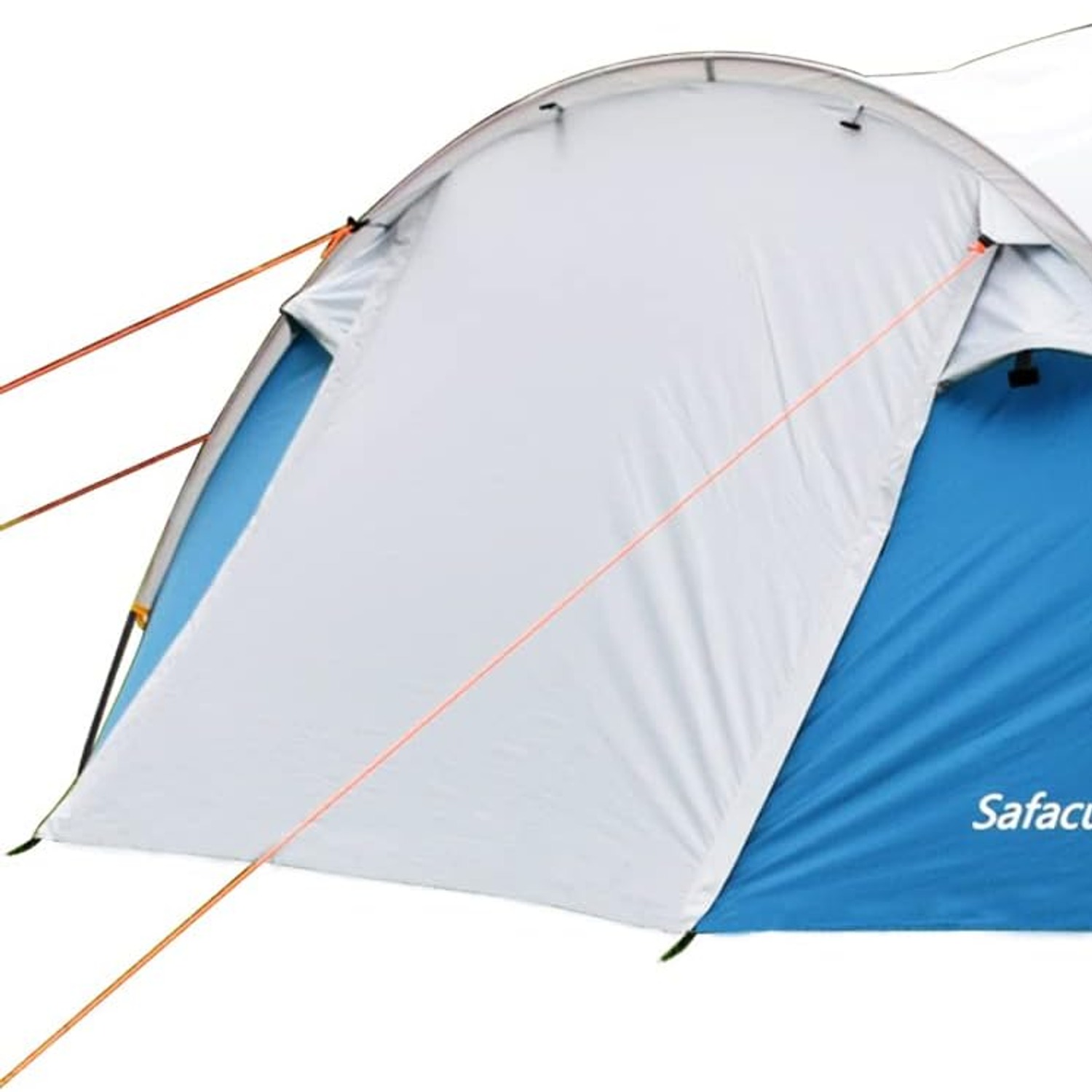
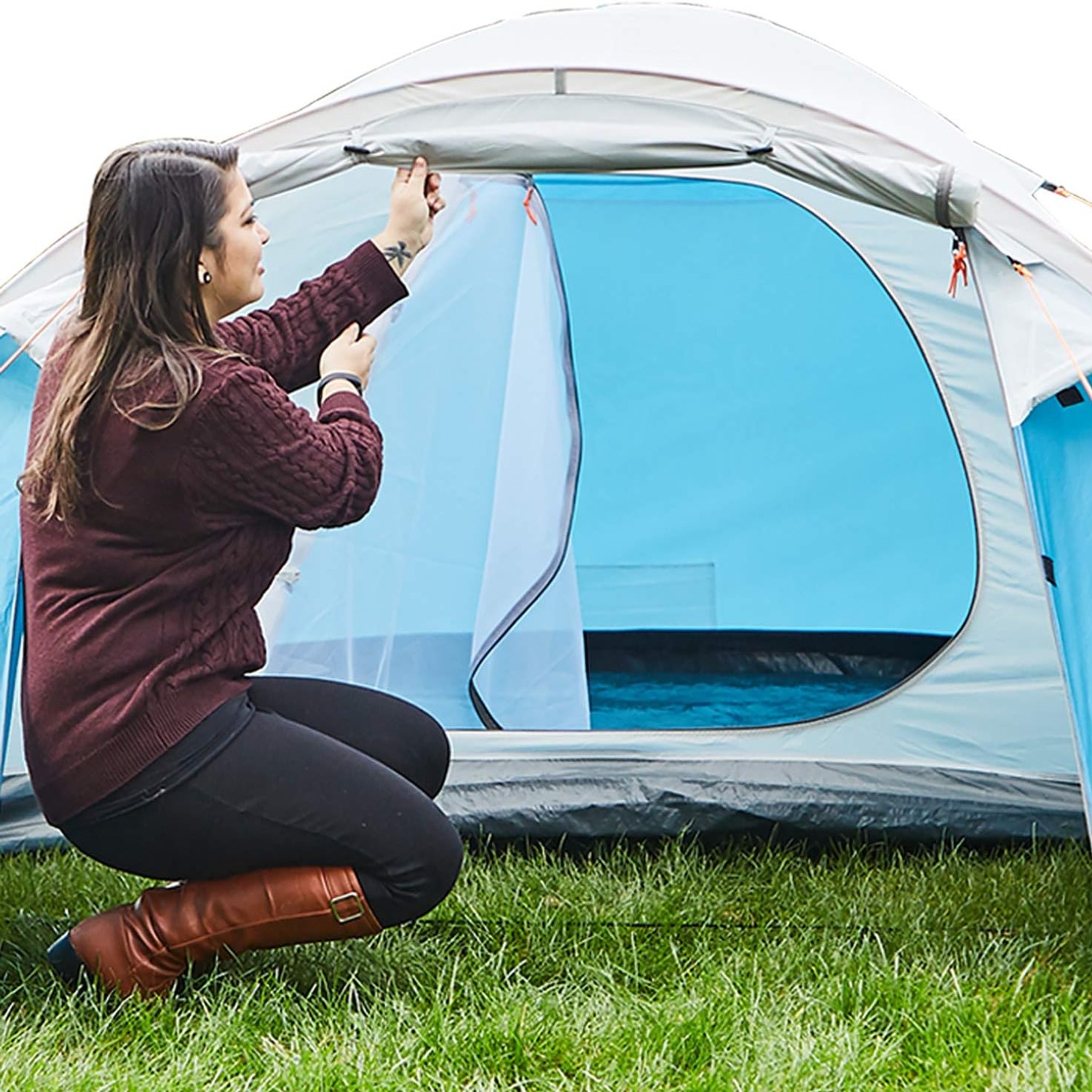
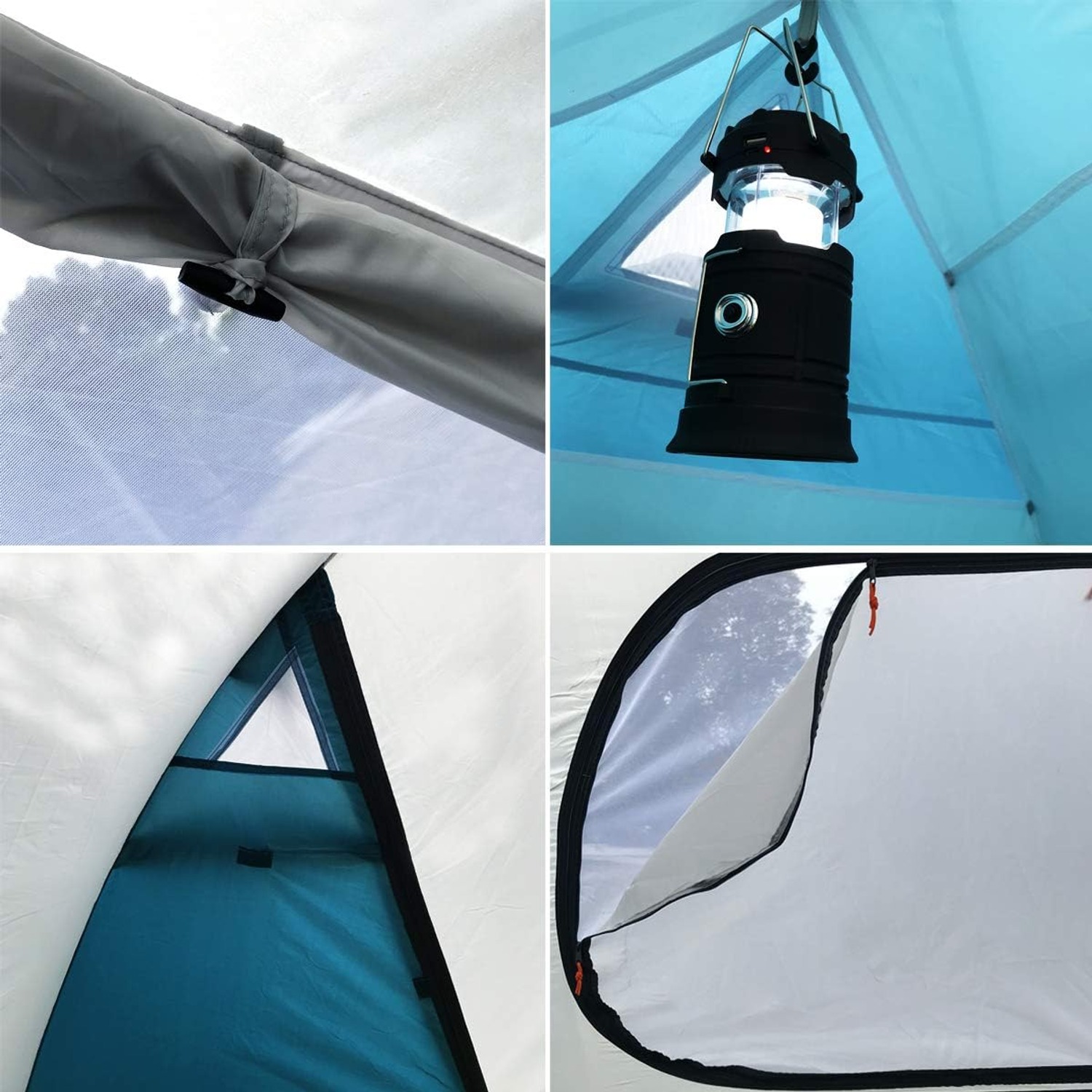
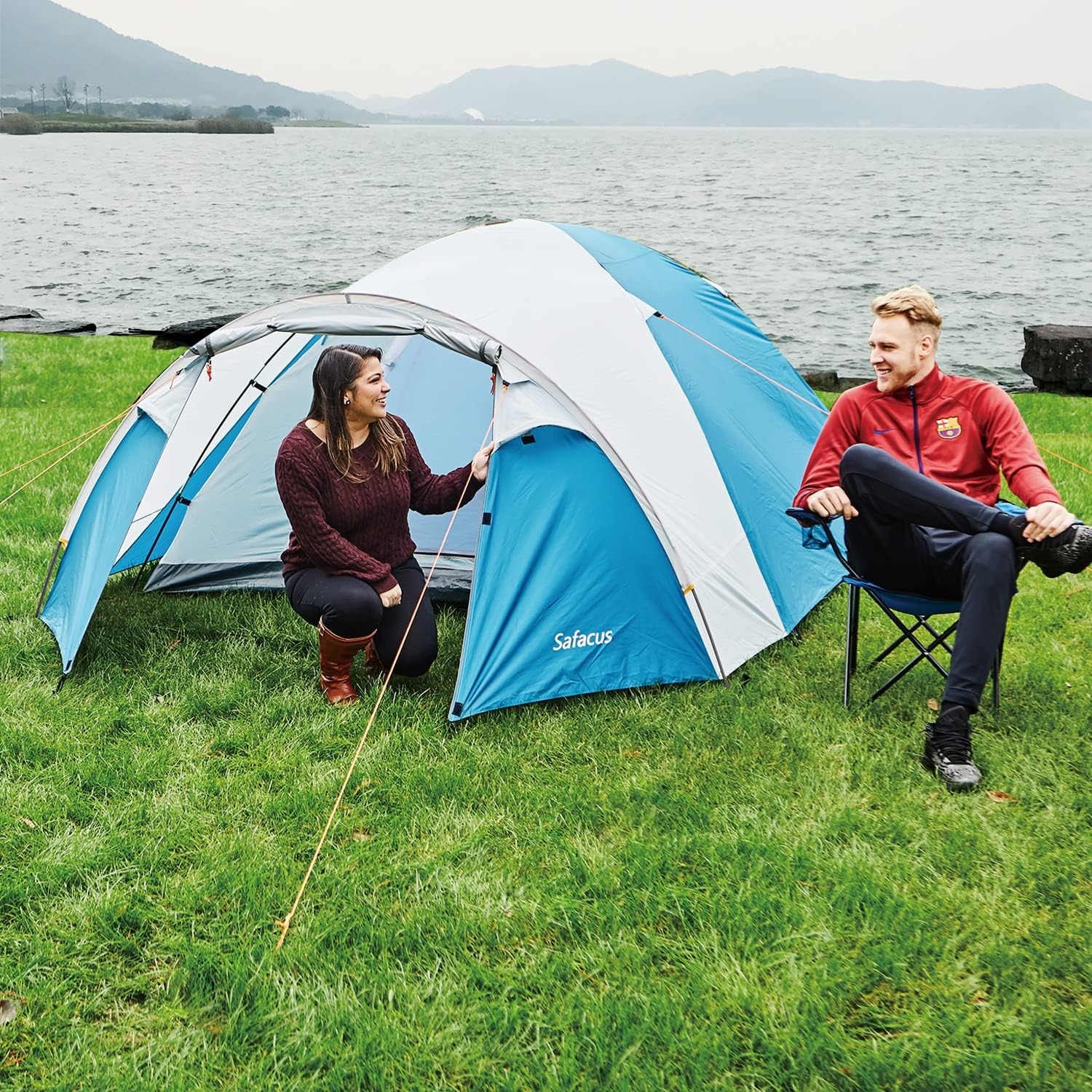
A double layer tent splits the job in two. The inner tent is made from breathable fabric that lets water vapour pass through. The rainfly sits over the top, separated by an air gap, and handles the rain. Moisture passes out of the inner tent, condenses on the underside of the fly, and runs down the outside to the ground. You stay dry. That is the whole idea, and this SAFACUS dome is built exactly that way.
How a dome tent holds itself up
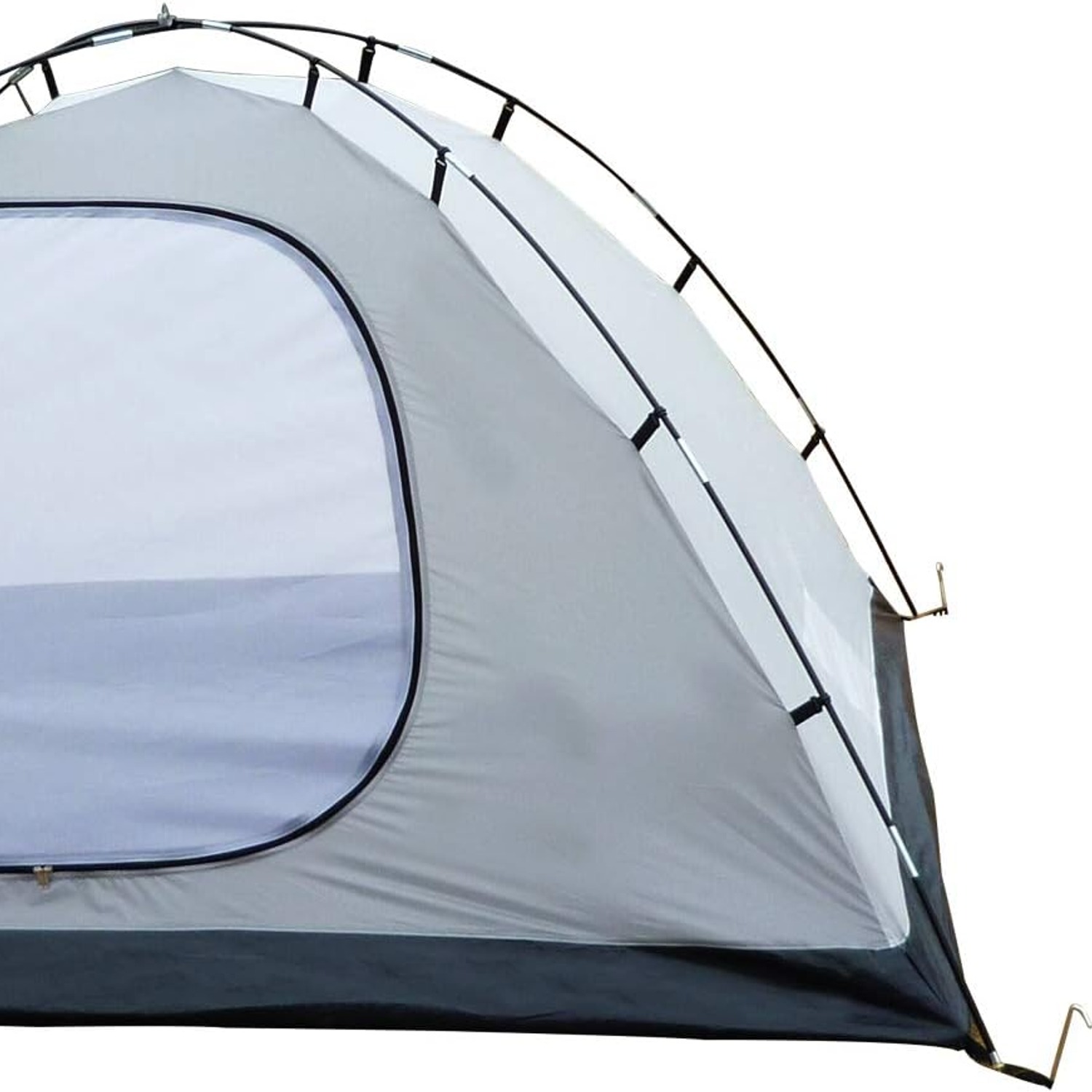
Dome tents work by crossing flexible poles over the top of the tent body. The tension in those curved poles is what gives the structure its shape and strength. This one uses two fibreglass poles that attach to the tent with clips.
Clips are worth mentioning because they make a real difference to your evening. The older method threads a pole through a long fabric sleeve sewn along the tent. That is fiddly, slow, and genuinely unpleasant when your hands are cold or it is already raining. Clips snap onto the pole in a second each. The listed assembly time of around ten minutes reflects that, and most people get faster with practice.
Because the poles support the tent on their own, this is a freestanding design. You can build the whole thing on a flat patch of ground, pick it up, and move it two metres left when you realise there is a tree root where your hip will be. That is a small thing that matters a lot. Once positioned, peg it down and run out the four guylines.
The guylines are not optional extras. They take load off the poles and stop the fly from flapping against the inner tent. Flapping is what loosens seams and wears fabric over time. Peg each guyline at roughly 45 degrees from the tent and give them a decent amount of tension.
Reading the size numbers properly
Tent capacity ratings are optimistic almost everywhere in the industry. A four person rating means four adults lying shoulder to shoulder with no room spare for gear. It is not a comfort figure, it is a geometry figure.
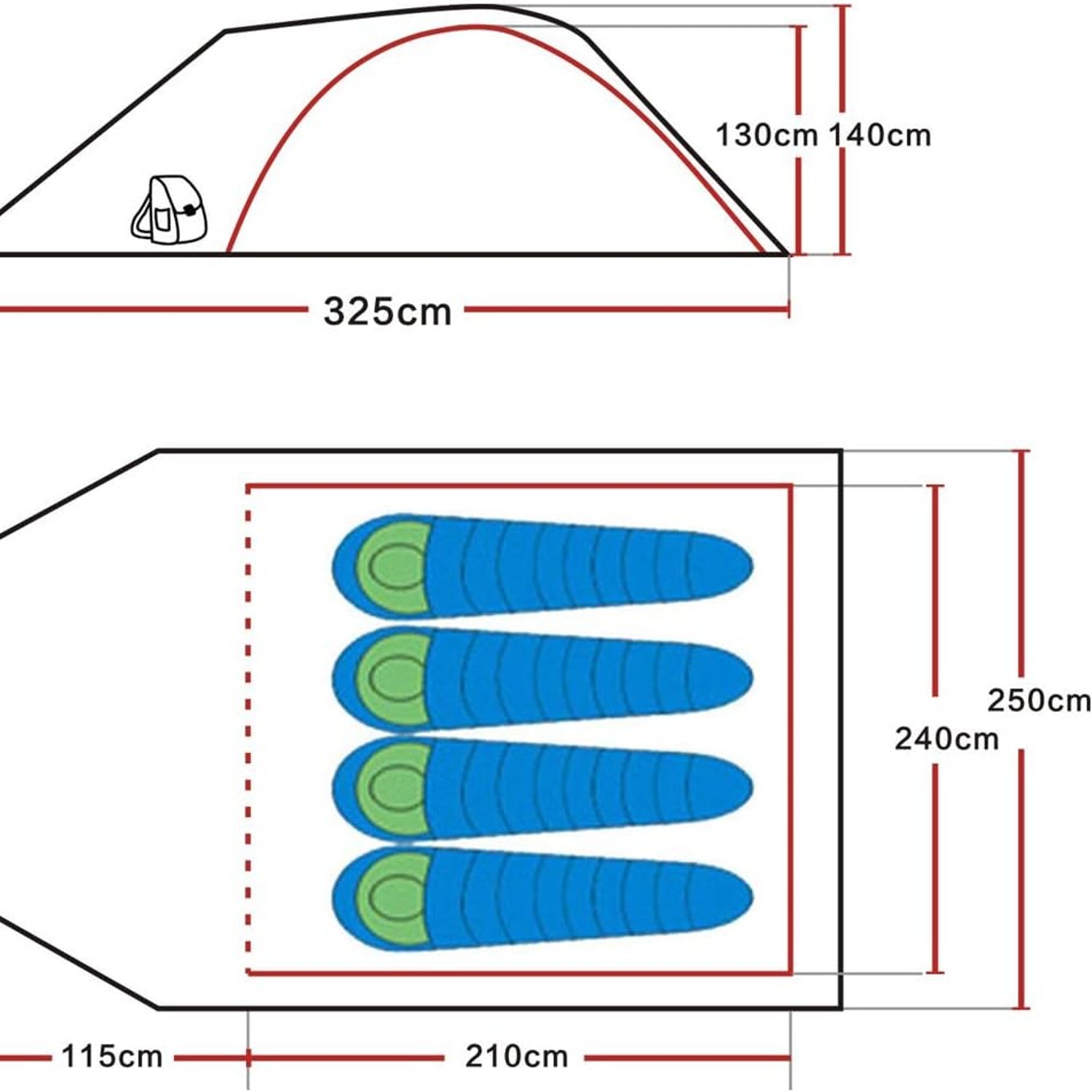
This tent has a floor length of 325 cm and a floor area of 81,250 square centimetres. That is genuine space. Four sleeping mats fit. But if you want room for packs, boots, a dog, or a toddler who moves around at night, think of it as a tent for two or three with luggage. Plenty of people buy a four person model specifically to use as a very comfortable two person tent, and that is a smart way to shop.
Maximum height is 140 cm. You can sit up straight, kneel, change clothes and play cards. You cannot stand. That is the deal with domes, and it is a fair deal, because the low profile is also what makes the shape so good in wind. Tall tents catch more air.
Packed, it comes in at 4.8 kg with packed dimensions of 128 x 98.4 x 55.1 cm. Light for its size. Not a solo backpacking tent, but easy to carry from a car park, and reasonable to split between two or three people if you are walking in.
Materials and what they mean in the rain
The fly and inner are polyester, with polyurethane coating handling the waterproofing, and the floor is polyester with a PU coating too. Polyester is a sensible pick for a family tent. It resists UV better than untreated nylon, and it does not stretch and sag as much when it gets wet, which means your taut pitch stays taut through a rainy night.
The polyurethane coating is the part actually blocking water. It is also the part you can damage. Strong detergents, solvents and long storage in a hot car boot all break coatings down. Treat the fabric gently and it will last seasons.
The floor is where most leaks actually happen, not the roof. Water pressure from someone kneeling on a wet floor can push moisture through a coating. Using a cheap tarp or footprint underneath takes that pressure off, protects against sharp stones, and gives you a clean surface to pack onto. It is a small cost for a big gain.
Stakes are aluminium and plastic. Aluminium pegs bend in hard ground rather than snap, which is usually recoverable. If you camp a lot on stony sites, a set of stronger pegs is the cheapest useful upgrade you can make to any tent.
Who this tent suits
The recommended uses listed cover beach, camping and hiking, fishing and travelling, and that is a fair description of where this shape works. It is a good first family tent. It is a good festival tent, because it goes up fast and packs small. It is a good fishing or beach tent for a weekend, as long as you use sand pegs or buried anchors when the ground will not hold a standard stake.
It is less suited to long solo treks where every gram counts, and it is not a mountaineering shelter for heavy snow loading. The four season description means it is built for cold, wet and windy conditions rather than alpine extremes. For the weekends most of us actually take, that is the right level.
If you are shopping for the best family camping tent and comparing against larger cabin style models, the trade is clear. You get less headroom here, and you get better wind performance, faster setup and a much lighter pack. Think about how you camp rather than how the photos look.
Looking after it
Dry storage is the single rule that matters. Pack a tent away damp and you will open the bag weeks later to mildew spots and a smell you cannot get rid of. If you have to pack wet because you are leaving a site in the rain, that is fine, just pitch it in the garden or hang it over a line as soon as you get home and let it dry completely.
Clean it with cool water, a sponge and a little mild soap. No machine washing, no tumble drying, no bleach, no ironing. Brush sand and grit out of the zipper teeth, because grit is what kills zippers, not age.
Store it loosely rather than compressed hard, somewhere cool and out of direct sun. Let the shock cord in the poles relax before you fold them, and fold from the middle outward so you do not stretch the cord. Carrying a pole repair sleeve costs almost nothing and turns a trip ending problem into a five minute fix.
The short version
This is a four person double layer dome tent with a breathable inner, a waterproof polyester rainfly, two fibreglass clip poles and four guylines. The floor runs 325 cm long, peak height is 140 cm, and the whole thing packs to 4.8 kg. One zippered door, blue, freestanding, about ten minutes to pitch.
If you want a tent for family camping, beach weekends, fishing trips or festivals, and you would rather have quick setup and solid wind performance than standing height, it is a sound choice. Treat it as a roomy two or three person tent if you want real comfort, add a tarp underneath, and always pack it dry.