
The complete guide
How to Choose a Rechargeable Camping Light That You Will Actually Use
The problem with camp lighting
Most people discover their lighting plan is bad at about 8pm on the first night. The sun drops faster than expected, dinner is half cooked, and suddenly three people are holding phones at the same pot. Someone digs out a head torch, which means that for the rest of the evening whoever is talking is also shining a light into everyone else's eyes.
The fix is not more brightness. It is better placed, better controlled brightness. A single lamp hung above the table does more good than four torches pointed sideways, because light coming from above lands on the surfaces you care about instead of into faces.
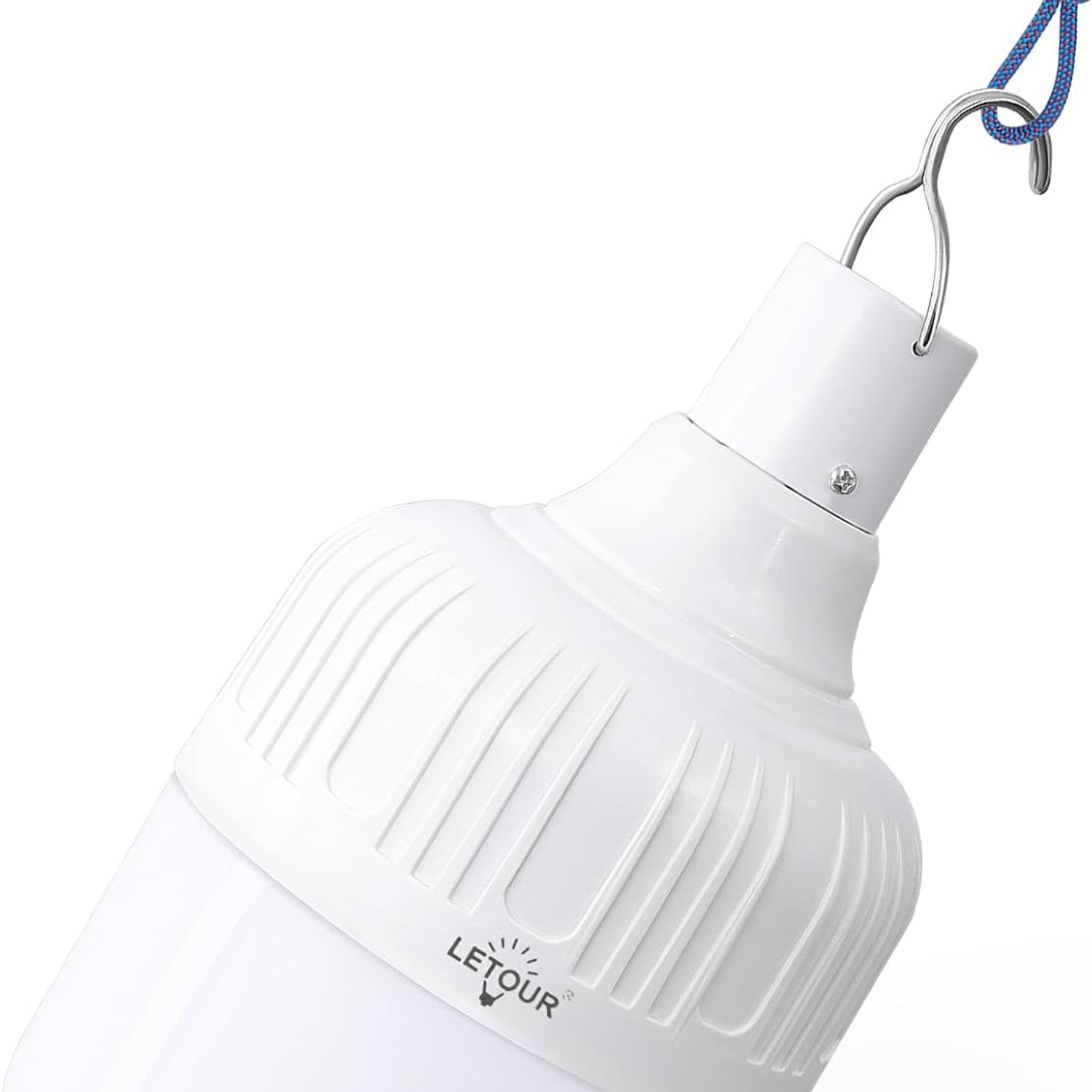
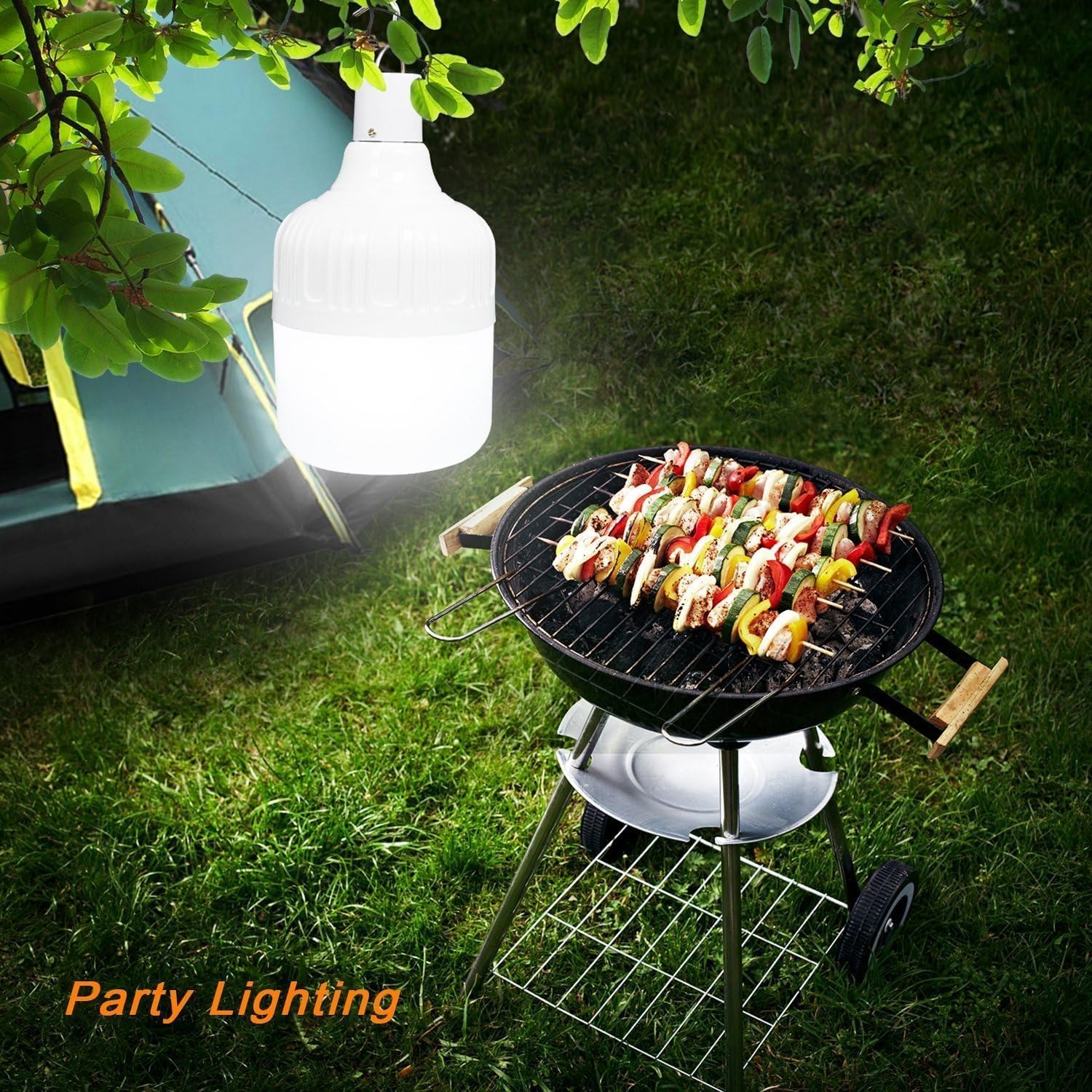
That is the job this lamp is built for. Twenty-four LED beads, a hanging mount, five brightness modes and a rechargeable battery. It is meant to be the light you hang up once and then forget about.
How this lamp works
Output is rated at up to 5000 lumens from a 50 watt light source. Instead of one big emitter, the light is spread across 24 LEDs. That matters more than the headline number. Many small sources produce a softer, wider wash than a single bright one, so there is less harsh shadow and less glare when someone glances up.
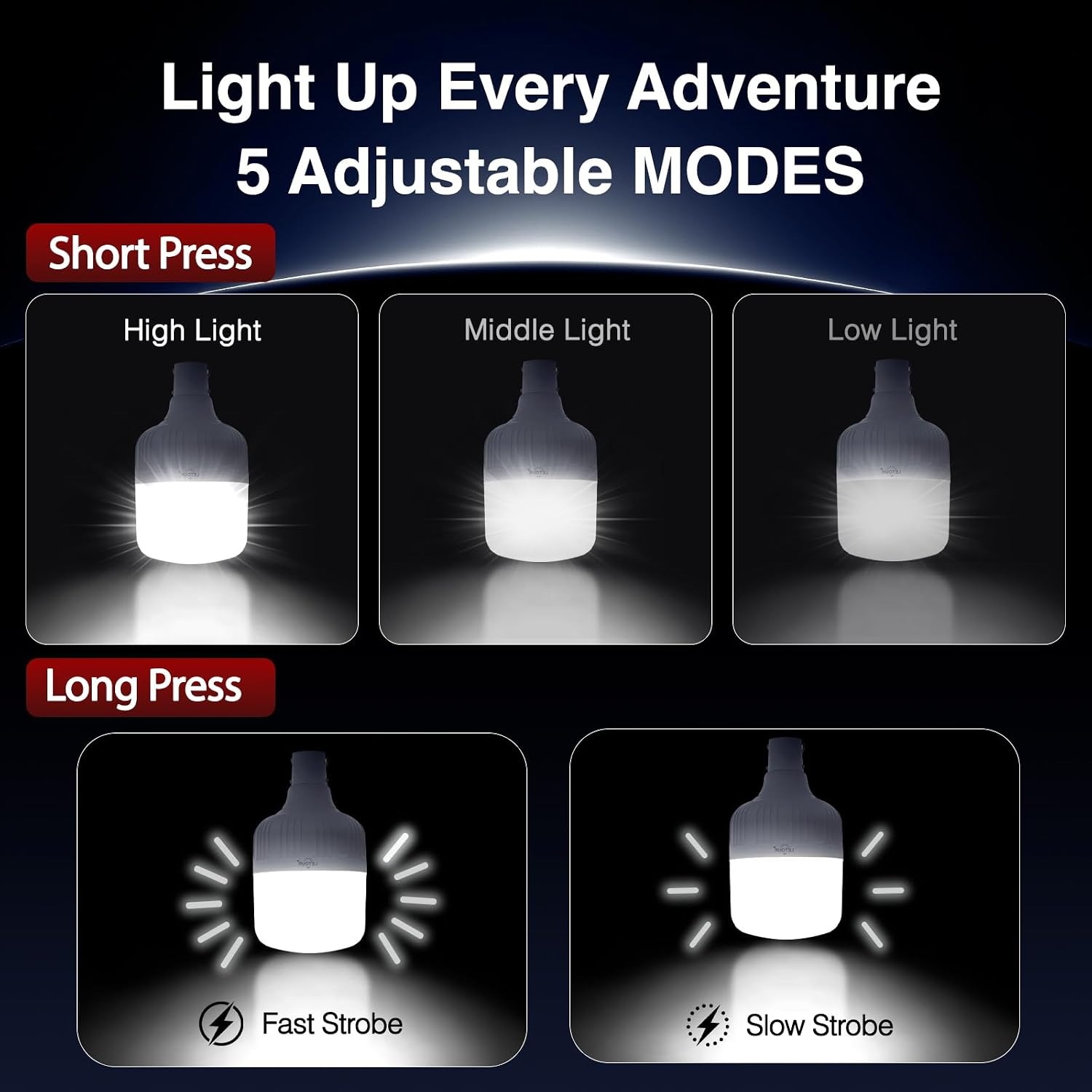
The five modes are high light, middle light, low light, fast strobe and slow strobe. In practice the useful part is the dimming. High light is for jobs. Setting up a tent after dark, finding something in the boot, cooking. Middle light covers eating and talking. Low light is the one you leave on while people drift off, bright enough to find the tent zip without wrecking anyone's sleep.
The two strobe modes are not party settings. They are there for being seen, which is worth remembering if you break down on a verge or need to mark a spot in the dark.
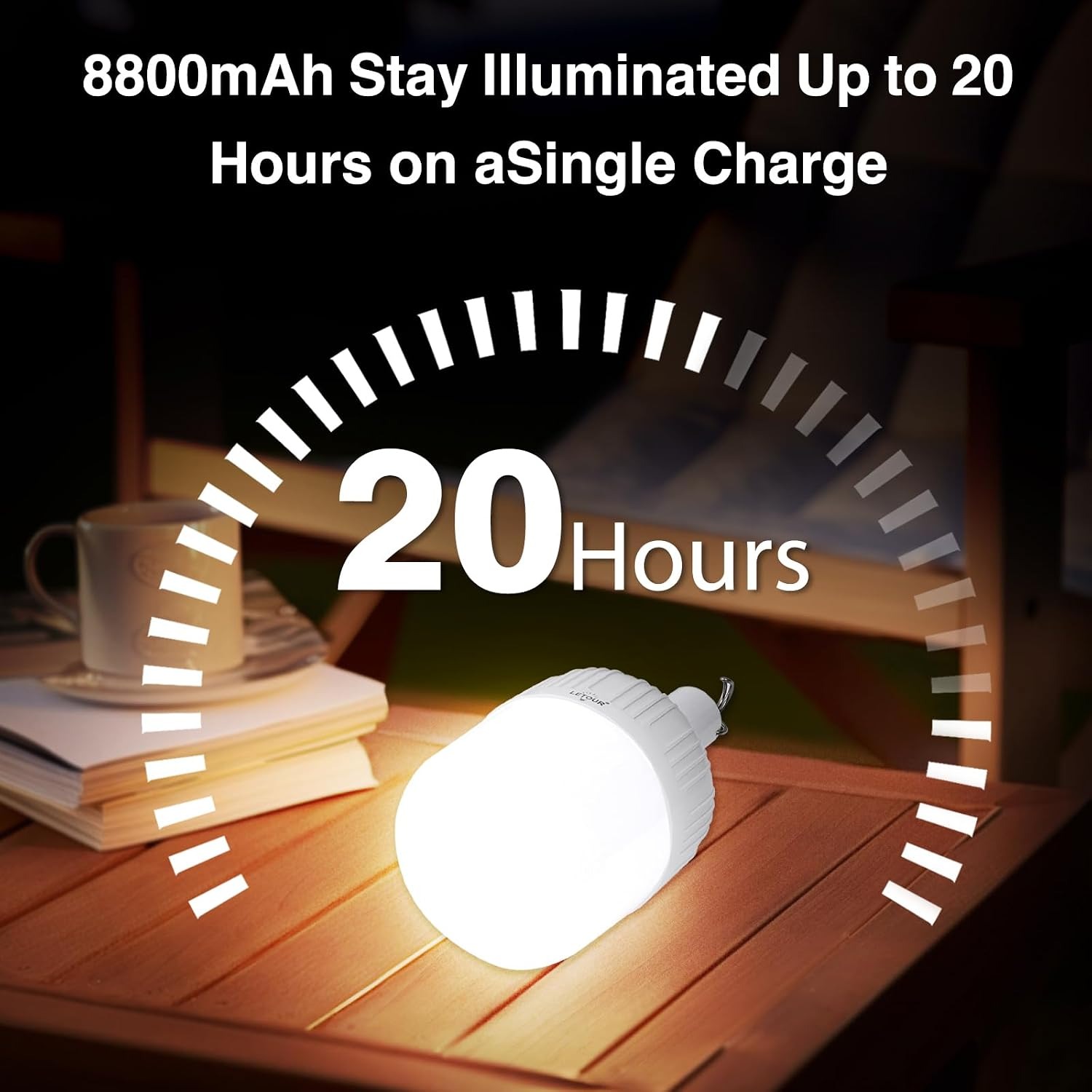
Power is a built-in lithium-ion battery, included with the lamp, charged over USB at 5 volts. There is no battery compartment to open and no trip to the shops for cells. If you already carry a power bank for your phone, you already carry a recharger for this lamp.
The body is ABS plastic in white, at 272 grams. Light enough for a tent loop, tough enough for the back of a car.
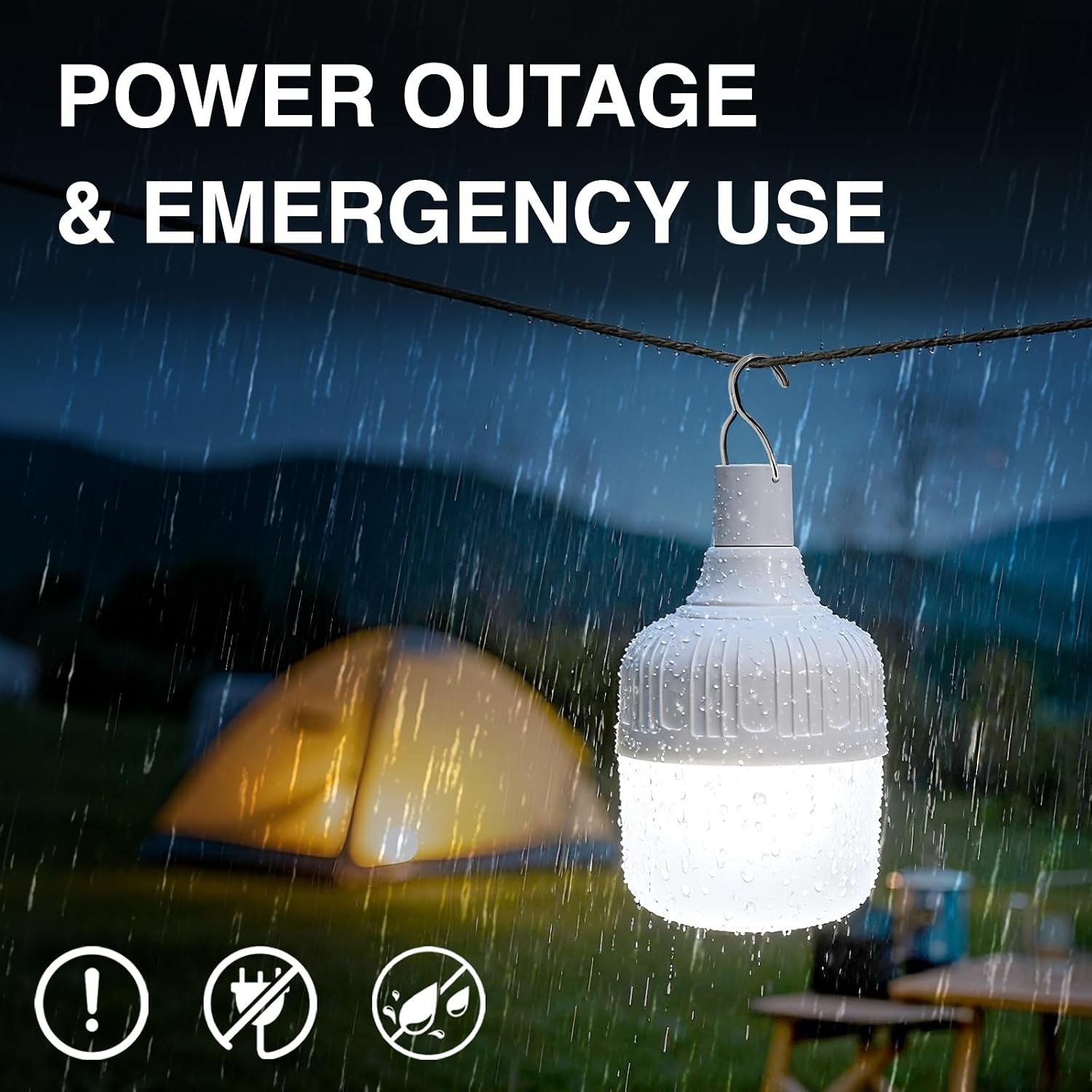
One honest note before you buy. The manufacturer lists this lamp as not water resistant. That is not a dealbreaker, but it does shape where you use it.
Who it suits
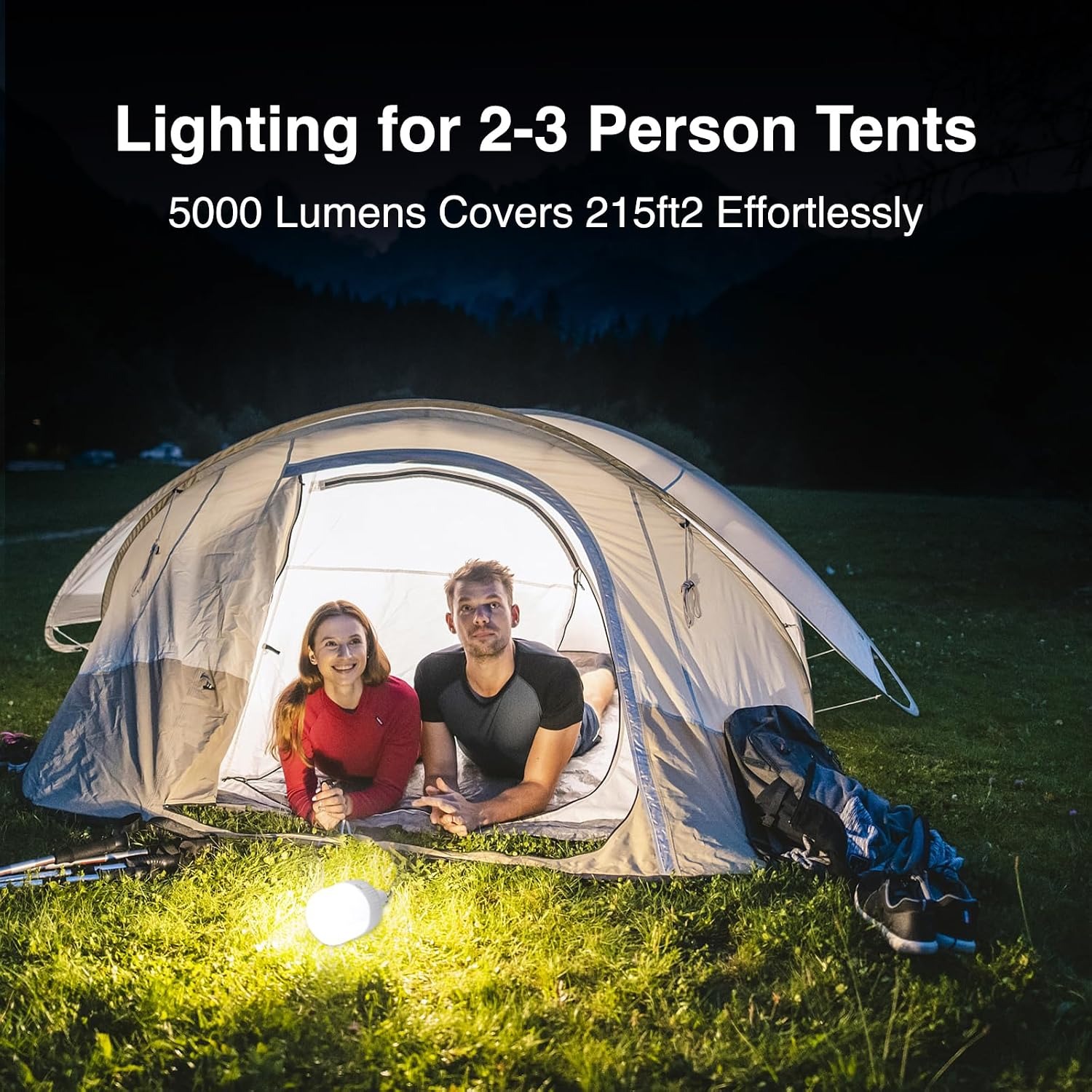
Tent campers get the most obvious benefit. Hang it from the apex loop and a two to four person tent is properly lit, which makes everything from sorting sleeping bags to reading at night easier.
Caravanners and van dwellers like it because there is no wiring. It is a light you move to wherever you need it, then charge off the same USB socket as everything else.
Festival and backyard users use it as a patio party light. Dropped to a lower mode and hung over a table, it stops being a work lamp and becomes atmosphere.
Then there is the group that never goes camping at all. A rechargeable lantern in a kitchen drawer is one of the better bits of household preparation you can own. When the power goes out, you want something you can hang in the middle of a room, not a torch someone has to hold.
It also earns its keep in sheds, garages and under the bonnet, where a hanging light above the work beats a torch in your teeth.
Where it is less suited
If you need a light that survives being rained on, this is not it. The spec is clear that it is not water resistant. Anyone camping in exposed conditions without an awning, or working outdoors in wet weather, should look for a sealed, rated lantern instead.
It is also not a long throw spotlight. The design spreads light out rather than pushing it far down a track. For walking a trail at night you still want a head torch. These two tools complement each other rather than replace each other.
How to choose between camp lights
A few things actually separate good camp lights from bad ones.
Dimming. This is the single most underrated feature. A lamp that only does full brightness will annoy you within an hour. Being able to drop to a low glow is what turns a work light into an evening light.
How it mounts. Light from above is better than light from beside. A hanging mount, a hook or a magnet all beat a flat base in a tent.
How it is powered. Disposable batteries are a recurring cost and a recurring annoyance. USB recharging means one cable covers your phone, your lamp and anything else you carry.
Weight. For car camping, weight barely matters. For anything you carry, 272 grams is the kind of number that disappears in a pack.
Weather rating. Decide this one honestly. If the lamp will always be under cover, a non water resistant light is fine. If it might get rained on, pay for a sealed one.
Spread versus throw. Multi LED lanterns like this one give you spread. Torches give you throw. Most campsites need spread.
Getting the best out of it
Charge it fully before you leave. Obvious, but easy to forget when a lamp has been in a cupboard for three months.
Hang it high. People instinctively put lanterns on tables, where they glare straight into everyone's eyes. Lift it above head height and the whole area gets light without the glare.
Use the lowest mode that does the job. Lower modes stretch runtime considerably, and your eyes adjust to dimmer light more than you expect once there is nothing brighter competing.
Pack a power bank. Pairing the lamp with a decent battery pack effectively doubles or triples your available light across a weekend.
Keep it dry. Inside the tent, under the awning, or in a dry bag when it is not in use.
Care and storage
Cleaning is simple. A soft cloth, slightly damp, over the ABS housing, then dry it off. Skip the solvents, which can cloud plastic over time.
Keep the USB port clean. Sand and grit in a charging port is one of the most common ways portable gear dies, and a quick puff of air before plugging in costs nothing.
For storage between seasons, give the battery a top up every couple of months. Lithium-ion cells left completely flat for long periods lose capacity. A partial charge is kinder than either extreme.
Store it indoors, somewhere dry. Since the lamp is not water resistant, a damp garage shelf through winter is not ideal.
The short version
If you want one light that handles cooking, eating, reading and emergencies, this covers all four. The 5000 lumen rating gives you plenty of headroom when you need it, and the five modes mean you are not stuck with that brightness when you do not.
The USB charging is the part that changes your habits. No spare cells, no guessing, just the same cable you already pack. At 272 grams it is easy to bring along, and the hanging mount puts the light where light belongs, above you rather than beside you.
Just keep it dry. Inside a tent, under an awning, in a van or in the house, it does exactly what a good camp lamp should do, which is to stop being a thing you think about.