
The complete guide
Choosing a Folding Camping Table That Actually Earns Its Space
The flat-surface problem
Every camp trip runs into it. You have a stove that needs a level base, food that needs chopping, a kettle that should not tip, and the ground is lumpy grass, sand or gravel. People end up balancing things on an esky lid or a car bonnet, which works right up until the moment it does not.
A small folding table fixes this for less money and less bulk than most people expect. It is not glamorous gear. It is the sort of thing you buy once, forget about, and then use every single trip. Within a few outings it stops being a camping item at all and starts coming to the park, the swap meet, the kids' sports day and the garage.
This guide covers what to look for in a best folding table for camping, how the adjustable-height idea actually plays out in real use, and the things worth knowing before you buy.
How an adjustable-height camp table works
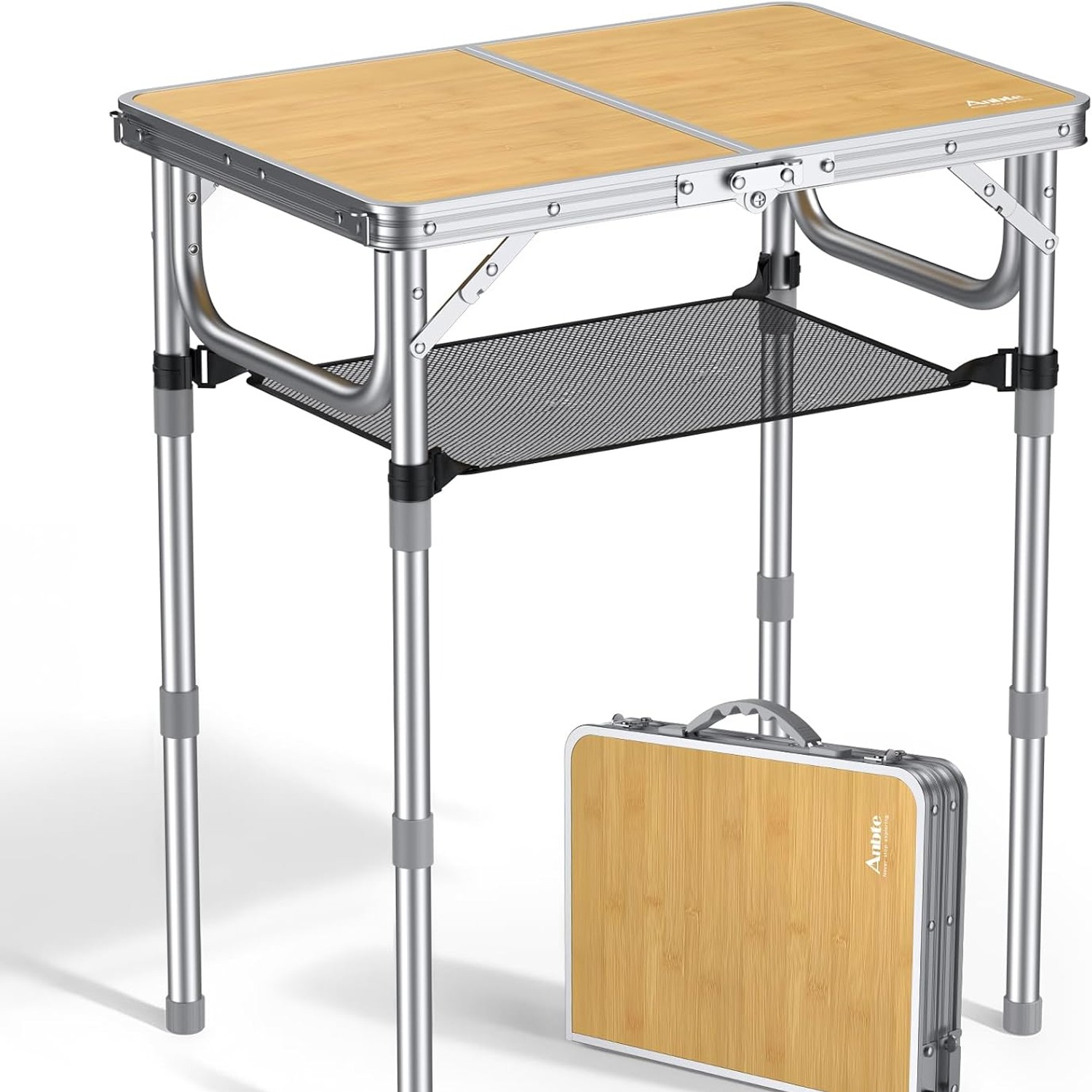
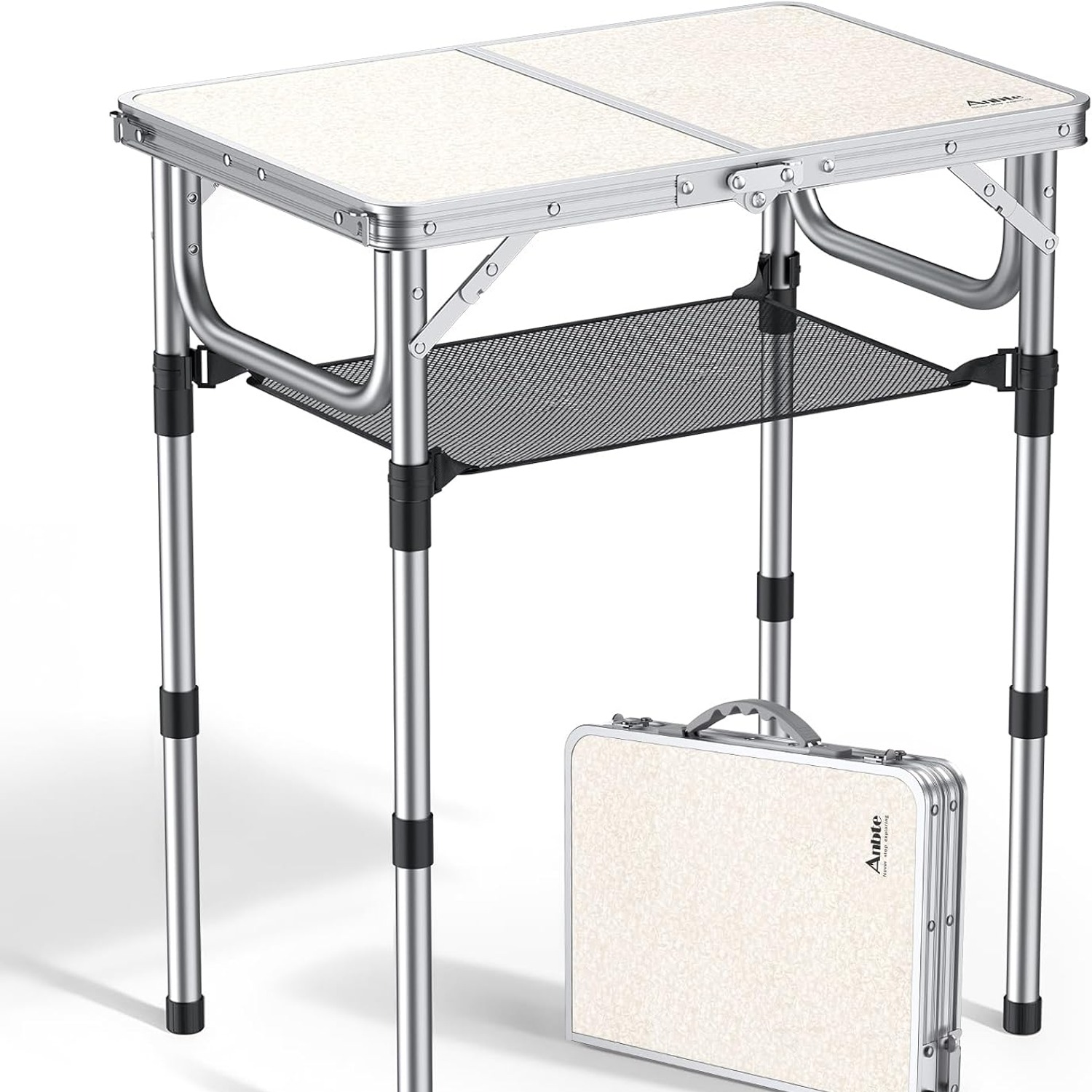
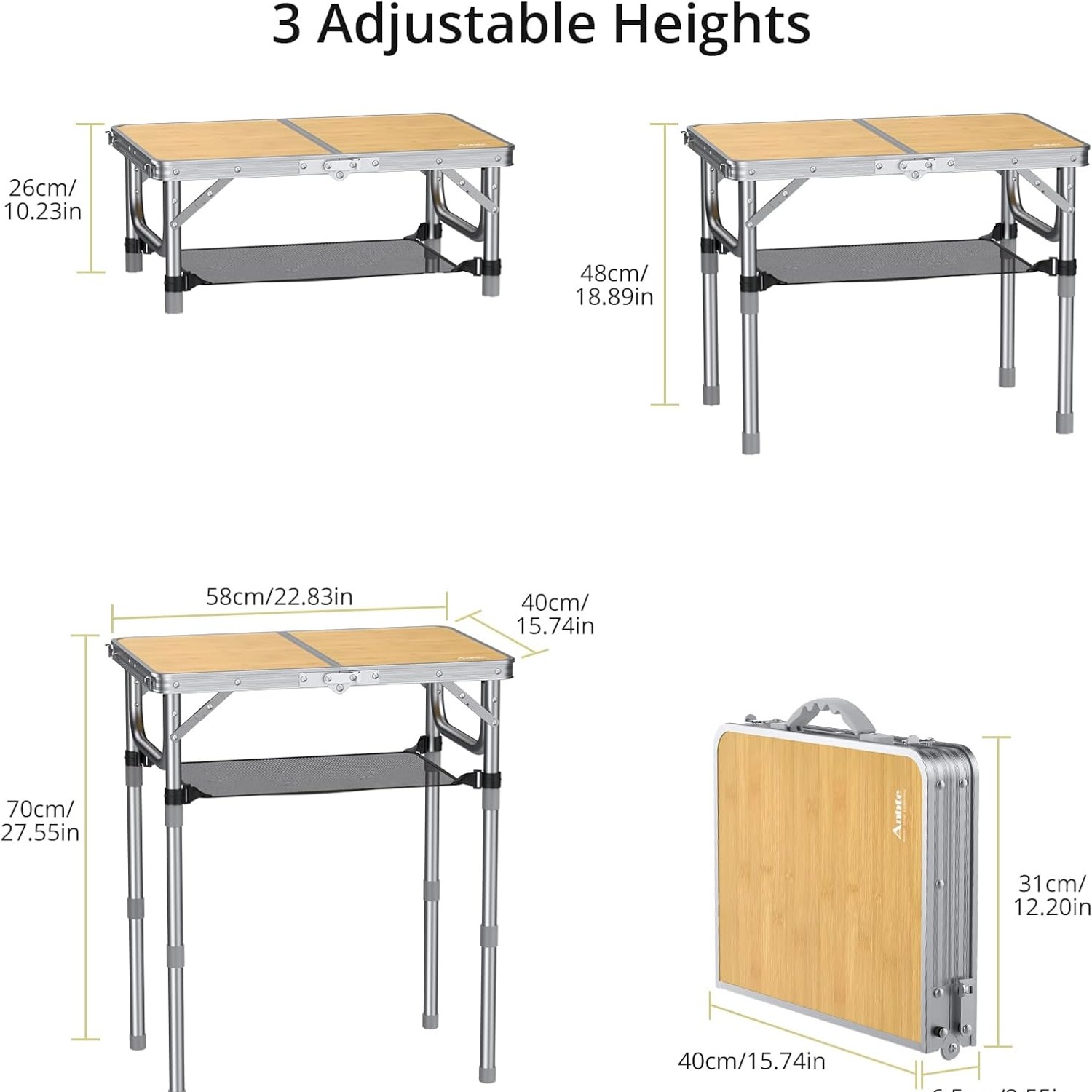
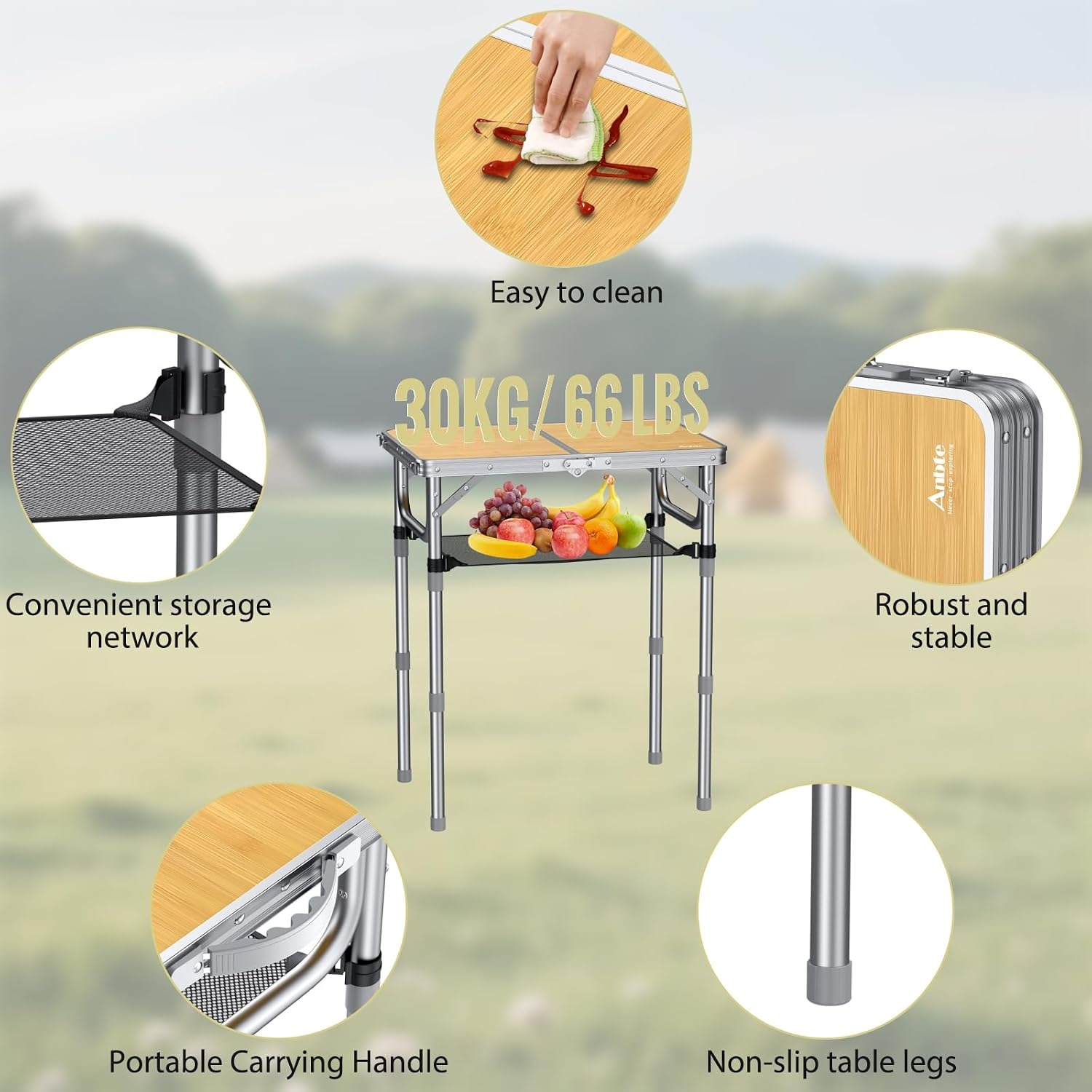
The legs on this style of table are not telescopic in the sliding sense. They are made up of sections that insert into each other and lock at set positions. You either run one section for a very low table, two for a mid height, or the full set for standing-chair height.
That matters because fixed positions are more rigid than a sliding clamp. There is nothing to creep down under load and no twist-lock to seize up with sand in it. The trade-off is that you get three choices rather than infinite adjustment, which in practice is plenty.
On this table the full height is 69.9cm. That is close to the height of a normal dining table, so an ordinary folding camp chair pulls up to it comfortably. The lower settings drop it to picnic-rug height, which is where it earns its keep at the beach or in a park where nobody brought chairs.
The frame is aluminium. That is the usual choice for portable gear because it is light, does not rust, and has enough strength for a 30kg rating at this size. The top is engineered wood, so it is a solid, smooth panel rather than a fabric sheet stretched over a frame. Fabric tops flex when you cut on them. A rigid top does not.
Who it suits
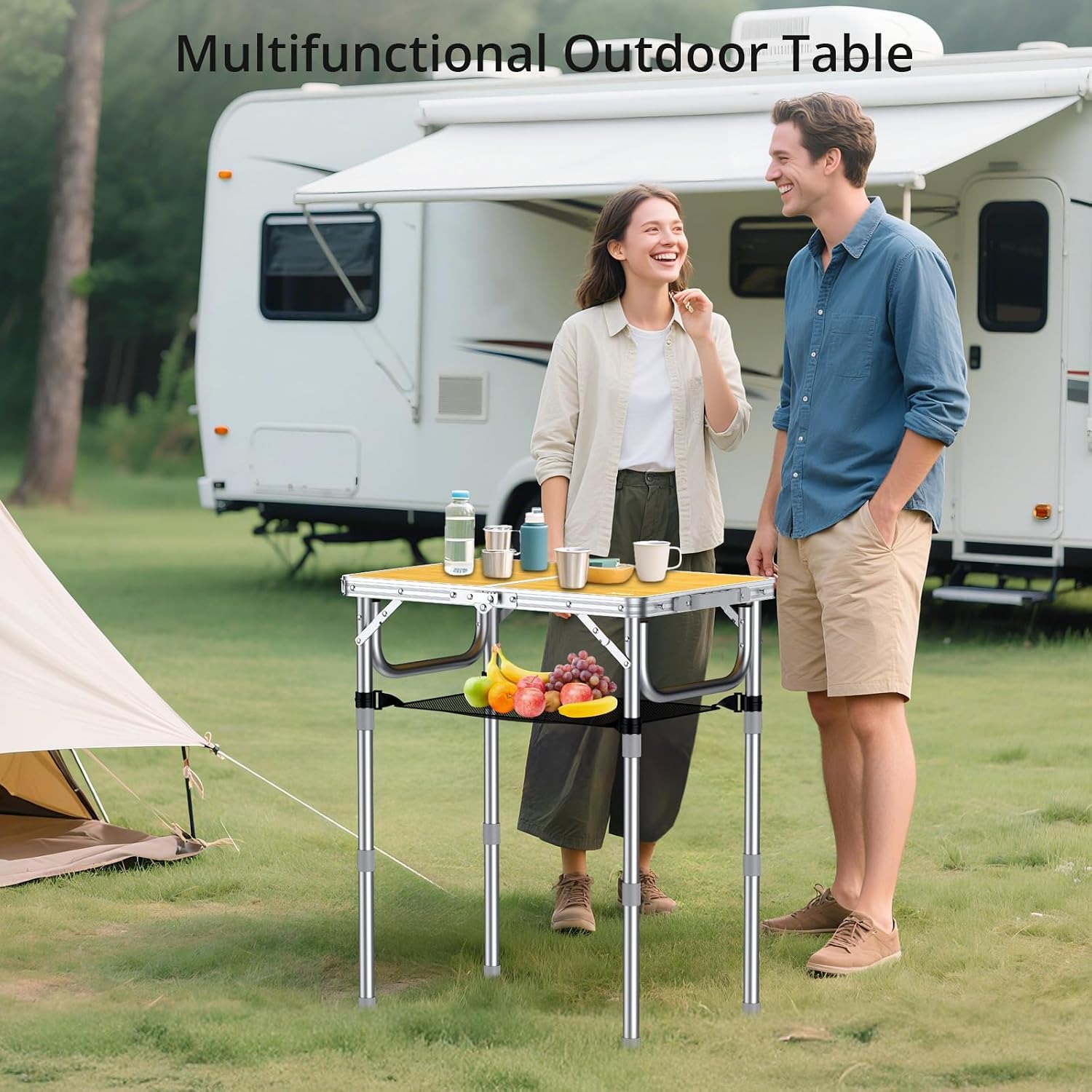
Car campers get the most out of it. The table folds to a flat case and the weight is 2.235 kg, so it is no burden to throw in alongside the chairs and the esky. If you camp out of a van or caravan, a flat-folding table slides into an awning locker without eating storage.
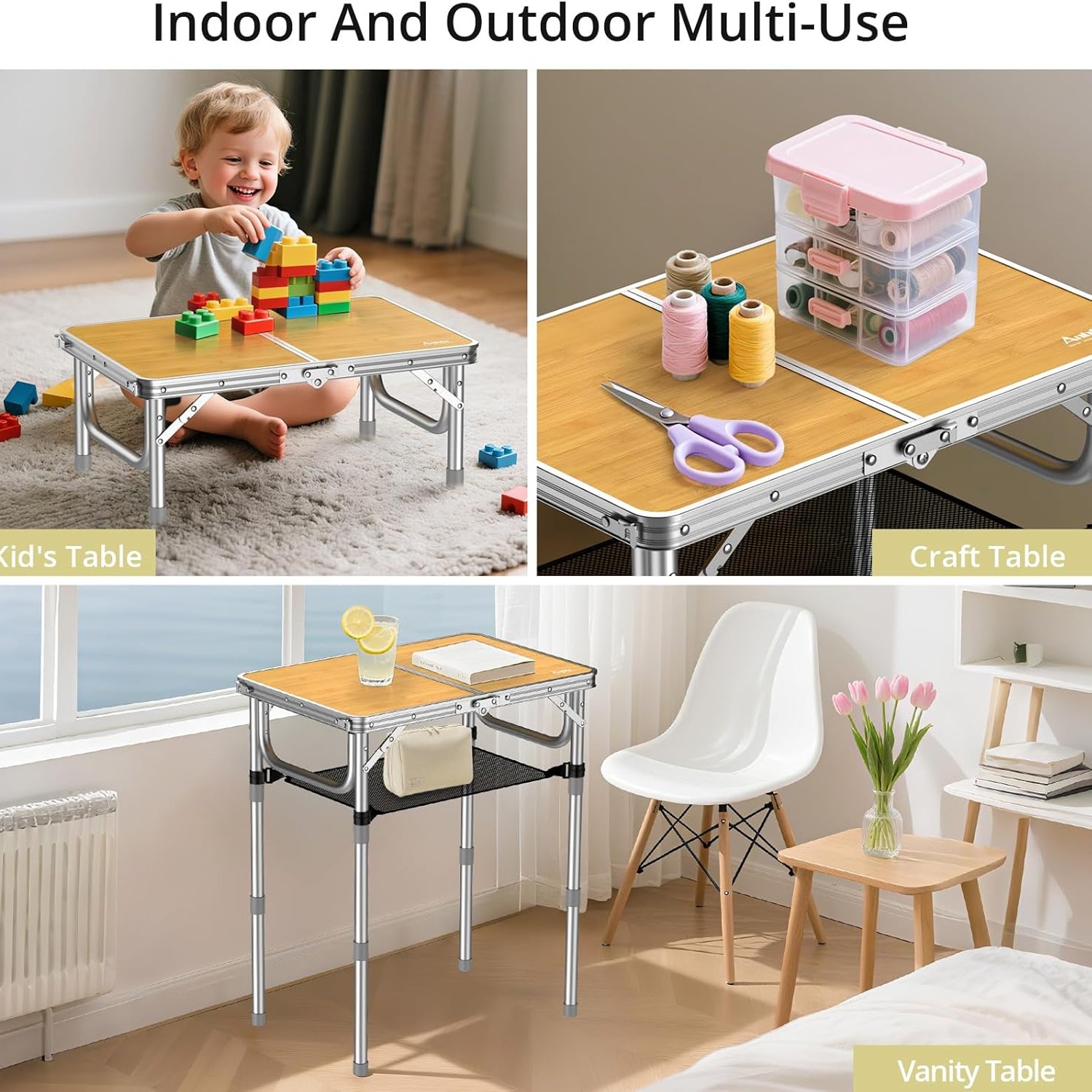
It also works for people who are not camping at all. Fishing is an obvious one, because a flat spot for tackle and a thermos changes the whole session. Market stalls, kids' sports sidelines, tailgates, picnics and outdoor craft all use the same thing. Anyone hunting for a best portable picnic table is really looking for this exact set of features.
It is less suited to backpackers. At just over two kilos it is light for a table, but it is still two kilos you are carrying along with everything else, and the folded case shape does not strap neatly to a pack. If you are walking in, a table is usually the first thing to leave at home.
It is also not a heavy workbench. The 30kg rating covers food, a stove, drinks and gear. It does not cover sitting on it, standing on it, or using it as a platform for engine parts.
How to choose the right size
Think about what you actually put on a camp table. For most people it is a stove, a board, a couple of plates and a drink. A top around 58cm by 40cm handles that. Go much smaller and the stove takes the whole surface. Go much bigger and you start losing the compact folded size that made the table attractive in the first place.
The listed seating capacity here is four, and that figure is honest for drinks and cards. For a sit-down meal with four adults you would want something longer. Two or three people eating around it is comfortable.
Check your car before you buy anything. Measure the gap behind your back seats or the depth of your boot side pocket. A table that folds to a 3.5 inch depth usually slots in somewhere, but it is worth two minutes with a tape measure rather than discovering the problem in a dark car park.
Height matters more than people assume. Bring your camp chair into the equation. Low-slung reclining chairs sit well below a 70cm table, so if that is your only chair you will want the mid setting instead. Upright director-style chairs pair better with the full height.
Setting it up well
Pick level ground. This sounds obvious, but a table on a slope will slide everything toward one edge and makes a stove genuinely unsafe. If the ground is soft, press each leg in firmly and then check the top with a quick hand test.
Once the legs are in, press gently in the middle of the top. That seats everything properly and tells you if a leg has not clicked into position. It takes a second and prevents the classic mid-meal collapse.
Load the heavy stuff near the centre. A 30kg rating assumes weight spread across the panel, not a single heavy item hanging over a corner. Keep the stove toward the middle and put drinks around the edges.
The storage net underneath is more useful than it sounds. On sand or dirt, having a place for keys, cutlery, a lighter and a phone is the difference between packing up cleanly and losing something. Keep it to light items.
Looking after it
The main rule with any engineered wood top is to keep it dry. The supplier is clear about this: do not use the table in wet or rainy conditions. MDF is strong and smooth, but water that sits on it will eventually get in at the edges and cause swelling. If you are caught by a shower, wipe it off, let it air dry, then pack it.
Heat is the other thing to watch. Do not put very hot pans, grill plates or coals straight on the surface, and keep the table away from the fire. A cheap trivet or a folded tea towel solves this permanently.
Cleaning is simple. Damp cloth, mild detergent, dry it off. The top is listed as stain resistant, so most spills wipe away if you do not leave them overnight. Avoid harsh scourers, because once you scratch through a painted finish you have opened a path for moisture.
Before folding, give the legs a quick brush if you have been on sand. Grit in the leg joints is the main cause of stiff assembly later. Store the table folded in a dry spot rather than leaving it in a damp shed floor corner.
Common mistakes
Buying on top size alone is the big one. A larger table that does not fit your car gets left at home. The useful table is the one that is actually with you.
Ignoring the load rating is another. People see a solid-looking top and treat it like a bench. Thirty kilograms is a sensible working limit for a table this light, and respecting it is how you get years out of it rather than one season.
The last one is leaving it out overnight. Dew is enough to dampen an MDF top. Two seconds to fold it and put it in the car protects the surface and keeps the table looking tidy.
The short version
If you camp, fish, picnic or just need a spare surface that disappears when you are done with it, a small aluminium folding table is one of the better value bits of gear you can own. This one weighs 2.235 kg, locks at three leg heights up to 69.9cm, holds a recommended 30kg, and folds to a flat case you can carry in one hand.
Keep it dry, keep hot things off the top, load it from the centre, and it will quietly do its job trip after trip. That is really all you want from a best aluminium camping table.