
The complete guide
Choosing A Camping Kettle That Actually Earns Its Space
The small problem that ruins a morning
Camping gear arguments usually happen before coffee. Someone is holding a pot with a bent handle, trying to pour boiling water into a mug while the steam goes everywhere and half of it lands on the grass. Ten minutes later the second mug is still waiting because the pot has to go back on the stove.
Boiling water is the most repeated task in any camp kitchen. You do it for coffee in the morning, tea in the afternoon, dinner at night and washing up afterwards. A pot can do it. A kettle does it better, because it was designed around pouring and around telling you when it is ready.
That is the whole case for carrying a dedicated kettle. It is not a luxury item. It is the piece of gear that gets used the most times per trip.
How a camp kettle works differently from a pot
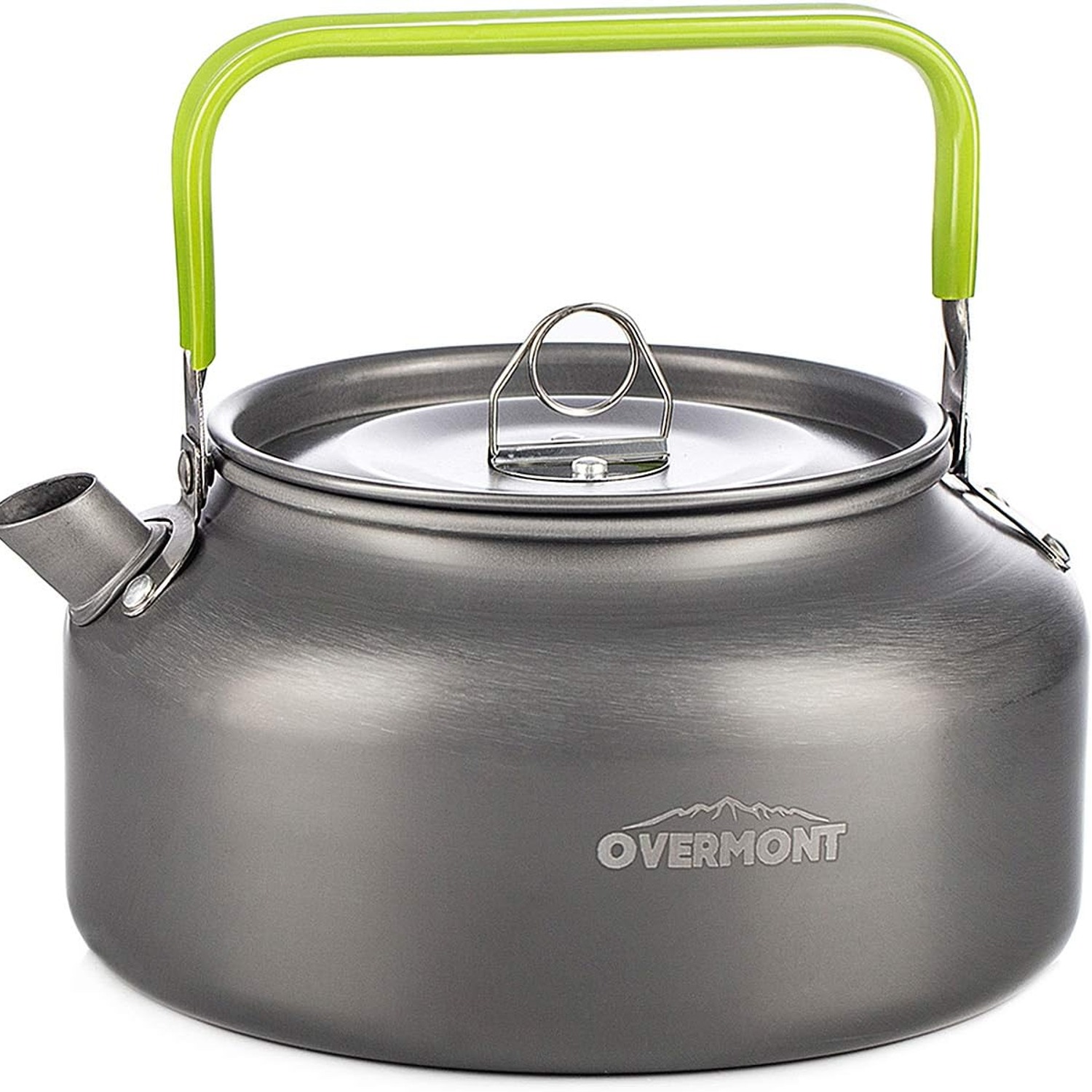
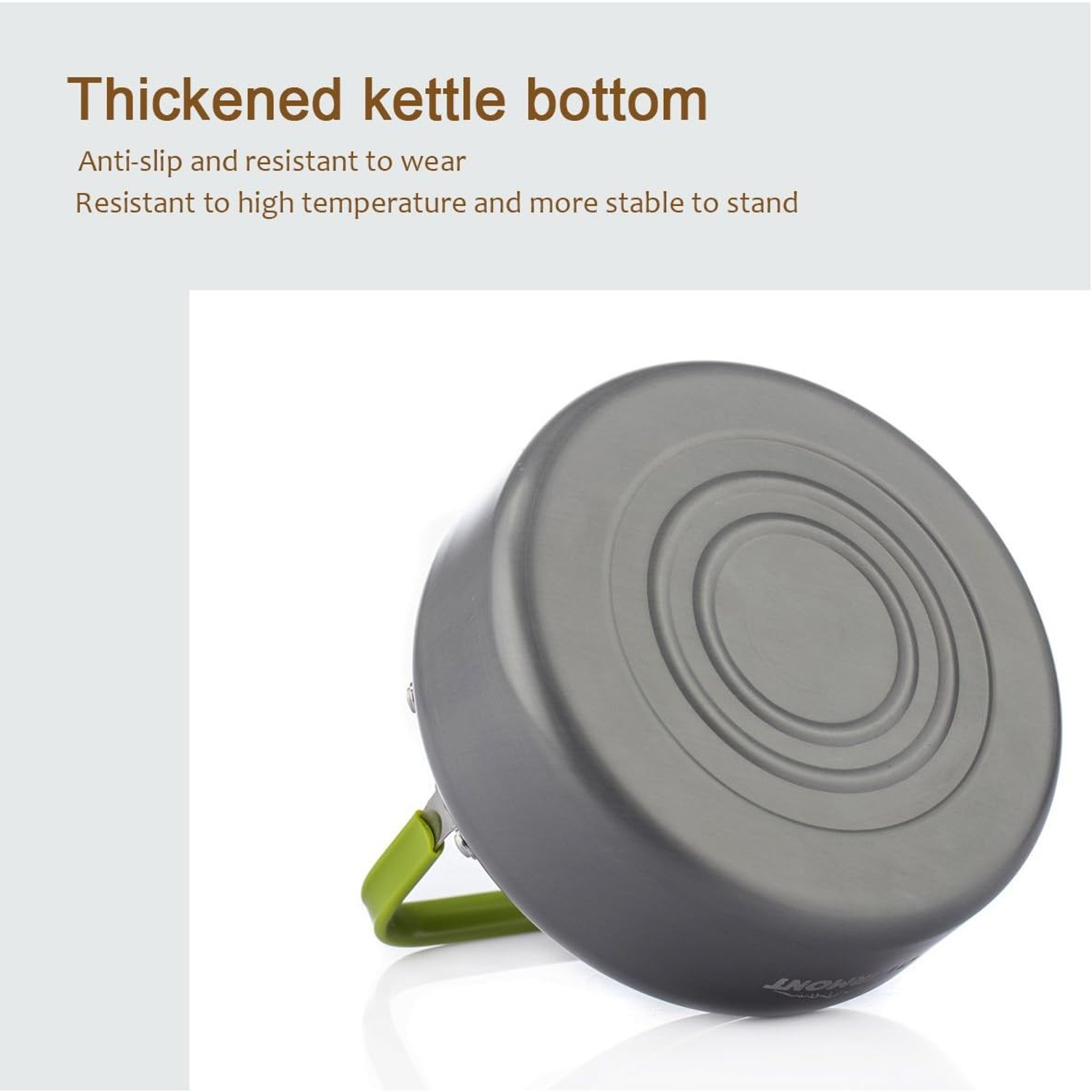
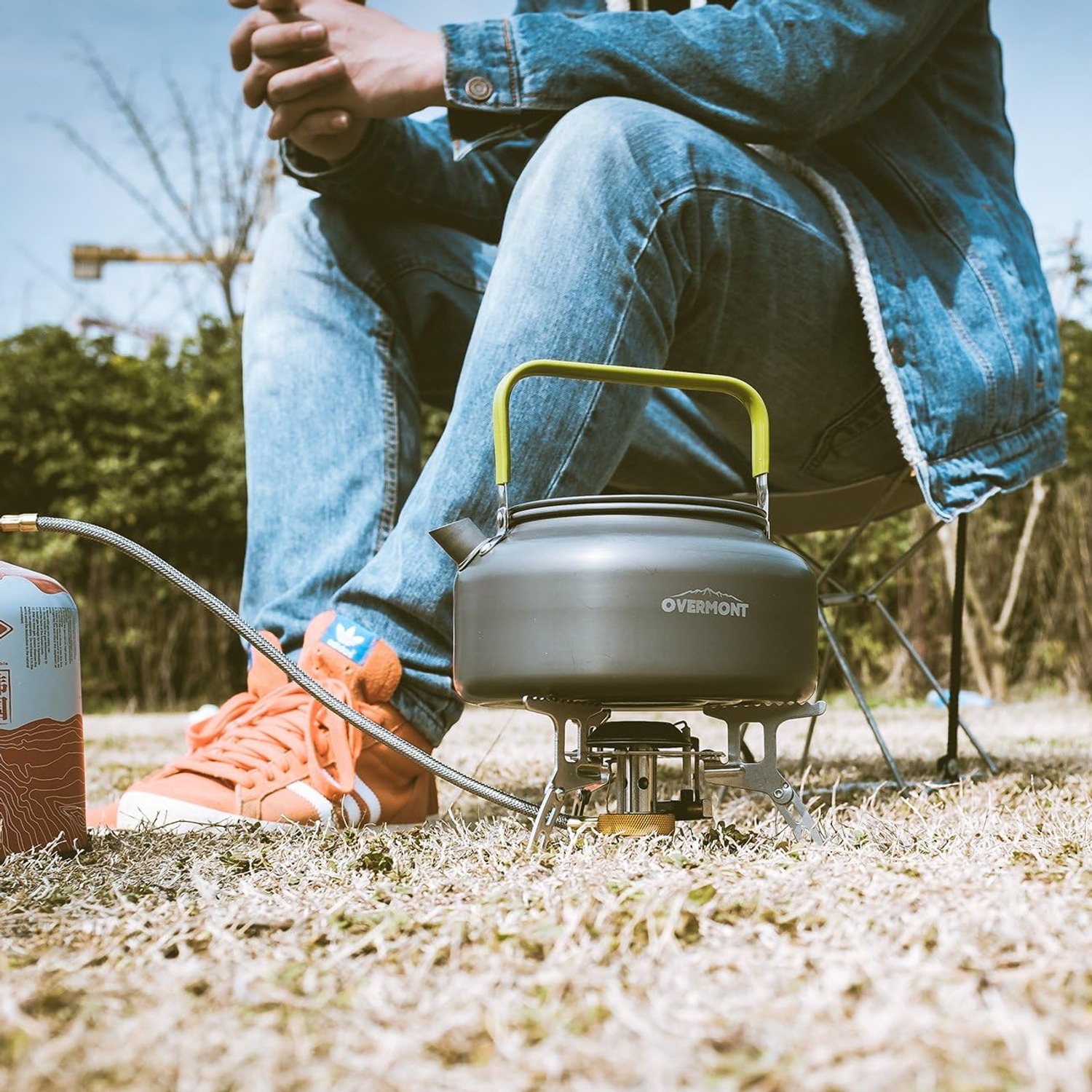
The shape is the first difference. A camp kettle has a wide, low base so heat from a burner or coals spreads across more metal at once. Heat moves into the water faster, and the kettle is less likely to tip on uneven ground. This one measures 17 cm across the base and only 10 cm tall, which is a stable footprint for a camp stove.
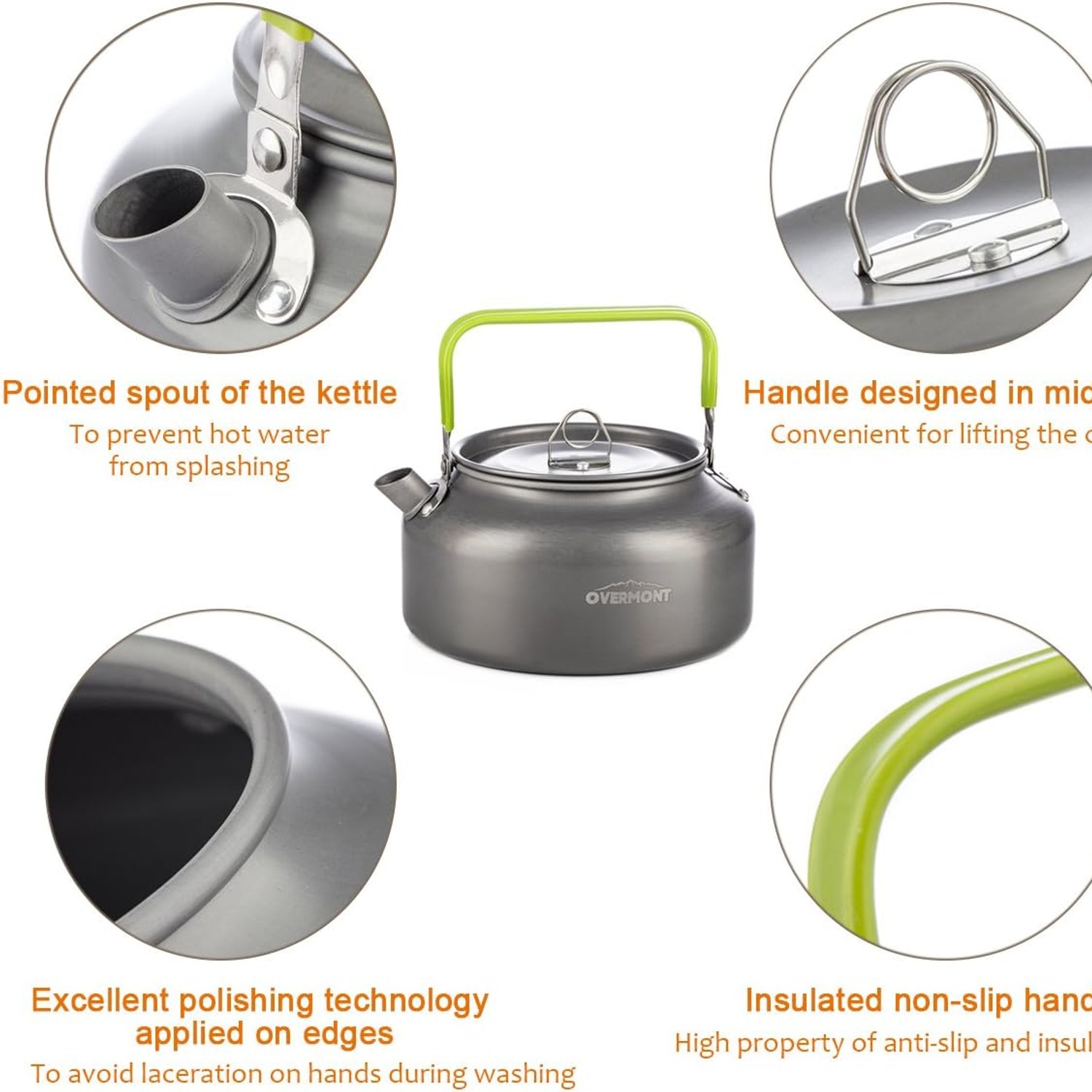
The spout is the second. Pouring from a pot means tipping the whole rim and hoping gravity behaves. A spout gives you a narrow, controlled stream that lands in a mug instead of around it. The filter included with this kettle sits in that path to catch leaves or grit.
The whistle is the third, and it is the one people appreciate most after the first trip. When water reaches a rolling boil, steam forces its way through the spout and makes a noise. You do not have to stand there watching. You can put the tent up, chop an onion, or walk back from the car, and the kettle will call you. It also saves fuel, because you are not holding the flame on longer than needed out of uncertainty.
Why aluminium
Camp kettles tend to come in aluminium, stainless steel or titanium, and each one is a trade.
Stainless steel is tough and takes abuse, but it is heavy and slower to heat. Titanium is the lightest and most expensive, and it heats unevenly, which matters more for cooking than boiling. Aluminium sits in the middle. It conducts heat quickly, which shortens boil times and saves fuel, and it is light.
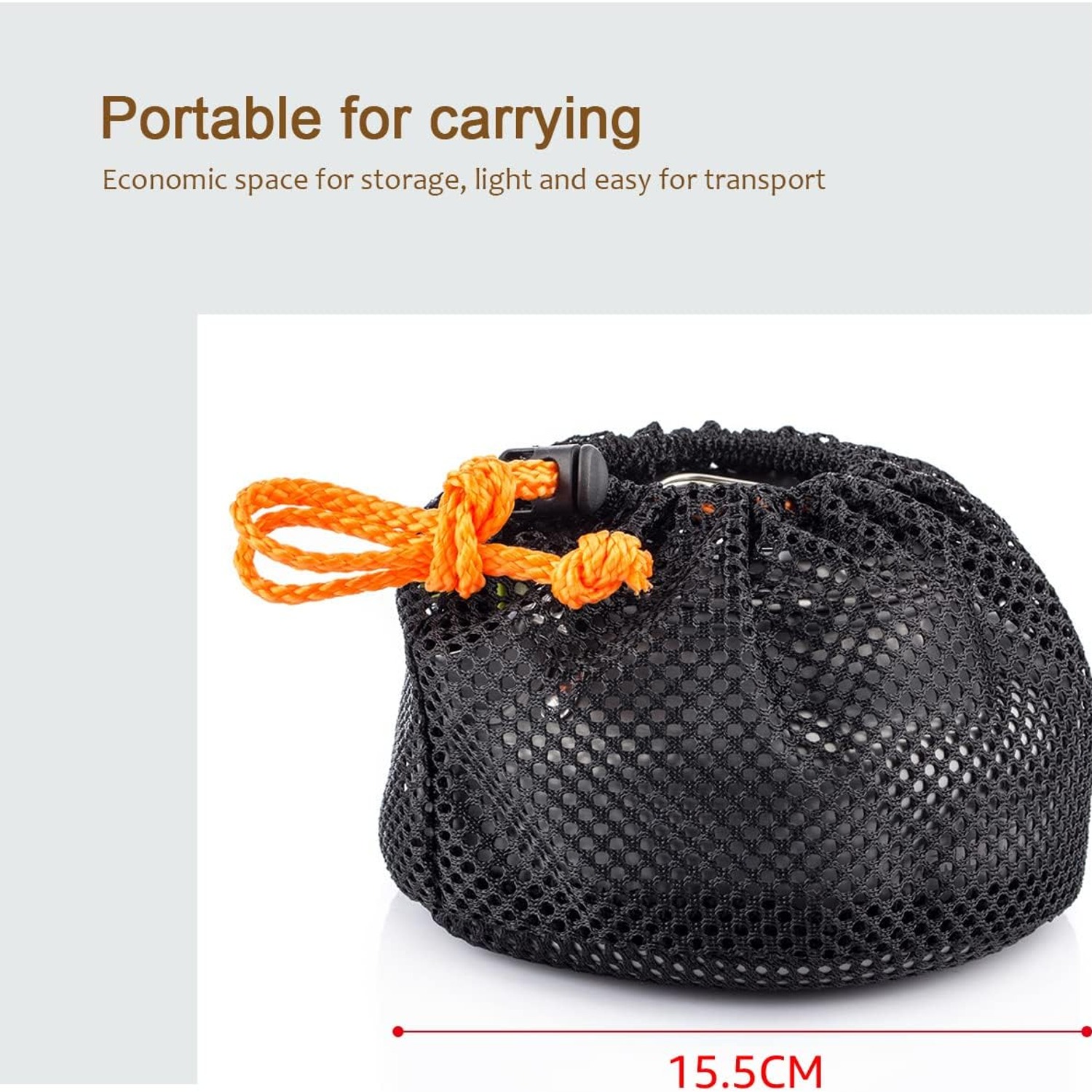
This kettle weighs 318 g. For perspective, that is less than a full water bottle. On a day hike you can clip it to a pack and forget it is there. In a car camping crate it takes up almost no weight allowance at all.
The lid here is stainless steel, which copes well with being lifted and knocked around. The handle is wrapped in silicone, which puts a softer, less conductive layer between your hand and hot metal. Treat it as hot anyway when it has been over a fire, and keep a cloth within reach.
Picking the right capacity
Capacity is where most people get it wrong, usually by going too big.
A 0.5 to 0.8 litre kettle suits a solo hiker who wants one mug and one freeze-dried meal. It boils fast and packs tiny. The catch is that any second person turns it into a two-round job.
A 1.2 litre kettle, like this one, covers two to four mugs in a single fill. That is a couple on a weekend, a small family doing hot chocolate, or one person who wants a drink and a pot of water for noodles at the same time. It still boils in a sensible time on a camp stove.
Anything above two litres starts to work against you. It is heavier empty, takes much longer to boil a full load, and burns more fuel. Unless you are catering for a scout group, that capacity sits unused most of the time.
If you are choosing between sizes, think about the most common trip you take rather than the biggest one you might take someday. The best 1.2 litre camping kettle for you is the one matched to your usual Saturday, not your once-a-year group trip.
Who this suits
Car campers get the most out of it, because weight is not a constraint and the whistle means you can run a camp kitchen without hovering.
Hikers who do overnight or weekend walks will find 318 g acceptable, especially split across two people's loads. Ultralight walkers chasing the lowest possible base weight may still prefer boiling in a titanium mug, which cuts out the kettle entirely at the cost of convenience.
Van and caravan travellers like a kettle like this as a backup for when they are not plugged into power. Four-wheel drive tourers, fishers and people with a beach setup all land in the same category. Anywhere you have heat and want hot water without complication.
It also suits people who light a fire pit in the backyard. A camp kettle on coals is a pleasant thing even when you are fifteen steps from a kitchen.
Using it well
Fill to just below the spout, not to the brim. A full-to-the-top kettle spits as it boils and you lose water down the sides.
On a gas burner, use a medium flame. Flames climbing the outside of the kettle heat air rather than water and waste fuel. Over a fire, aim for the glowing coals rather than the tall flames. Coals give steadier, more even heat and leave less soot.
Keep the lid on while heating. An open lid lets heat escape and delays the boil, and the whistle will not work properly without the lid seated.
Lift it with the handle and, if you have been over a fire, with a cloth or glove as well. Pour slowly at first to check the stream before committing.
Keeping it in good condition
This kettle is not dishwasher safe, so plan on hand washing. The good news is it takes about a minute.
Let it cool completely first. Pouring cold water into a very hot kettle is hard on the metal. Then wash inside and out with warm water, a drop of detergent and a soft cloth or sponge. Skip the steel wool. It scratches the anodised surface and gives soot somewhere to sit next time.
Outside soot from campfires is cosmetic. Scrub what comes off easily and let the rest be. Most people who cook over fires end up with a kettle that looks well used, and that is fine.
If you boil hard water a lot, a chalky film can build inside. Boil water with a splash of white vinegar, let it stand, then rinse several times until the smell is gone. Once or twice a season is plenty.
Before packing it away for a few months, dry it fully and store it with the lid off. Air needs to move through, or you will open it next season to a stale smell.
The short version
A 1.2 litre aluminium kettle is the sensible middle of the camp kettle range. It is big enough for a group of two to four, small enough to boil quickly, and at 318 g it does not fight you for space in a pack.
The whistle means you can walk away. The silicone-covered handle makes pouring less awkward. The stainless lid stands up to knocking around in a crate.
If you camp more than a couple of times a year, a dedicated kettle quietly removes one small annoyance from every single morning. That adds up faster than you would think.