
The complete guide
How To Choose A Family Camping Tent That Actually Fits Everyone
The problem nobody warns you about
Tent capacity numbers are not really about comfort. They are a measurement of how many adult bodies can lie flat on the floor touching each other, with no gear. A six person rating means six mats, edge to edge, and that is it. Nothing for boots, nothing for the daypacks, nothing for the cool box you dragged in because it was raining.
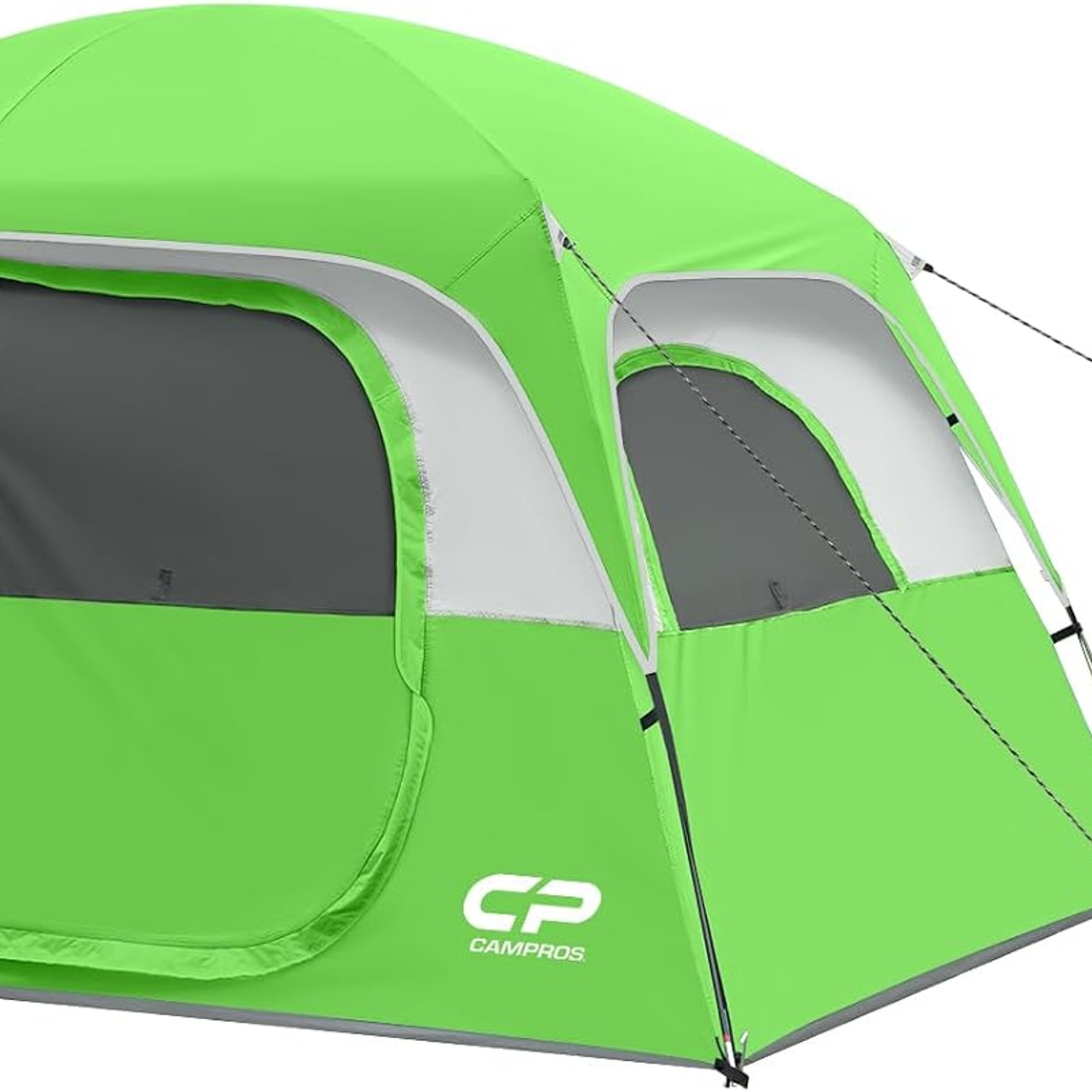
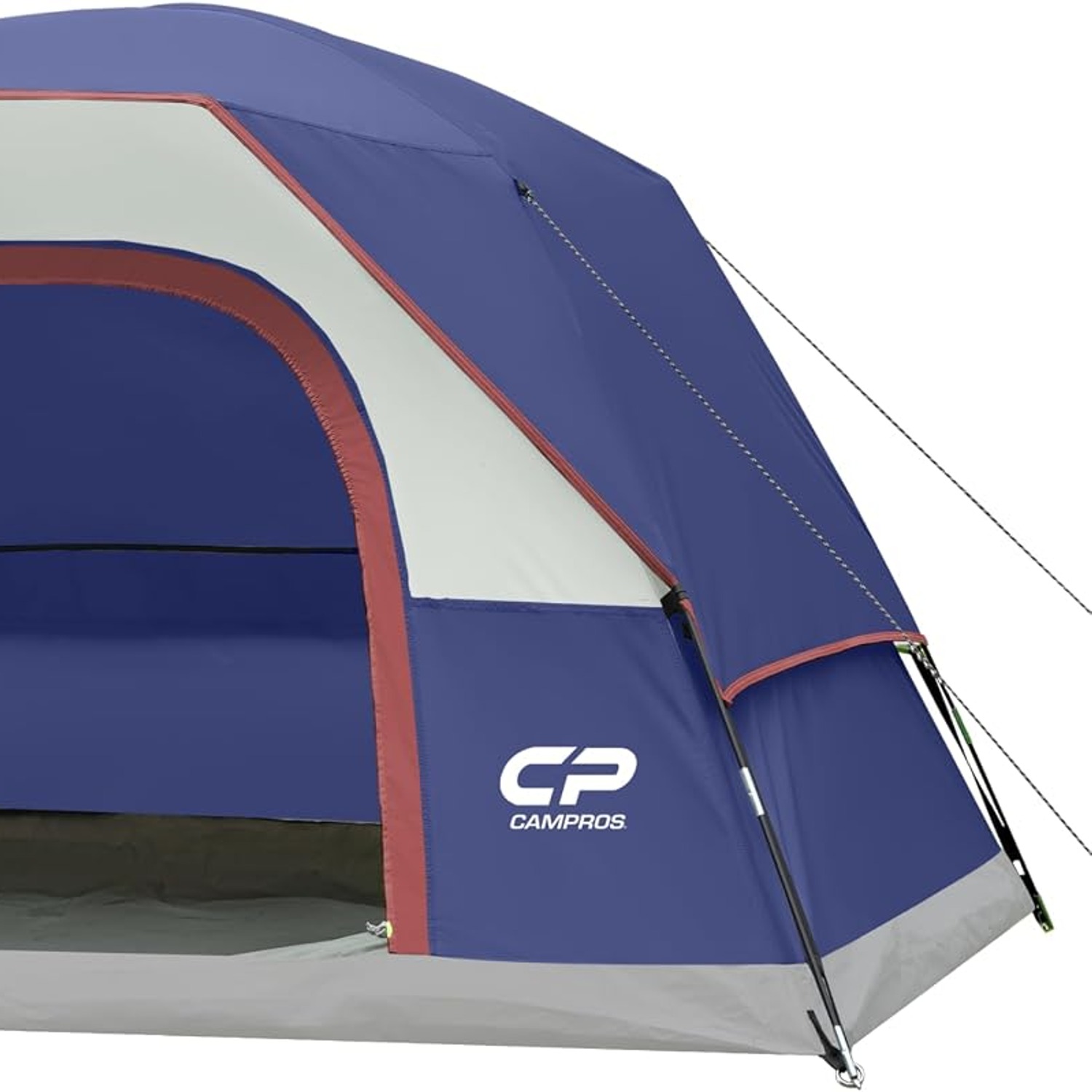
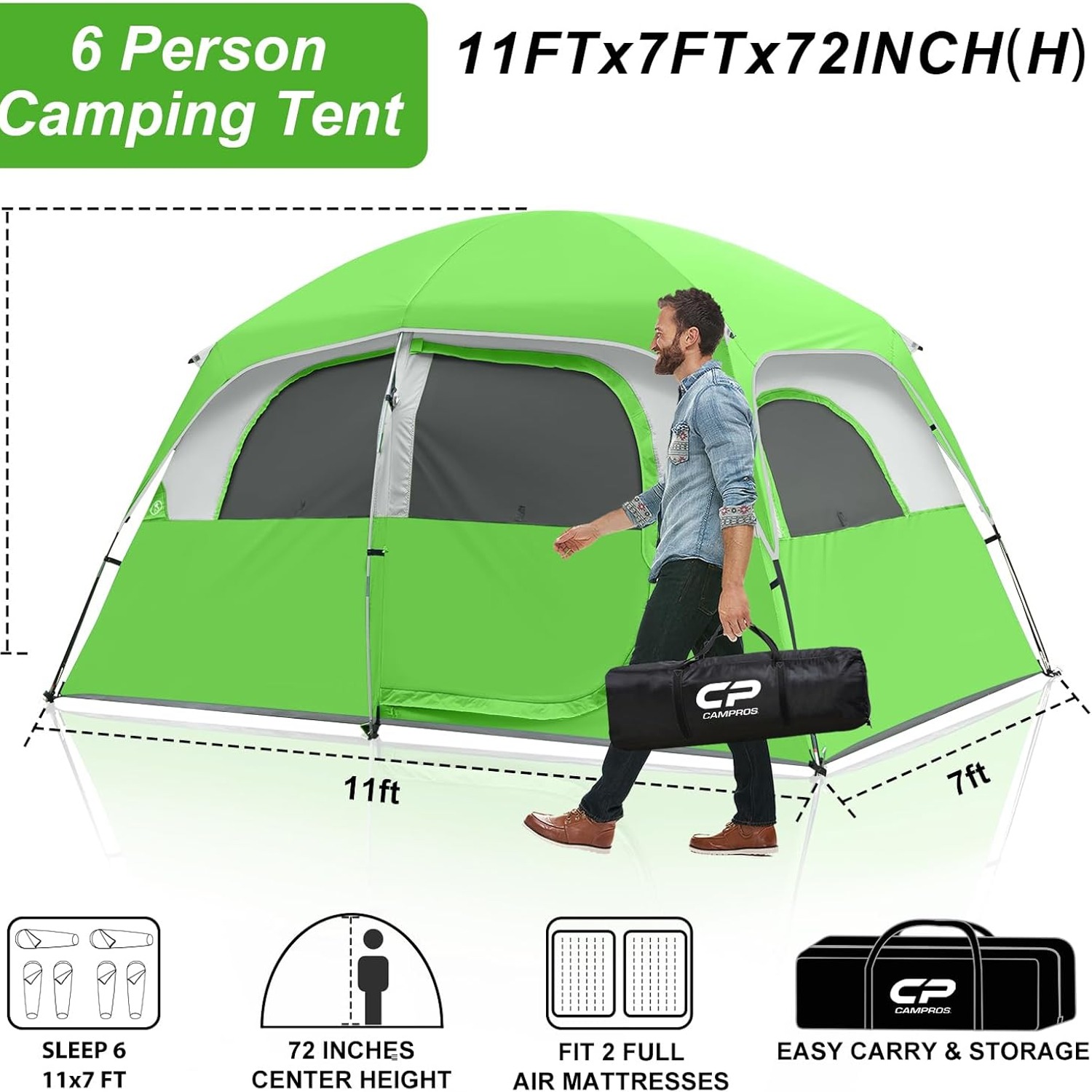
So the first rule of buying a family camping tent is to size up. If there are four of you, look at six person tents. If there are six of you, you are probably looking at eight, unless everyone travels light and nobody minds a tight night. This CAMPROS CP model gives you a 3.35 metre by 2.13 metre floor, which is 77 square feet. That is genuinely generous for four people with all their stuff, and workable for six if the gear lives in the car.
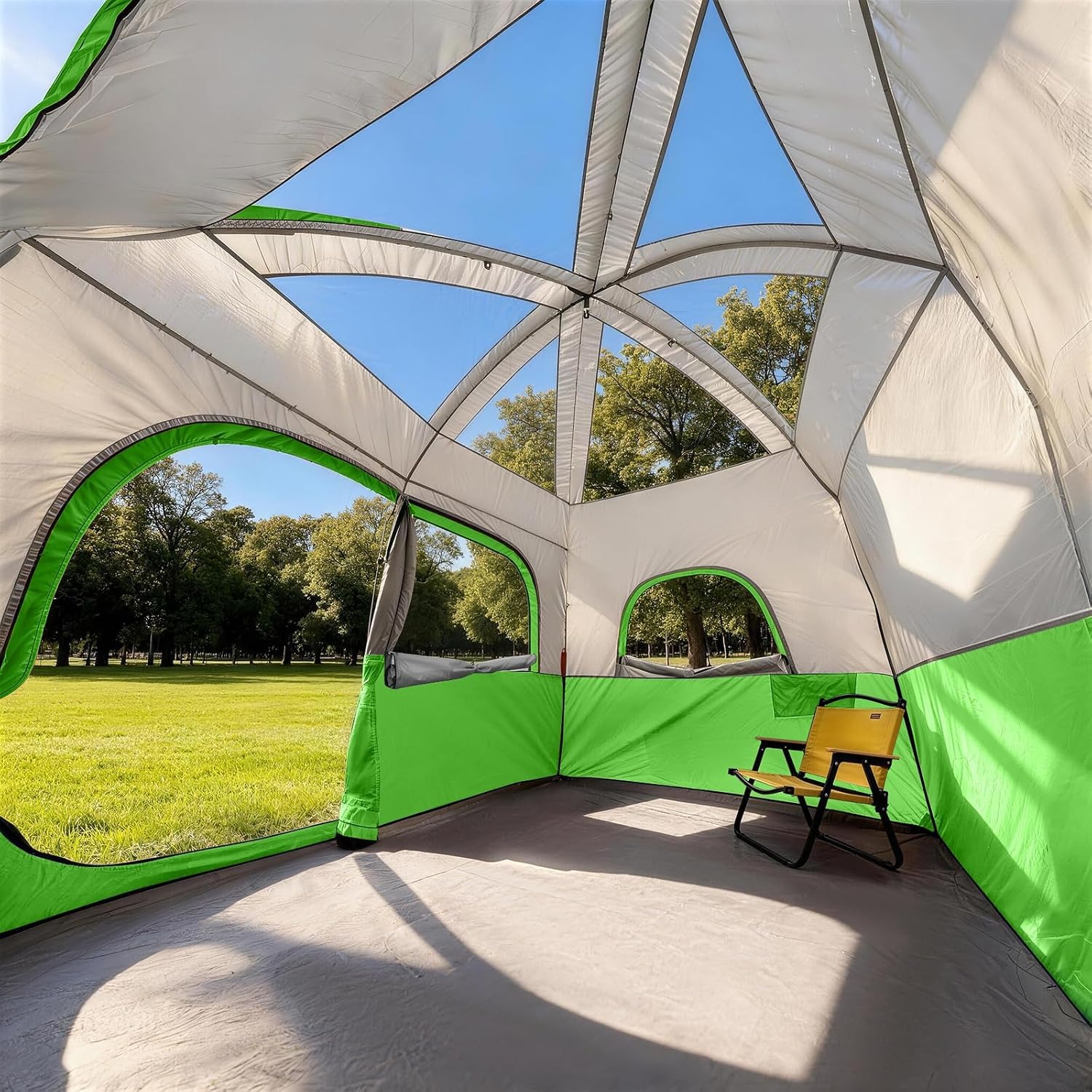
The second thing people underestimate is height. A low dome tent is fine for sleeping and awful for everything else. Changing clothes, sorting bags, waiting out a shower, all of it is miserable when you cannot straighten your back. The 1.83 metre peak here means most adults stand up in the middle. On a wet afternoon when the whole family is inside playing cards, that extra headroom is the difference between a nice memory and a bad one.
How a cabin tent works
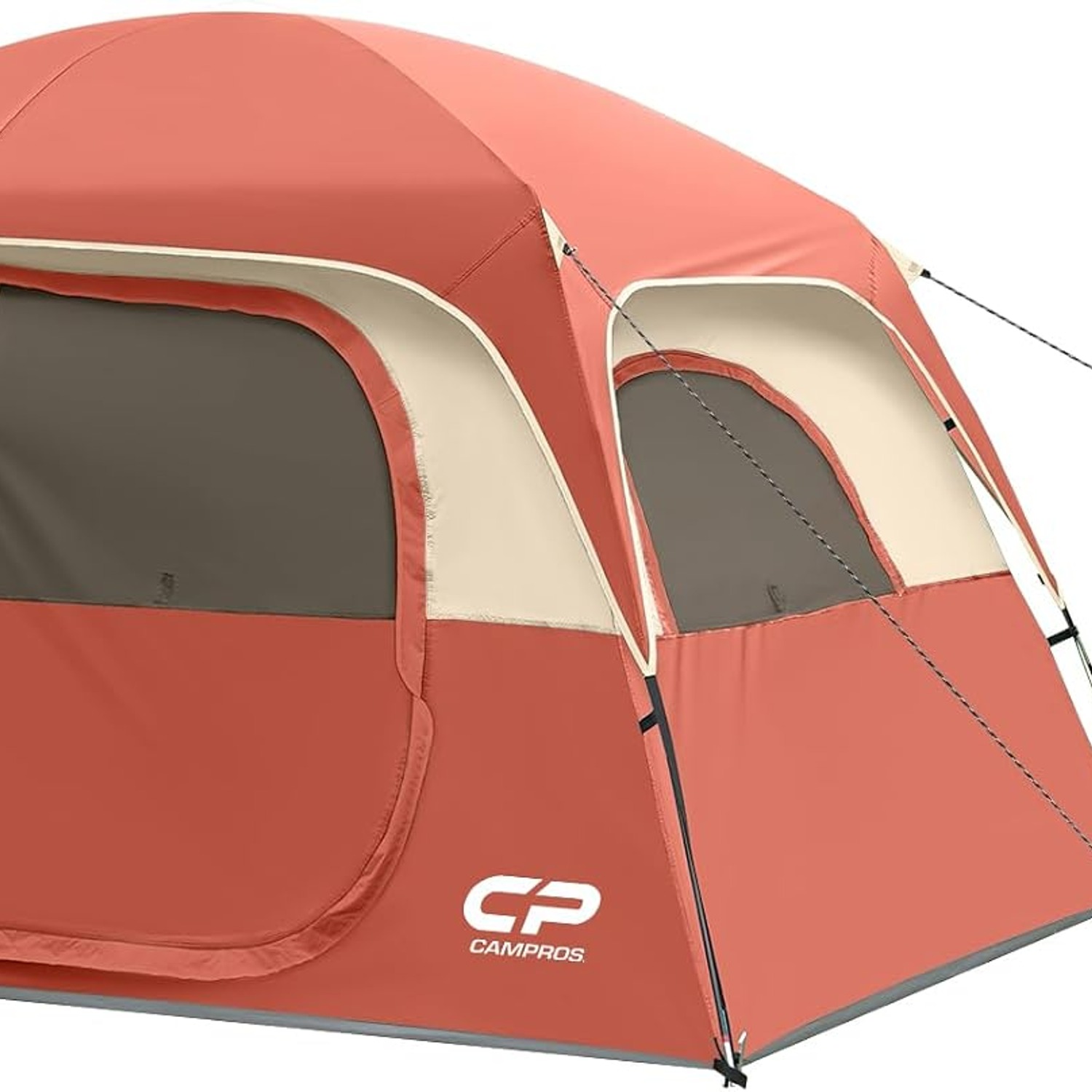
Dome tents curve in from the base, which sheds wind nicely but steals usable floor space. Cabin tents push the walls closer to vertical, so the floor area you paid for is actually floor area you can use. The trade-off is that more upright walls catch more wind, which is why guying out matters more.
This one uses four alloy steel poles that feed through fabric sleeves rather than clipping onto the outside. Sleeves are a little slower to thread, but they spread the tension across a wider band of fabric instead of concentrating it at clip points. Over a few seasons that tends to mean less stress on the seams.
It is free standing, which is one of those features you do not appreciate until you need it. You can build the whole frame on a hard pad, a wooden platform or a tarp, and then pick the tent up and move it. Everyone who has pitched a tent, climbed inside, and found a fist-sized rock under their hip knows exactly why that matters.
Weather and the 1000mm number
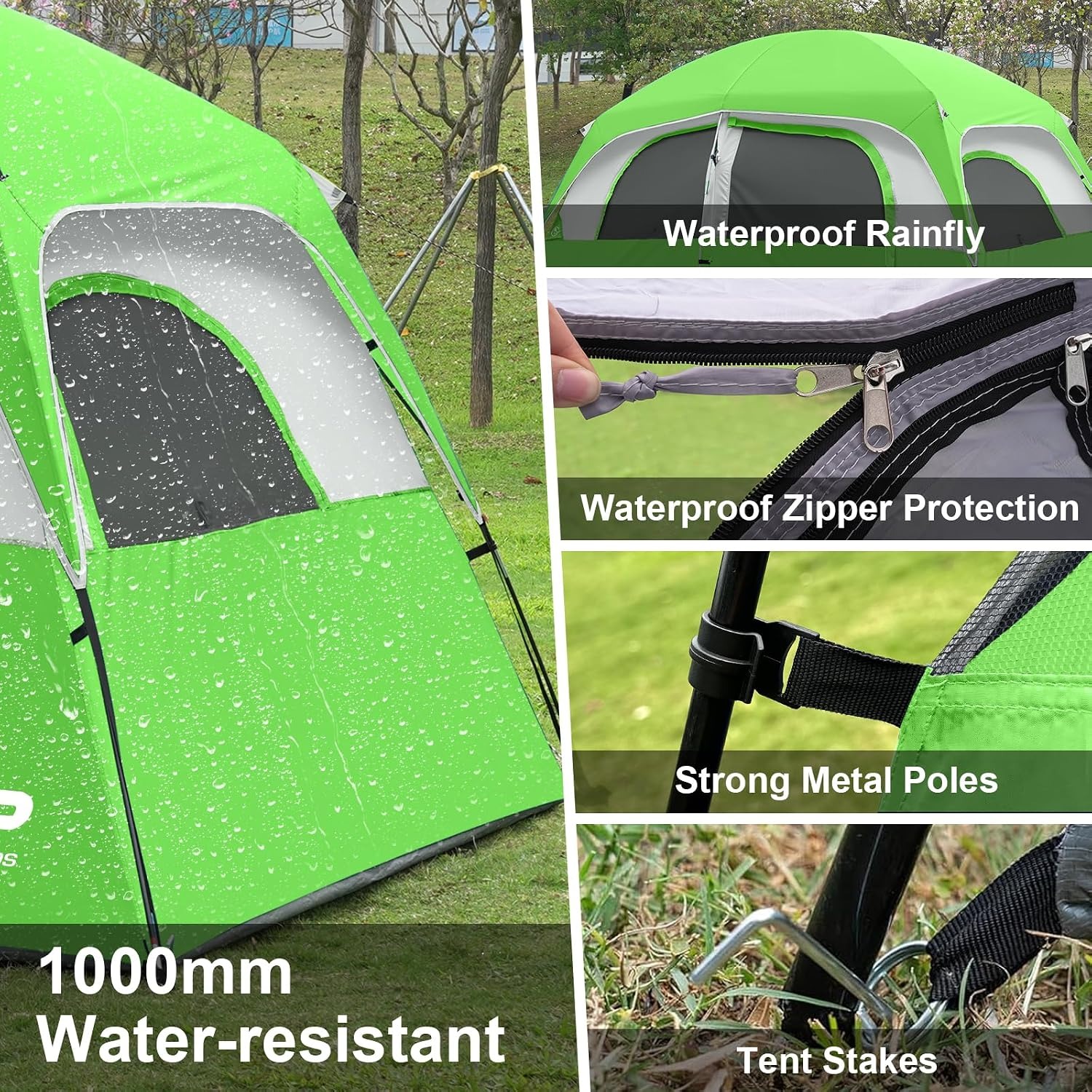
Water resistance on tents is measured as a hydrostatic head in millimetres. It describes how tall a column of water the fabric can hold back before it starts to seep. This tent is rated at 1000 mm, and it ships with a removable 185T polyester rainfly.
For normal camping rain, that is fine. What causes most "my tent leaked" complaints is rarely the fabric itself. It is water pooling on a sagging rainfly, condensation misread as a leak, or a tent pitched in a dip where ground water collects. Three habits fix nearly all of it. Pitch on ground that slopes slightly or drains well. Keep the fly taut so water runs off instead of sitting. Put a groundsheet under the floor.
Condensation deserves its own mention. Every person in a tent breathes out moisture all night. In a sealed tent that moisture lands on the inside of the walls and drips. The four mesh windows here exist precisely for this. Even in cool weather, cracking two windows on opposite sides lets damp air escape. It feels wrong to open a window when it is cold outside, but a dry tent at 7am is worth it.
Who this tent suits
Car campers and caravan park families, mostly. At 6.1 kg packed it is easy to lift into a boot and carry to a pitch, but it is not a hiking tent and it would be unkind to suggest otherwise. If you drive to your site, this is a good fit.
It also works for festivals, school holiday trips, beach camping and anyone who wants a spare shelter for visiting relatives in the back garden. Groups of friends sharing a tent get on well with the single open room, because you are not crawling through a divider in the dark. Scout leaders and youth group organisers often go for this kind of layout for the same reason.
Who it does not suit: hikers, anyone expecting serious winter conditions, and people who want separate sleeping compartments. It is one room with one door. That simplicity is a feature for some buyers and a dealbreaker for others, so be honest with yourself about which group you are in.
Choosing between tents
When you are comparing options, a few numbers tell you most of what you need.
Floor area per person is the first. Divide the square footage by the number of real sleepers. Anything above 15 square feet each is comfortable for car camping. This tent gives roughly 19 square feet each for four people.
Peak height is second. Under 1.5 metres and you are crouching. Around 1.8 metres and you can stand.
Pole material comes third. Fibreglass is cheap and snaps in cold weather. Steel, as used here, is heavier but tough. Aluminium is light and expensive. For a drive-up tent, steel is a sensible middle ground.
Last, count the doors and windows. One door is fine for a group that goes to bed at the same time. Four windows is a good ventilation count for this size.
Setting it up well
Pick your spot before you unroll anything. Look for level ground, check for sharp stones and sticks, and avoid the lowest point of the field. Look up too, because dead branches above a tent are a genuine hazard in wind.
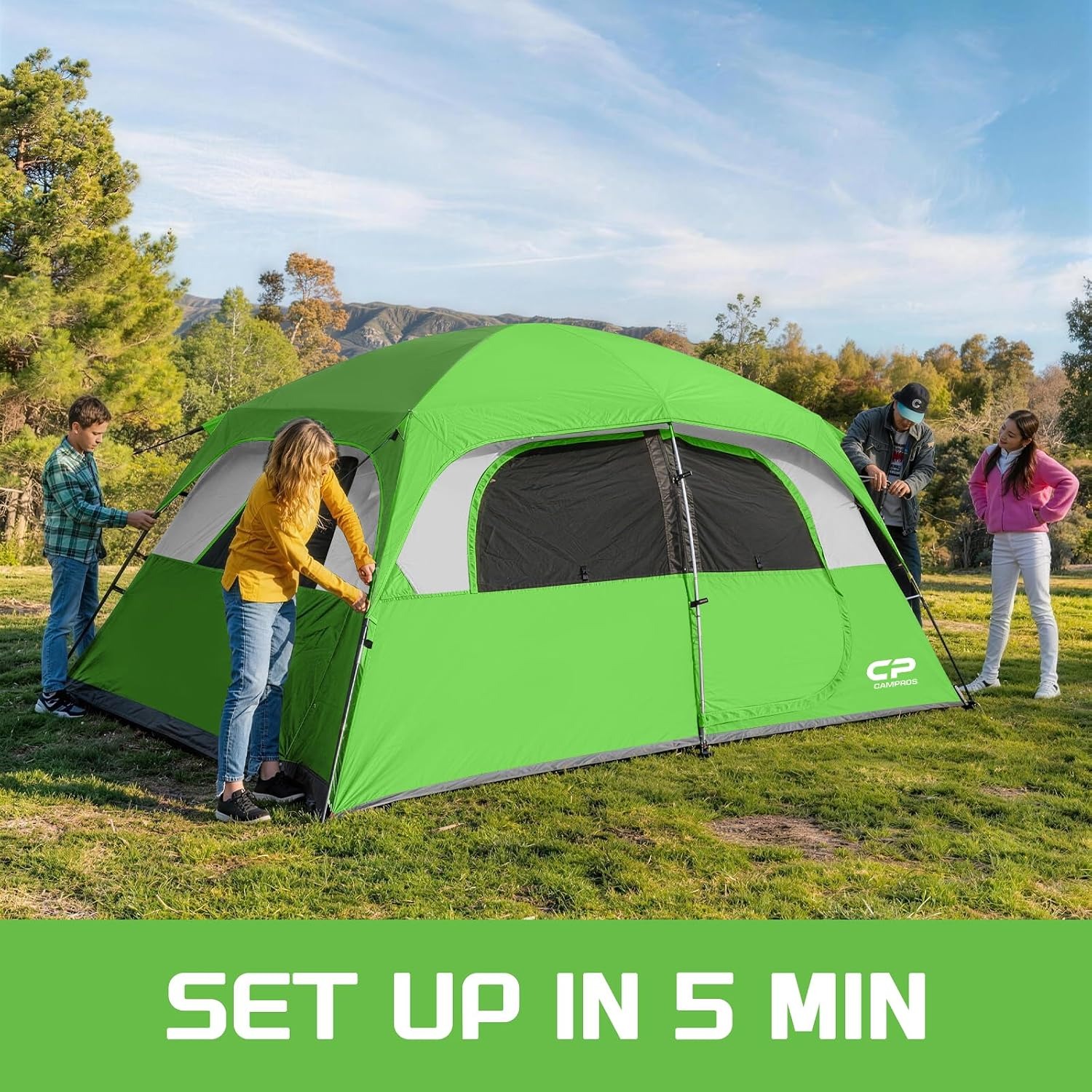
Lay the groundsheet down first, then the tent floor on top of it. Thread the poles through the sleeves one at a time rather than trying to do two at once. Raise the frame, stake the corners, then fit the rainfly and finally run out the four guylines.
Guylines are the step people skip, and they should not. They take ninety seconds and they are the difference between a stable tent and one that flexes alarmingly at 3am. Angle your stakes away from the tent at roughly 45 degrees so they bite into the soil instead of pulling straight out.
Care that makes it last
Hand wash only. Cool water, a soft sponge, mild soap that is not a detergent, then a thorough rinse. Washing machines destroy tent coatings and seams, and tumble dryers are worse.
The single most important habit is drying. Never pack a damp tent away for more than a day. If you break camp in the rain, that is sometimes unavoidable, so get it out and hang it over a line or across a couple of chairs as soon as you are home. Mildew sets into polyester fast and the smell does not come out.
Between trips, shake the grit out of the floor, wipe the zips clean and check the stakes for rust. Store the whole lot somewhere cool and dry. Garages are fine if they are not damp. Lofts get hot, which is harder on coatings over years.
The short version
This is a cabin-shaped six person tent with a 77 square foot floor, a 1.83 metre peak and a 185T polyester build with a removable rainfly. It pitches in about ten minutes, stands on its own without stakes, and packs down to 6.1 kg in a carry bag. Four mesh windows handle airflow, four guylines and four stakes handle the wind.
Buy it if you drive to your campsite, want room to stand up, and would rather have one big open space than a divided layout. Look elsewhere if you need to carry your shelter on your back or you camp in serious winter weather. For family weekends, festivals and holiday trips, it covers what most people actually need.