

The complete guide
How To Choose A Camping Pillow That Actually Helps You Sleep
The problem with sleeping outdoors
Almost nobody sleeps badly outdoors because of the ground. Modern sleeping mats handle that well enough. What wrecks a night in a tent is usually the head and neck. You lie down, your ear presses into a lumpy pile of spare clothes, your neck angles slightly off, and three hours later you are awake and annoyed and convinced you are just "not a camping person".
You probably are. You just do not have a pillow.
The reason people skip one is simple. A proper pillow is bulky, and pack space is precious. So the compromise everyone makes is to use something they already carry, which is almost always worse than it sounds. A stuff sack of clothes squashes flat within twenty minutes. A rolled jacket slides out from under your head. Neither holds a shape, and shape is the entire point.
A compressible camping pillow fixes that by giving you something that packs like a jacket and behaves like a pillow.
How a compressible pillow works
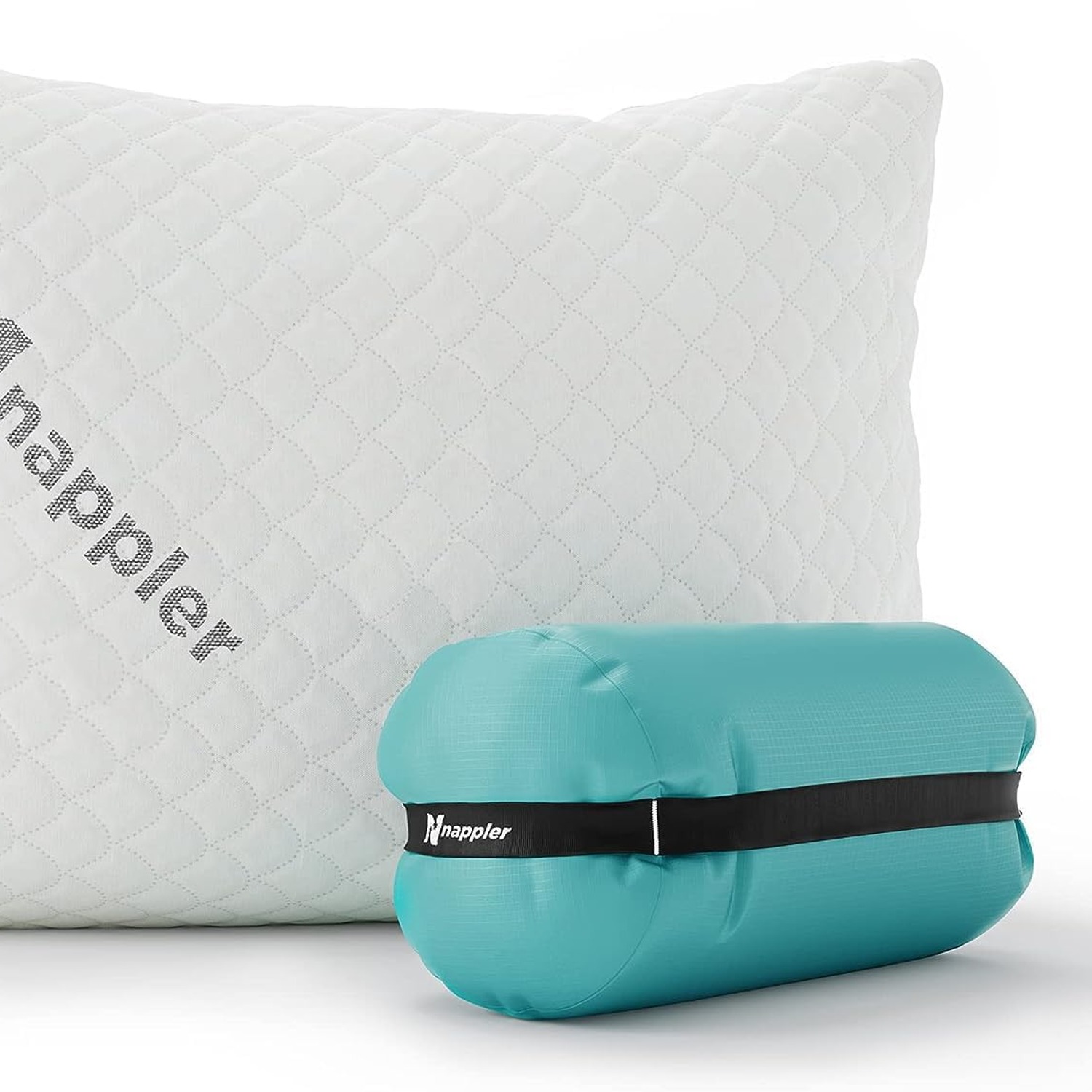
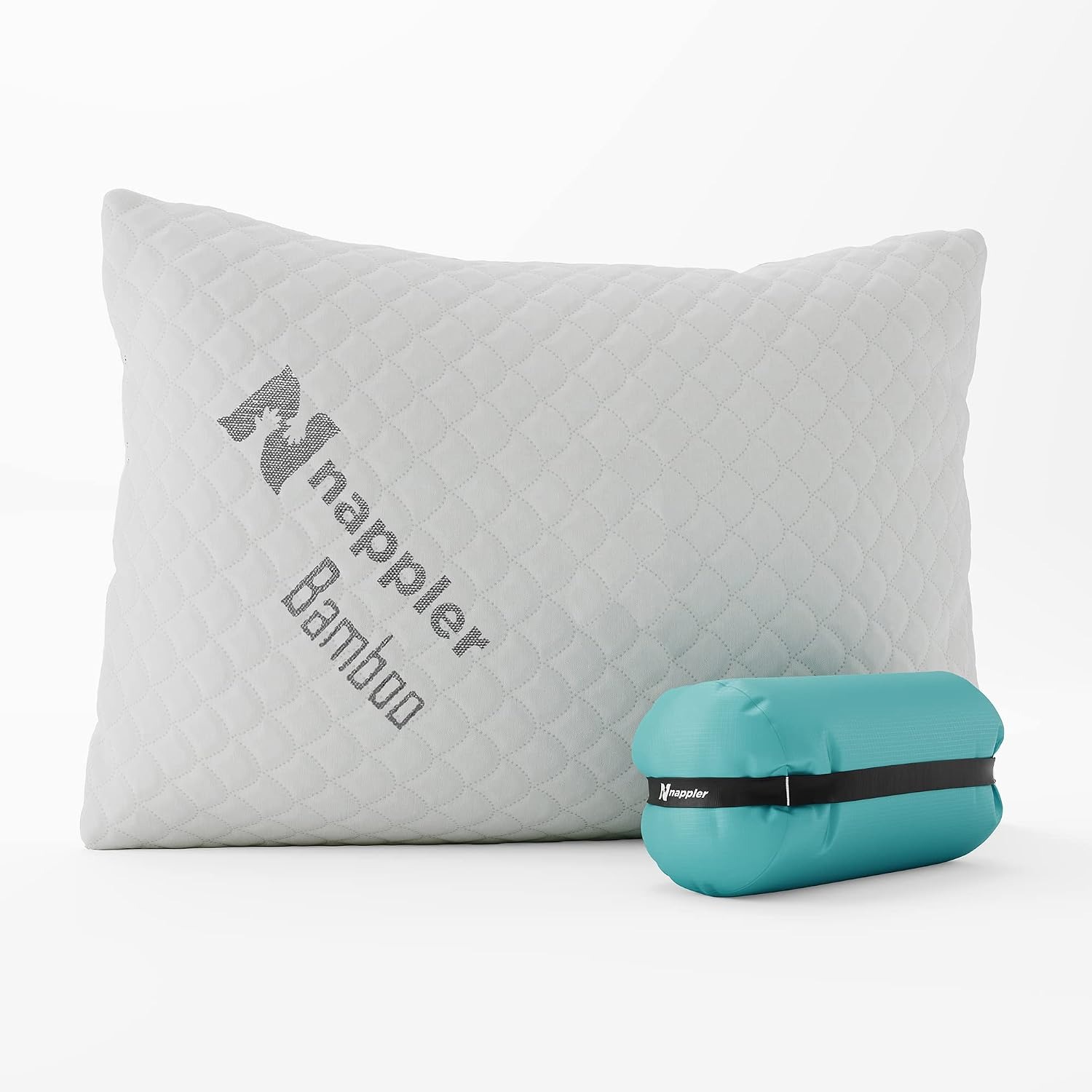
The trick is the fill. Instead of a solid slab of foam, which cannot be squashed into anything useful, this pillow uses shredded memory foam. Thousands of small pieces, loose inside the cover.
Loose pieces do two jobs at once. First, they trap air between them, and that air can be pushed out. Press down on the pillow, roll it up, slide it into the carry case, and the whole thing shrinks. Release it and the foam pulls air back in and opens out again. That is the compressible part.
Second, loose pieces move. You can push the fill to one side if you sleep on your side and need more height under your ear. You can flatten it out if you sleep on your back. You can bunch it under your neck if you are reading in a camp chair. A fixed pillow gives you one loft and you either get on with it or you do not. A shredded fill lets you tune it every night.
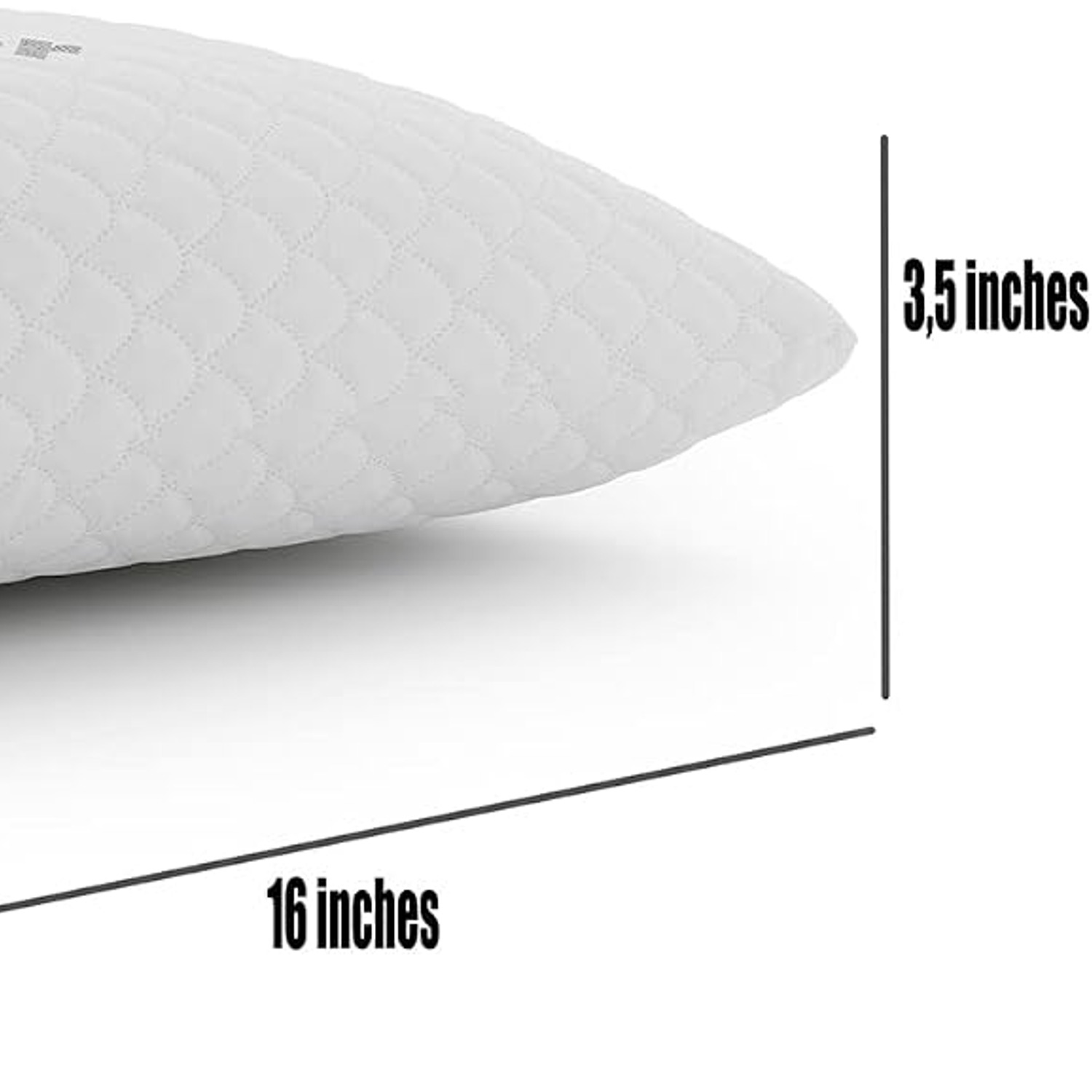
This one measures 48.3 by 33 cm when open, which is a medium size. Bigger than a neck pillow, smaller than the pillow on your bed. On a standard sleeping mat it covers the head area without hanging off the edges.
Weight, and why it matters less than people think
The shipping weight is 0.23 kg. In pack terms that is almost nothing. For comparison, a single apple weighs more.
People counting grams for long thru hikes will still choose an inflatable, and that is a fair call. Inflatables can get under 100 g. But for most trips, weekend camping, car camping, van trips, festivals, flights, the difference between 100 g and 230 g is irrelevant, and the difference in how it feels under your head is significant. Air pillows are bouncy and a bit squeaky. Foam feels like home.
If you are choosing the best lightweight camping pillow for general use rather than record breaking distances, foam is usually the smarter pick.
Heat, sweat and airflow
Here is the honest downside of memory foam. It holds warmth. Sleep on a sealed foam pillow in a warm tent and by 2am your cheek is damp and you are flipping it over looking for a cool side that does not exist.
This design addresses that with ventilation holes running through the pillow so air can move rather than sit trapped in the foam. The cover is a 35% viscose and 65% polyester blend, which breathes better than a plain plastic backed fabric.
It will not turn a 30 degree night into a cool one. Nothing will. But it does keep the surface from becoming a heat trap, and in shoulder season camping, which is when most of us actually go, that is enough.
Who it suits
Think about where you will really use it, not just where you imagine using it.
Tent campers get the most obvious benefit, because a tent is where bad pillow improvisation causes the most damage. Van and campervan sleepers like it because it packs away during the day when the bed becomes a bench. Road trippers use the snap loop to clip it to a headrest, which stops it sliding into the footwell every time you brake.
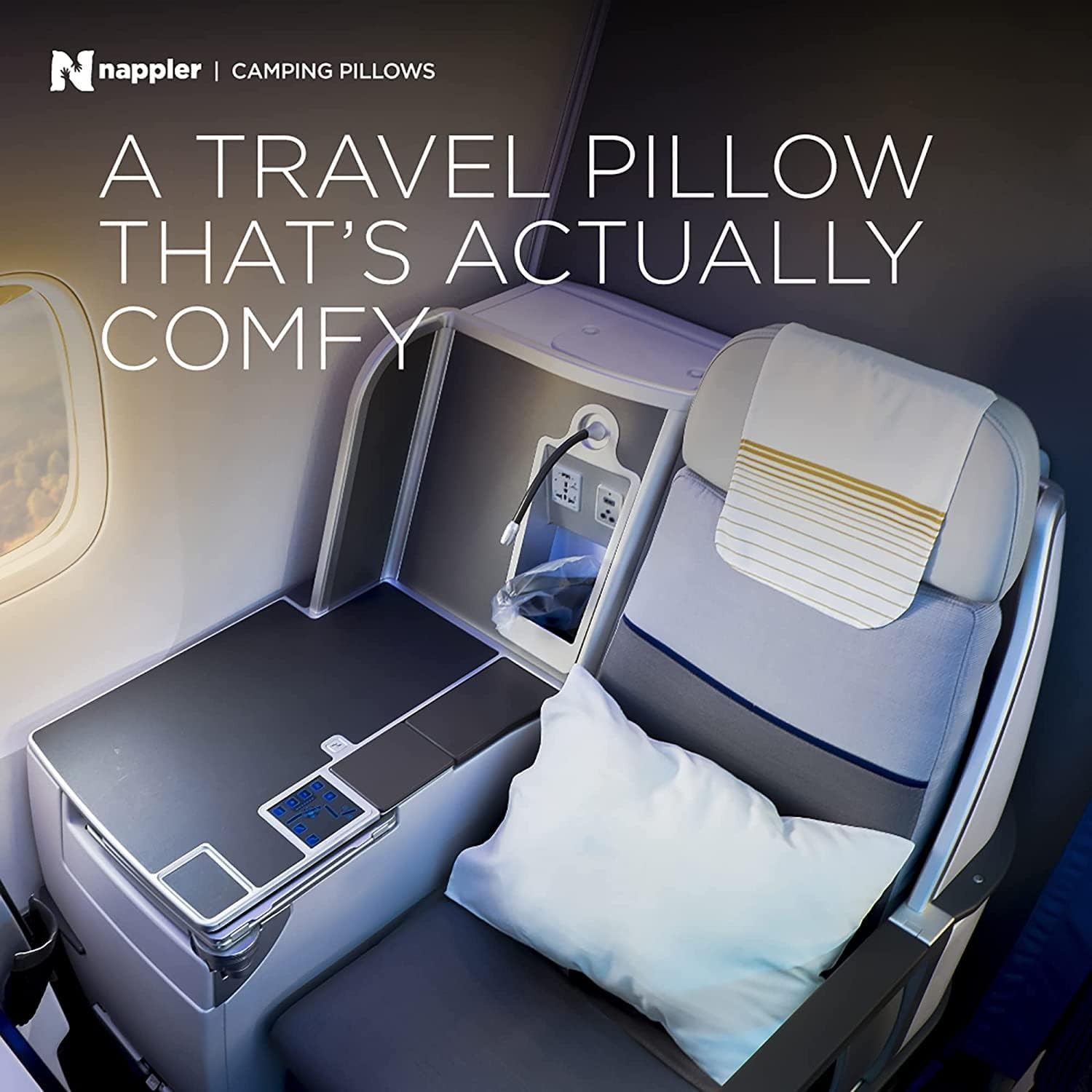
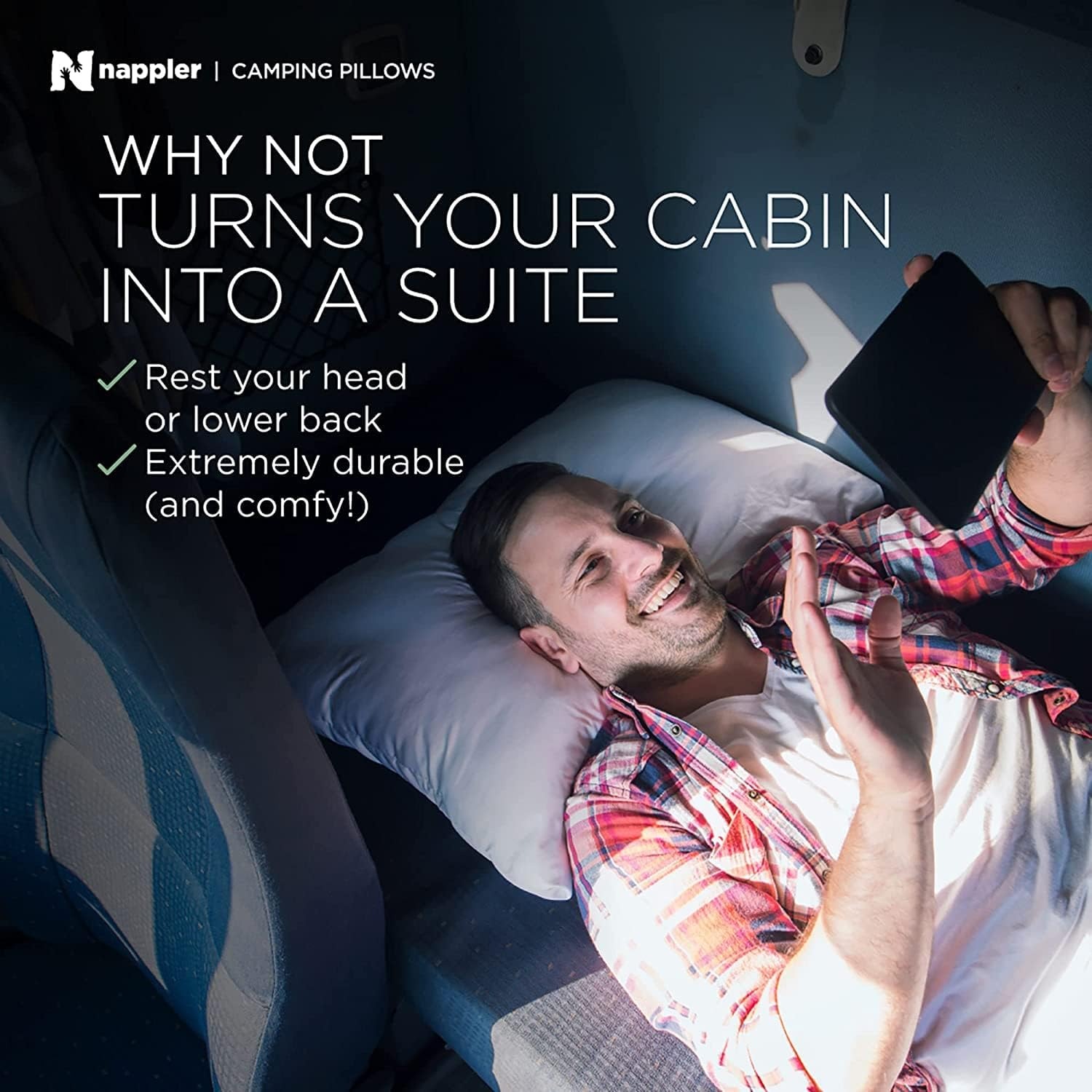
Flyers can use it, with one caveat. This is a rectangular pillow, not a U shaped neck pillow. It is excellent wedged between your head and a window or tucked behind your lower back. It will not hold your head upright in a middle seat on its own. If you want the best travel pillow for flights specifically in an upright position, a neck shape does that job better. If you want one pillow that works on the plane and then in the hostel, this is the more useful item.
It also quietly works as a guest pillow, a sofa pillow and a kid's sleepover pillow. Age range is listed as adult, but a medium size is perfectly fine for an older child in a tent.
Choosing your loft and firmness
Firmness here is medium firm, which is the sensible default.
Side sleepers need the most height, because the gap between your shoulder and your head is the largest. Bunch the fill toward the middle, and if you are on a thick mat you may still want a folded fleece underneath for a bit of extra lift.
Back sleepers want less. Spread the fill evenly and press the centre down slightly so your chin is not pushed toward your chest.
Front sleepers want the least of all. Flatten it right out. Honestly, front sleepers often do fine with the pillow placed under the chest rather than the head.
The useful habit is to adjust it before you get in the bag, not after. Lying down and then reaching around to push foam about tends to end in a worse arrangement than you started with.
Care, and the one rule that matters
The single most important thing to know is this. The cover washes. The foam does not.
Take the cover off and put it in the machine on a normal cycle, then air dry it. That handles sunscreen, campfire smoke, hair oil and general trail grime, which is most of what a pillow collects.
The shredded memory foam fill must stay out of both the washing machine and the dryer. Water saturates the foam and takes days to leave, and dryer heat permanently damages the structure. If the inner gets marked, wipe it with a damp cloth and a little mild detergent, then let it dry fully in the open air before you put the cover back on.
Between trips, store it loose rather than squashed in the case. Foam that spends months under compression loses some of its bounce. A shelf in a cupboard is fine. Only pack it down when you are actually leaving.
Small details that earn their place
The carry case is not just packaging. It keeps the pillow compressed in your pack and, more usefully, keeps it clean. A white pillow loose in a backpack with boots and a stove picks up marks fast.
The snap loop on the back sounds like a gimmick until you use it. Clipped to a pack strap, the pillow stops being something you dig for. Clipped to a car headrest, it stays where you left it. It is the kind of small design decision that comes from someone actually using the thing.
The short version
If you camp, drive, fly or sleep anywhere that is not your own bed, a packable pillow is one of the cheapest upgrades to how you feel the next morning.
This one gives you shredded memory foam for real support, a medium firm feel you can adjust by hand, a 48.3 by 33 cm size that suits most adults, ventilation holes for airflow, a washable cover for after the trip, and a 0.23 kg weight that nobody will complain about carrying. Wash the cover, keep the foam dry, store it loose, and it will see you through plenty of seasons.
Sleep is the thing that decides whether a trip was great or merely survived. Worth packing a pillow for.