
The complete guide
How to Choose a Camping Sleeping Pad That Actually Lets You Sleep
The real reason camping sleep is bad
Ask around a campsite in the morning and you will hear the same complaints. Sore hip. Cold back. Woke up at 3am and never really got back under. Most people blame the tent, the noise or the fact that they are "just not a camper". Usually it is the mat.
The ground does two things to you overnight. It presses back hard on whatever part of you sticks out most, which is your hip if you sleep on your side and your shoulder blades if you sleep on your back. And it pulls heat straight out of your body, because packed earth is a very efficient heat sink and your sleeping bag squashes flat underneath you, losing most of its loft and most of its insulating power.
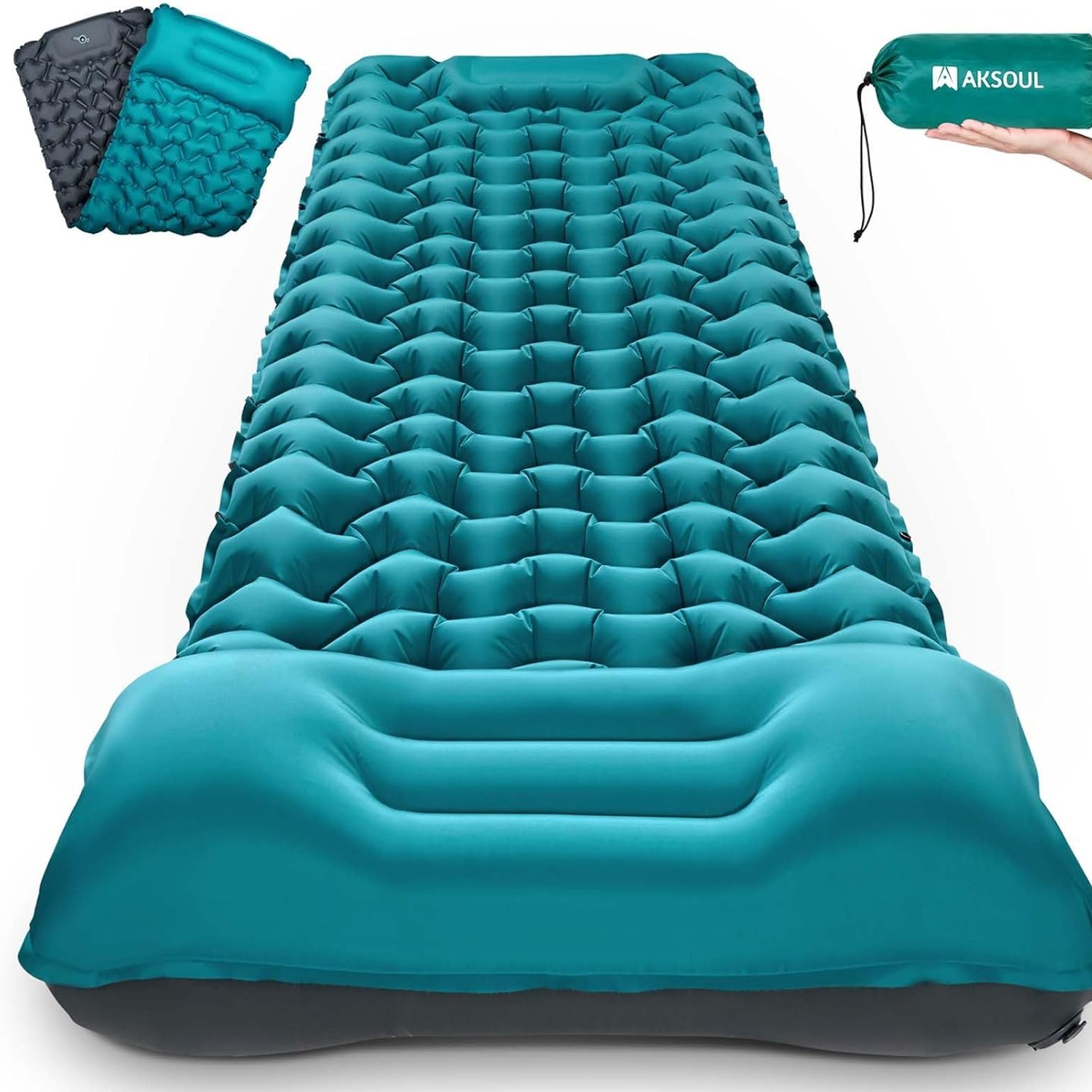
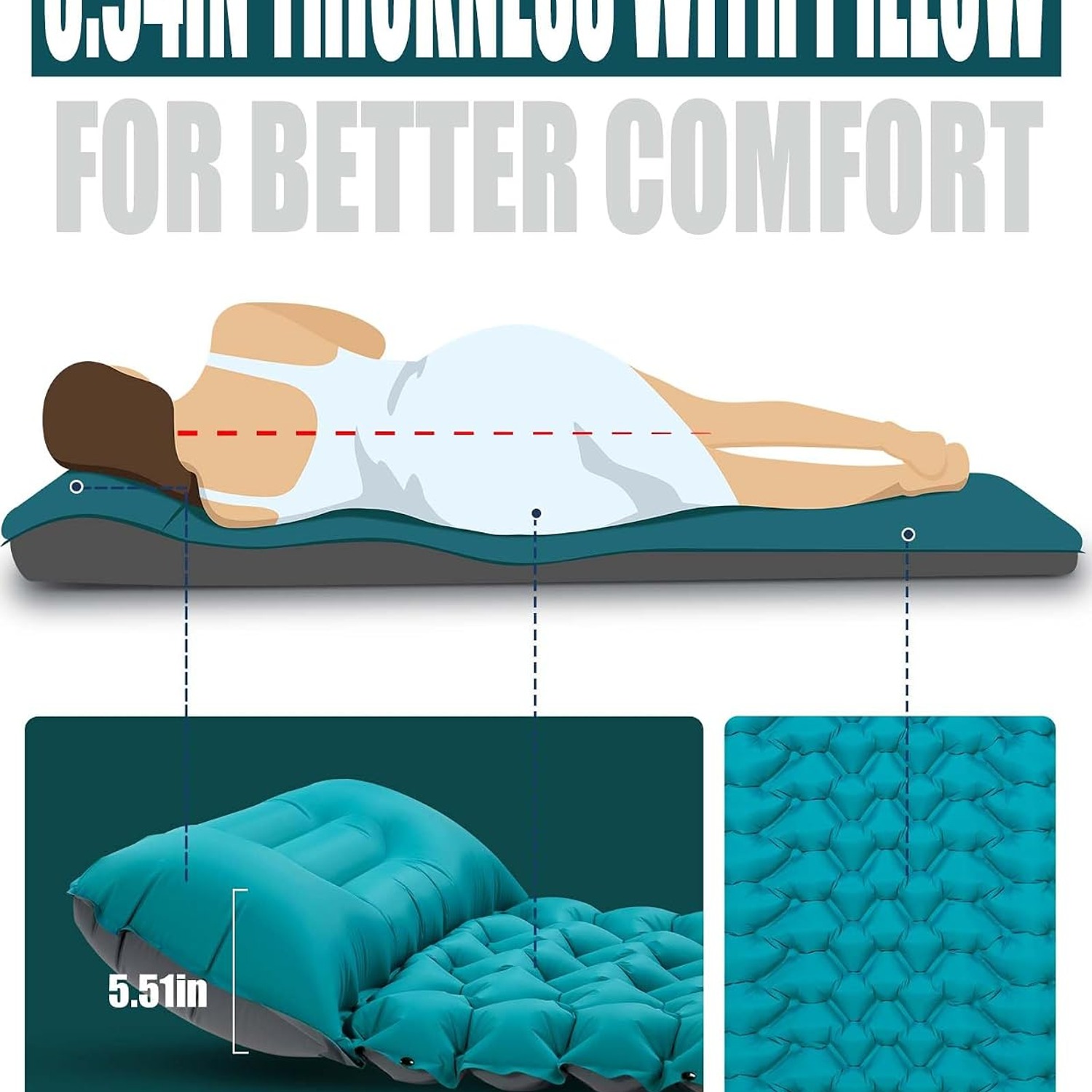
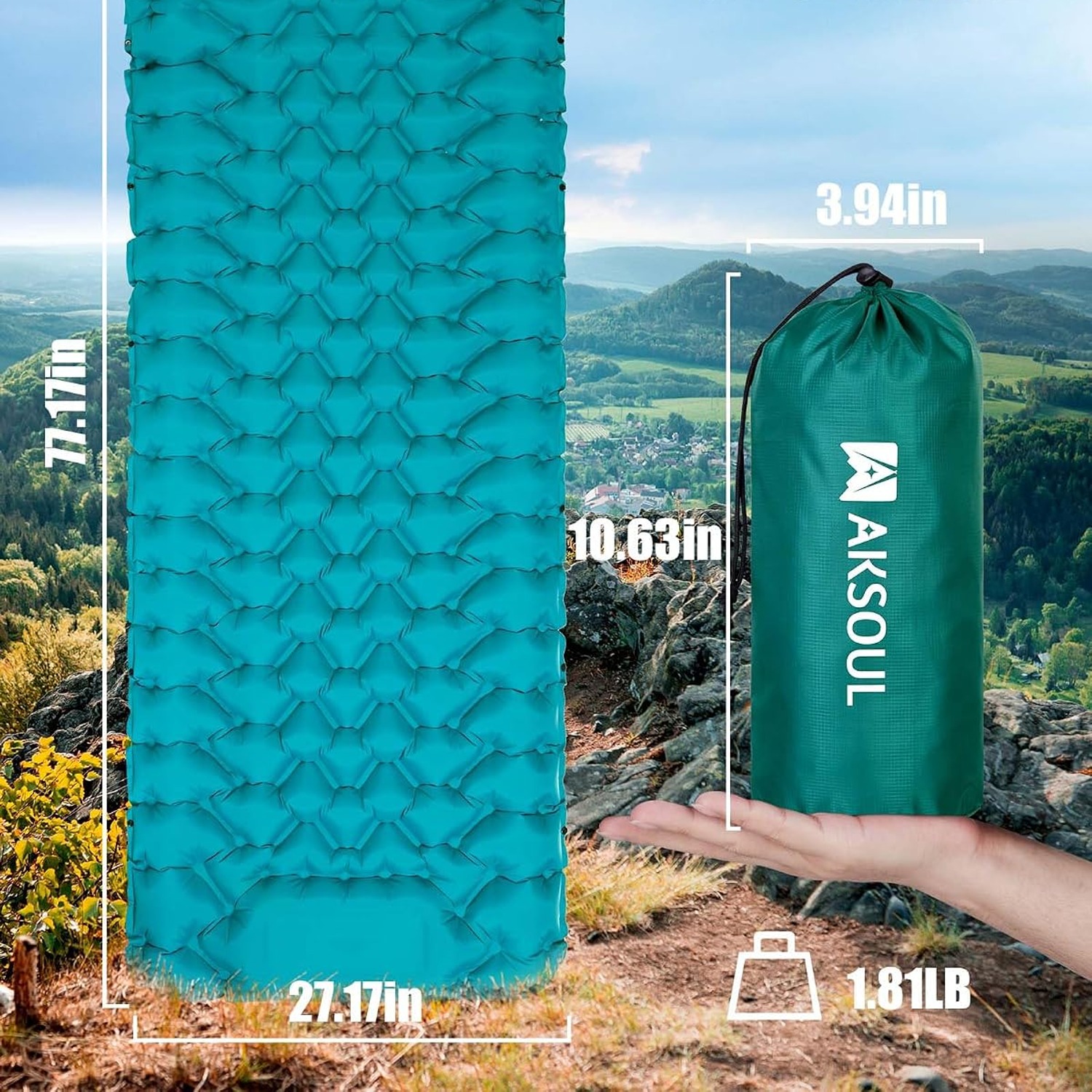
A thick camping sleeping pad fixes both problems at once. Nearly 10cm of air gives your hip somewhere to go. It also puts a buffer between your body and cold ground. This particular pad is 9.9cm thick inflated, measures 195.8 x 68.8 cm, and weighs 850 grams packed, which is the sort of balance most people are after when they go looking for the best camping sleeping pad that is still carryable.
How an inflatable camping mat works
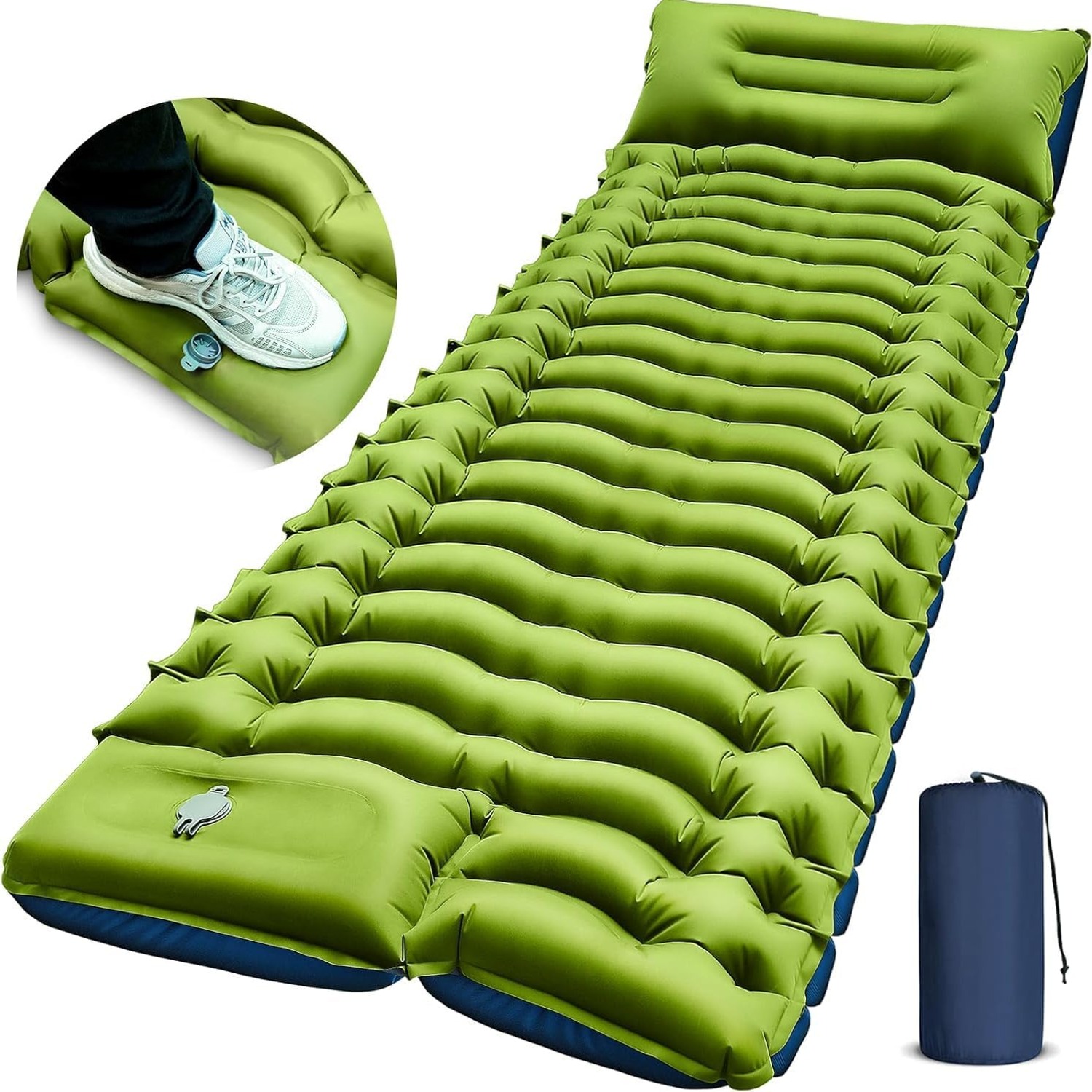
The construction here is airbed style, built in two layers with a nylon cover and top surface. Air is the fill, so the firmness is genuinely in your control. Pump it tight and it behaves like a firm bed. Let a bit out and it cradles you, which is what most side sleepers end up doing after the first night.
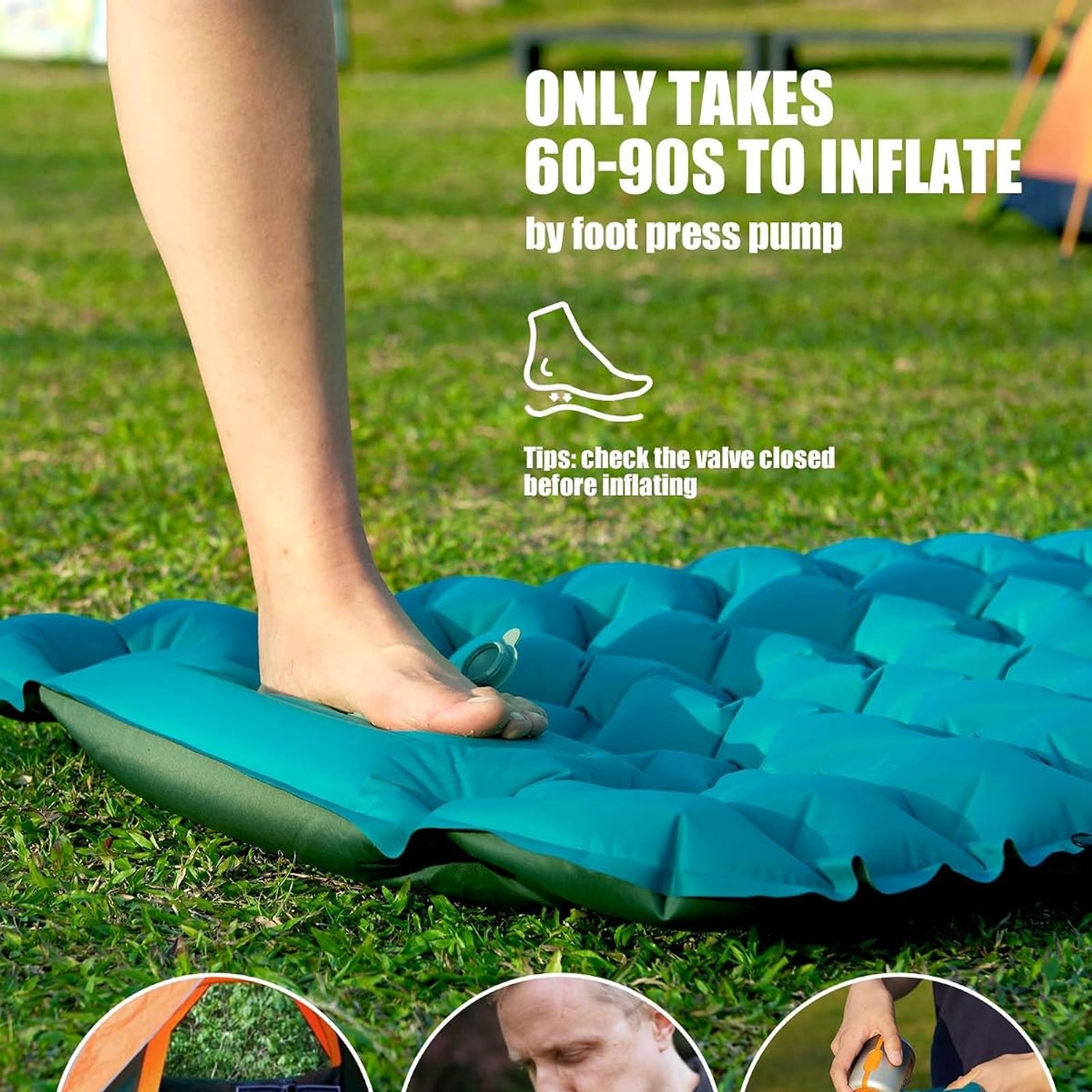
The clever part is the built-in foot pump. On a lot of inflatable mats you either blow the thing up by mouth, which gets you lightheaded and introduces moist breath into the chambers, or you carry a separate hand pump that takes up space and is the first thing you forget to pack. Here you stand and stomp. It fills quickly, you are not kneeling in the mud, and there is no accessory to lose.
The pillow is built into the design too. That sounds like a small thing until you realise how often camping pillows get left in the car, inflated badly, or substituted with a rolled-up fleece that slides out from under your head twenty minutes after you lie down. One fewer item, one fewer problem.
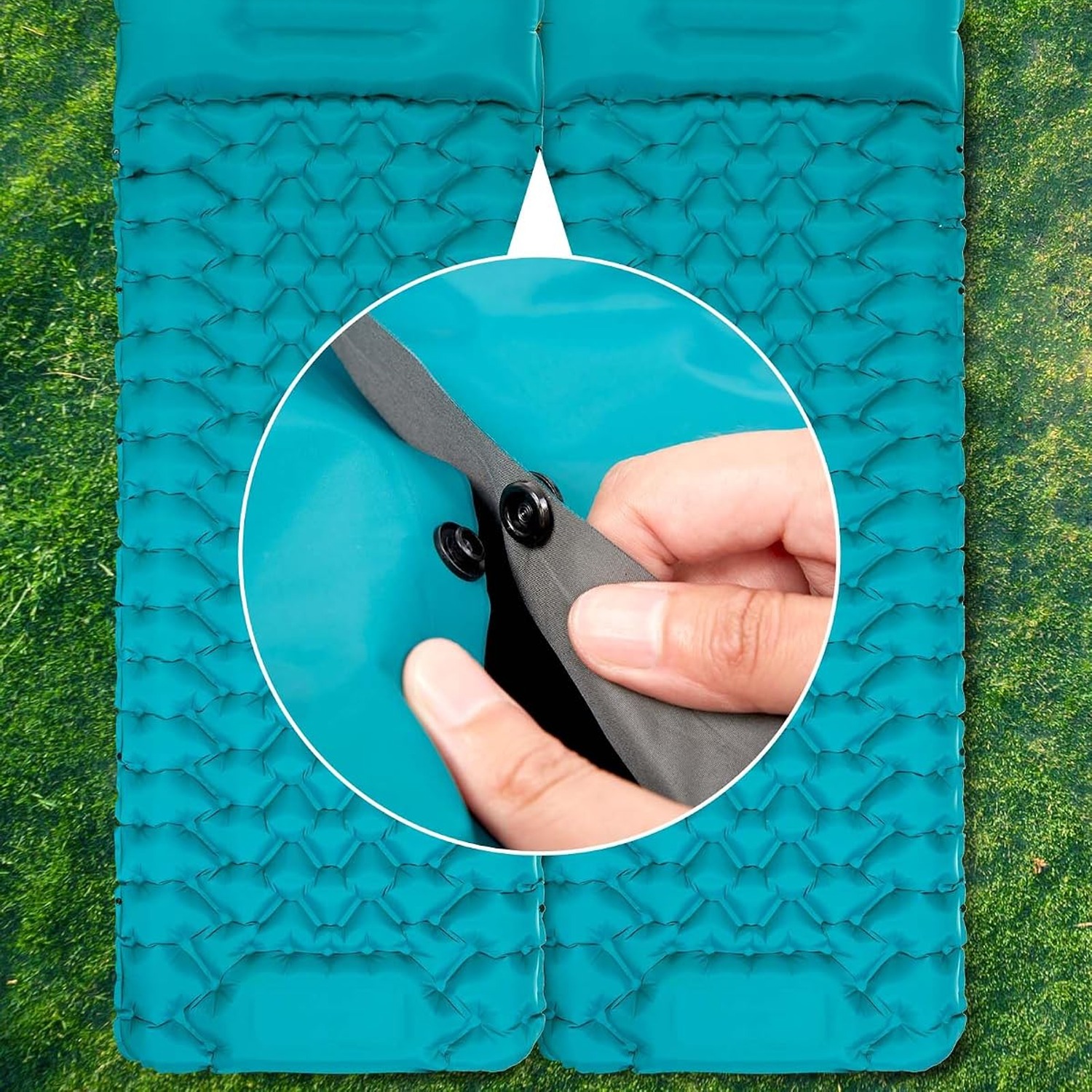
Then there are the snaps along the sides. Two pads clip together into a wide, stable double surface. Anyone who has shared a tent with two loose mats knows the drift problem, where you wake up in the gap between them at 2am with cold air on your back. Snapping them together solves that properly, and it is a big part of why people shopping for the best double camping sleeping pad look for connectable designs.
Who this pad suits
Car campers get the easiest win. There is no weight penalty worth worrying about, the pad goes up in under a minute, and you get close to indoor comfort on a campsite.
Hikers and backpackers should weigh it up. At 850 grams it is light by general camping standards, and it is light enough for a weekend walk-in or a hut trip. Ultralight through-hikers counting every gram may want something smaller, but for most weekend trips it is a sensible carry.
Side sleepers are the group who notice the biggest change. Thin mats are brutal on hips, and the plush firmness plus the depth here is exactly what that body position needs. Anyone who has given up on tents because of back pain is also worth including, though if pain is a medical issue, talk to a physio rather than relying on gear.
Beyond camping, it works for festivals, spare guest beds, van floors, sleepovers and school camps. The target audience listed covers adults, kids, men and women, so it is not built narrowly for one body type. The 199.58 kg (440 lb) weight capacity gives real headroom.
Working out what size you need
Measure your tent floor before you order anything. At 195.8 cm long, this pad suits anyone up to roughly six foot without their feet hanging off the end. The 68.8 cm width is generous for one person and tight for two adults sharing, which is exactly why the snap system exists.
If you are two adults, plan on two pads snapped together rather than squeezing onto one. A parent with a young child can usually share one comfortably. If you are kitting out a family tent, think about the total floor area first, then how many pads will actually fit side by side.
Pack size matters as much as inflated size for some trips. Compact storage is one of the listed features, so it will sit inside a daypack rather than dangling off the outside. Check your pack volume if you are planning to walk in with it.
Setting it up and getting the firmness right
Clear the ground first. Thirty seconds spent kicking away stones, sticks and pine cones saves you both a bad night and a puncture. A groundsheet or tent footprint is cheap insurance on rough or rocky sites.
Inflate until the pad holds shape, then lie on it and see how it feels. Most people over-inflate at first because a firm pad feels impressive when you press it with a hand. Let some air out until your hip sinks slightly without touching the ground underneath. That is the sweet spot, and it is different for every body.
Cold nights change things. Air contracts as temperature drops, so a pad that felt right at dusk can feel soft by midnight. A few extra pumps before you get in solves it.
Looking after it
Care here is hand wash only. Wipe the surface with a damp cloth and a little mild soap, wipe again with clean water, and let it dry completely before it goes anywhere near a storage bag. Trapped moisture inside a rolled pad is how mustiness starts.
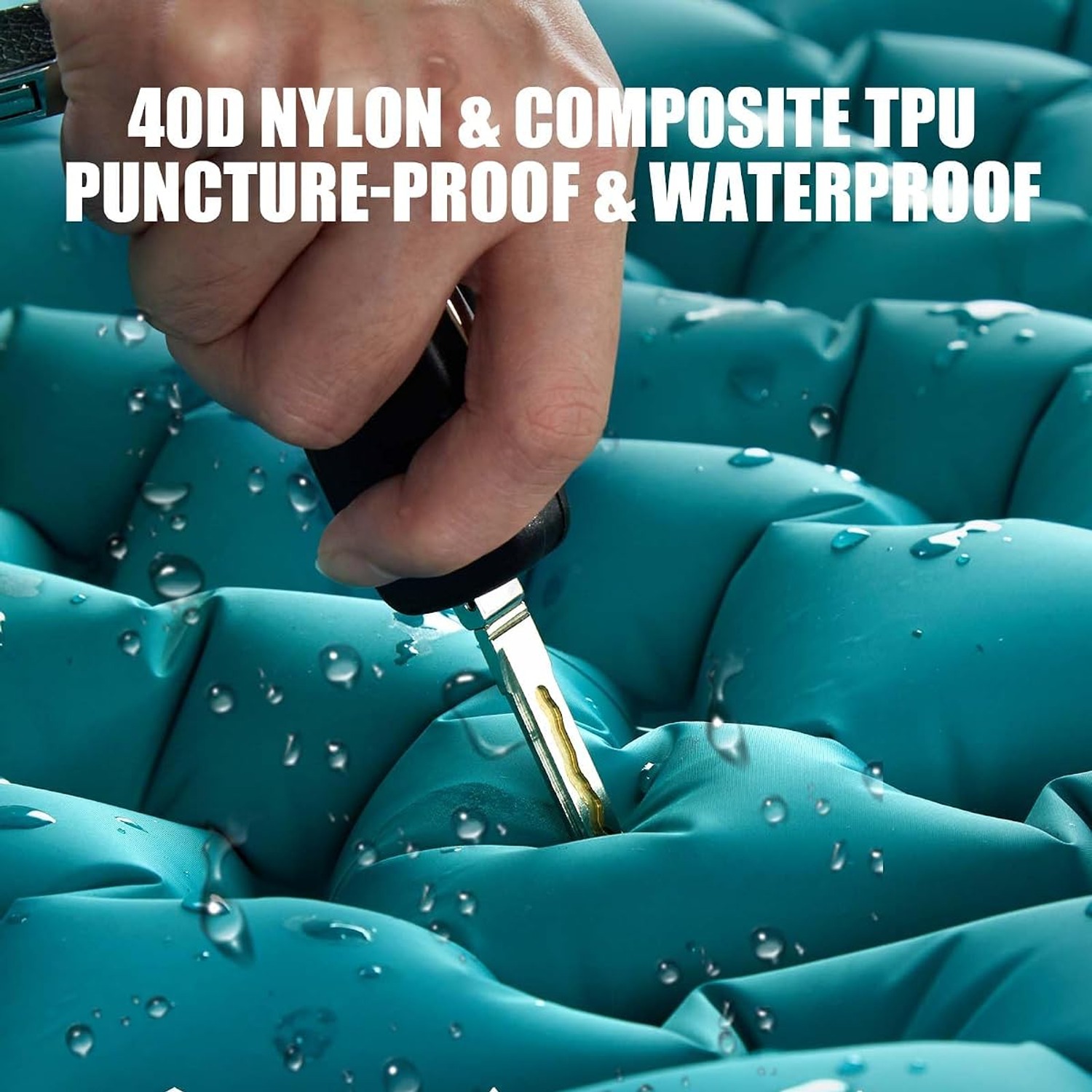
The pad is water resistant, which covers dew, condensation and spills. It does not mean you should leave it lying in a puddle or out in heavy rain overnight.
Store it loosely rather than crushed into its smallest possible roll for months on end. Valve open, laid flat under a bed or loosely rolled in a cupboard is ideal. Keep it away from campfires, cigarettes, dog claws and anything with a sharp edge, because nylon is tough but it is not armour. Carry a patch kit and the odd puncture becomes a five-minute job instead of a ruined trip.
The short version
If camping leaves you sore and tired, the mat is the first thing to upgrade. This one gives you 9.9cm of air, a pillow you do not have to pack separately, and a foot pump that fills it without leaving you breathless. It weighs 850 grams, handles up to 199.58 kg, and snaps to a second pad when you want a double.
Clear the ground, inflate it a little softer than feels right, and give it one night. Most people stop treating a bad sleep as the price of being outdoors.