


The complete guide
How To Choose A Camping Air Mattress That Actually Lets You Sleep
The real reason people sleep badly outdoors
Ask anyone who has come home from a camping trip exhausted and they will usually blame the tent, the noise or the cold. More often than not the actual culprit is the ground. Soil is uneven. Grass hides stones. Even a tent pitched on a flat-looking site has small bumps and hollows that your body finds within an hour of lying down.
A thin foam mat takes the edge off, but it does not change the shape of the ground. You still feel the root under your hip. You still wake up at three in the morning and spend ten minutes trying to find a position that does not hurt. By morning you have had maybe four broken hours of sleep and the walk ahead feels much longer than it is.
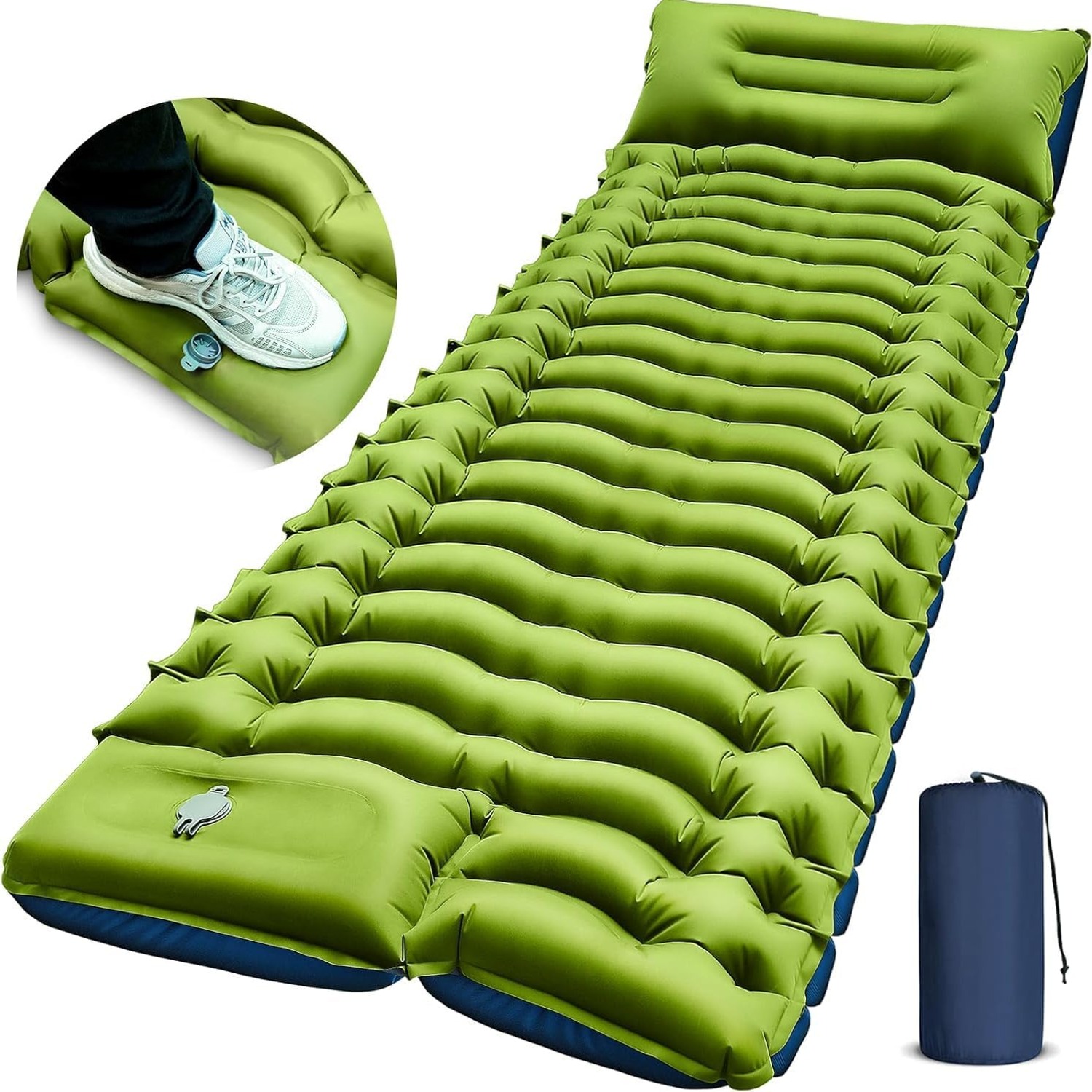
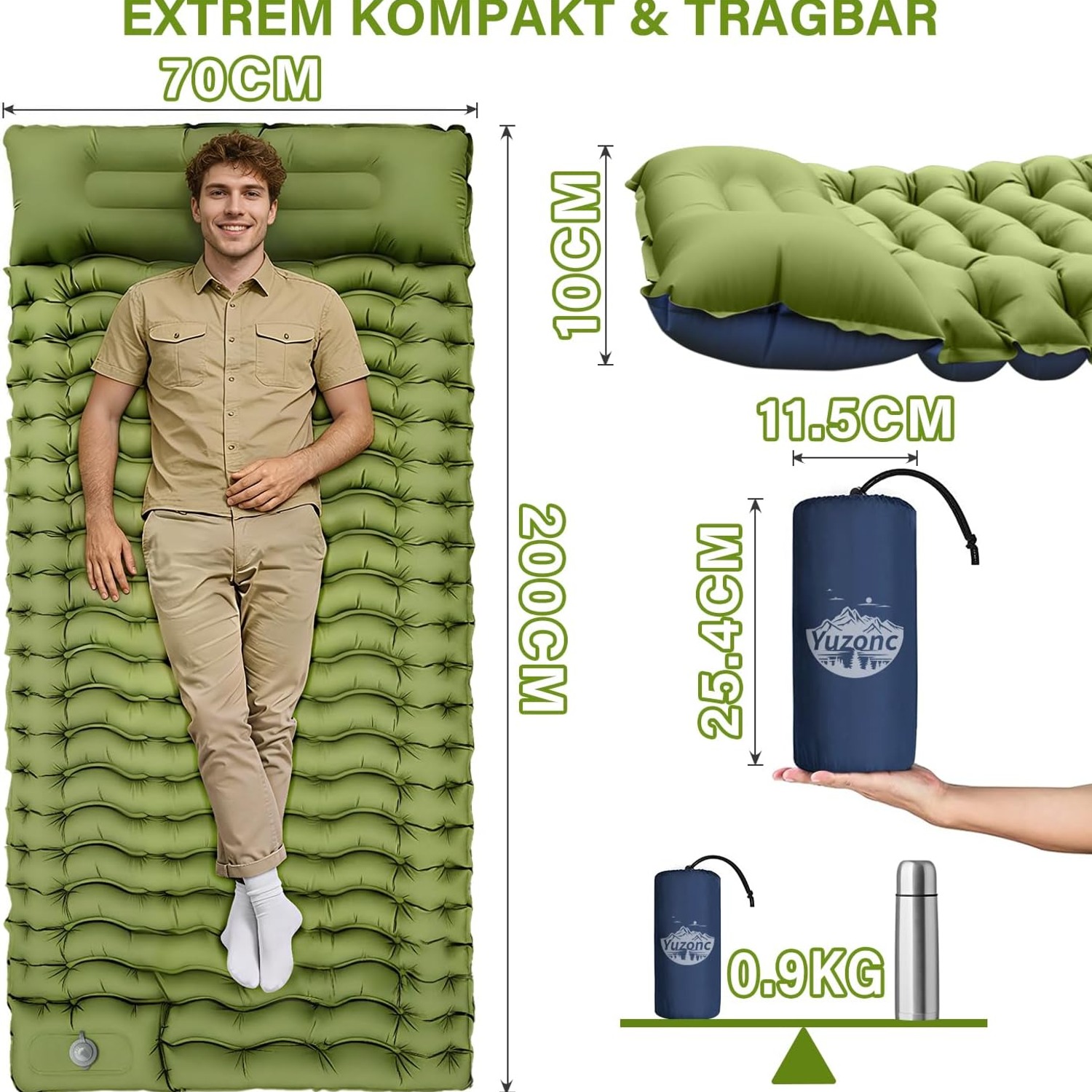
An inflatable mat solves this differently. Instead of pressing a thin layer against the shape of the ground, it holds you above it on a cushion of air. Ten centimetres of air is enough to make a stony pitch feel like a flat one. That is the whole point of this mat, and everything else about it is designed around making that 10 cm easy to carry and quick to set up.
How the foot pump changes the routine
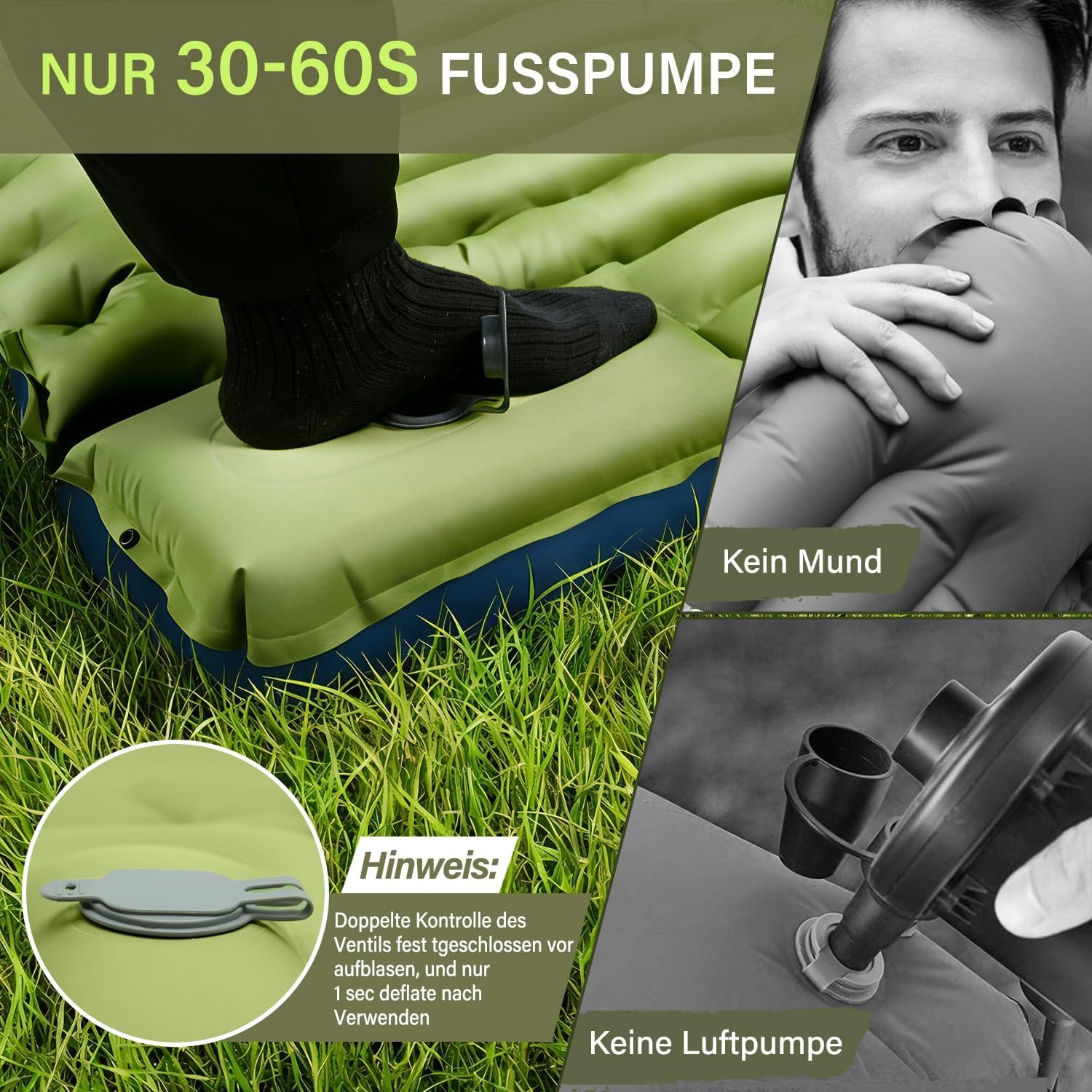
The weak spot of most inflatable mats is getting them inflated. Blowing one up by mouth is slow, it leaves you dizzy, and the moisture from your breath ends up inside the mat where it can eventually cause problems. A hand pump means carrying another item. A battery pump means charging something and having it fail at the wrong moment.
A built-in foot pump sidesteps all of that. You lay the mat out, open the valve and press the pedal section with your foot or your hand. Each press sends a slug of air through a one-way valve. After 30 to 60 seconds of steady pumping the mat is full and you close the valve. No extra gear, no power, nothing to forget at home.
Deflation is just as practical. Open the vent valve and the air dumps out in about a second, then you roll the mat from the foot end towards the head to push out whatever is left. On a wet morning when you want to be packed and gone in fifteen minutes, that speed matters more than almost any other feature.
What the air cell structure does
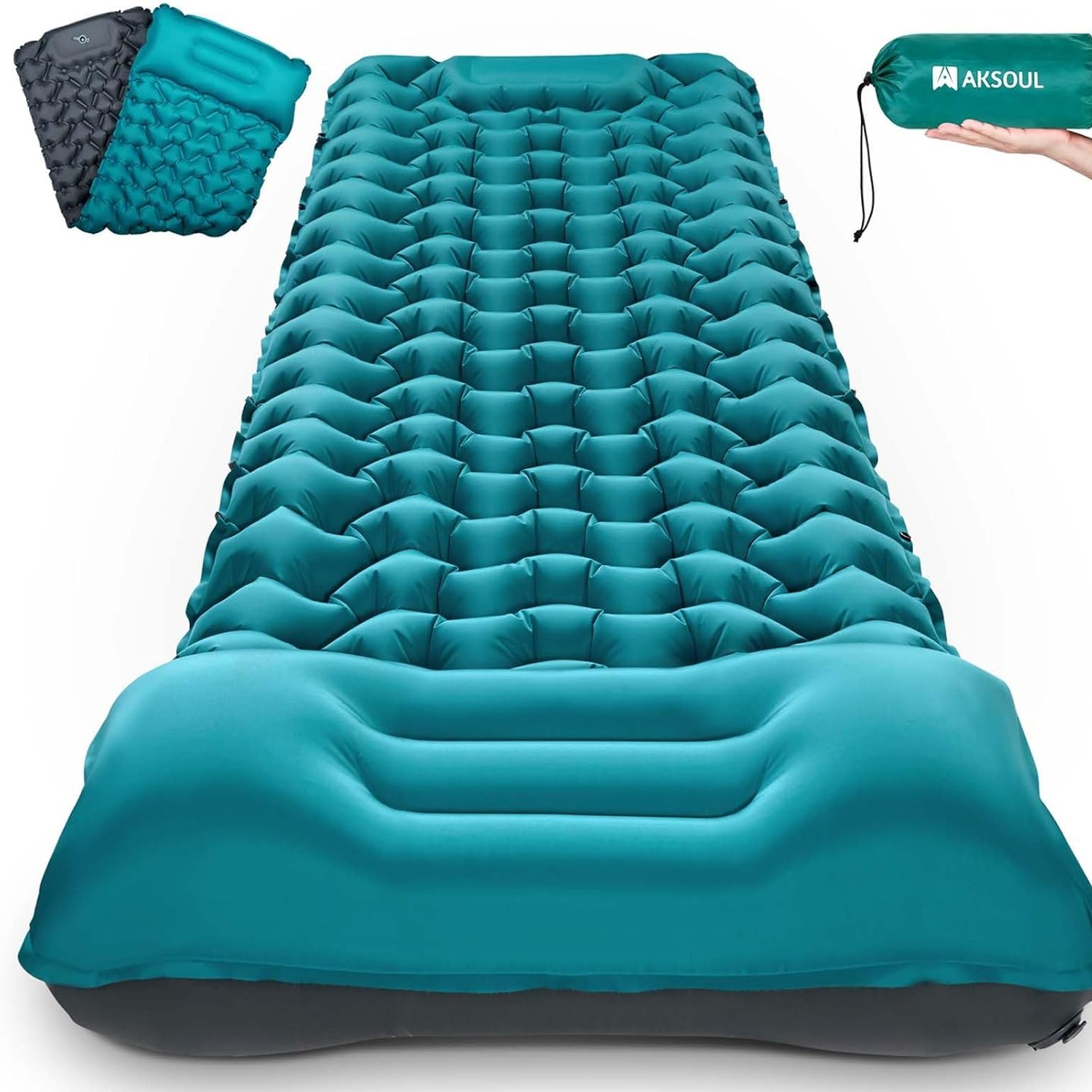
Inside the mat the air is not sitting in one big open bag. It is divided into cells arranged in strips. This sounds like a small detail and it makes a big difference to how the mat feels.
In a single-chamber mat, the air moves. Lie on your side and the air under your hip rushes towards your feet and head, so you sink down until you are almost touching the ground at the heaviest point. The cell structure resists that. Each section holds its own air, so support stays spread across the whole mat rather than pooling wherever you are lightest.
It also makes the mat more stable. You can shift position without the whole surface rocking under you, which is the thing that makes some air beds feel like sleeping on a waterbed. For side sleepers in particular, this is the difference between an inflatable mat you tolerate and one you actually like.
Firmness is adjustable too. Pump it hard and you get a firm, supportive surface that suits back sleepers. Let a little air out through the valve and the surface softens, which lets the shoulder and hip sink in slightly. Spend two minutes on your first night finding your preferred pressure and you will set it the same way every trip after that.
Who this mat suits
Tent campers are the obvious group. If you camp a few weekends a year on mixed ground, this gives you a consistent sleeping surface regardless of the pitch.
Hikers and trekkers who count grams will care about the packed size. The mat folds to roughly the size of a water bottle and comes with a storage bag, so it rides in a pack rather than strapped awkwardly to the outside. The total weight is not listed in this record, so if you are building an ultralight kit and need an exact figure, ask us first.
Festival-goers get a lot of value from a mat like this. Festival ground is usually hard, flat-ish and covered in things you do not want to lie on directly. A fast-inflating mat with a built-in pillow is one of the best inflatable sleeping pad choices for that environment because it sets up in under a minute when you arrive tired.
Then there are the household uses. A spare bed for guests. Something to throw in the van or caravan. A floor bed for a child's sleepover. Because it stores small and inflates fast, it gets used far more often than a bulky air bed that lives at the back of a cupboard.
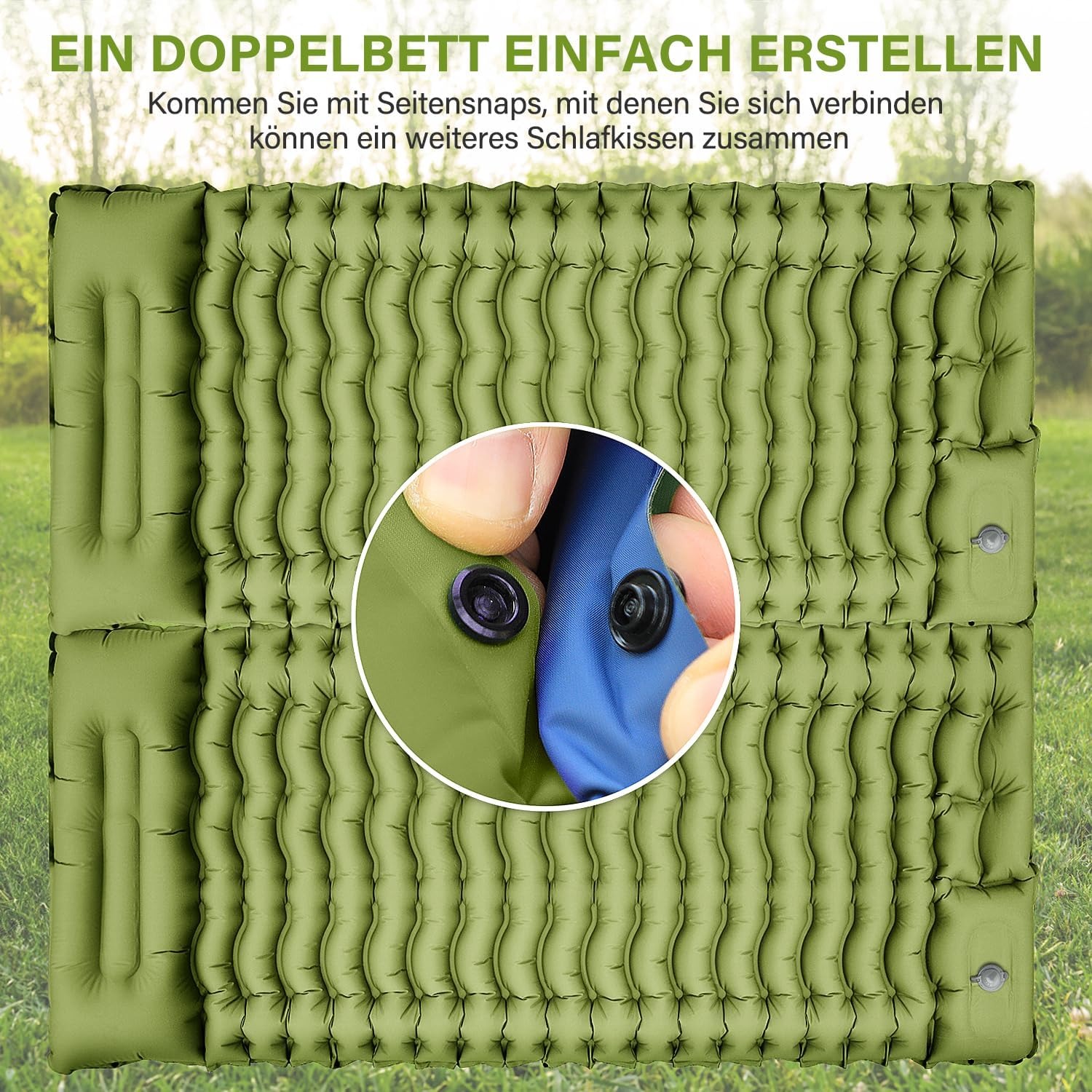
Couples and families should note the side fasteners. The mat is extendable and designed so that more than one can be joined together into a wider sleeping surface. If you camp as a pair, buying two and connecting them gives you something closer to a double bed than two mats sliding apart all night.
How to choose between mats
A few questions sort out most of the confusion.
First, how are you carrying it? If it goes in a car, thickness and width matter more than packed size. If it goes on your back, packed size and weight come first. This mat is a reasonable middle option because 10 cm of thickness is generous for something that packs this small.
Second, how do you sleep? Side sleepers need thickness, because the shoulder and hip stick out furthest and bottom out first on thin mats. Back sleepers can get away with less. At 10 cm this mat has enough depth for side sleeping if you set the pressure a little softer.
Third, how wide do you need? Narrow 50 cm mats save weight but you wake up with an arm on the tent floor. At 68 cm there is room to move.
Fourth, what temperature are you camping in? The mat does put a barrier of air between you and the ground, but no R-value or temperature rating is given here. For genuinely cold ground, add a foam mat underneath. That combination is one of the best approaches for shoulder-season camping anyway.
Looking after it
The care is simple. Spot clean with a damp cloth and mild soap, rinse the cloth, wipe again. Let the mat dry completely while it is still inflated before you pack it, because rolling up a damp mat is how mould starts.
Keep it away from sharp things. That means checking the ground before you lay it down, clearing twigs and sharp stones, and using a groundsheet when the site is rough. Keep it well away from campfires and camp stoves, since nylon and heat are a bad mix.
For storage between trips, resist the urge to leave it crushed in its sack for months. Loosely rolled or lightly inflated with the valve open is kinder to the internal structure and the coating. Carry a small nylon repair patch in your kit. A puncture in the field is a ten-minute fix if you have a patch and a disaster if you do not.
The short version
This is a 195 x 68 x 10 cm nylon camping air mattress with a foot pump and a pillow built into it. Pump it with your foot for 30 to 60 seconds and you have a proper sleeping surface. Open the valve and it is flat in about a second. It packs to roughly the size of a water bottle, holds up to 250 pounds, is listed as waterproof, and joins to another mat with side fasteners if you want a double.
If you camp, hike, travel or just need a decent spare bed that stores in a drawer, it covers a lot of ground for one piece of gear. If you need exact packed weight or country of origin before you commit, ask us and we will find out rather than guess.