
The complete guide
Gazebo Side Walls Buying Guide, How To Pick Panels That Actually Stay Up
The problem with an open gazebo
A gazebo roof does one job well. It keeps the sun off the top of your head and stops rain landing in the salad. Everything else, it ignores.
Anyone who has sat under one on a breezy day knows the pattern. Wind runs straight through at table height and takes the napkins with it. By four in the afternoon the sun has dropped below the roof line and is shining directly into everyone's eyes. And the moment rain arrives with any angle on it, the two people sitting near the edge get wet while the people in the middle stay dry and smug.
Side walls fix all three at once. They are not glamorous, and nobody takes photos of them, but they are the single cheapest upgrade that changes how much time you actually spend under your canopy.
How gazebo side walls work
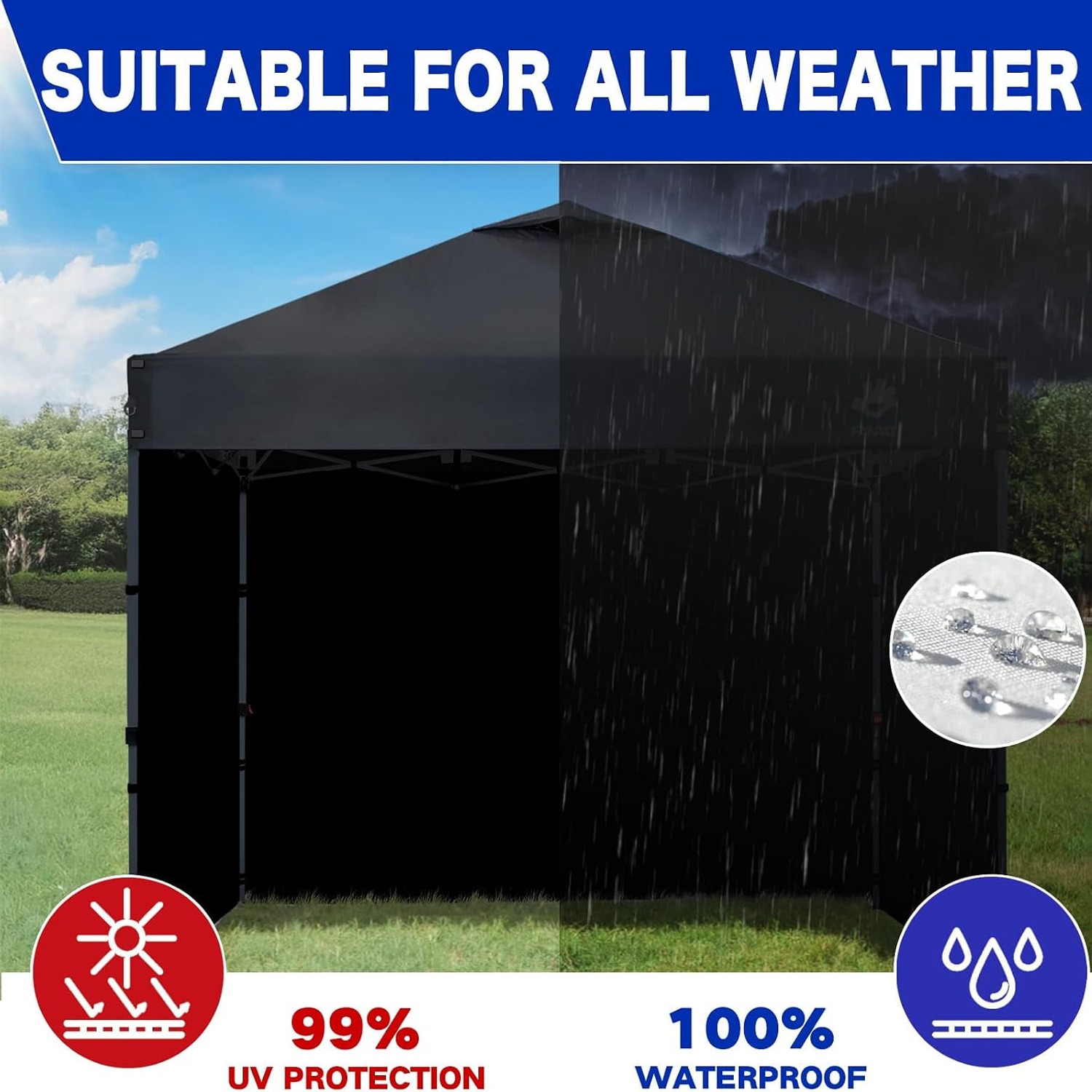
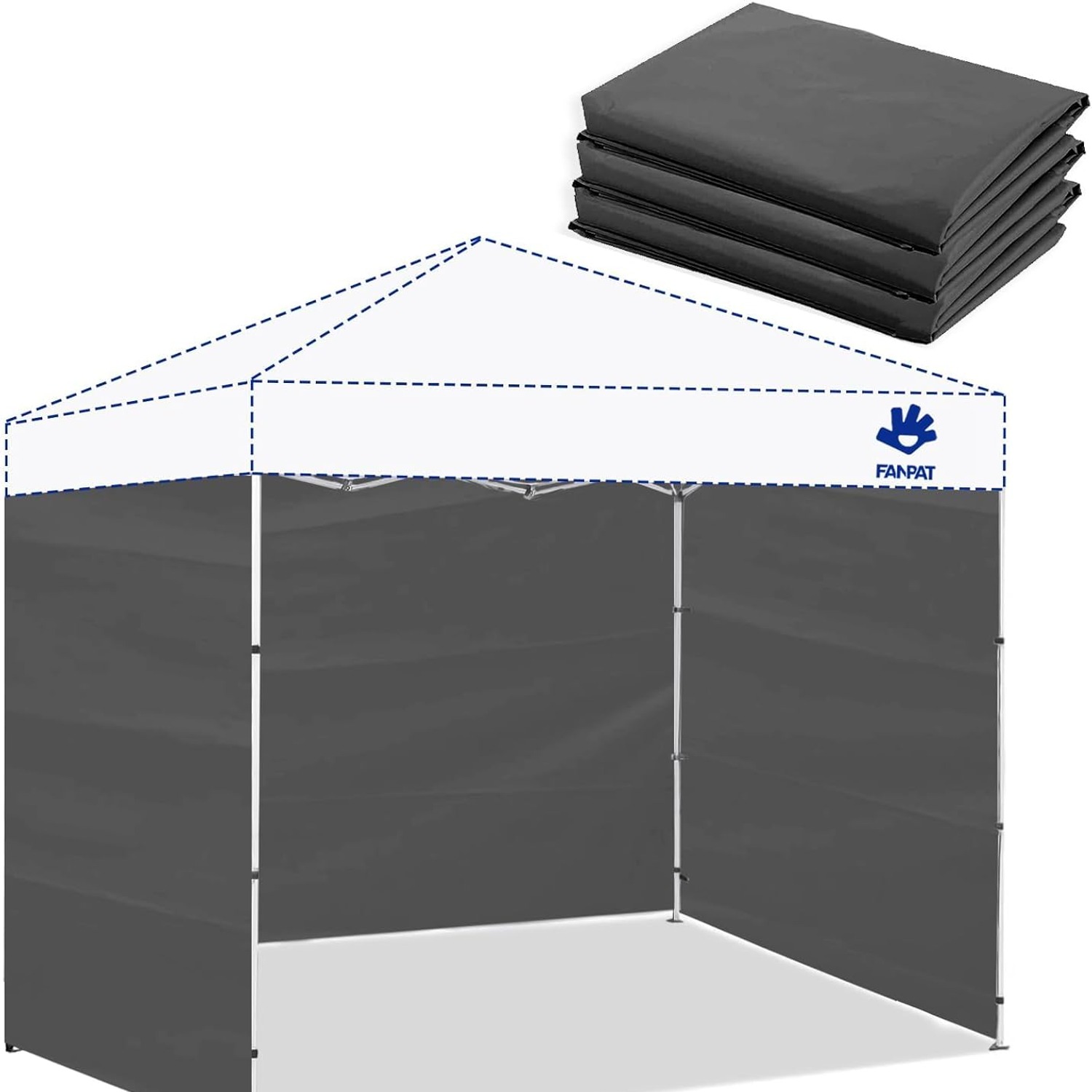
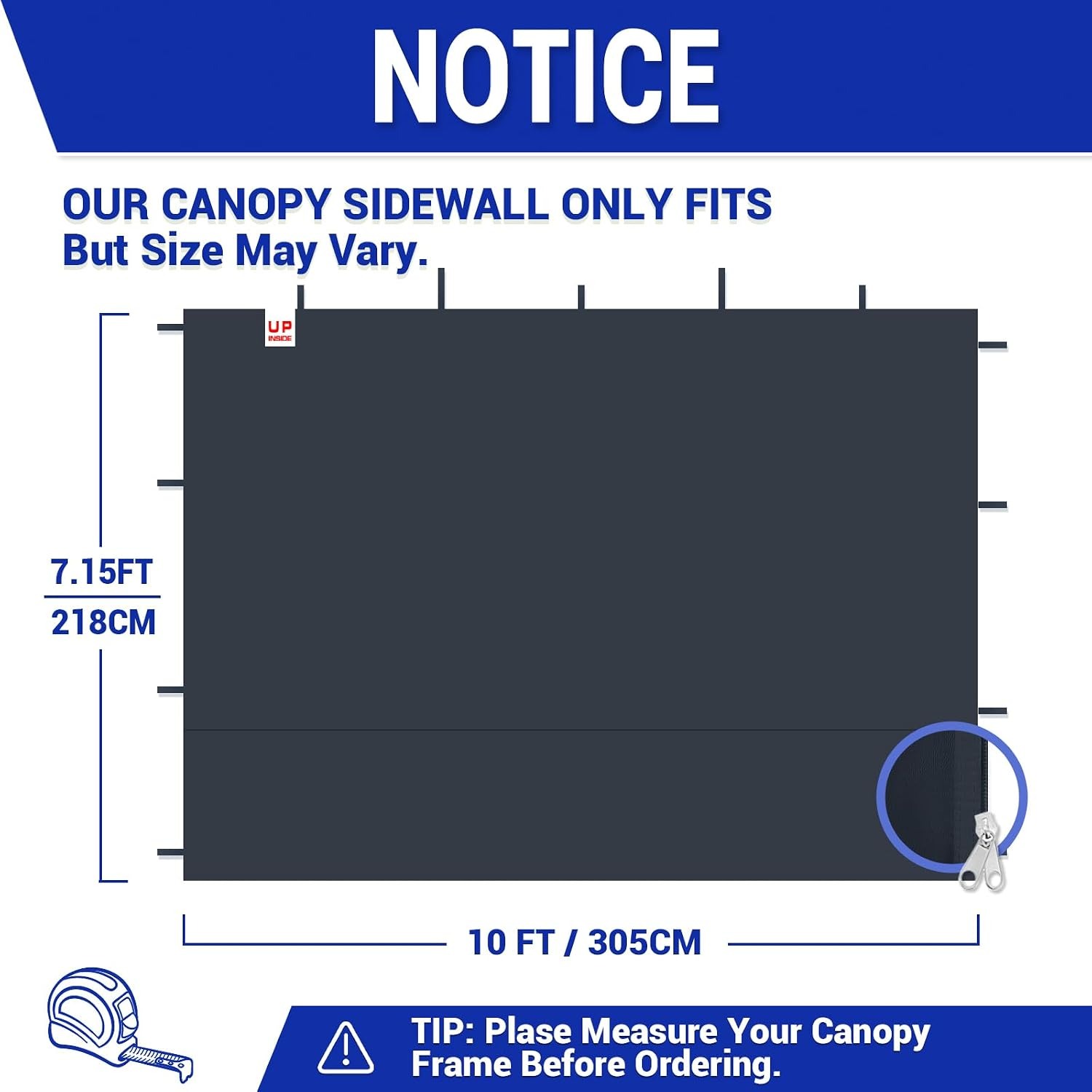
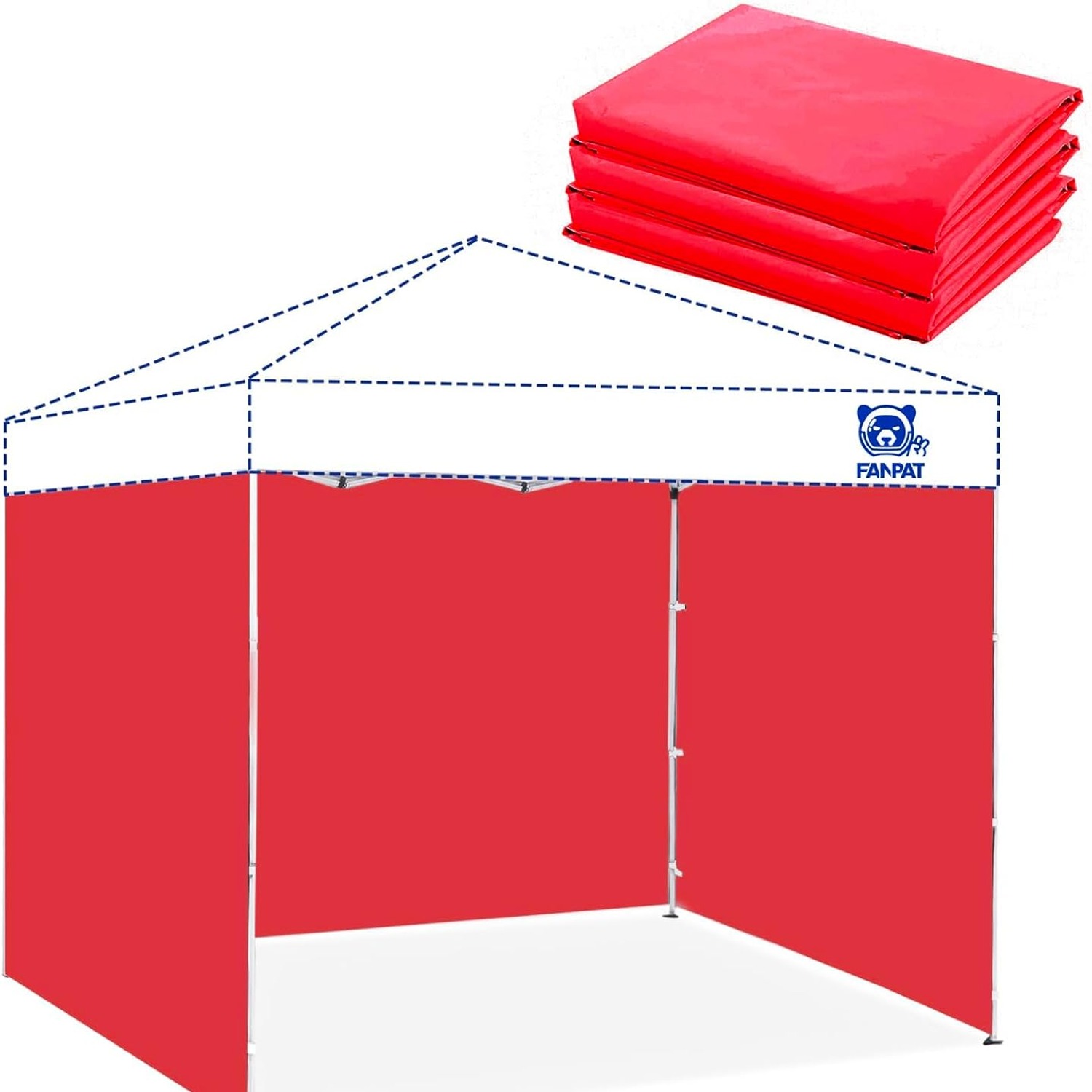
The principle is simple. Each panel is a sheet of fabric that hangs from the gazebo frame and closes off one open side. This set gives you three panels, each 3 metres wide and 0.86 metres high, so they match the side length of a standard 3 x 3 metre gazebo and sit as a band around the lower part of the opening.
Attachment is by hook and loop. The strips wrap around the frame bar and press back onto themselves, which means there is nothing to thread, bolt or line up. No assembly is required straight out of the packaging. That matters more than it sounds. Side walls that take twenty minutes and two people to fit get left in the car. Side walls you can hang alone in a few minutes get used every single time.
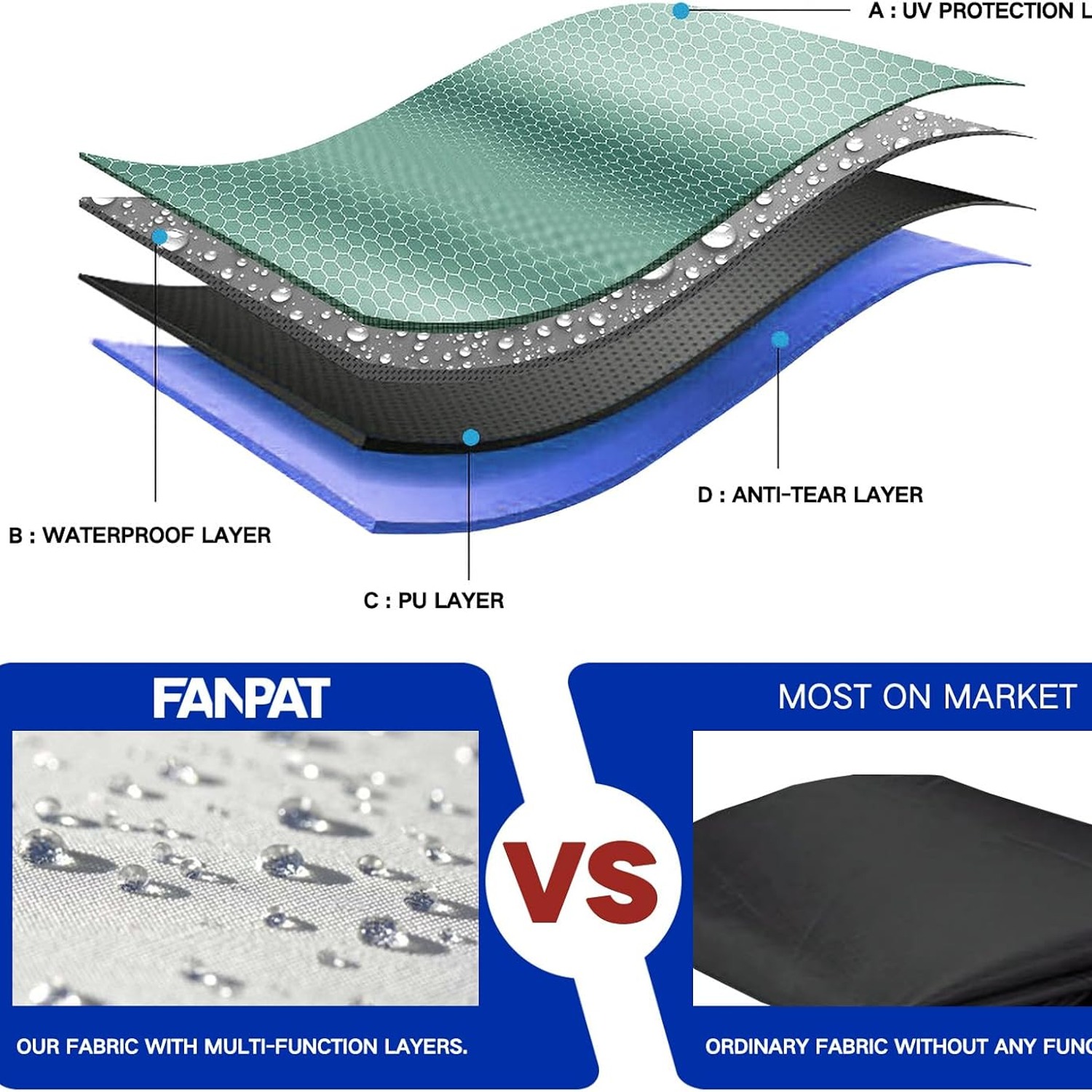
The fabric here is polyester with a waterproof rating, plus ultraviolet light protection. Water beads and runs down the face rather than soaking through, and the opaque black weave blocks the low-angle sun that a roof cannot reach. Frame and pole material for the product are listed as aluminium.
Why part-height panels make sense
A lot of people assume more fabric is better and go looking for full-drop walls that reach the ground. Sometimes that is the right call. Often it is not.
At 0.86 metres high, these panels sit at exactly the level where wind causes trouble, across the table and around seated shoulders. Below that, airflow at ground level is mostly harmless and actually helps keep the space from feeling stuffy. Above that, the roof already has you covered.
There is a safety angle too. Every square metre of wall you hang is extra sail area for the wind to push against. A full-height wall on a lightweight pop-up frame turns the whole structure into a kite in a gust. Part-height panels keep the load manageable while still blocking the draught that actually bothers people.
And you keep your sight lines. For a market stall, that means customers can see you and you can see what is going on around you. For a backyard, it means the space feels open rather than like a tent.
Who these suit
Campers are the obvious group, and camping is the recommended use listed for this product. A camp gazebo with walls on the windward side becomes a proper cooking and eating area instead of a glorified sunshade.
Stallholders are the other big one. Markets are rarely held in perfect weather, and a wall at the back of the stall gives you a backdrop for signage, stops wind flipping your display, and keeps the worst of the rain off your stock. Three panels let you close the back and both ends and leave the customer side open.
Then there is the backyard crowd. If your gazebo lives semi-permanently over a seating area or a spa, walls on two sides create a sheltered corner that stays usable on days you would otherwise go inside. They double as privacy panels if your yard sits close to a neighbour or a footpath.
Event hire, sports sidelines, beach days and caravan park annexes all follow the same logic. Anywhere the roof alone is not quite enough.
How to choose and check the fit
Start with your frame size. These are built around a 3 x 3 metre gazebo, with each panel 3 metres wide. Most pop-up and fixed gazebos in that class share the same side run, so they will fit, but it is worth getting the tape out before you order rather than after.
Check the frame bar as well. The hook and loop strips need to wrap around the upright or the eave bar, so an unusually thick or oddly shaped bar can cause trouble. A standard aluminium or steel tube is fine.
Think about how many sides you want closed. Three panels on a four-sided gazebo leaves one open by design, and that open side becomes your entrance and your airflow. If you only ever need one wall, buy the set anyway and keep the spares. They are the sort of thing you end up glad to have when the wind changes direction.
Colour is worth a thought too. These are black, which is the practical pick. Light fabric shows every mud splash, grass stain and coffee mark, and it never quite washes out. Black looks the same in year three as it did in week one.
Setting them up well
Hang the panel on the windward side first. If you only put up one wall, that is the one that earns its keep.
Overlap the edges properly where two panels meet at a corner. A small gap at a corner is where wind finds its way in and where rain gets pushed through during a squall. Pull the hook and loop tight so the fabric sits flat rather than flapping, because loose fabric wears faster and makes noise all day.
Weight your gazebo legs. Walls add wind load, and a frame that was stable bare can shift once it has fabric on two or three sides. Sandbags, weight plates or proper pegs on soft ground all work. If the wind gets up beyond what your frame is rated to handle, take the walls off before you take the whole gazebo down the road.
Looking after them
Care is undemanding. Wipe the panels with a damp cloth and a little mild soapy water, rinse lightly, and let them dry fully. Skip the washing machine, the tumble dryer, bleach and the iron. Machine washing in particular is rough on both the waterproof coating and the hook and loop strips.
Before you pack up, shake off grass, leaves and sand. Debris caught in the hook side of the fastening is the main reason these lose grip over time, and a few seconds of picking it out keeps them working.
The rule that matters most is to store them dry. Folding damp polyester into a bag and leaving it in a shed for a fortnight is how you end up with mildew spots that never fully come out. If you have to pack up wet, hang the panels over a line or a chair at home that evening.
The short version
Three waterproof polyester panels, each 3 metres wide and 0.86 metres high, giving 9.3 square metres of cover across a standard 3 x 3 metre gazebo. Hook and loop fastening, no tools, no assembly, a few minutes of work. Ultraviolet light protection and a black finish that stays looking decent.
They will not turn your gazebo into a cabin, and they are not meant to. What they do is block the wind at the level where it bothers people, stop angled rain reaching the edges of the table, and keep late sun out of everyone's eyes. The canopy and frame are not included, so this is an upgrade for a gazebo you already have.
If you own a 3 x 3 metre gazebo and only use it on calm, mild days, side walls are what change that.