
The complete guide
How to Choose an Ultralight Backpacking Chair
The problem with sitting outdoors
Every trip has the same moment. You have walked far enough that your legs are done, you find a decent spot, and then you look around for somewhere to sit. The options are usually bad. Wet grass. Gravel that works its way into everything. A log at the wrong height with bark that leaves marks. Or you lean against your pack and slowly slide sideways for forty minutes.
For years the answer was to accept it. Camp chairs were heavy things built for car boots, three or four kilograms of steel and padded fabric that nobody would consider carrying for ten kilometres. If you walked in, you sat on the ground. That was the deal.
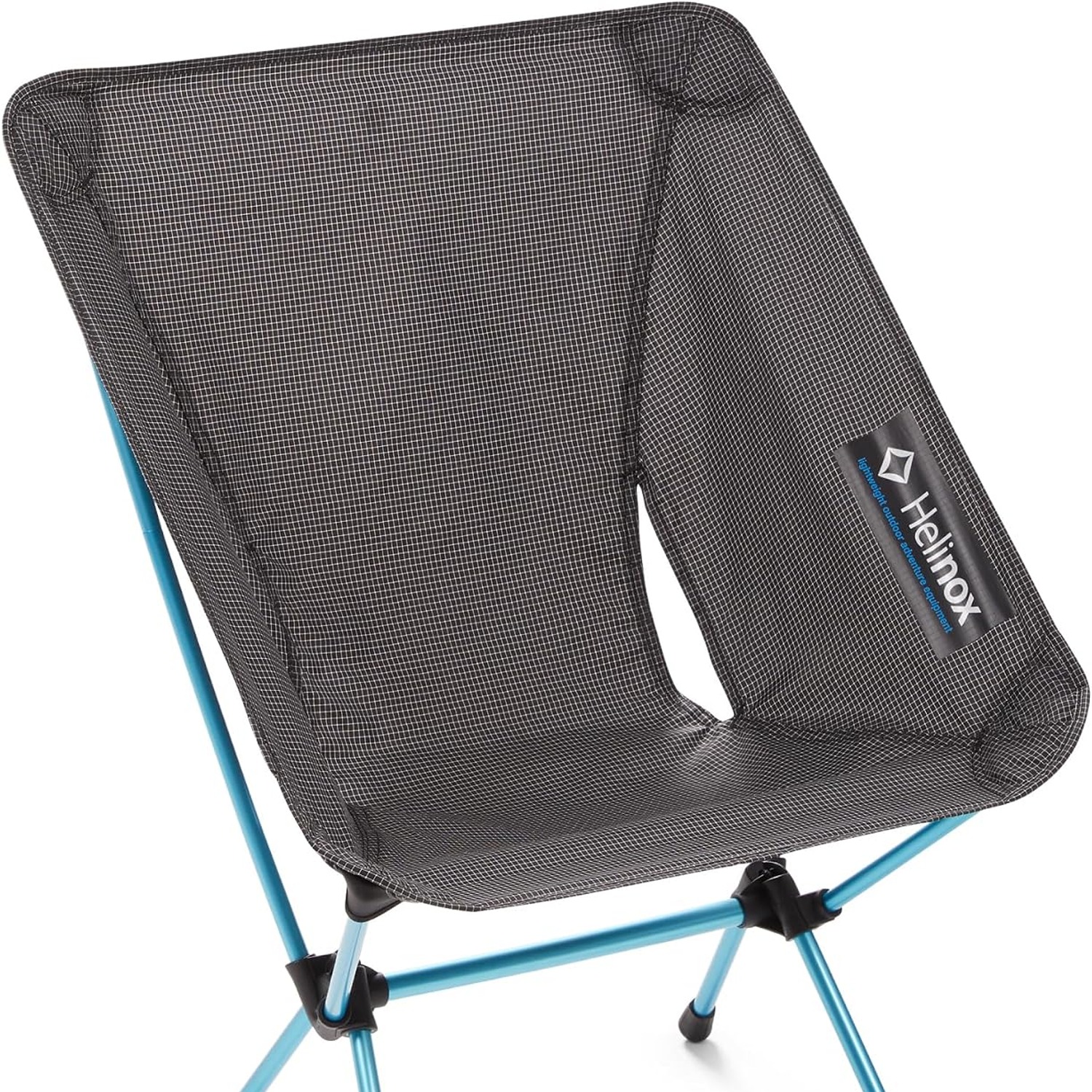
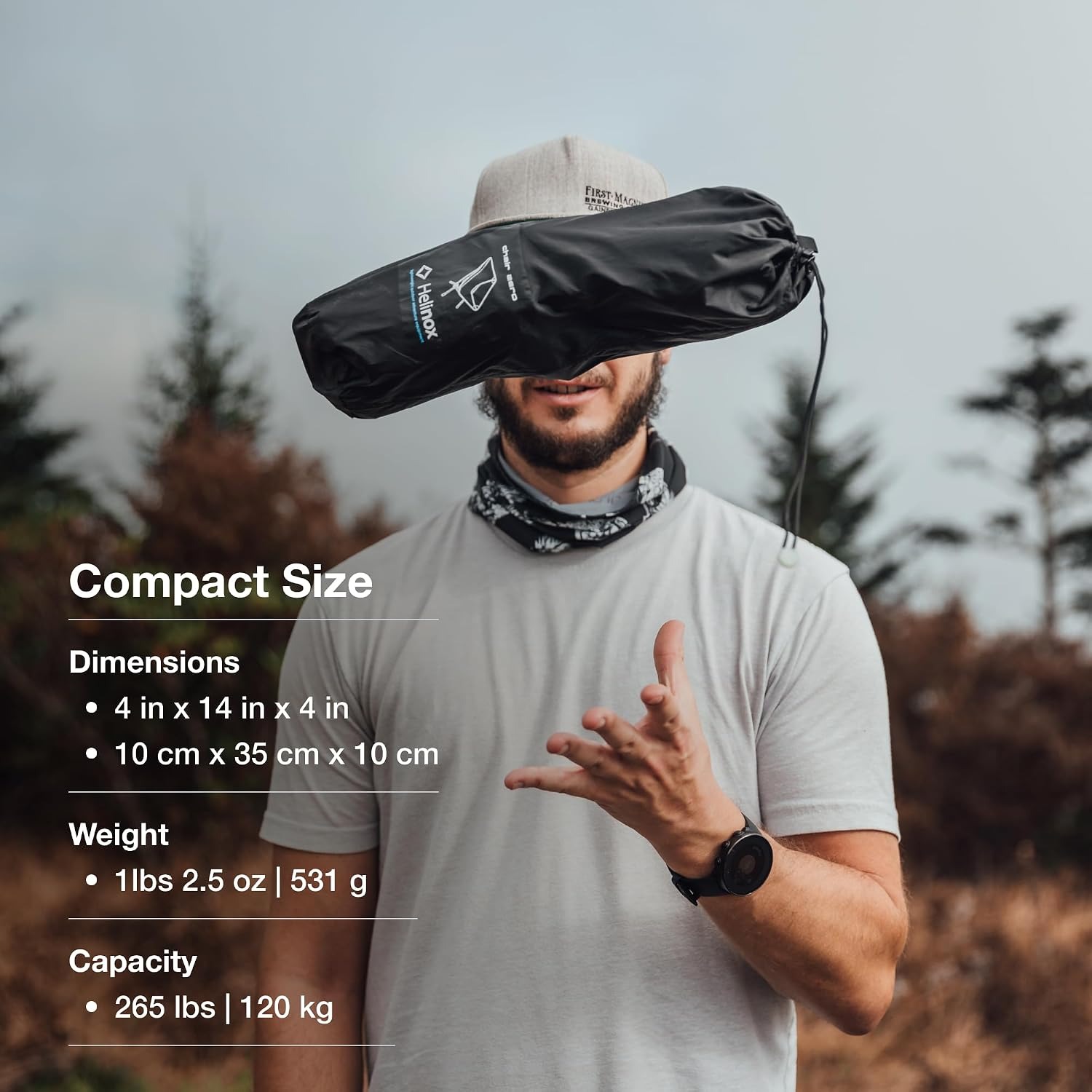
The Helinox Chair Zero changed the maths. At 510 g packed, it costs you about the same as a full water bottle. Suddenly the question is not whether you can carry a chair, but whether a seat with a back is worth half a kilo of your load. For a lot of people, especially on multi-day trips where evenings are long, the answer is yes.
How it actually works
The design is borrowed from tent poles, and once you see that, the whole thing makes sense. Short aluminium pole segments are threaded onto a single internal bungee cord. Pull the bundle out of its bag and the segments want to find each other. You push them home until the frame is a rigid rectangle standing on four straight legs.
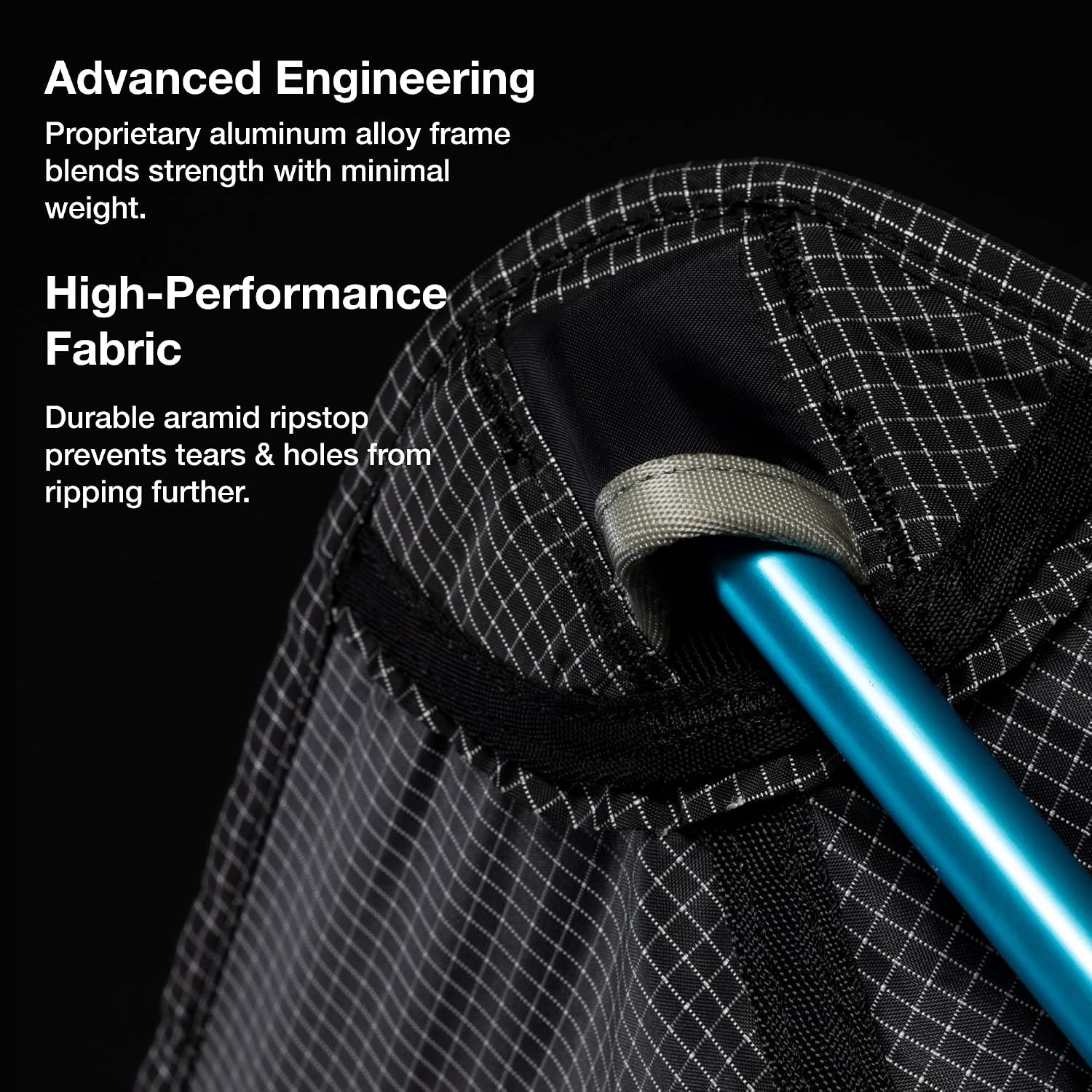
Then the seat. It is a sling of lightweight ripstop polyester with reinforced pockets at each corner. You stretch those pockets over the four upper pole ends, and the tension of the fabric is what makes the whole structure stiff. Nothing is bolted. Nothing is hinged. The fabric and the frame hold each other up.
That is why it weighs what it does. There are no springs, no locking mechanisms, no padding and no moulded plastic beyond the pole hubs. The ripstop weave matters here too. If the fabric picks up a nick from a stick or a sharp rock, the weave stops that nick running into a tear across the seat.
Setup takes under a minute once you have done it a few times. The last corner is always the tightest, and the trick is to do two opposite corners first so the tension spreads evenly. Packing away is the same four steps backwards, and it drops back into its case at about 35 cm long.
Who it suits
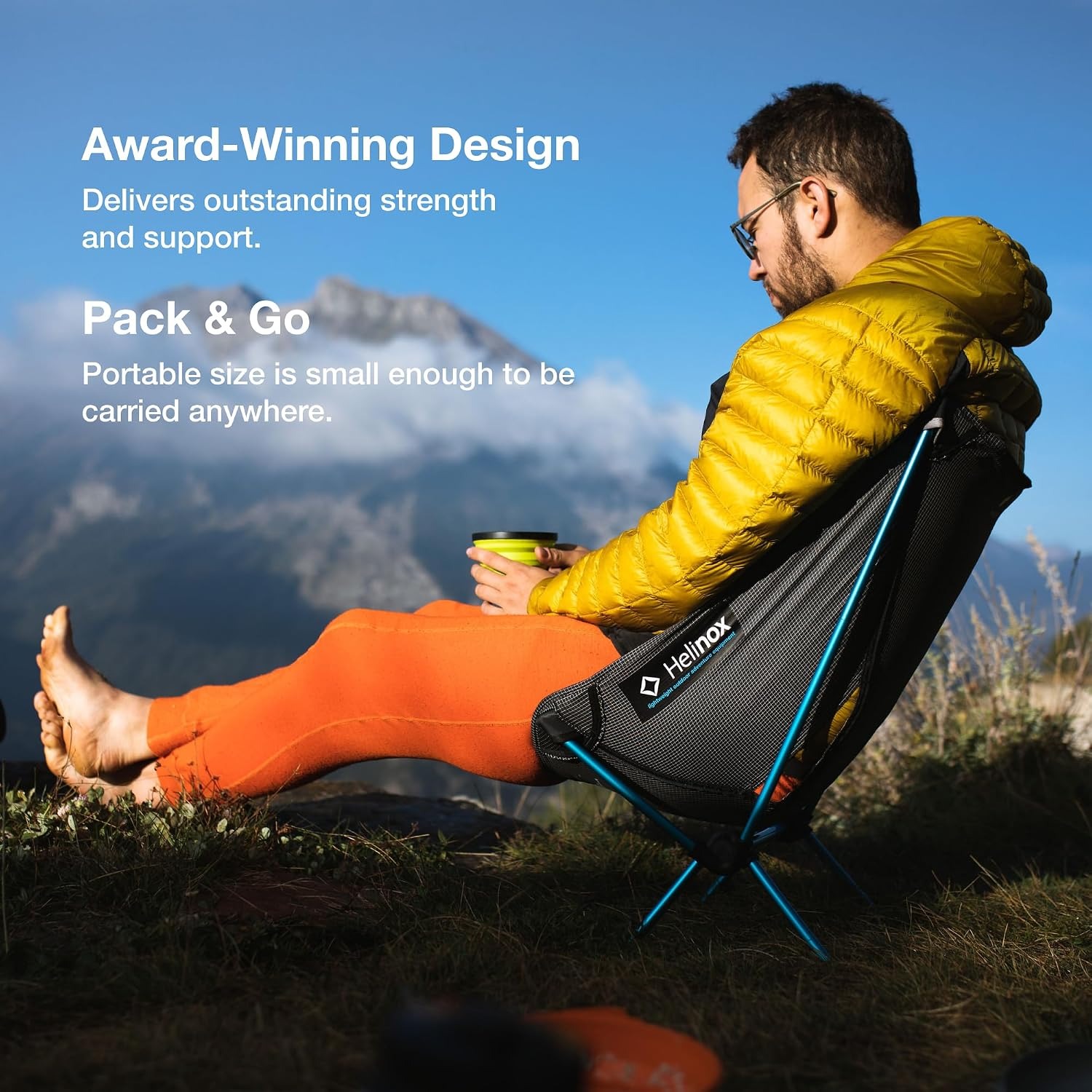
If you backpack, this is squarely aimed at you. The same goes for anyone travelling with a strict weight budget. Kayakers like it because the short packed length goes through a hatch. Cyclists strap it to a rack. Plenty of people take it as a travel chair in a carry-on, because a 35 cm bundle takes up less room than a pair of boots.
It also suits a less obvious group. People who go to outdoor concerts, kids' sports, markets and beaches, and who are tired of wrestling a bulky folding chair out of the car. A compact camp seat you can keep in a tote bag year-round gets used far more often than a big one that lives in the garage.
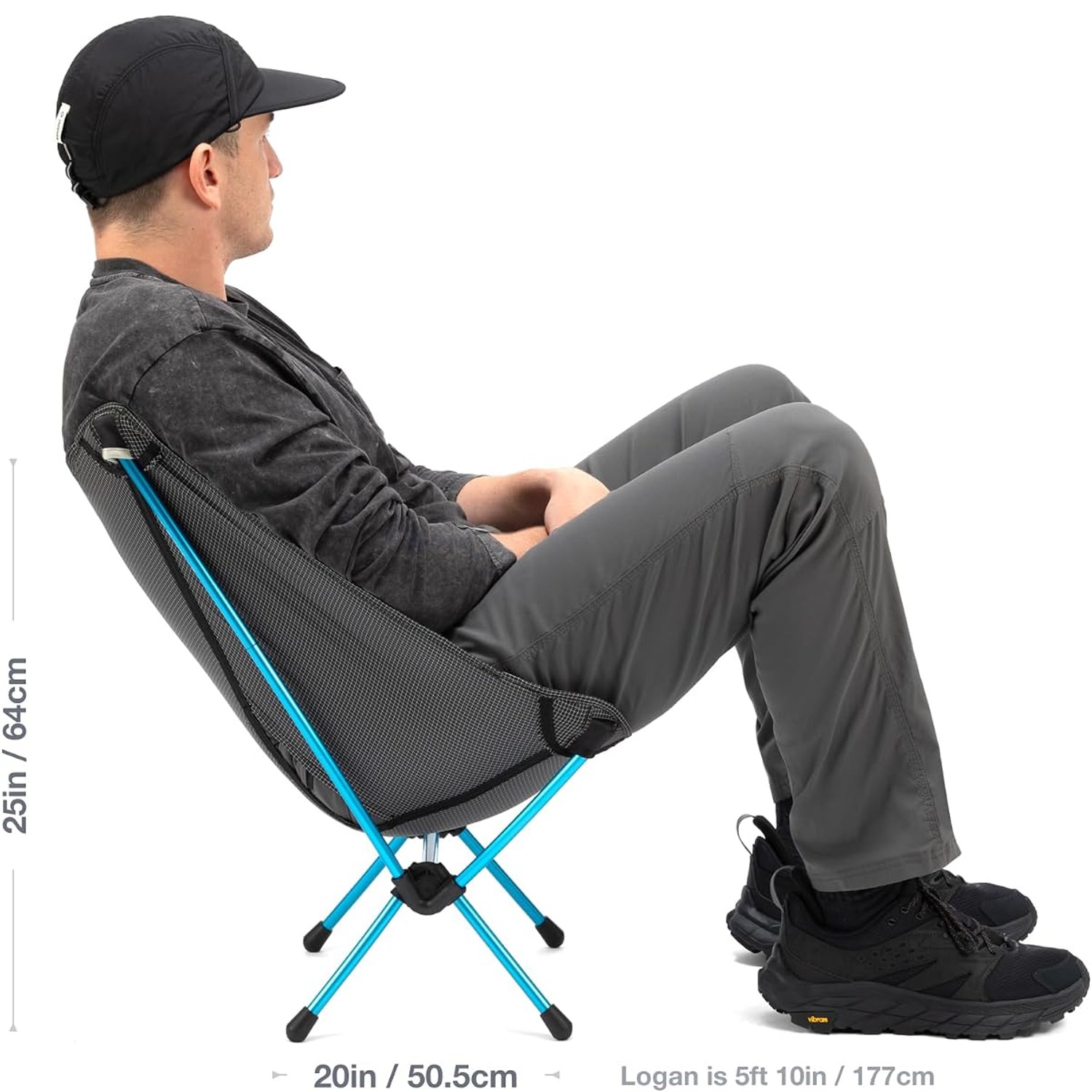
Who it suits less well is worth saying plainly. Seat height is about 8.5 inches, which is low. Your knees sit above your hips. After a long day of walking that position feels great, but if you have knees or hips that make low seats hard to get out of, a taller camp chair will serve you better. It is also not a dining chair. Eating at a camp table from this height is awkward.
The maximum weight rating is 120.2 kg. That is a genuine figure for normal seated use, not a wishful one, but it assumes all four feet are on the ground and you are not rocking back or standing on the frame.
How to choose between light chairs
A few things actually matter when you compare ultralight camp chair options, and most of the marketing noise does not.
Start with packed weight and packed length together. Weight tells you what your shoulders feel. Packed length tells you whether it fits anywhere sensible. A chair that is light but packs long is a nuisance on a bike or in a kayak. At 510 g and roughly 35 cm, the Chair Zero is strong on both counts.
Next, look at the seat depth and whether there is a back. Some ultra-minimal seats are little more than a sling on two legs, and they are tiring after ten minutes because you have nothing to lean on. A 52 cm seat depth with a solid back is the difference between perching and actually resting.
Then check the weight rating honestly against your own body weight plus anything you tend to hold, like a pack on your lap. Sitting close to the limit all the time will shorten the life of any light chair.
Finally, think about the ground you sit on most. Small feet concentrate load. On hard dirt, rock, decking or sand that is damp and packed, there is no issue. On dry loose sand or soft mud, expect some sinking. A foam sit pad or a few flat stones under the feet fixes it and costs nothing.
Looking after it
This is simple gear and it rewards simple care. Wipe the frame and seat with a damp cloth and a bit of mild soap when they get dirty, then let everything air dry fully before it goes back in the case. Packing a wet chair away is how fabric gets musty.
After beach or desert trips, shake grit out of the pole ends and the seat corner pockets. Sand inside a pole joint grinds the aluminium and makes the segments stiff to separate. Thirty seconds of shaking saves that.
Do not machine wash or tumble dry the seat. Do not drag the chair across sharp rock while someone is sitting in it. Store it loosely in its bag somewhere dry and out of direct sun, since long UV exposure is what ages any outdoor fabric fastest.
The bungee cord inside the poles will slowly lose tension over years of use. That is normal for all pole-based gear and it is a repairable wear point rather than a failure. The manufacturer's five-year warranty covers defects in the product as supplied.
Living with it
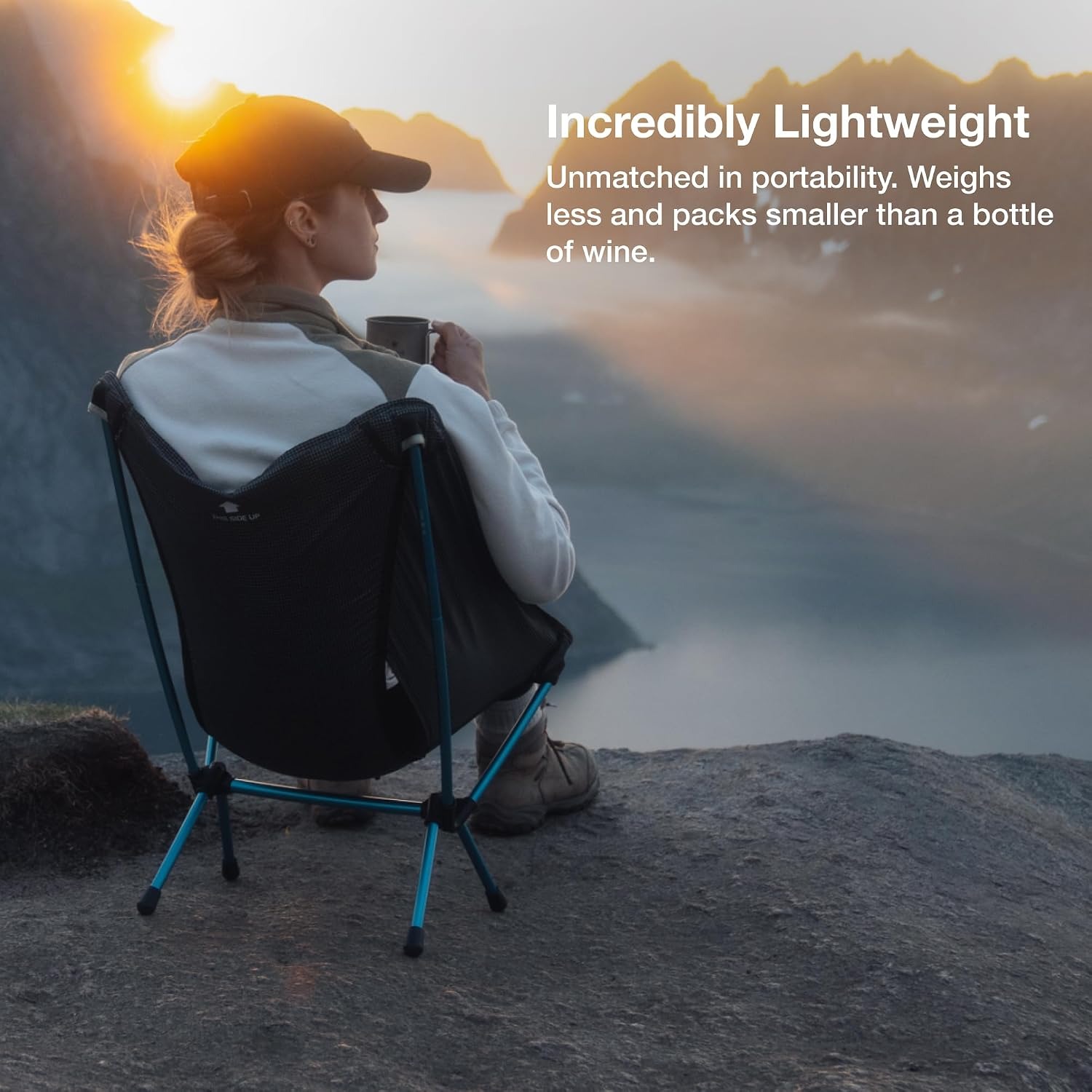
The honest experience of owning one is that you stop thinking about it. It sits in the pack, it weighs nothing you notice, and then at the end of a day it is there. You sit down with a back behind you and a hot drink in your hand, and the ground stays where it belongs, under your feet.
That is also why it works as a gift. Very few people buy themselves a lightweight folding chair, because it feels like a luxury right up until the first time they use one. After that it is standard kit.
The short version
The Helinox Chair Zero is an aluminium-framed, ripstop polyester camp chair that weighs 510 g, packs to about 35 cm, and holds up to 120.2 kg. It sets up in under a minute on a single shock cord, sits low at roughly 8.5 inches, comes in black with a carry case, and is backed by a five-year manufacturer warranty.
If you walk, paddle, ride or fly with your gear and you have been sitting on the ground to save weight, this is the chair that makes that choice unnecessary. If you drive to your campsite and want a tall padded seat with a cup holder, buy something heavier and spend the saving on a cooler.