
The complete guide
Choosing a High Back Camping Chair, A Practical Buyer's Guide
The problem with most camp chairs
You know the feeling. The fire is going, someone has put the billy on, the conversation is good, and about forty minutes in you start shifting around. Your lower back is fine. Your shoulders are not. There is nothing behind your head, so you either hold it up yourself or let it tip backwards over a metal bar.
That is what happens with a standard folding camp chair. The backrest usually stops somewhere between your shoulder blades. It is enough to lean on while you eat, but it is not enough to actually relax into. The chair is doing half the job.
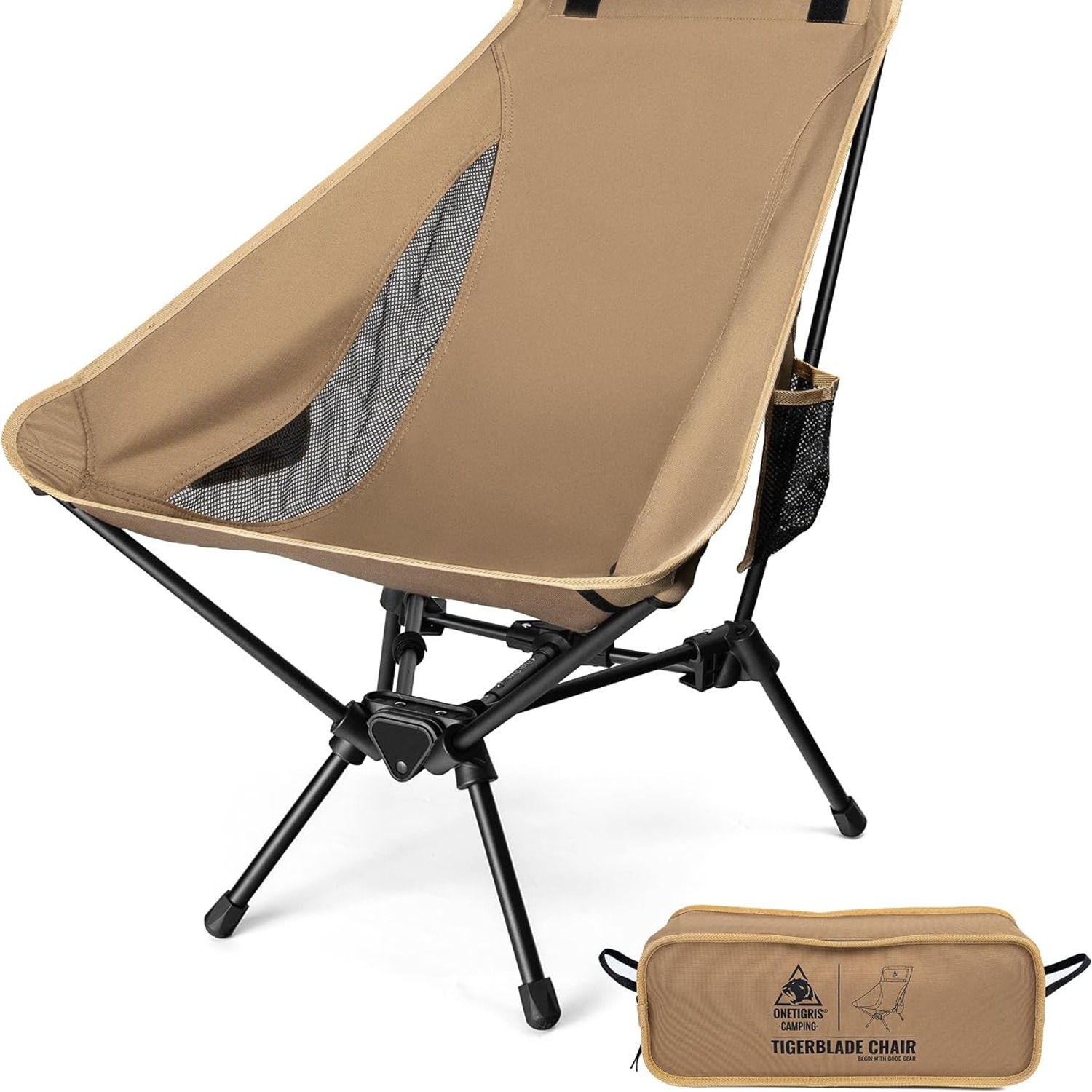
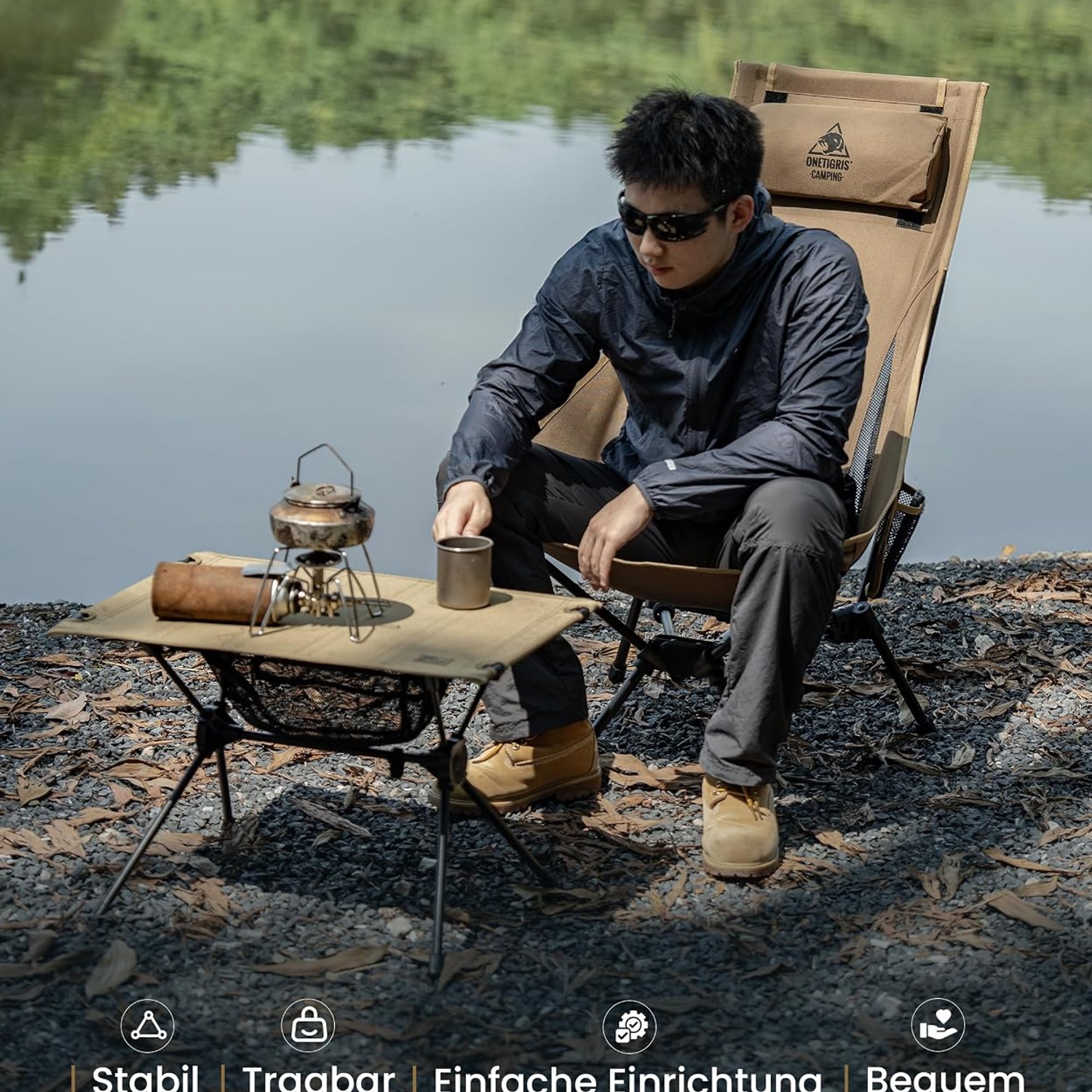
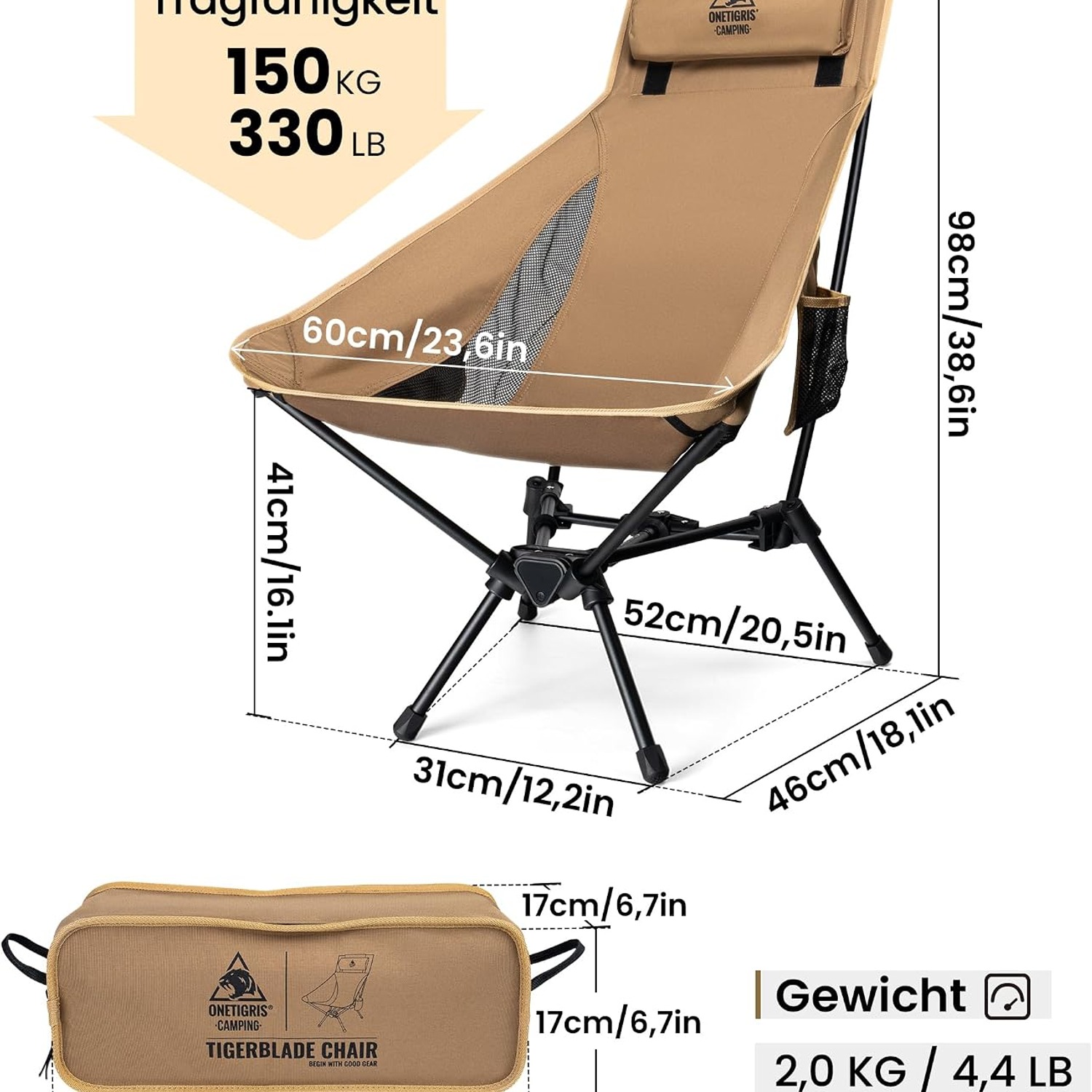
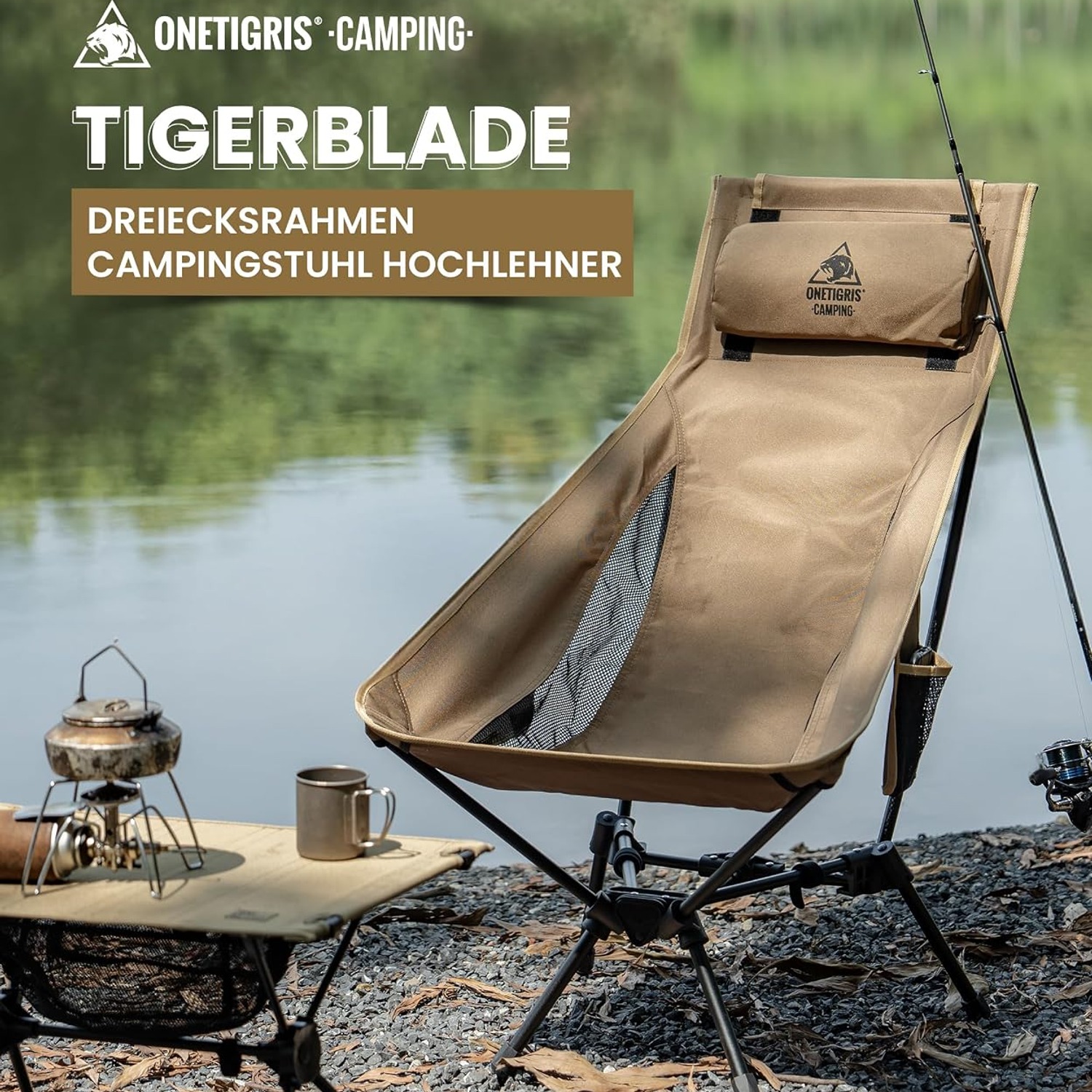
A high back camping chair solves this in the simplest way possible. The back is taller. On this OneTigris model it reaches 98 cm from the ground, which puts fabric behind your shoulders rather than underneath them. Add a removable headrest and your neck finally gets to stop working.
How the design works
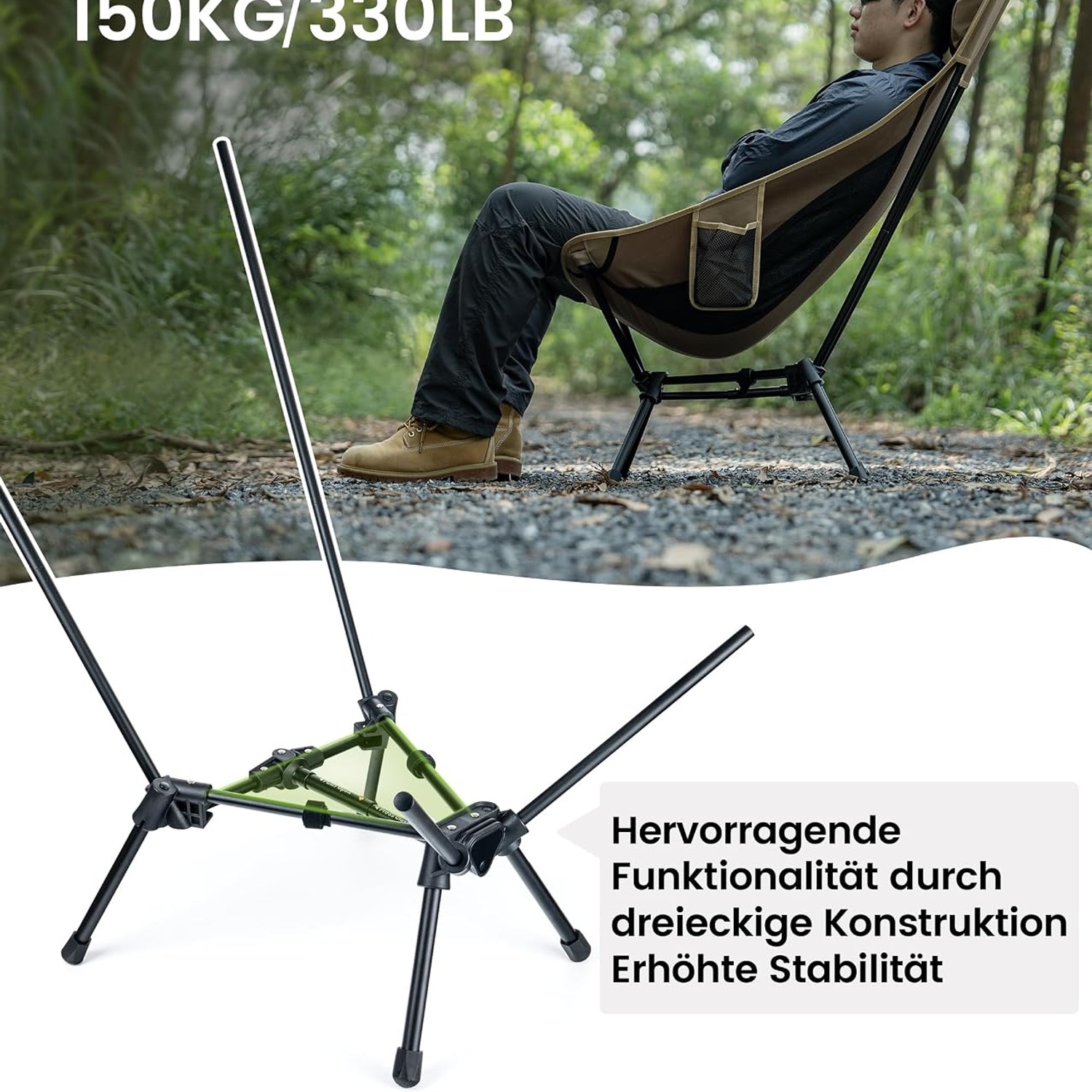
The frame is aluminium alloy. That choice drives most of the chair's character. Aluminium is light, it does not rust the way untreated steel does, and it holds a shape well enough that the chair does not sag into a hammock after a season. The entire chair comes in at 1.96 kg.
Think about what that number means in practice. Two kilograms is about the same as a full drink bottle. You can carry the chair in one hand and still have the other free for a cooler, a rod or a toddler. Weight is the reason chairs get left in the garage, and this one removes that excuse.
The seat and back are polyester. It is the standard outdoor fabric for good reasons. It dries fast, it does not absorb much moisture, it takes a wipe-down without complaint, and it holds colour in sunlight better than most alternatives. Mesh panels on the sides let air pass through, which you appreciate on a humid evening when a solid-fabric chair would have your shirt stuck to your back.
Assembly is required the first time, and instructions come in the box. After that it is a fold-and-go item. The chair is listed as foldable but not tilting and not extendable, so there are no adjustment levers, no reclining positions and nothing to fiddle with. Fewer moving parts means fewer things to break at the worst moment.
Who this chair suits
Car campers get the most obvious benefit. If your camp is a short walk from the vehicle, you have no reason to settle for a chair that only supports half your back.
Anglers are the other natural fit. Sitting still for hours is the whole activity, and a high back with a headrest makes that far less punishing. The two side pockets end up holding a phone, pliers, a spare spool and whatever else otherwise lives in the dirt. For anyone comparing options for the best chair for camping and fishing, low weight plus head support is usually the winning combination.
Then there is everyone who wants a comfortable spare seat. Caravanners using an annex. Parents on the sideline at junior sport. Market stallholders. People who need an extra chair twice a year and do not want to store a bulky one. The Brown Coyote colour is plain enough that it looks fine on a patio or deck without screaming camping gear.
Tall people deserve a specific mention. If you are over about 185 cm, most folding chairs genuinely do not fit you. The 98 cm back and 60 cm seat width here give more to work with. It is one of the few categories where the specs on the page actually predict how it will feel.
What to check before you buy
Start with height, since that is the whole point. Sit upright in a dining chair and have someone measure from the seat to the top of your shoulders. Compare that to the chair's back. If the chair back clears your shoulders you will get the support you are paying for.
Next, think about where it will be used. Firm ground, a campsite, a deck or a lawn all suit a chair like this. Very soft sand is harder on any folding chair, because the legs sink unevenly. It still works, you just have to accept some digging in.
Consider the width. Sixty centimetres across is comfortable for most adults without being so wide that the chair feels like furniture. If you usually sit with a jacket on or like to cross your legs, that extra room helps.
Check your storage and transport space. A folded chair of this type is slim and under 2 kg, but every boot is different. Measure once if you drive something small. The included storage bag keeps the folded shape tidy and stops the frame scratching other gear.
Finally, be clear about what the chair does not do. It does not recline. If you want multiple back angles and a footrest, this is not that chair, and you will be adding a couple of kilograms to get those features. Many people looking for the best lightweight camping chair end up deciding the trade is worth it, because weight is what gets a chair used.
Getting the most from it
Setting up well matters more than people expect. Open the chair on reasonably level ground and press the legs down so all four make contact. A chair that rocks on one leg feels unstable even when it is perfectly sound.
Use the headrest when you are lounging and take it off when you are eating or working with your hands. That is the advantage of a removable one. You get two setups out of one chair.
Keep the side pockets for small things. They are designed for a phone, keys, a torch or a snack, not for heavy gear. Loading one side heavily throws off the balance when you stand up.
Care and storage
Cleaning is simple. Spot clean the fabric with mild soap and cool water. Do not use bleach or strong solvents, and do not put it in a washing machine. The fabric has a surface finish that helps it shed dirt and moisture, and aggressive chemicals strip that off.
Let it dry completely before folding. This is the single most common way camp chairs get ruined. A damp chair folded into a bag in a hot car grows mildew within days, and once that smell is in polyester it is hard to remove.
After beach or dusty trips, brush or rinse grit out of the frame joints. Sand in a folding mechanism wears the metal and makes the chair stiff. Salt water deserves a fresh water rinse, then a dry in the shade.
Store it folded, in its bag, somewhere dry and out of direct sun. Sunlight is the slow killer of outdoor fabric, and a chair that lives in a shed will outlast one that lives on an open deck by years.
Matching the chair to the trip
For a weekend at a campground, this chair is an easy yes. Short carry, long sitting, exactly what it was built for.
For a walk-in campsite a few hundred metres from the car, still a yes. Under 2 kg is manageable over that distance, especially with the carry bag over a shoulder.
For multi-day hiking, probably not. Hikers who want a seat usually carry something under 700 grams with no back at all. This chair is comfort-first, which is the right priority when you are not carrying it far.
For home and casual use, it is a quiet winner. A light, good-looking folding chair that stores flat and supports your whole back is useful far more often than a camping-only item.
The short version
This is a 1.96 kg folding chair with an aluminium frame, a polyester seat, mesh side panels, two pockets and a 98 cm high back with a removable headrest. It measures 43 by 60 by 98 cm set up, comes in Brown Coyote, and includes a storage bag. It folds but does not recline or extend.
If you have been putting up with a chair that stops at your shoulder blades, the upgrade is noticeable within the first hour. Light enough to bring, tall enough to actually rest against, and plain enough to use at home as well as at camp.