
The complete guide
How to Choose a Portable Camping Table That Actually Gets Used
The problem with camp tables
Everyone who camps has owned a table they stopped bringing. It was either too big to justify the boot space, or so flimsy that a mug of tea made it sway. Both end up in the same place, stacked in the garage behind the paint tins.
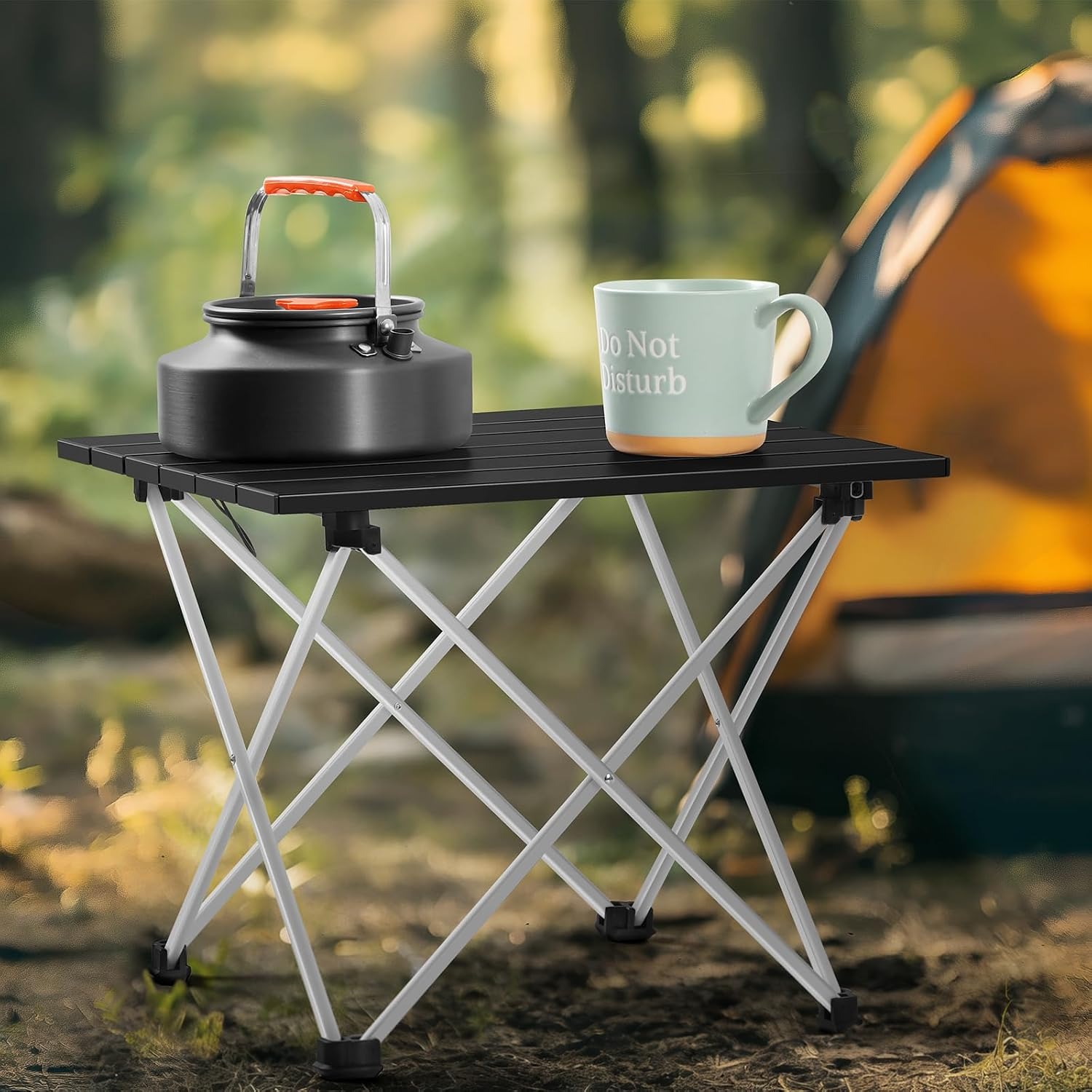
The fix is not a bigger table. It is a table sized to the job it actually does on a trip. Most of the time you are not seating six for dinner. You are looking for somewhere to stand a stove, put a plate down, rest a book or keep your phone off the dirt. That is a small flat surface at a comfortable height for someone sitting in a camp chair, and it should disappear into your kit when the trip is over.
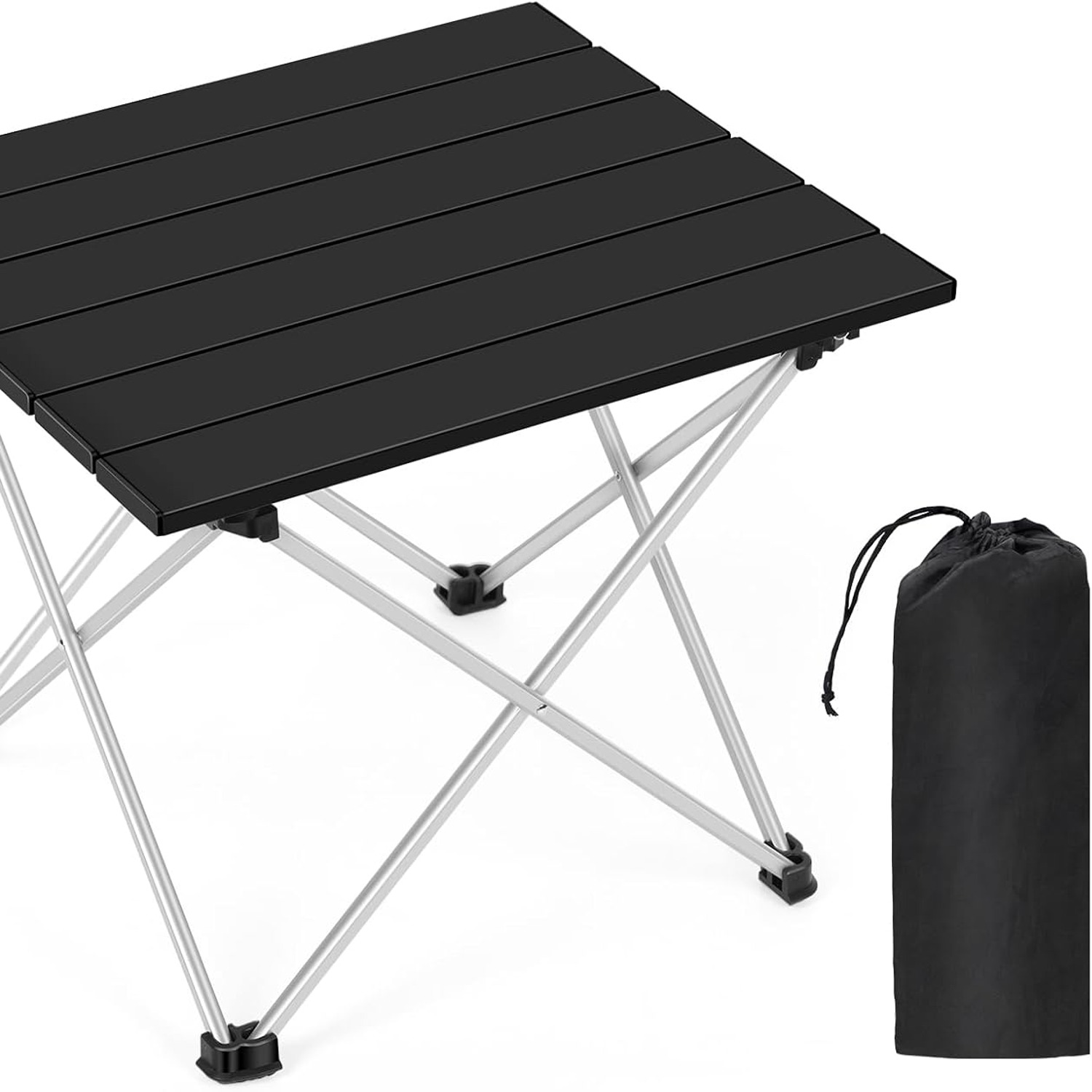
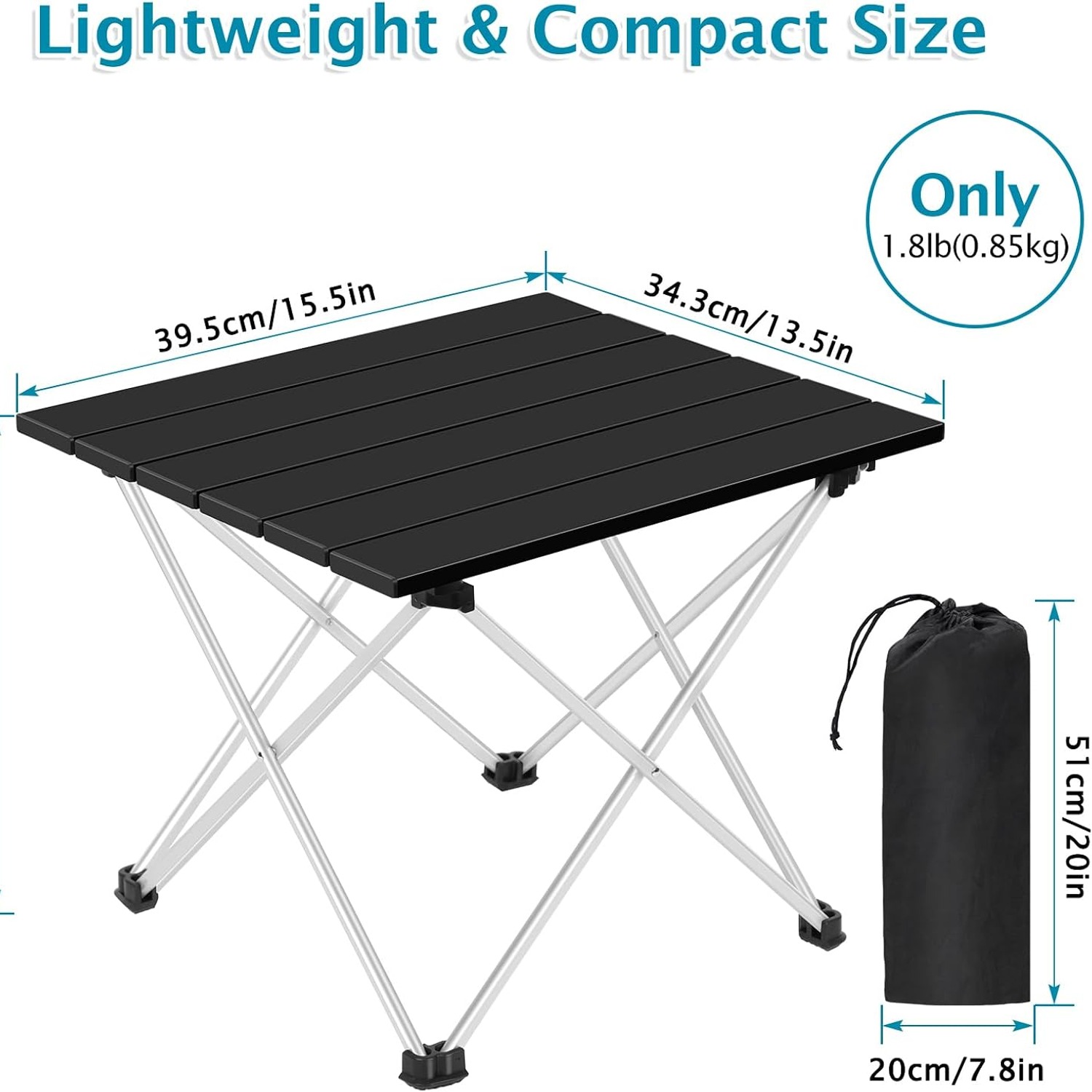
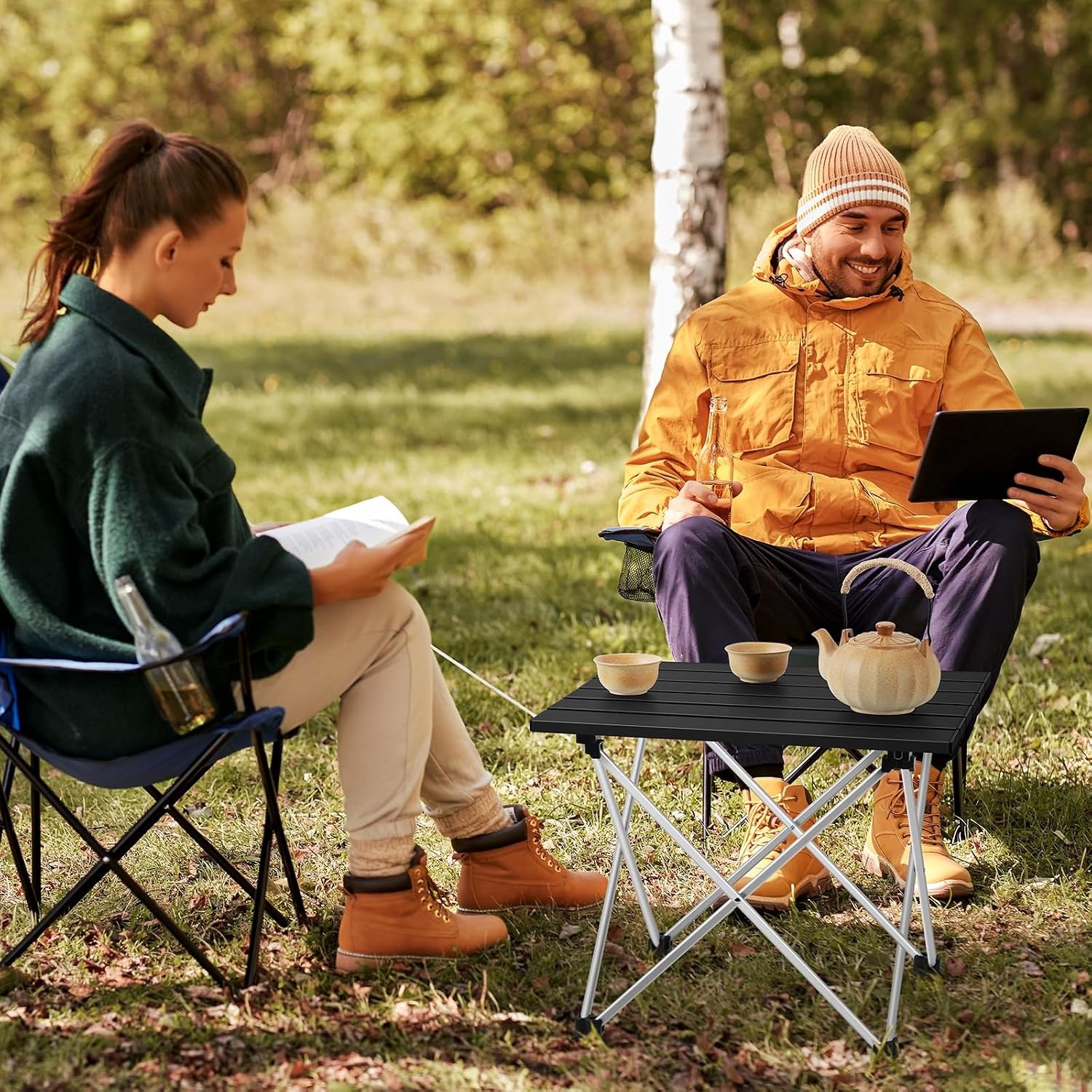
This table is built around that job. The top is 39.6 cm by 34.5 cm, the height is 32.5 cm, and the whole thing weighs 780 grams. Folded it is about 440 mm long. Those numbers are the whole argument.
How it works
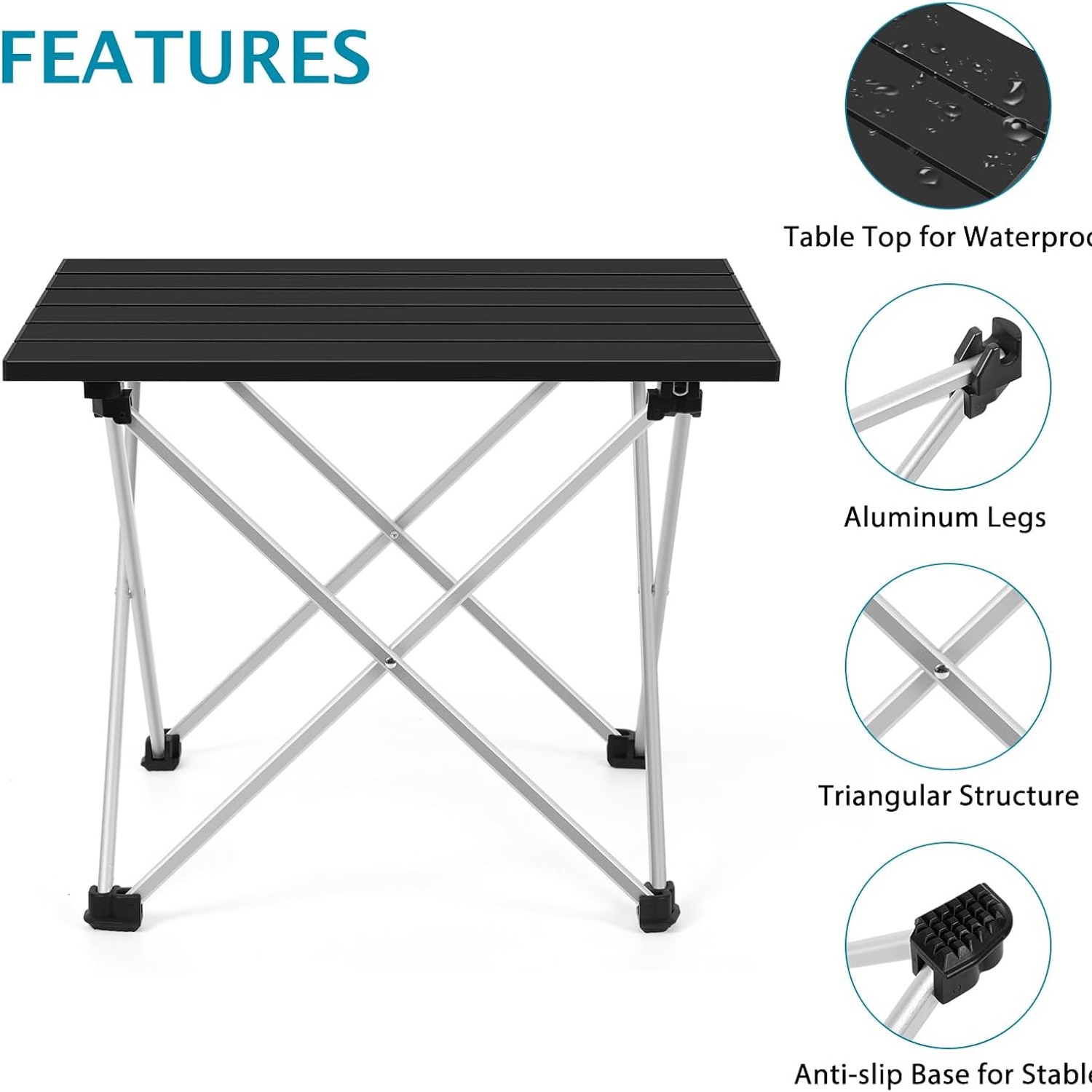
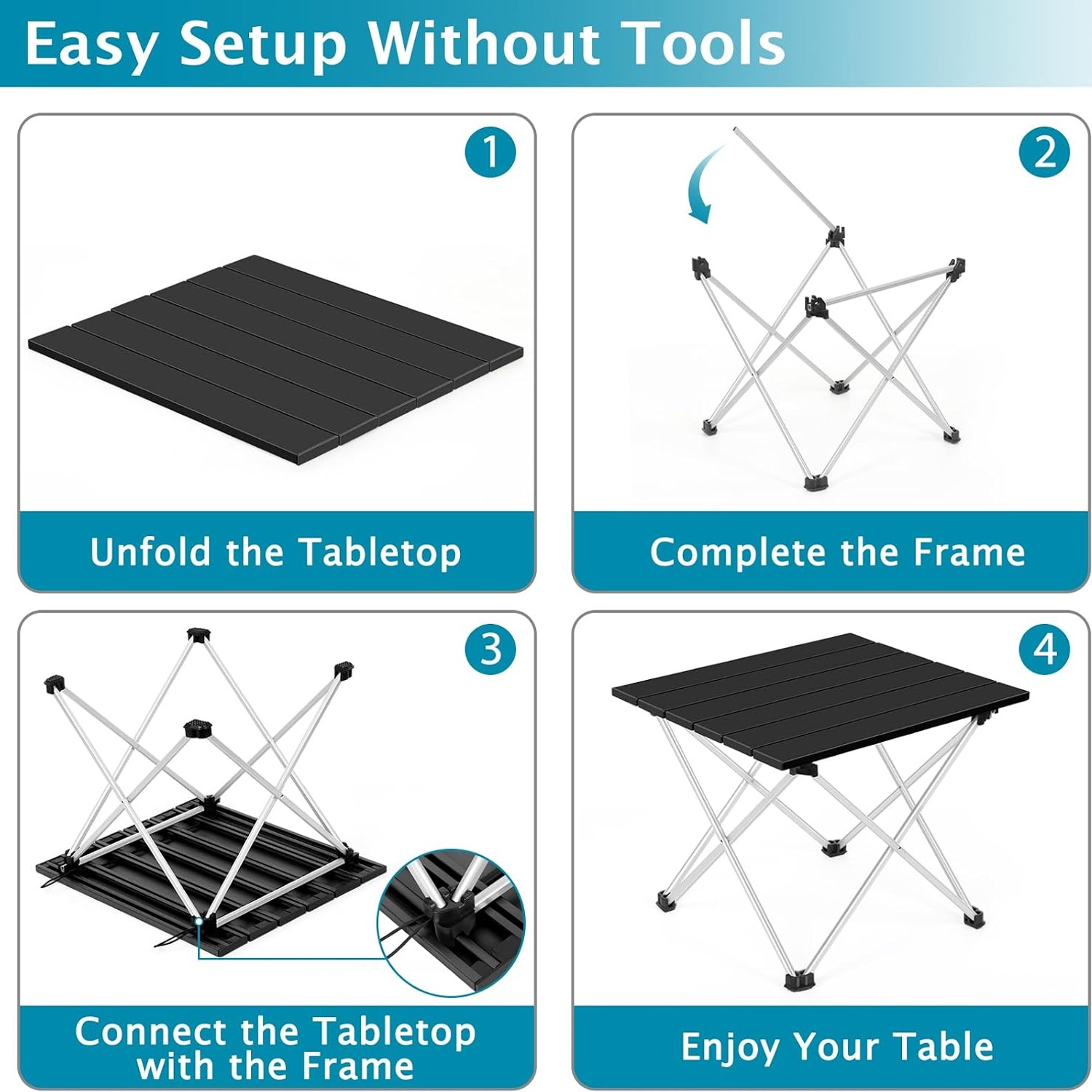
The design is two parts that lock together. An aluminium alloy frame with straight legs and a cross base gives the structure, and a roll of plastic slats forms the top. Hinged joints connect them, so when the legs spread out the slats pull taut and sit flat.
That tension is what gives a roll top its stiffness. Rather than relying on one rigid board, the frame pulls the slats into a flat plane and holds them there. The listed maximum load is 22.68 kg, which is far more than a camp kitchen puts on a table. The number matters less as a target and more as a sign that the frame is not going to flex when you lean on it while pouring hot water.
The frame carries a powder coated finish, which is the normal way to protect aluminium outdoor gear from scuffs and salt. Aluminium itself does not rust like steel, so a knock that chips the coating is cosmetic rather than the start of a problem.
Setup needs no tools. The assembly guide in the box covers the first time, and after that it becomes muscle memory. Open the frame, unroll the top, seat it, done. Packing away is the same in reverse and the bundle rolls up slim.
Who it suits
Car campers get the most out of a table this size. You already have chairs, a stove and a cooler, and the table slots in as the missing surface between them. It takes up almost no room in the packing order.
It also suits beach days, fishing sessions, tailgates and roadside picnics. The listed recommended uses cover camping, picnics, barbecues, hiking, fishing and the beach, which is a fair summary of where a low, light, wipe clean table makes sense. Anyone hunting for the best beach folding table usually lands on something like this, because sand brushes out of the slat gaps instead of grinding into fabric.
Day hikers and kayakers who stop for a long lunch will find 780 grams easy to justify. Hardcore ultralight walkers probably will not carry any table, and that is a fair call. Know which camp you are in before you buy.
Indoors it works as a low side table, a kids' craft surface or a spare perch when guests arrive. The room type listed includes playroom, which tells you something about how low and unfussy it is.
How to choose between folding tables
Start with height. Low tables around 32 cm suit camp chairs, picnic blankets and sitting on the ground. Taller tables around 70 cm suit standing to cook or sitting on a normal chair. Buying the wrong height is the single most common regret, because a table you have to stoop over gets left at home.
Next, look at the top material. Fabric tops are cheap and light but they sag under a point load like a stove leg, and they stay damp. Plastic slat tops stay flat, wipe dry in seconds and handle spills. Solid aluminium tops are tougher again but heavier and bulkier. For a small table used around food, the slat top is the sweet spot, and it is why many shortlists for the best camp kitchen table skip fabric entirely.
Then check the folded length, not just the weight. A 440 mm pack length fits places a 700 mm one does not, and that difference decides whether the table lives in the car permanently or gets left behind. Measure the gap behind your seats before you buy anything.
Finally, be honest about load. A rated 22.68 kg limit is plenty for a stove, a pot and a few plates. If you are planning to set a full cooler on top, you want a different class of table. Matching the rating to the real job keeps you from overbuying.
Setting it up well
A few small habits make a light table feel far more solid.
Pick your ground first. Grass, packed sand and gravel all work. Very soft sand or a slope will make any low table lean, so spend ten seconds finding a flatter patch instead of fighting it later.
Load the centre, not the edges. A small square top concentrates the load at the corners, so a heavy pot right on the lip will try to tip it. Keep the stove and the heavy items near the middle and use the edges for cups and cutlery.
Use a heat mat under hot cookware. The top is plastic, so a trivet, a flat stone or a small board between a hot pan and the slats protects the surface. That one habit adds years to a table like this.
Give it a wipe before it goes away. A damp cloth over the slats and a quick brush through the gaps takes less than a minute and stops crumbs and sand living in the bag.
Looking after it
Care is straightforward. Wipe the top with a damp cloth, dry it, and store it in its bag somewhere dry. The slats are listed as stain resistant, so most spills come off with water and mild soap. Avoid scouring pads, which scratch plastic and scuff powder coating.
Hinges are the one moving part worth attention. Sand and grit are what wear them, not use. Brush or rinse around the joints after beach trips and let everything dry fully before folding. If a hinge feels tight, clean it rather than forcing it.
Do not store it damp. Nothing on this table will rust, but a bag that stays wet gets musty and that smell transfers to everything else in the camping tub.
Leaving it set up outdoors for weeks is not what it is for. Sun degrades plastic over time. Bring it in between trips and it will keep working for a long run of seasons.
A few honest limits
This is a small table. Three people can share it for snacks and drinks, two can eat off it comfortably, but it is not a dining table. If you need a food prep surface for a family of five, look at a trestle style instead and accept the boot space cost.
The 32.5 cm height is low. That is right for camp chairs and blankets and wrong for standing to chop vegetables. Check your chair height against it before ordering.
Colour, country of origin and warranty terms are not specified in this product record. We would rather say that plainly than guess. Your statutory consumer rights apply wherever you are buying from, and we handle faults and damage through the normal returns process.
The short version
If you want one small, light table that lives in the car and comes out whenever you stop somewhere nice, this is a sensible pick. The aluminium frame and plastic slat top weigh 780 grams together, the surface is 39.6 cm by 34.5 cm at 32.5 cm high, and the whole thing folds to about 440 mm for storage. The 22.68 kg rating covers everything a camp kitchen will put on it.
Set it on firm ground, load the middle, use a mat under hot pans, and wipe it down before it goes in the bag. Do that and it stays the table you keep bringing rather than the one that lives in the garage.