
The complete guide
How To Choose A Folding Camping Chair That You Actually Carry
The problem with most camp chairs
Here is how it usually goes. You buy a camping chair, it is cheap and it feels sturdy in the shop, and you use it twice. Then you realise it fills a third of the boot, weighs about six kilograms and has to be lifted out before anything else can come out. So it stays in the garage. On the next trip you stand around the fire or perch on a cooler lid, and by nine o'clock your back is telling you about it.
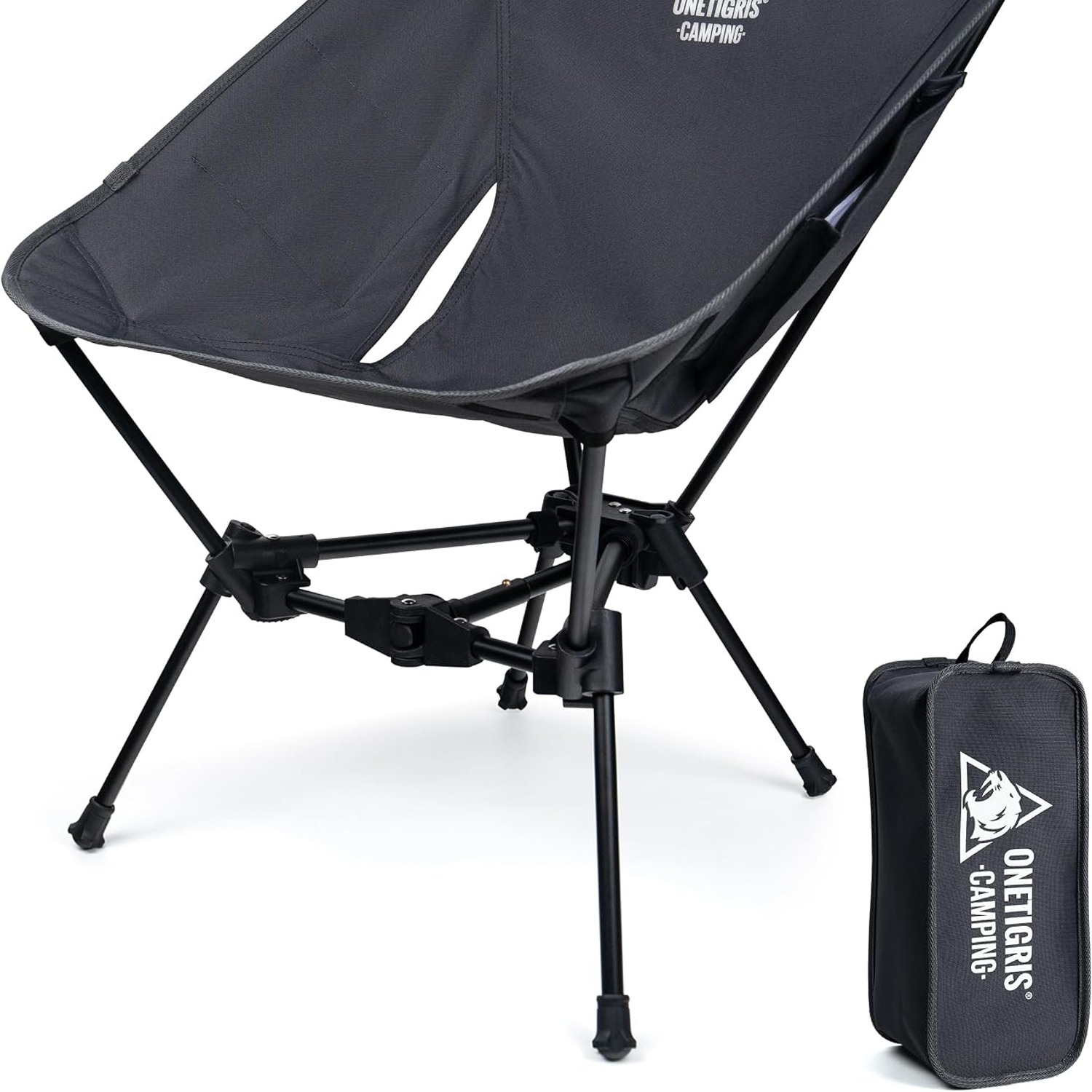
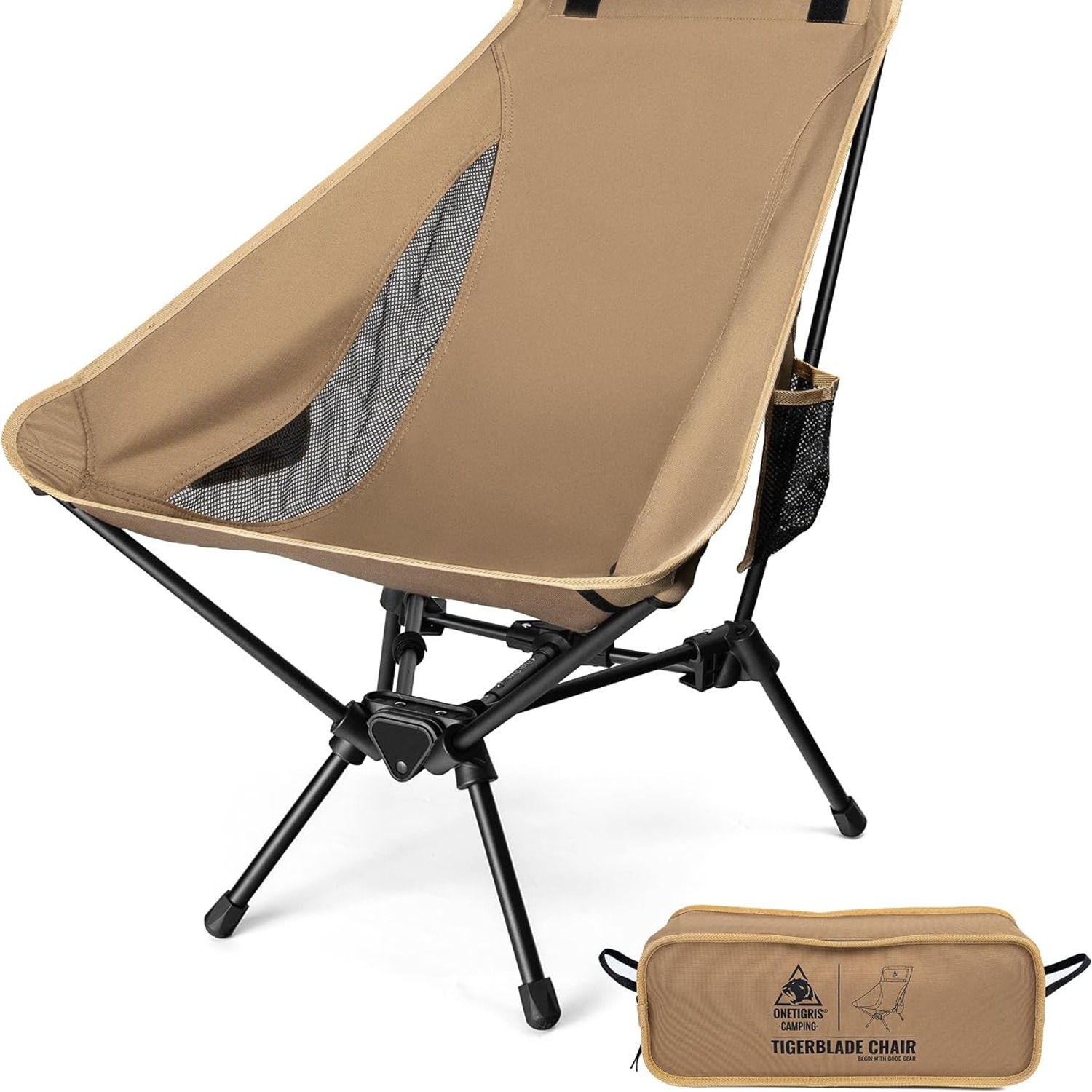
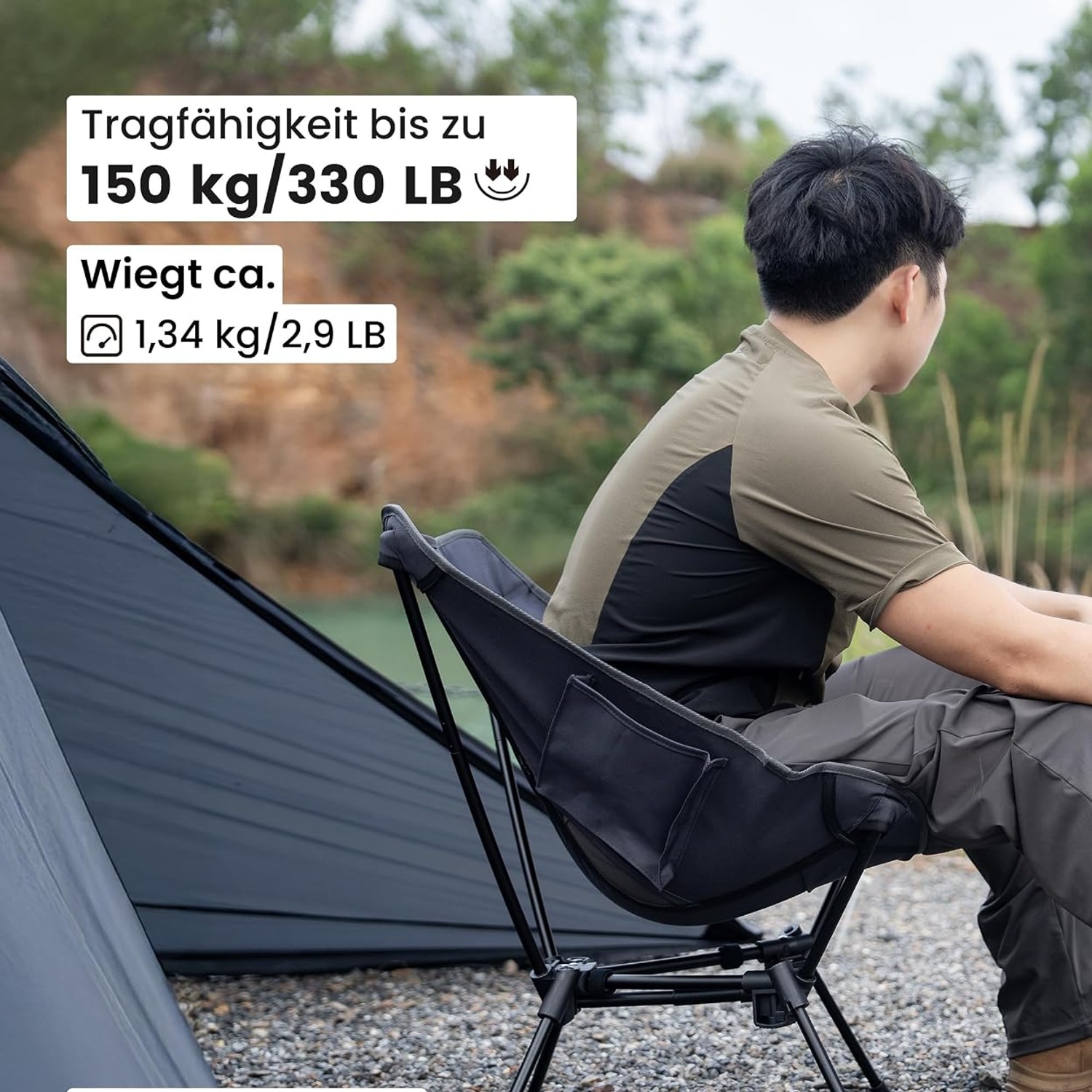
The fix is not a better chair in the sense of a bigger chair. It is a chair light enough and small enough that the question "should I bring it?" stops being a question. That is the whole design brief behind a lightweight camp chair like this one. At 1.4 kg, with a frame that breaks down into a bag, the decision to bring it costs you almost nothing.
How a packable chair holds a person up
It looks improbable the first time you see one. Thin aluminium poles, a slip of fabric, and a weight rating of 150 kilograms. The trick is in the geometry rather than the thickness of the metal.
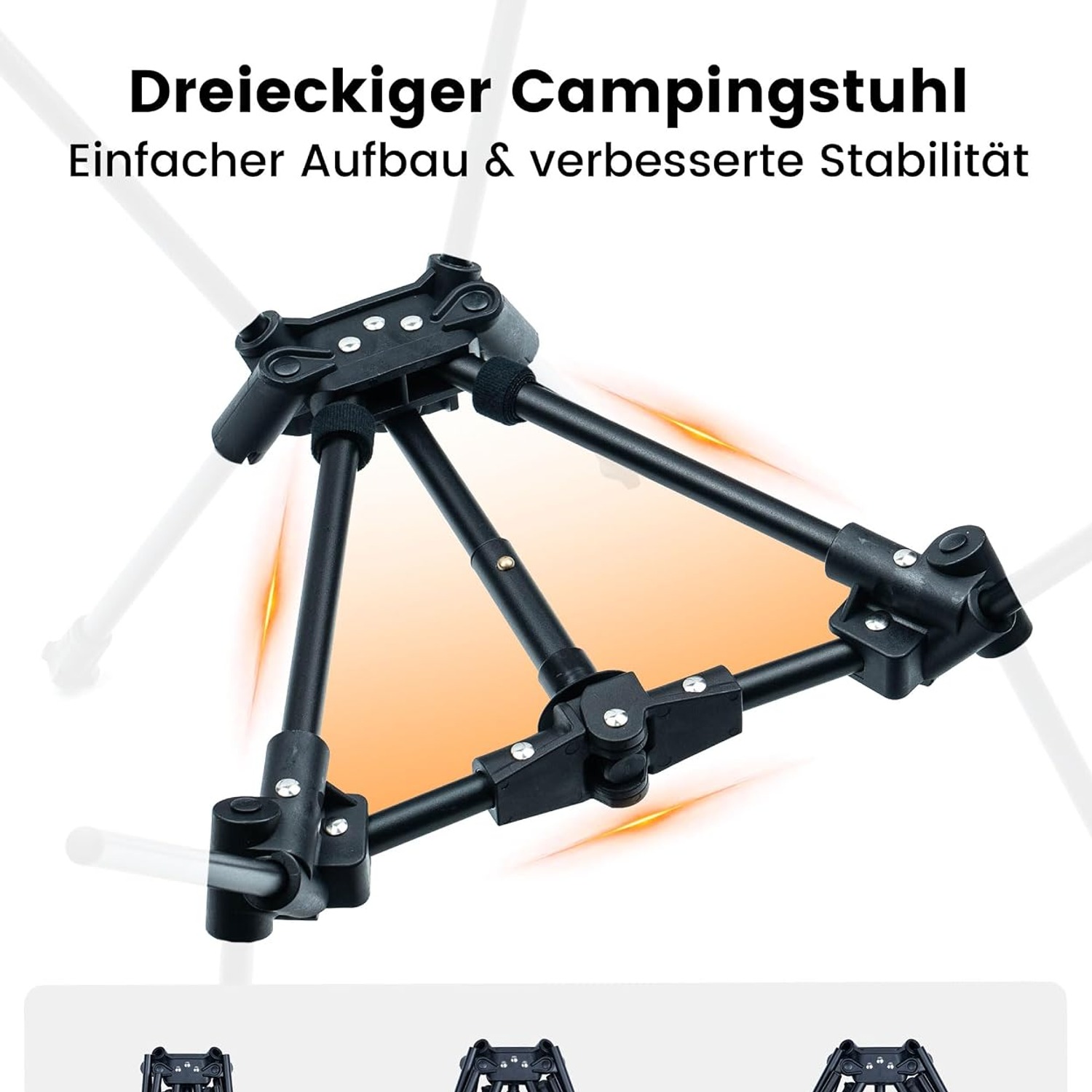
The frame uses a central connecting rod that divides the base into two triangles instead of one open rectangle. A rectangle made of poles wants to collapse into a parallelogram under load. A triangle cannot do that without one of its sides changing length, and the poles do not stretch. So the load you put on the seat gets pushed outward along the legs rather than folding the frame sideways.
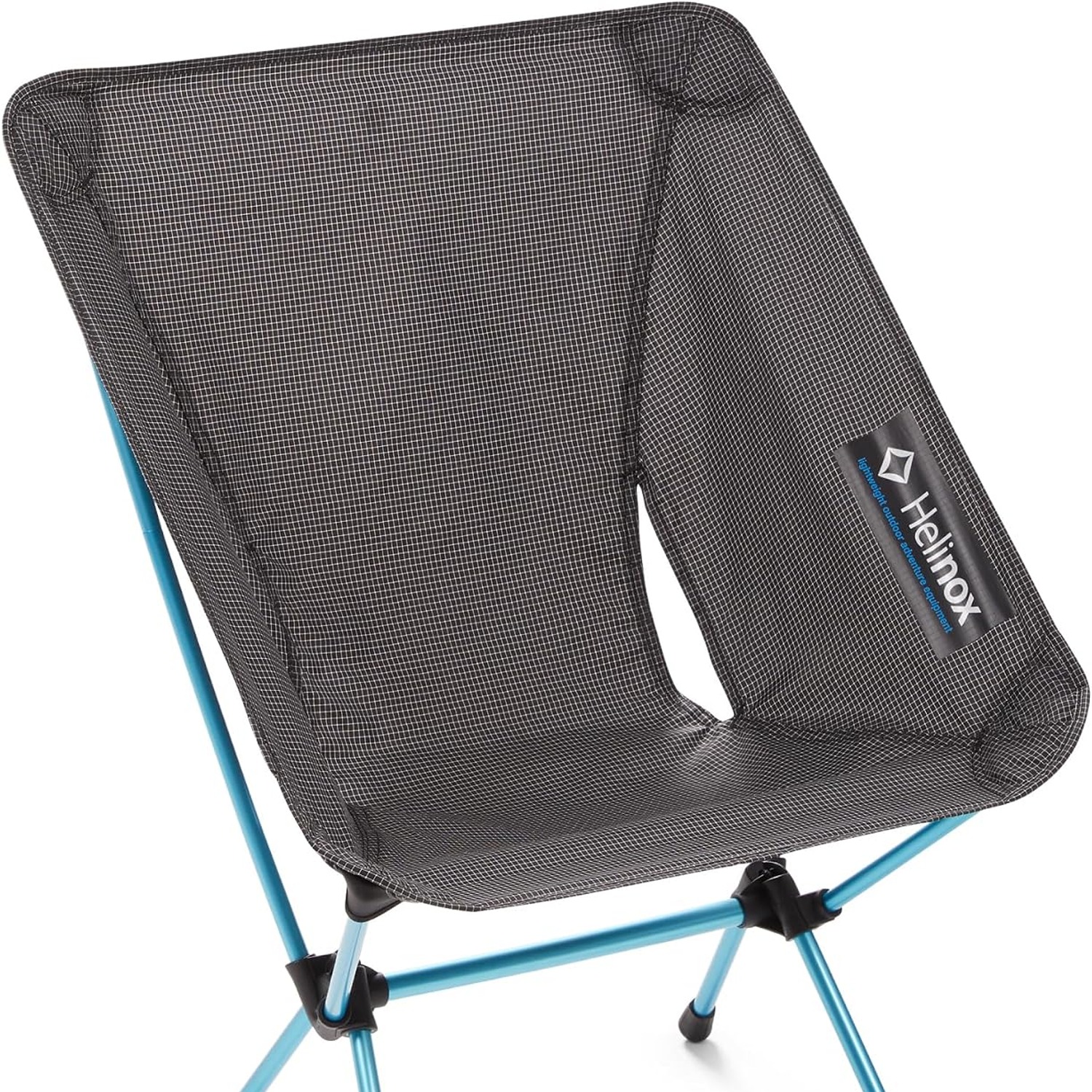
The fabric does its share too. The seat is polyester with polyester fill, and it works in tension. When you sit down, the cloth pulls the frame tips together and tightens the whole structure. That is why these chairs feel slightly loose when empty and solid once someone is in them. It is not a flaw, it is the design working.
Aluminium is the other half of the equation. It gives good stiffness for its weight, which is why it shows up in tent poles, trekking poles and bike frames. Steel would be cheaper and heavier. Carbon would be lighter and far more expensive to replace when it gets stood on in the dark.
Who this suits
Campers who walk in from the car park, or carry gear any distance at all, get the clearest benefit. Six kilograms of steel chair is a genuine burden over a few hundred metres with a cooler in the other hand. One point four kilograms is not.
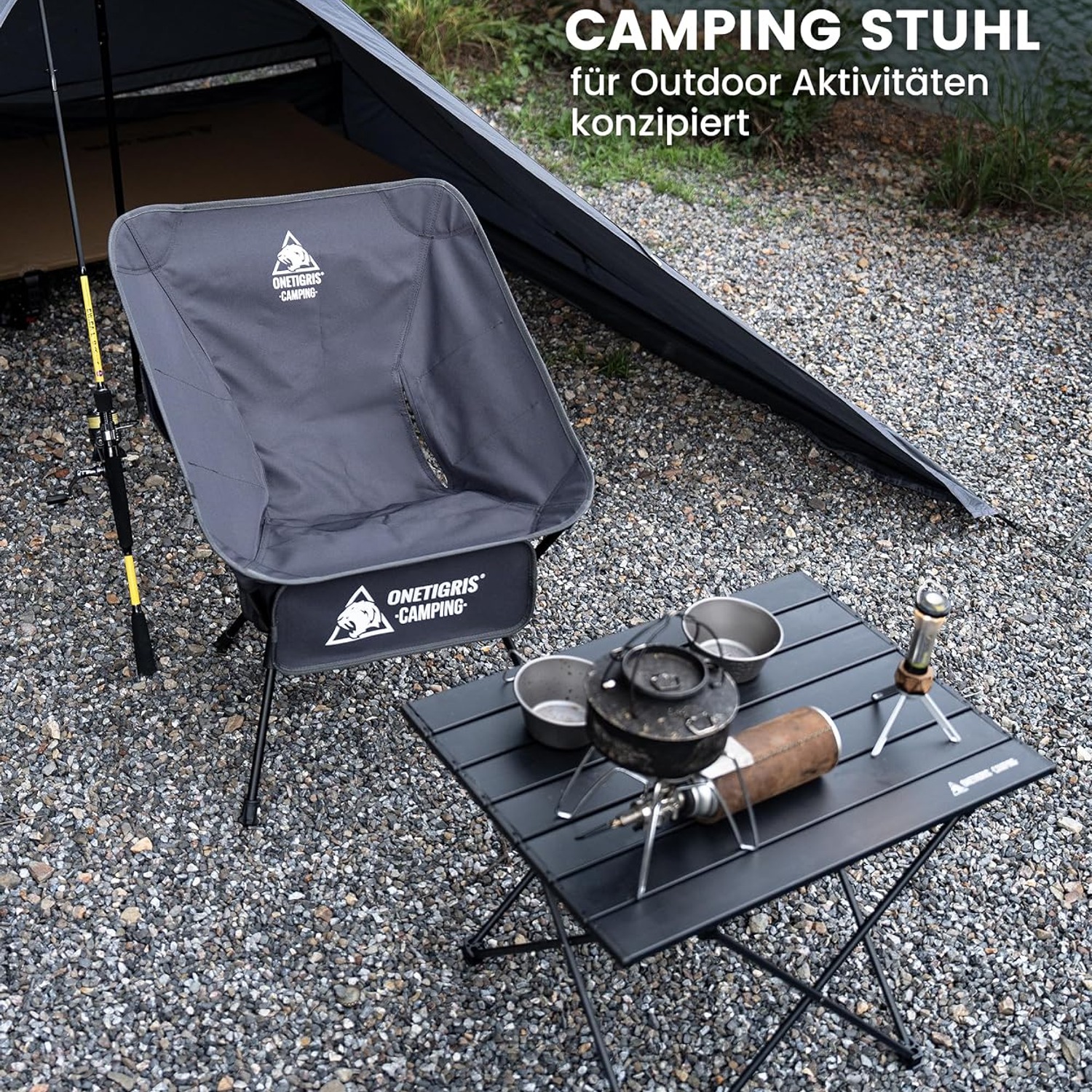
Anglers like this style because it carries easily to a spot and the armless design leaves your casting arm free. Festival and outdoor cinema regulars like it because they can carry it all day and stow it between acts. Parents at weekend sport use it because it lives in the car permanently without eating boot space. Gardeners and backyard cooks use it because it is the chair that happens to be closest to hand.
It also suits anyone sharing a small car. Four of these take up less room than one traditional folding chair with arms. If you have ever played boot Tetris at the start of a long weekend, that matters.
Who it suits less well: anyone who wants a deep, wide armchair experience with cup holders built into padded arms, and anyone who needs a high seat because getting up from low seating is hard. This is a 65 cm high chair with a relaxed lean and no arms to push off. Be honest with yourself about that before ordering.
How to choose between camp chair types
There are really four families of camp seating, and it helps to know which one you are shopping in.
Packable frame chairs. This one. Aluminium poles, tensioned fabric seat, storage bag, usually one to two kilograms. Best pack size to comfort ratio. You trade away armrests and cup holders.
Classic quad folding chairs. Steel frame, arms, cup holder, fold up like an umbrella. Comfortable and cheap, but heavy and bulky. Fine if you drive right up to your pitch and have boot space to burn.
Stools and tripods. Tiny and very light, but no back support. Good for ten minutes at a lookout, rough for an evening.
Low chairs and ground loungers. Very relaxed, excellent around a fire, but hard to get out of and awkward for eating at a table.
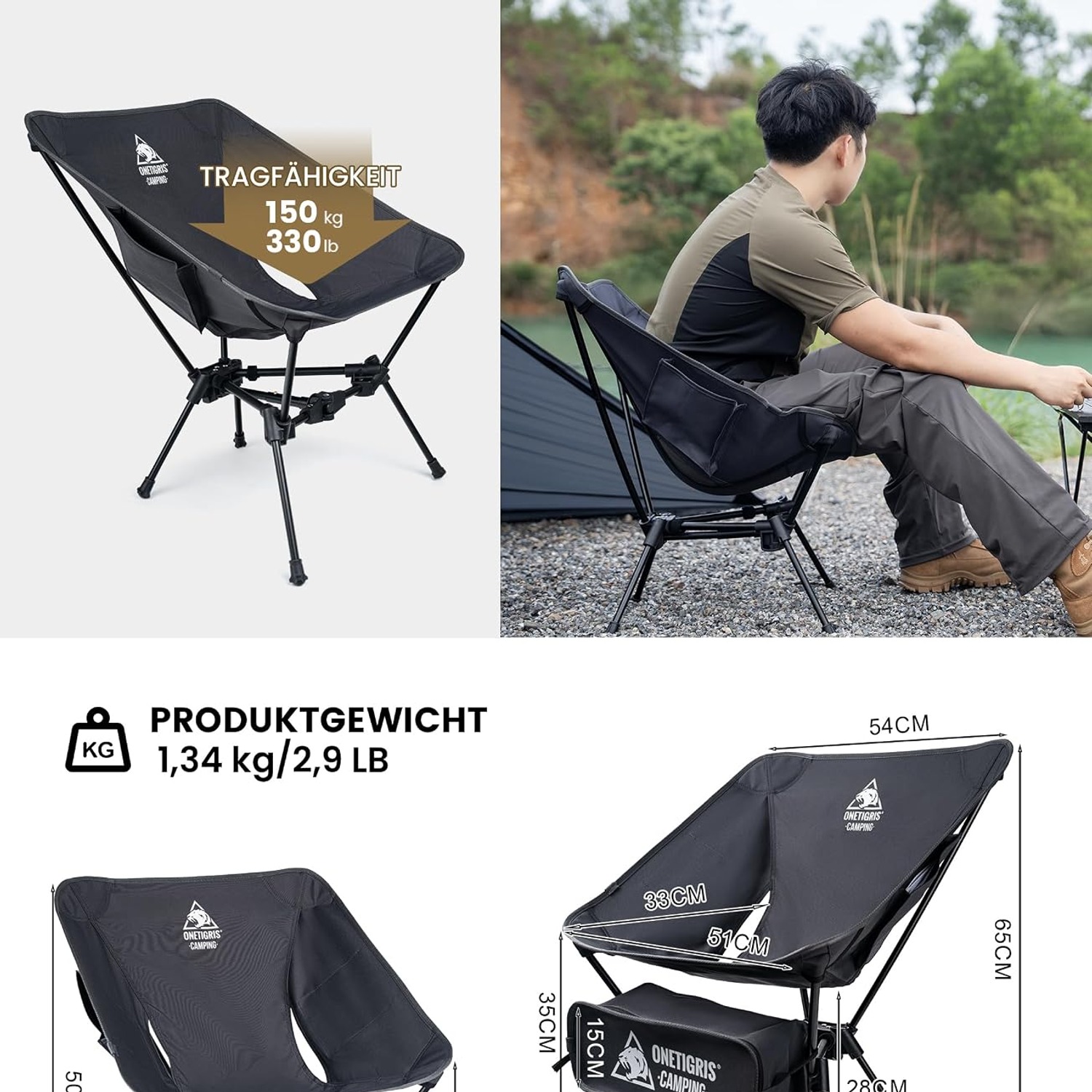
Once you know the family, the specs that actually matter are weight, weight rating, seat width and pack size. This chair lists 1.4 kg, a 150 kg maximum weight recommendation, set-up dimensions of 33 by 51 by 65 cm, and a storage bag in the box. Exact packed dimensions are not given in this record, so if you are planning around a specific pack pocket, measure what you have and allow a little room.
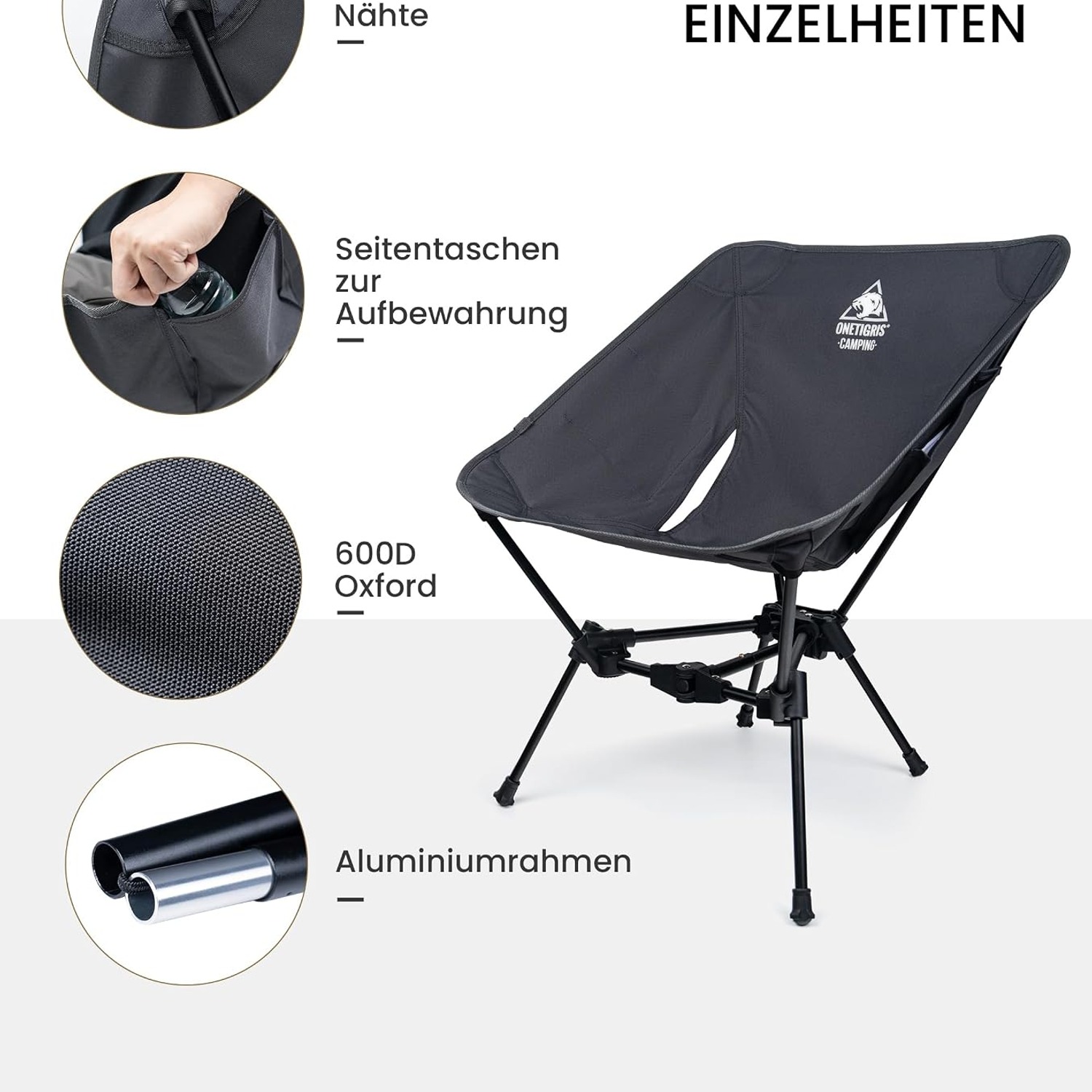
The small details are worth a look too. Two side pockets sound minor until you are reaching for a head torch without standing up. Flattened legs sound minor until you are on soft grass. Both are small design choices that show up in daily use.
Setting it up and taking it down
Shock-corded poles make this easy. Lay the sections out, let the cord pull them together, and the frame mostly builds itself. Lock the central rod so the base sits as two triangles. Then slide the fabric seat sleeves over the frame ends.
That last step is the only part with any resistance. The fabric is meant to be tight, so the final corner takes a push. Tip the chair slightly and use the frame's own flex rather than brute force. It gets easier after a few goes as the seat settles.
Taking it down is the reverse. Pull the fabric off, unlock the rod, fold the poles, bag the lot. Do it in that order and nothing gets bent.
Looking after it
Polyester is forgiving, but it is not immortal. Three habits will double the life of this chair.
Dry it before you bag it. Mildew on a damp seat is the single most common way camp chairs die. Even a few hours in the sun or over a chair back at home is enough.
Get the grit out. Sand and fine dirt work into pole joints and wear the alloy. A good shake and a wipe after beach or desert trips keeps the sections sliding properly.
Keep it out of permanent sun. UV breaks down fabric fibres slowly but surely. A chair stored on an exposed deck all summer will fade and weaken far faster than one that lives in a cupboard.
Cleaning is simple. Damp cloth, mild soap, air dry. No washing machine, no dryer, no bleach. If a shock cord goes slack after years of use, replacement cord is cheap and the repair is a quiet afternoon job.
The short version
If you already own a heavy steel camp chair and it never leaves the garage, that tells you what you need to know. A chair is only useful if you bring it.
This one weighs 1.4 kg, holds up to 150 kg, stands 33 by 51 by 65 cm when set up, and packs into its own bag. It has an aluminium frame, a polyester seat with a solid back, two side pockets, flattened legs and one fixed recline angle. It is armless and it needs a minute of assembly.
That is a sensible trade for most people who camp, fish, hike, garden or sit through junior sport on a Saturday morning. Bring it once and it will come with you every time after that.