
The complete guide
Choosing a Headlamp That You Will Actually Carry
The problem with torches
Dark happens earlier than you planned. The walk back takes longer than it should, the tent peg goes missing in the grass, the power cuts out while you are halfway through cooking. In every one of those moments, a handheld torch is the wrong tool, because the second you need both hands, you end up holding it in your teeth.
That is the whole case for a head torch. The light goes where your eyes go, and your hands stay free for the thing you are actually doing. It sounds minor until you have tried to pitch a tent in the wind with a torch wedged under your chin.
The second problem is that most people buy a head torch once, find it heavy or fiddly, and leave it in a drawer. A lamp that lives in a drawer has a brightness of zero lumens. So the real question is not "which is the brightest", it is "which one will I still be carrying in six months".
How a headlamp actually works
Inside is an LED, a reflector to shape the light, a battery compartment and a button. That is nearly all of it. The differences between lamps come down to four things: how much light the LED puts out, what shape the beam is, how long the batteries last, and how much the whole thing weighs on your head.
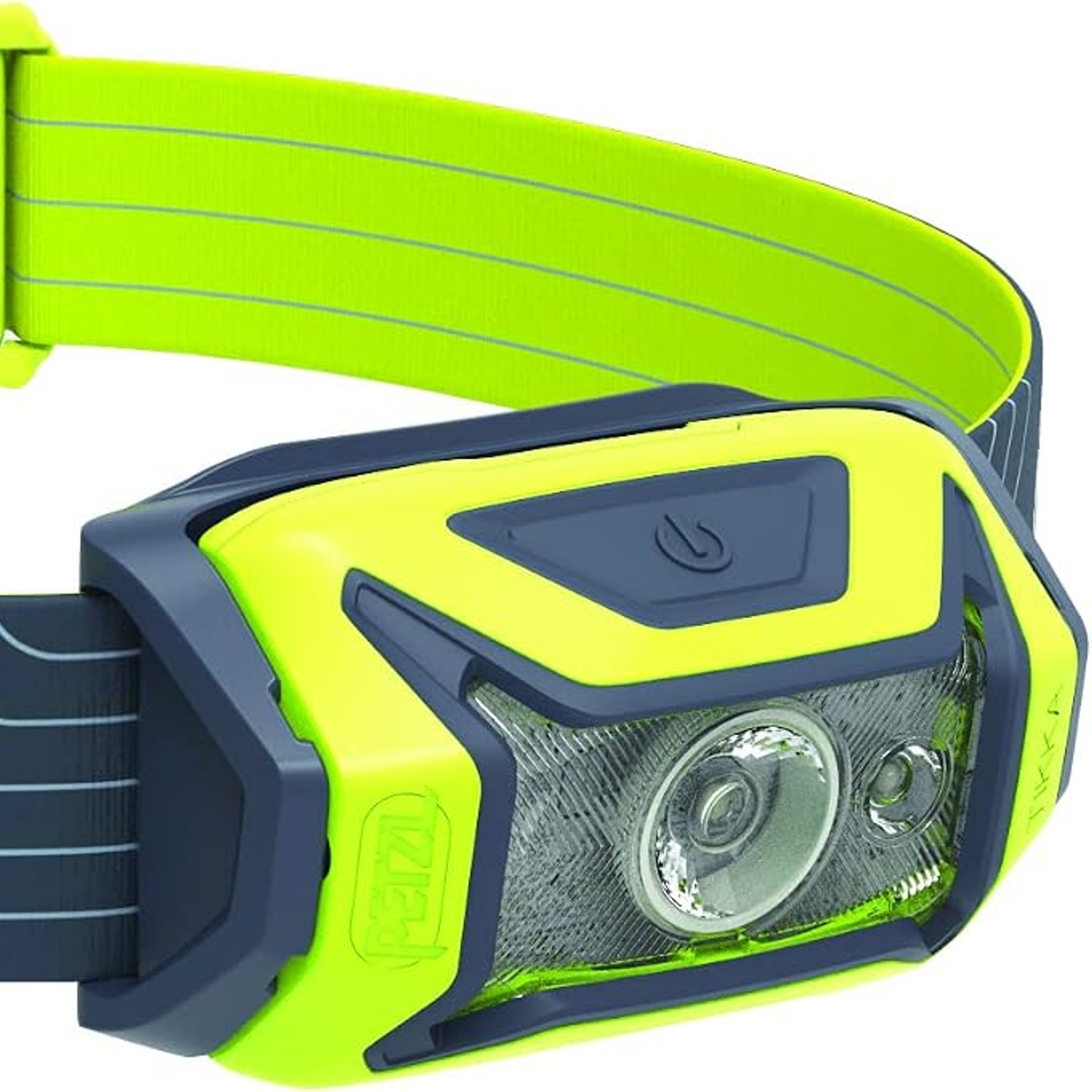
Output is measured in lumens. The Petzl TIKKA is listed at 350 lumens with a beam distance of 45 metres. Lumens tell you the total amount of light leaving the lamp, while beam distance tells you how far a usable amount of that light reaches. A lamp can be bright and short, or dimmer and focused into a long thin pencil of light.
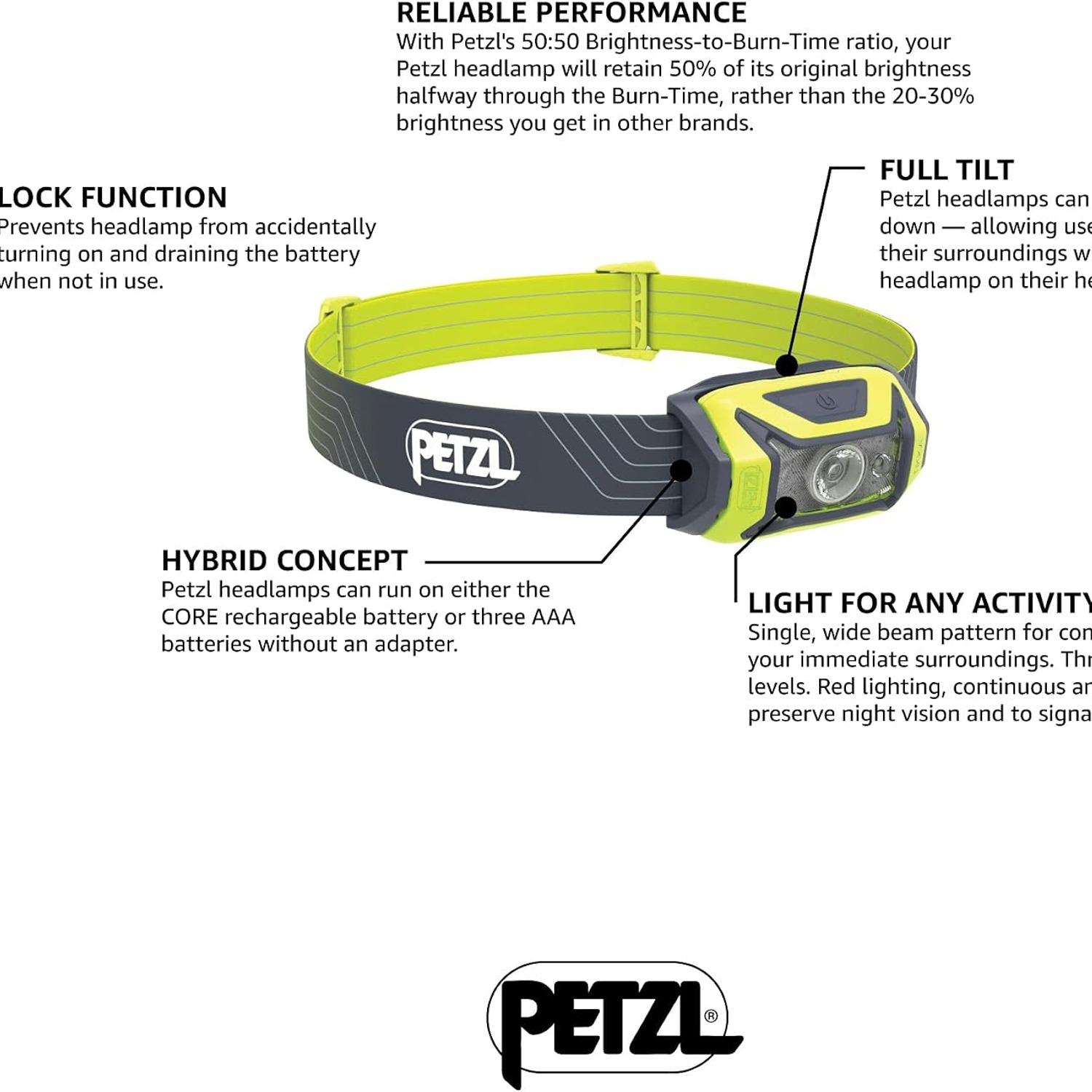
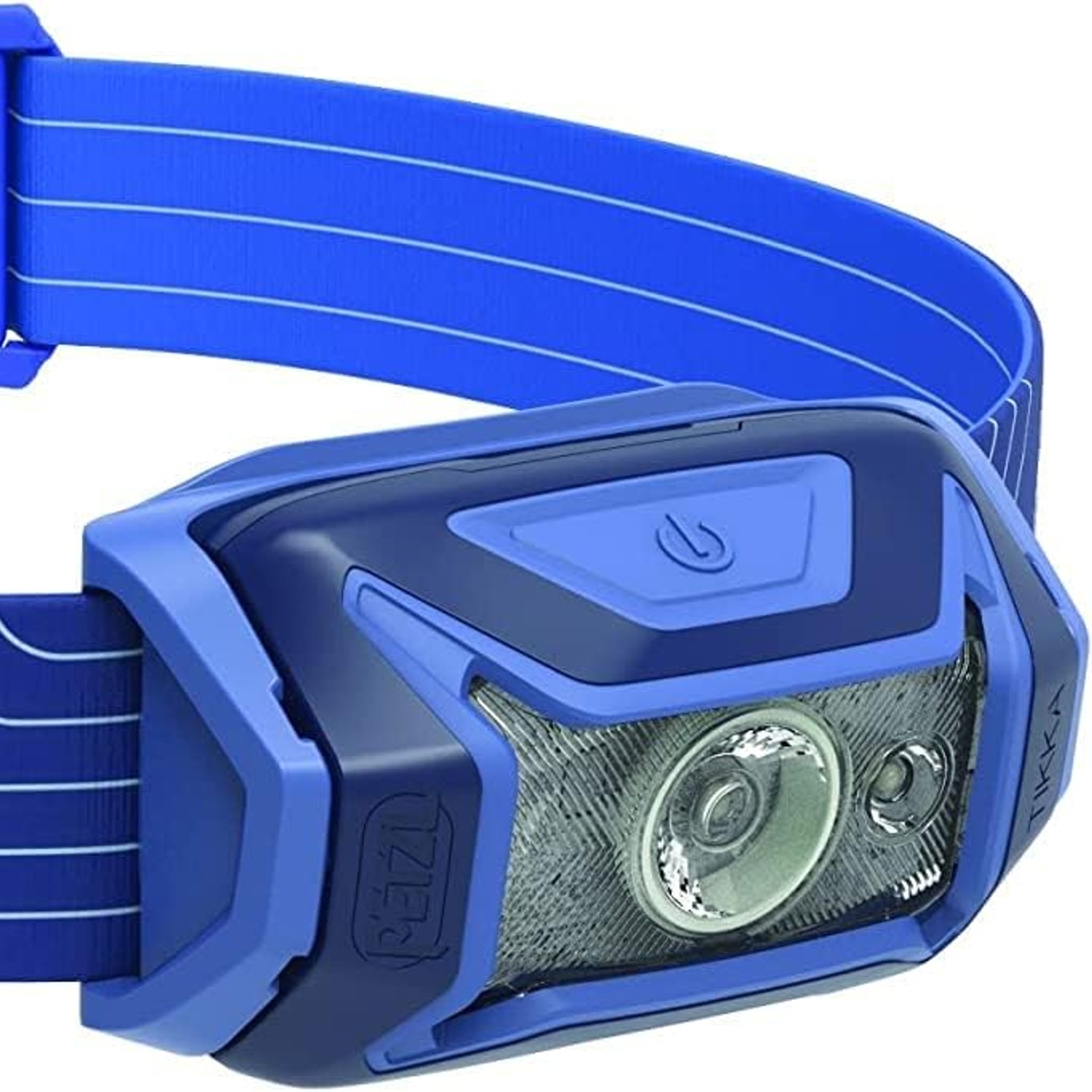
Beam shape is the part buyers tend to ignore, and it is the part you notice every single time you switch the lamp on. A flood beam spreads wide and even. A spot beam concentrates into a circle. The TIKKA uses a wide, uniform beam, which is deliberately aimed at proximity work, seeing your feet, your hands, the inside of a pack, the ground a few steps ahead. For camp and for most walking, that is far more comfortable than a narrow spot, because your peripheral vision is not left in the dark.
Runtime is the trade you make against brightness. This lamp offers three white levels, which Petzl describes as max burn time, standard and max power. Running at the lowest setting stretches the batteries a long way. Running flat out burns through them faster. The quoted figure is 6 hours, and in practice you will tune the level to the job rather than leave it on maximum.
Red light is the other mode worth understanding. Your eyes take roughly twenty minutes to adjust to darkness, and a flash of white light resets that in a second. Red light does not, or at least nothing like as much. So red lets you check a map, find your boots or read in a shared tent without blinding yourself or anyone else. On this lamp the red mode also flashes, which turns it into a locator or signal.
Who it suits
This is a general purpose lamp, and that is a feature. It suits weekend campers, day walkers, dog walkers, cyclists who want a backup, people who work on cars, anyone who keeps an emergency light in the car or the kitchen drawer.
It suits people who care about weight. At 94 g with batteries, it sits lightly enough on the forehead that you stop noticing it. Heavier lamps with big battery packs bounce when you move and leave a band of pressure across your head after an hour.
It suits people who want simple. One button cycles through the modes. There is no app, no menu, no sequence of long presses to memorise at 5am when you are cold and half awake.
It is less suited to a few specific jobs. If you are running fast down technical trails, or searching across open ground at distance, you will want a lamp built for throw rather than flood. If you work long shifts outdoors every night, a dedicated rechargeable work lamp with a bigger battery will serve you better. And it is water resistant at IPX4, not waterproof, so it is not the lamp for kayaking or anything that involves going under.
How to choose
Start with the hours, not the lumens. Ask yourself how long you will be using the lamp in one go. A twenty minute dog walk and a six hour night hike need very different settings, and the useful lamp is the one that lets you choose.
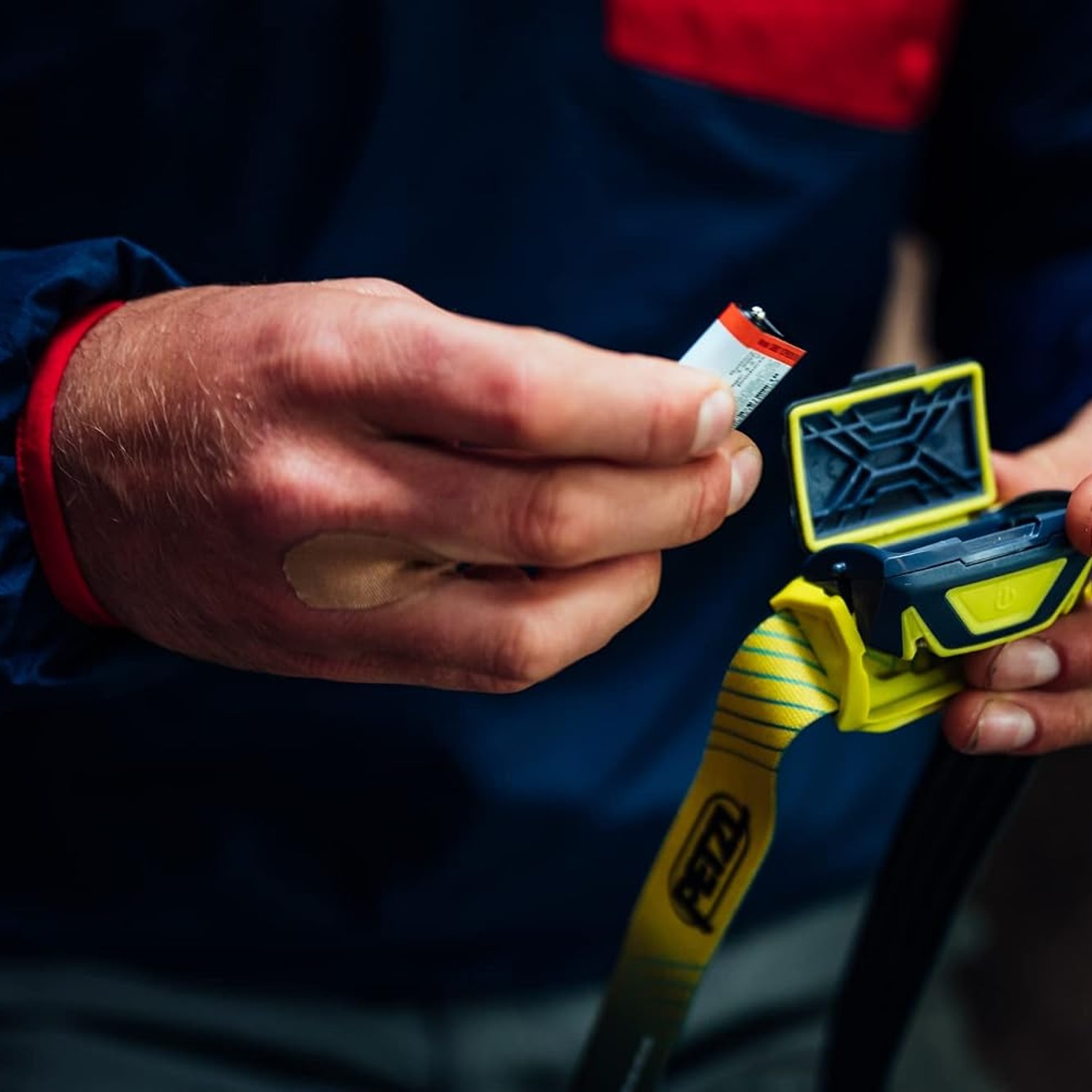
Then think about the battery. AAA cells are everywhere. You can buy them at a petrol station in a small town, you can keep spares in a side pocket, and you can run rechargeable Ni-MH cells at home to cut waste. This lamp takes three AAAs and they are included, so it works out of the box. It is also compatible with Petzl's CORE rechargeable battery if you later want to charge by USB, though that battery is sold separately and is not part of this purchase.
Weight next. Anything under about 100 g will feel light on the head. Above roughly 200 g you start to want a top strap. For a compact head torch for backpacking, lighter is almost always the right call, since you will be wearing it for short bursts rather than all night.
Then check the practical details that only matter after you own it. Can you tilt the beam down? The TIKKA tilts on a hinged plate, which means you can point the light at the ground instead of craning your neck. Does it tell you the battery level? This one flashes an indicator at switch on and switch off. Can you find it in the dark? The reflector glows faintly after soaking up daylight, which sounds like a gimmick until the first time it saves you crawling around a tent floor.
Finally, be honest about the beam you want. If most of your use is close up, cooking, reading, fixing, packing, a wide flood is the right answer and chasing long beam distance will just make the lamp less pleasant to use.
Living with it
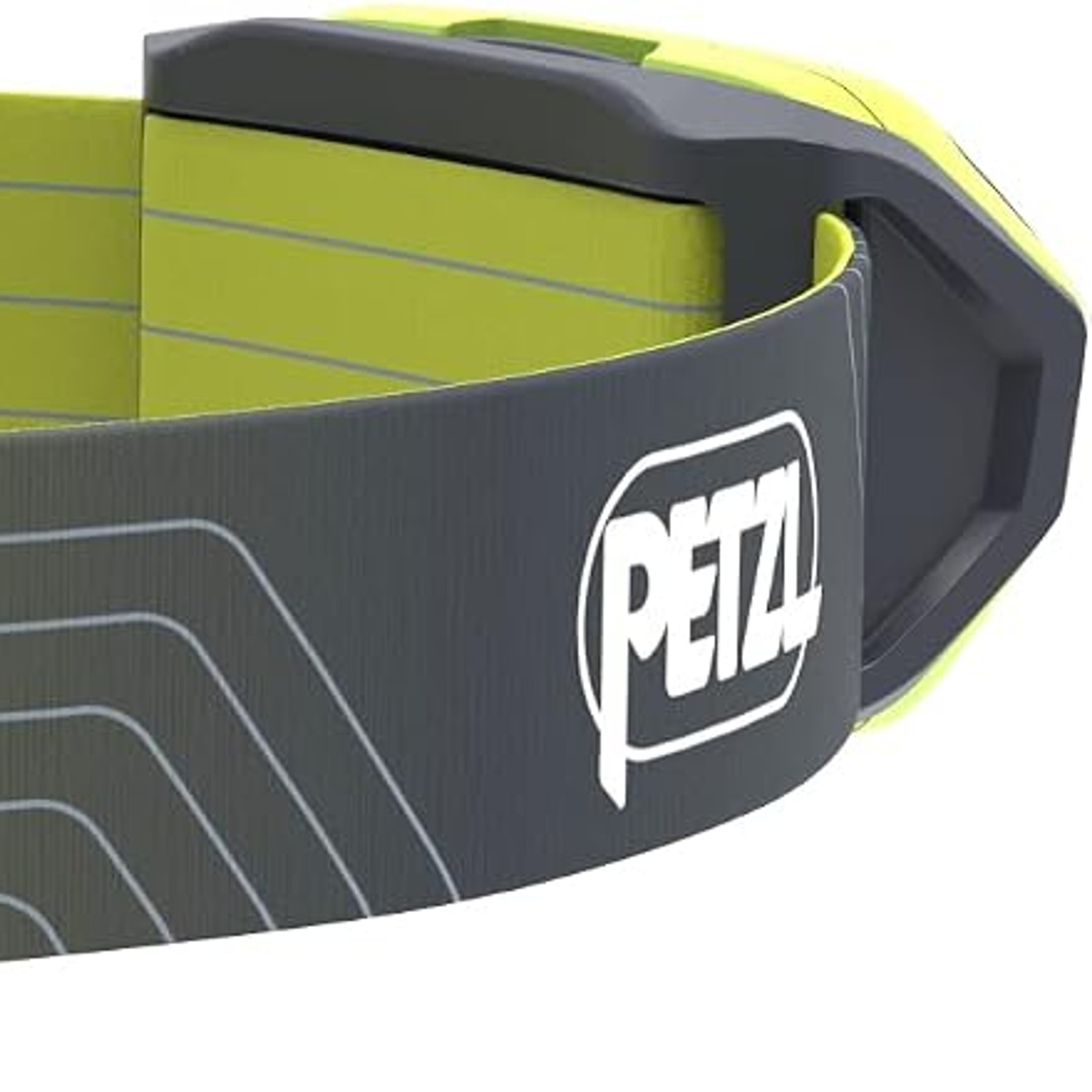
Care is simple. Take the batteries out if the lamp is going into storage for a few months, because a leaking cell will ruin the contacts. Wipe the lens and body with a soft damp cloth and leave the solvents alone. The headband detaches and can be hand washed in cool water with a little mild soap, then air dried, which is worth doing after a sweaty summer.
Check the batteries before trips rather than during them. The charge indicator makes this a five second job. Carry a spare set of three AAAs on anything longer than an afternoon, since they weigh almost nothing and solve the one failure mode that actually strands you.
Store it somewhere you will reach for it. A head torch in the bottom of a gear box gets used once a year. A head torch hanging by the back door gets used weekly.
The short version
The TIKKA is a 350 lumen, 94 g LED headlamp with a wide beam, three white levels, a red night vision mode and three AAA batteries in the box. It is water resistant to IPX4, it tilts, it tells you how much battery is left, and the reflector glows so you can find it in the dark.
It is not the lamp for lighting up a hillside at distance. It is the lamp you keep in the pack, the glovebox or the hallway, and reach for without thinking. For most people, most of the time, that is the one worth owning.