
The complete guide
How To Choose A Pop Up Beach Tent That Actually Stays Up
The problem with an unshaded beach day
Most people do not give up on the beach because of the water or the sand. They give up because there is nowhere to escape the sun. Around eleven in the morning the glare gets sharp, the sand gets too hot to walk on barefoot, and anyone under about six years old starts asking to go home. Umbrellas help for about twenty minutes until the sun moves and the shade lands on nobody.
A proper sun shelter fixes the day. It gives you a fixed, cool base to rotate through. Kids come in for a drink and a break, adults rest their eyes, food stays out of direct heat, and nobody is squinting. The difference between a two-hour beach trip and a full afternoon is usually just shade.
That is the job this pop up beach tent is built for. Not camping, not rain, just reliable shade that goes up fast and stays where you put it.
How an automatic shelter works
Older beach tents used a coiled spring frame. You threw it in the air, it popped open, and then you spent ten awkward minutes trying to twist it back into a flat circle at the end of the day. Plenty of them ended up in bins because of that second part.
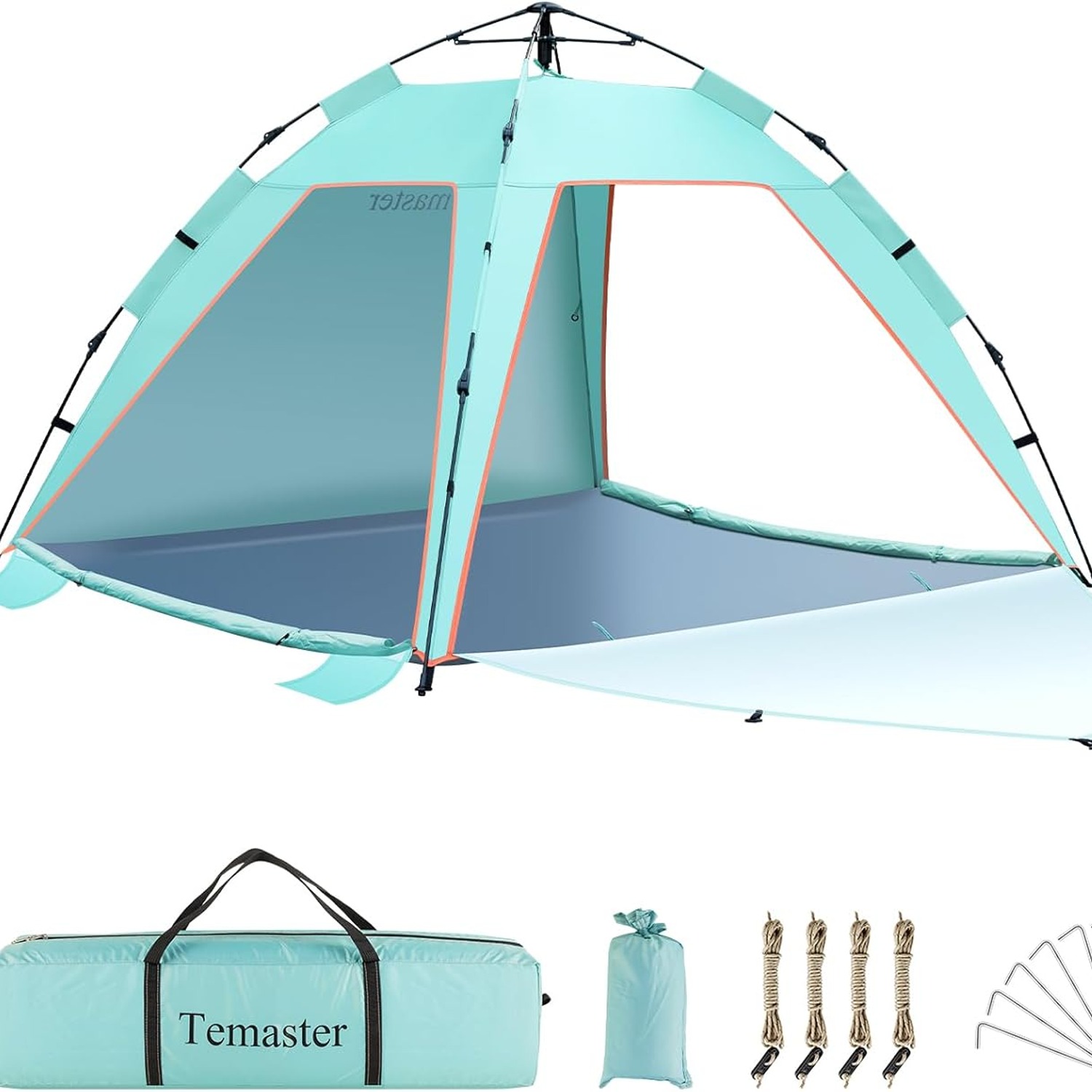
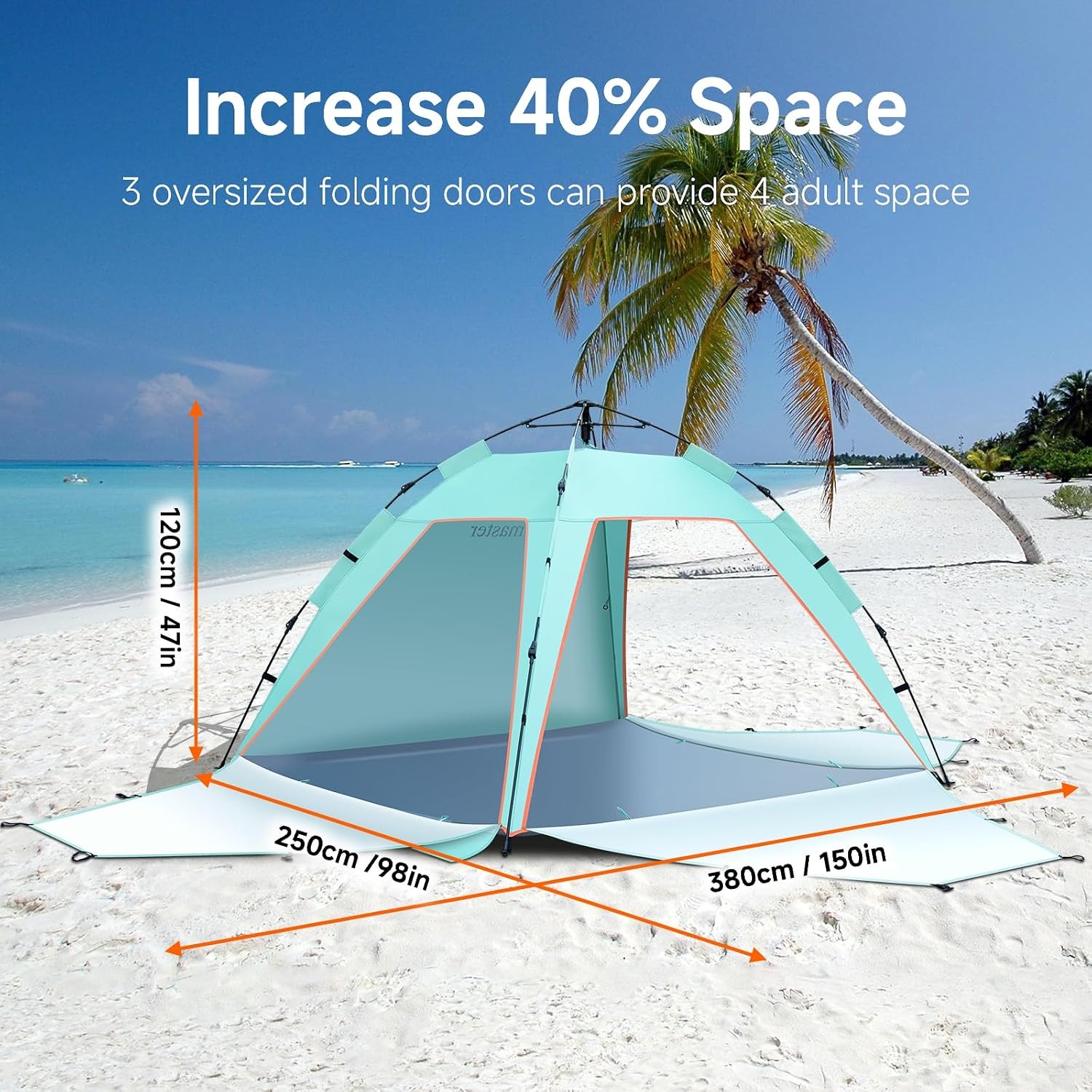
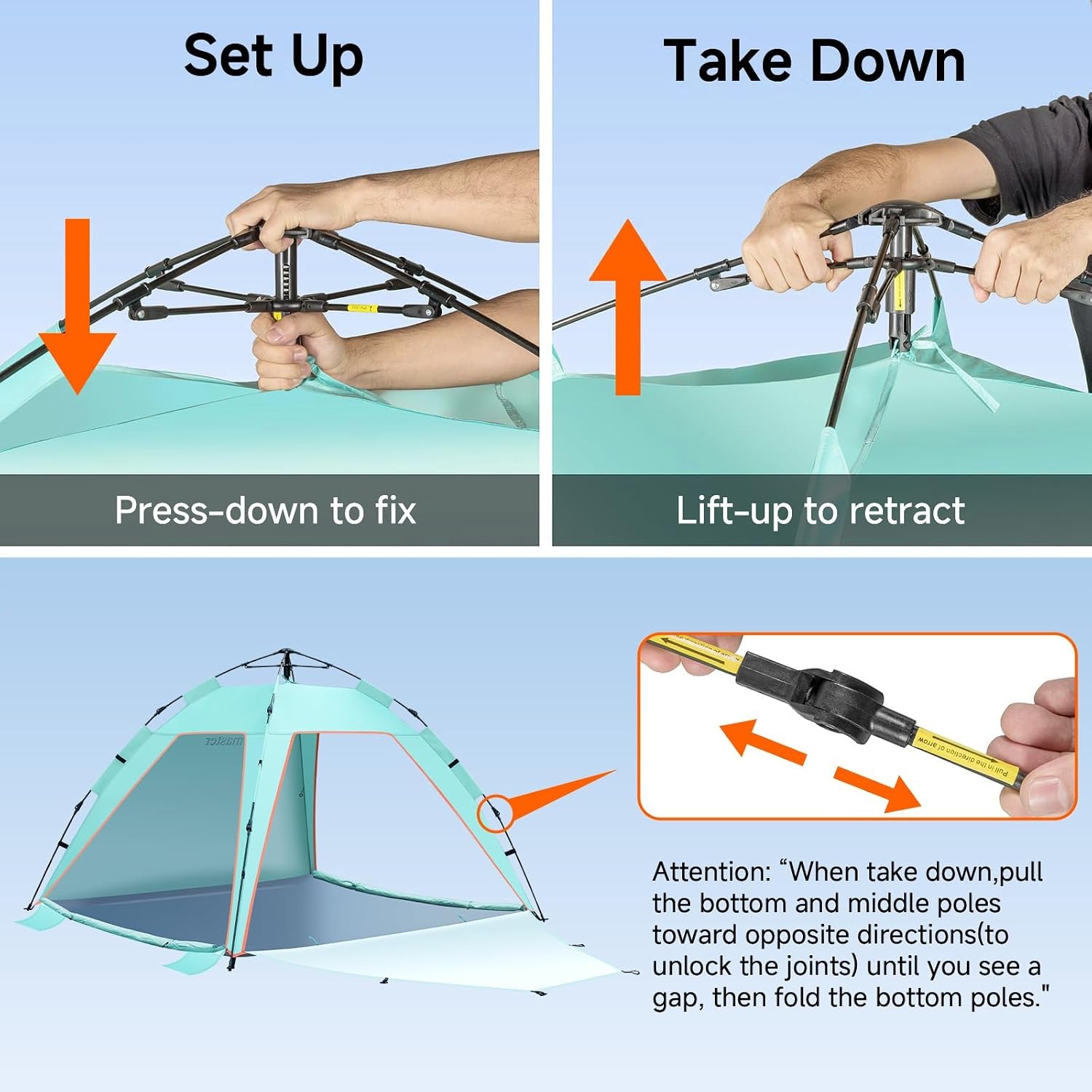
This one uses a hydraulic automatic frame instead. The poles are fibreglass, linked through a central mechanism that pushes the shelter into shape when you release it. You pull it from the bag, let the frame extend, and the canopy takes its full 190 by 170 cm footprint in seconds. There is nothing to thread, clip or assemble, and no instruction sheet to decode on windy sand.
Fibreglass is a smart choice for a beach frame. It flexes rather than bending permanently when a gust hits, it does not corrode in salt air, and it is light enough that one adult can carry the whole thing a few hundred metres without complaint. The pack size is roughly 80 by 18 by 18 cm, which is a long slim bundle rather than a bulky lump.
Folding down takes a little practice. The frame wants to go back a specific way, and if you push against it, it feels stuck. Follow the natural direction of the hinge and it collapses smoothly. Do this once in the backyard before your first outing and you will never think about it again.
Sun protection, explained simply
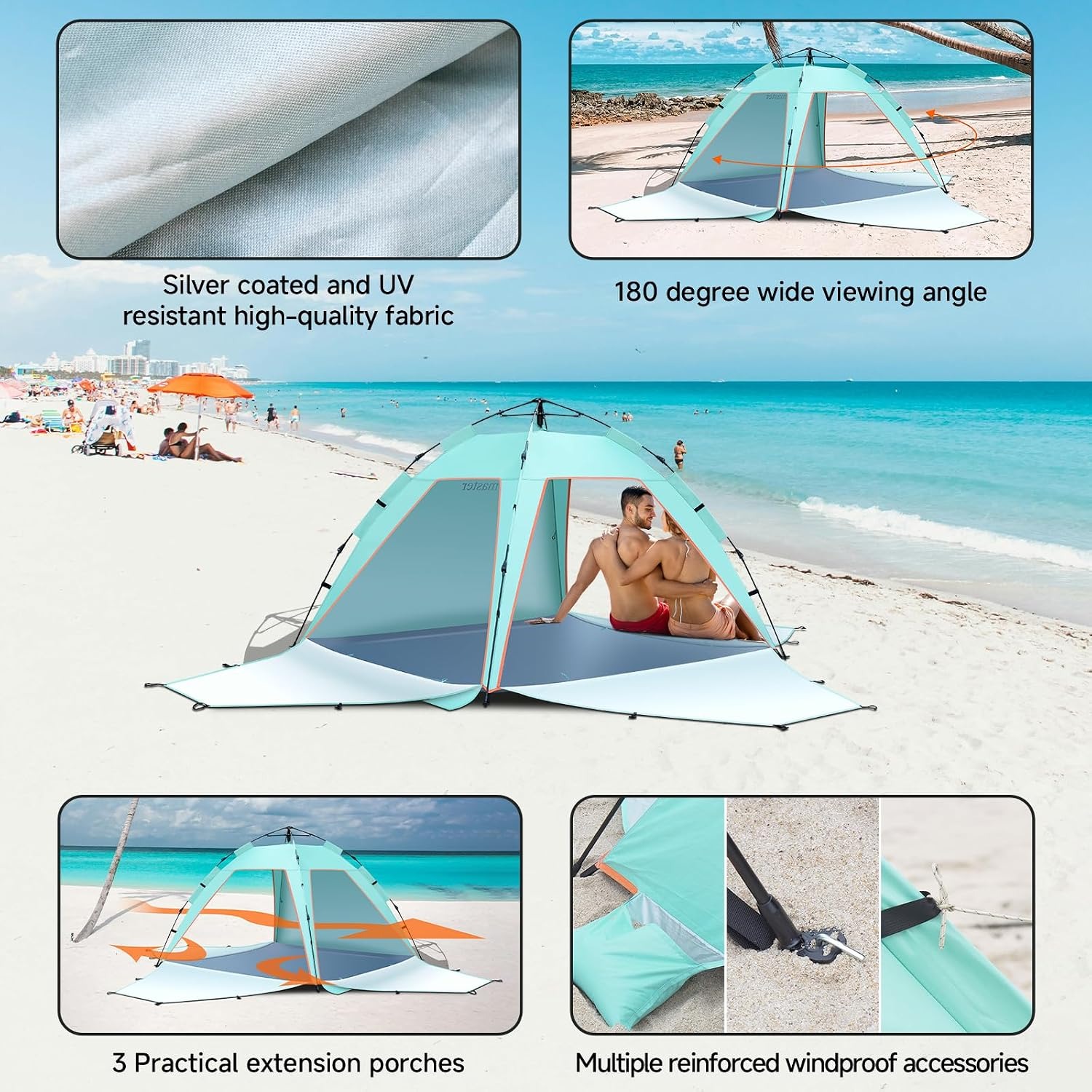
The canopy is polyester with a silver coating and carries a UPF 50+ rating. UPF is the fabric version of SPF. A UPF 50+ rating means the fabric allows through only a small fraction of the UV that reaches it, and 50+ is the highest band given to textiles.
The silver coating does a second job that matters just as much on a hot day. It reflects light instead of absorbing it, so less energy turns into heat inside the shelter. Sit under an uncoated dark canopy on a 32 degree day and the air underneath turns into an oven. A reflective light green canopy stays noticeably more comfortable.
Shade is not a replacement for sunscreen. UV bounces off water and wet sand, so you still get reflected light under any shelter. Think of the canopy as removing the worst of the direct overhead exposure, which is the part that burns fastest.
One honest limitation: this shelter is listed as not water resistant. It handles sun and wind, not rain. If the weather turns, pack it down, bring it home and dry it out before storing.
Who it suits
Families with young children get the most from it. A shaded base means nap time, snack time and sunscreen reapplication all happen in one spot instead of on a hot towel. Three doors mean you can leave the beach-facing side open to watch the kids while the windward side stays closed to block blown sand.
Groups of friends use it as a gear hub. Phones, keys, bags and food sit under cover instead of cooking in the sun. With four to five adults able to sit inside, there is room to take turns out of the heat.
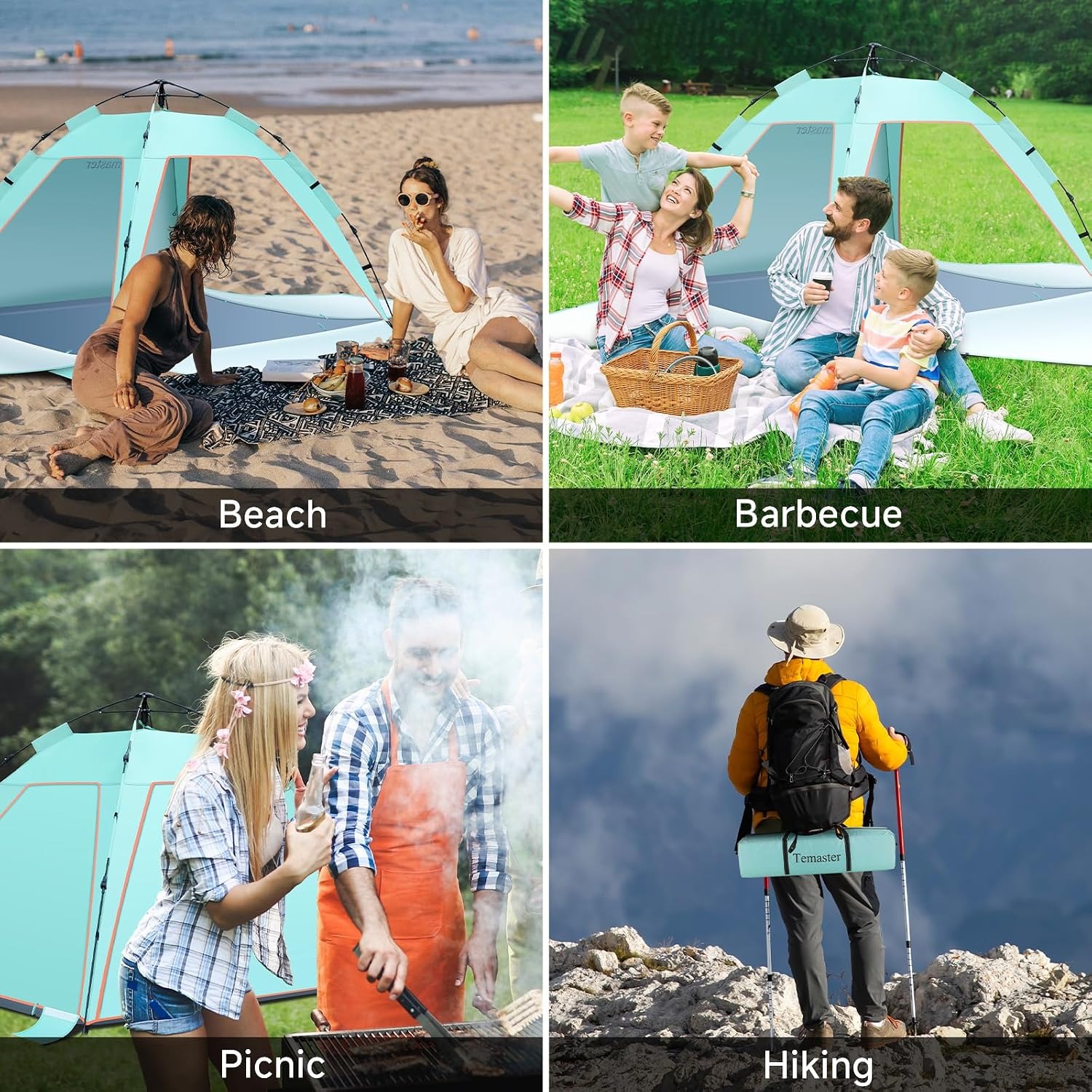
It is also handy well away from the sand. Sports sidelines, picnics in the park, markets, fishing spots and backyard afternoons all benefit from quick shade. On grass the pegs bite firmly, so setup is even faster than on sand.
The people it does not suit are campers. There is no rain fly, no sewn-in bathtub floor and no standing height. If you want a tent for overnight trips, buy a camping tent.
Getting the anchoring right
This is where most shelters fail, and it is nearly always user error rather than a product fault. A light fabric box with a big surface area is essentially a sail. If it is not held down, a single gust will lift it and roll it down the beach.
The shelter comes with four guylines, four reinforced wind strips, thickened ground pegs and four oversized sandbags you fill on site. Use all of them when there is any breeze at all.
On soft sand, pegs alone will pull out. Fill each sandbag properly, then bury it a little below the surface rather than leaving it sitting on top. Dig a short trench, drop the bag in and push sand back over it. Buried weight holds many times better than surface weight.
Angle your pegs away from the tent at roughly 45 degrees, so tension pulls them deeper into the ground rather than levering them out. Tension the guylines evenly. A canopy with slack flaps and snaps in the wind, which wears the fabric at the seams over time.
Face the back of the shelter into the prevailing wind, with the closed doors on that side. You get wind protection and the open doors still catch a cross breeze.
And when the wind really picks up, take it down. No fabric shelter is worth a broken frame or a chase down the beach.
Looking after it
Sand and salt are the two things that shorten the life of beach gear. Both are easy to manage.
Before packing up, shake the canopy out and brush off what you can while it is still standing. Sand left inside rubs against the coating every time the fabric moves in the bag. If the tent has caught salt spray, give it a rinse with fresh water at home.
Then let it dry fully in the shade before folding it away. Packing a damp canopy is how you get mildew spots and that musty smell that never quite leaves. Drying in direct sun for hours is not ideal either, since prolonged UV exposure ages the coating.
Skip the washing machine, bleach, strong solvents and the tumble dryer. A damp cloth and mild soap handle anything the shake-out missed. Rinse the pegs and sandbags too, since salty sand corrodes metal and rots fabric straps.
Store it dry in its carry bag, somewhere cool and out of the sun. Treated this way, a polyester beach shelter lasts many seasons.
Choosing between options
If you are comparing shelters, three questions settle it quickly.
First, how many people need to fit? A two-person pod is tiny once you add bags. This one's 190 by 170 cm footprint handles four to five seated adults, which covers most family and friend groups.
Second, how fast do you need it up? If you are arriving with kids, gear and a short window before someone melts down, an automatic frame earns its keep every single trip.
Third, what anchoring is included? A shelter sold without sandbags will need you to buy or improvise them, and that is the component people most often skip and most often regret.
The short version
This is a fully automatic pop up beach tent in light green, with a hydraulic fibreglass frame that opens in seconds and needs no assembly. The polyester canopy is silver coated and rated UPF 50+, giving top-band sun protection with less heat build-up underneath. Open size is 190 by 170 by 120 cm, enough for four to five seated adults, and it packs to a slim carry bag.
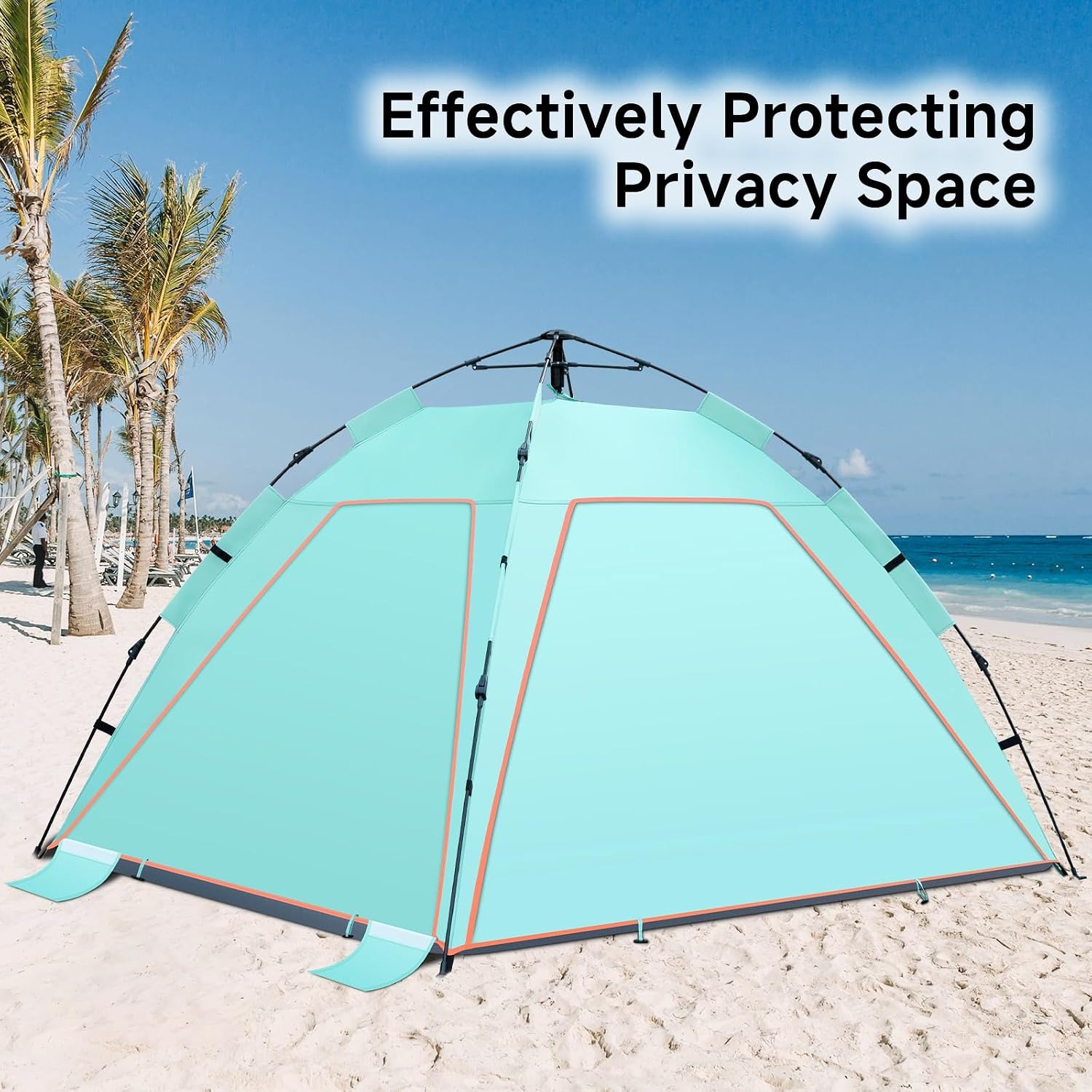
Three expandable porch doors give you airflow when open and privacy when closed. Guylines, wind strips, pegs and fillable sandbags are all in the box, so anchoring is sorted from day one.
It is not water resistant and it is not a camping tent. What it is, is a quick, roomy, genuinely cool patch of shade for beaches, parks and backyards, and that is exactly what makes a long summer day work.