
The complete guide
How to Choose a Rechargeable LED Headlamp
The problem with holding a torch
Every job in the dark gets harder when one hand is busy holding the light. You know the feeling. You are under the sink with a torch wedged against your shoulder, or standing at the back of the car at dusk trying to find the tent pegs while gripping a phone with the flashlight on. The beam points everywhere except where you are looking.
A head torch fixes that in the simplest way possible. The light goes where your eyes go, and both hands stay free. It sounds minor until you have used one, and then you quietly start buying them for the car, the shed and the camping box.
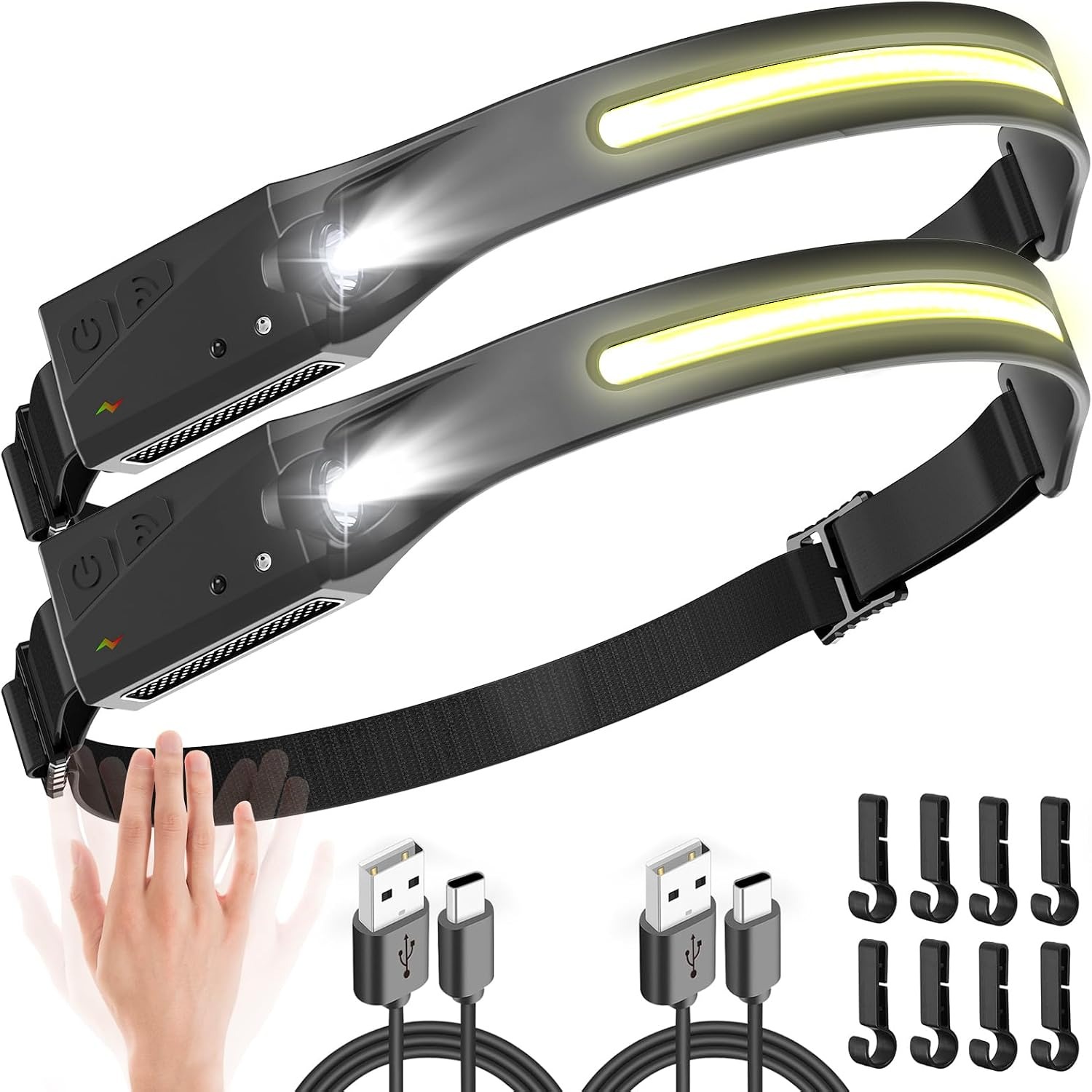
This guide walks through what matters when you pick one, using the UNBON LX200 two pack as the example.
How this headlamp works
Most cheap head torches use a single LED, and that is where they fall down. You either get a narrow spot that lights a small circle and leaves everything else black, or a wide flood that fades out after a few metres.
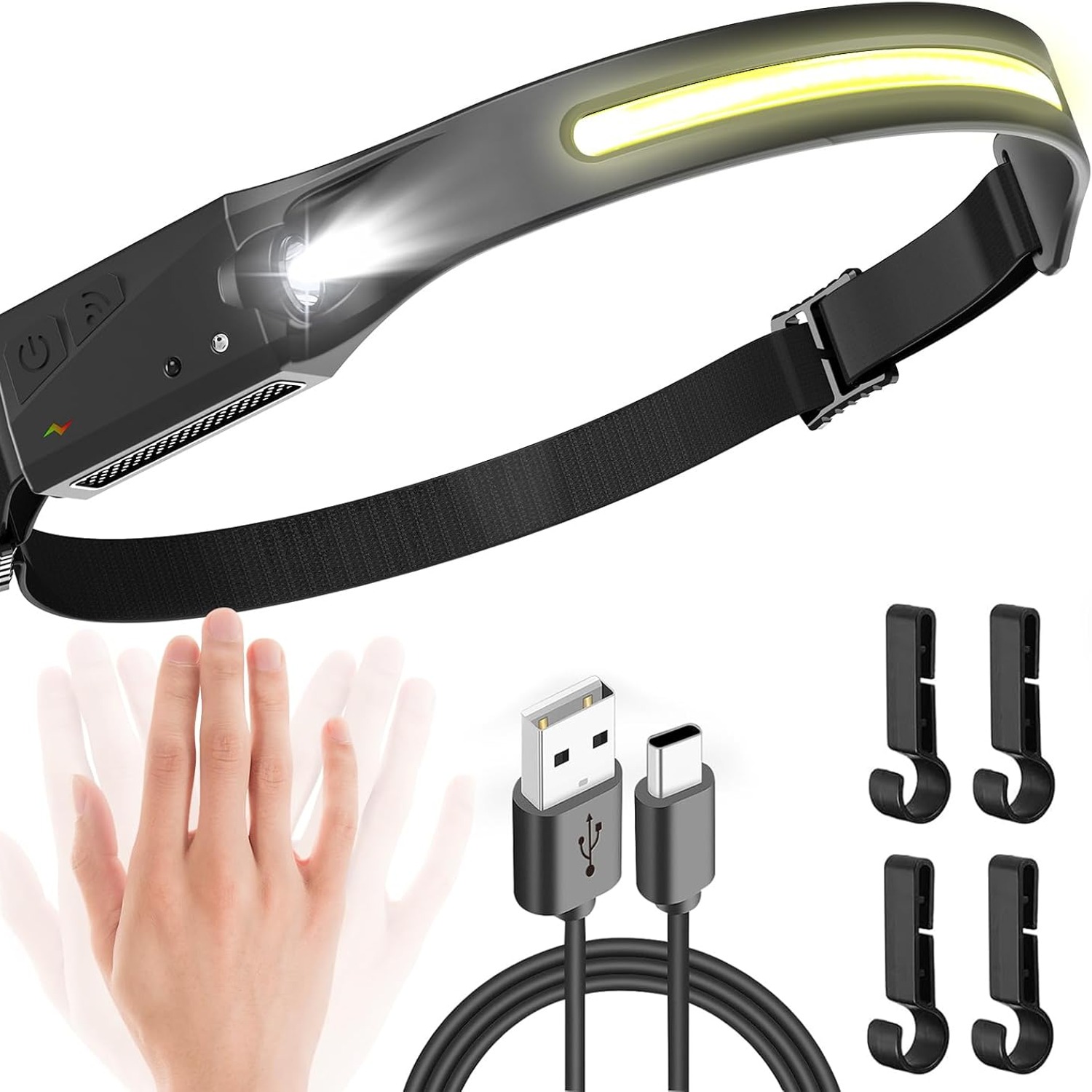
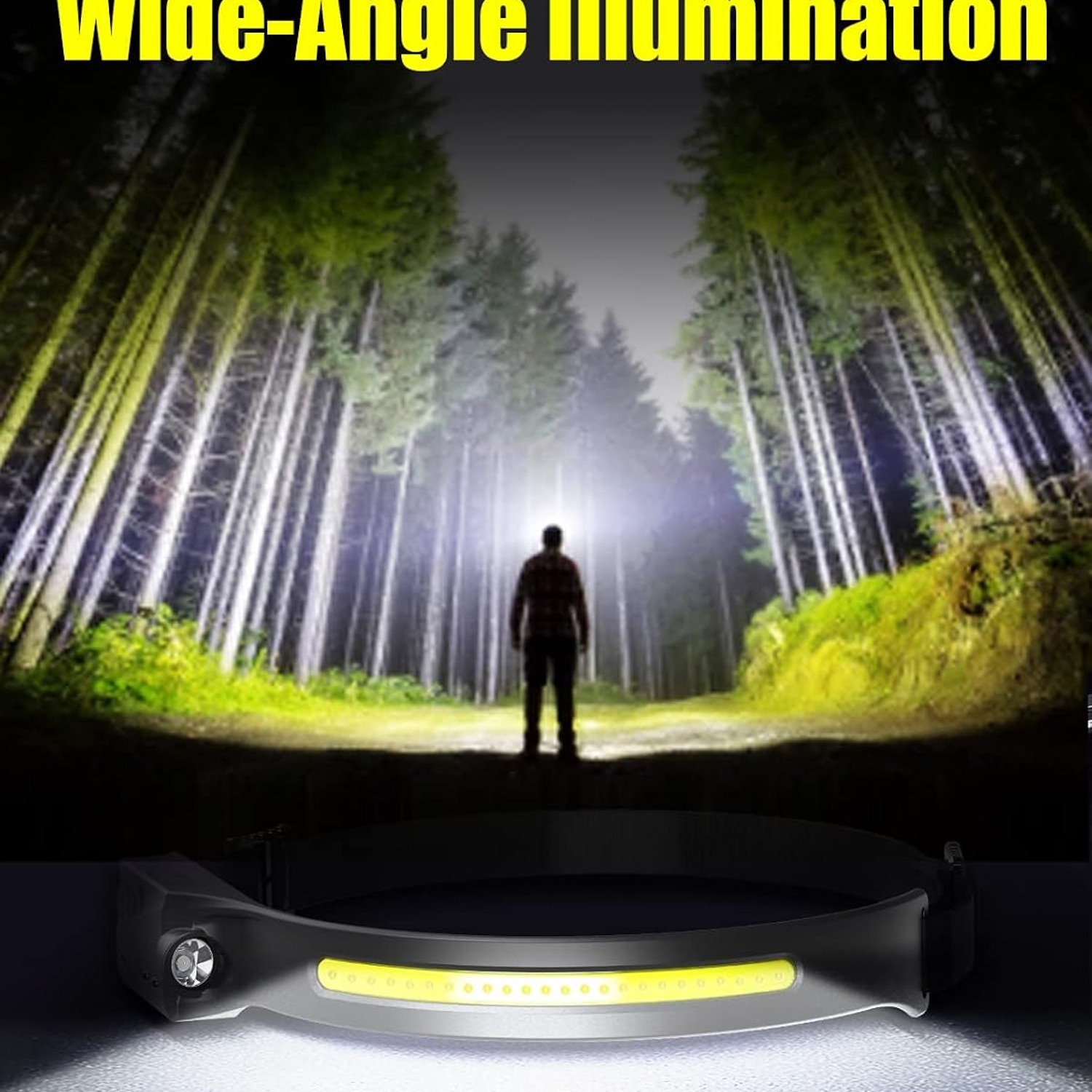
This one uses both. Across the front there is a COB LED strip, which is a bar of tiny diodes behind a diffuser. It throws an even, flat spread of light across roughly 230 degrees. That is the mode you want for anything close up: cooking, fixing, reading, rummaging through a pack. Nothing casts a hard shadow, and you do not get the tunnel vision that comes with a spot beam.
Next to it sits an XPE LED spot. That one does distance. The maker lists the light path at 300 metres, which in practice means you can pick out a fence line, a track marker or someone waving at you from the other side of a paddock.
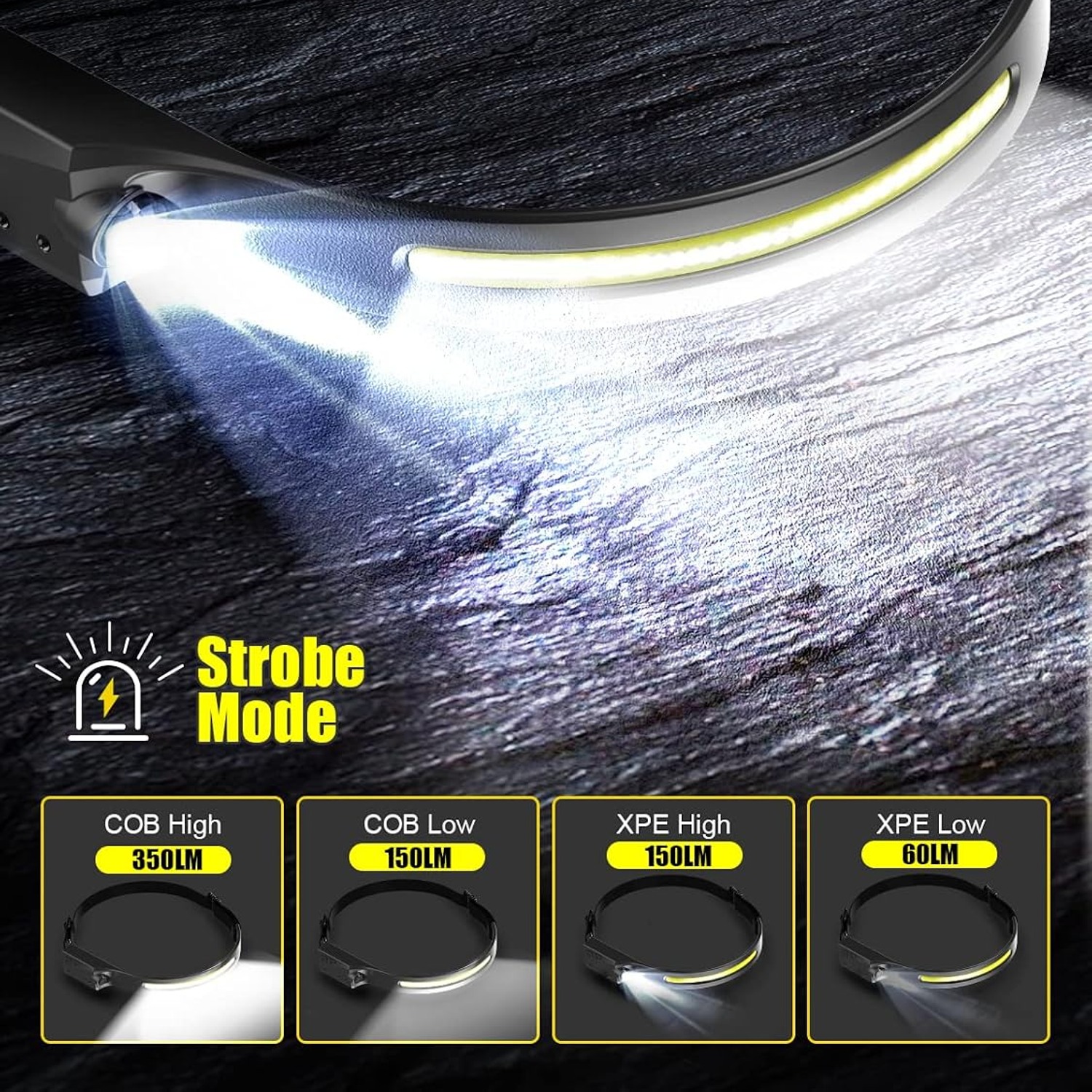
Maximum output is 350 lumens. There are five modes in total: the COB at full power, the COB at 40 percent, the spot at full, the spot at 40 percent, and a flashing mode for visibility. Running the lower settings is the easy way to stretch your battery through a long night, and the stated runtime reaches up to eight hours depending on what you pick.
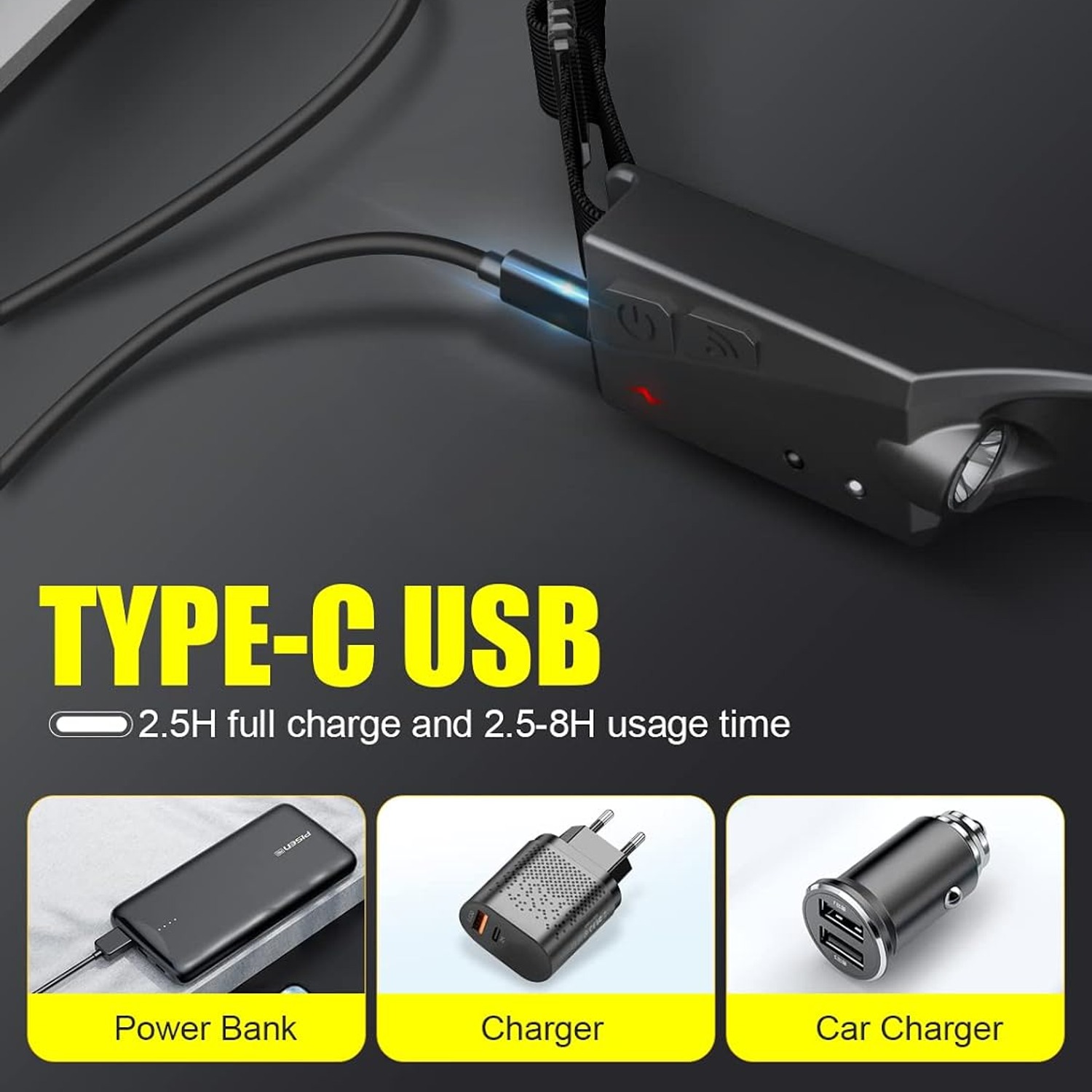
Power comes from a built-in lithium ion cell charged over USB-C. No AAA batteries, no hunting for spares.
The motion sensor
This is the feature people either love or ignore, and it is worth understanding before you buy.
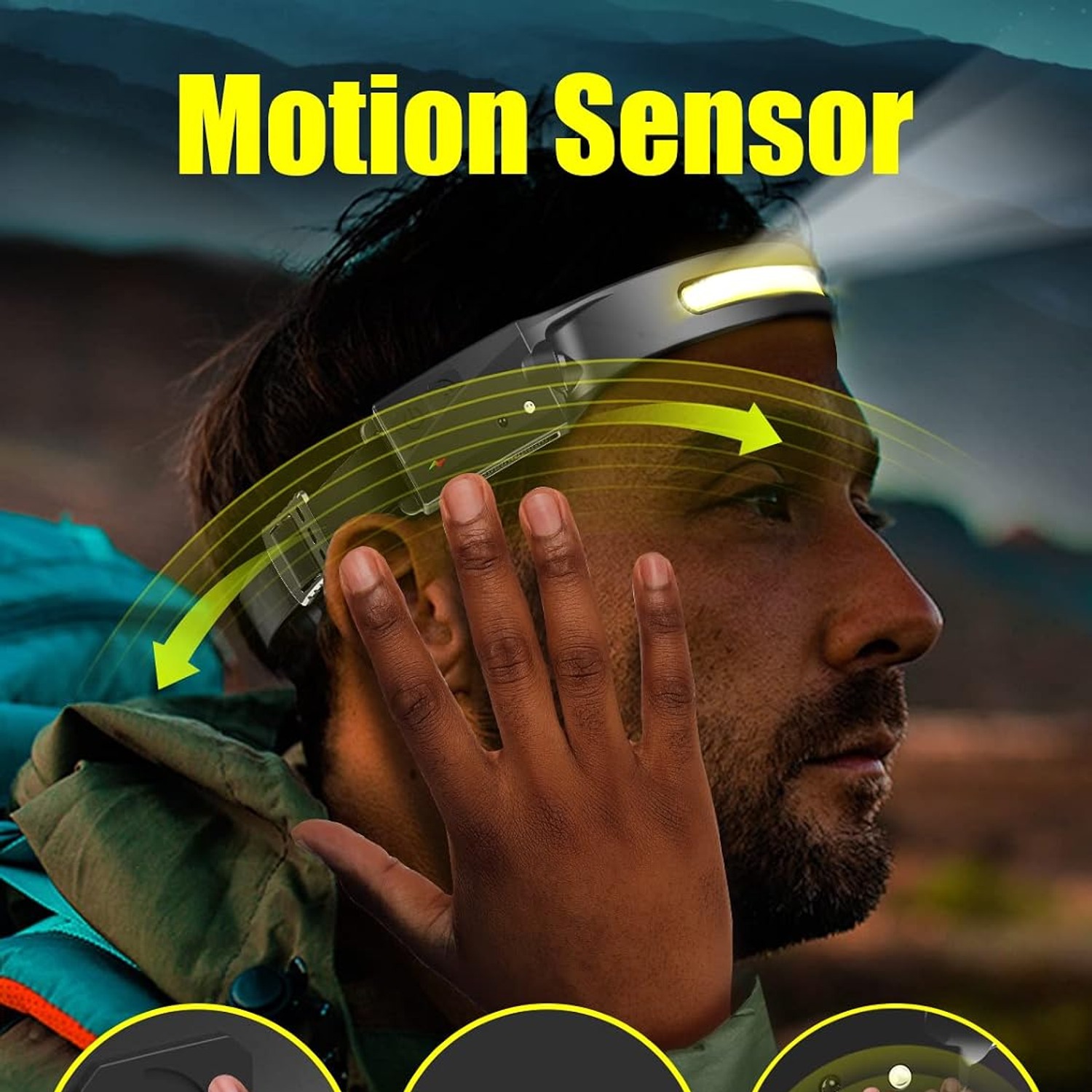
The lamp has a sensor on the front. Wave your hand across it and the light switches on or off. No button, no fumbling.
It matters more than it sounds. Think about when you actually need light. Your hands are covered in grease because you are changing an oil filter. They are wet and smelling of bait because you just landed a fish. You are wearing gloves because it is four degrees. You are holding a sleeping toddler. In all of those moments, pressing a small rubber button on your forehead is annoying at best.
The trade-off is that sensors can trigger when you do not want them to, usually when you lean in close over a workbench and your own hands keep passing in front. Most people adapt quickly and learn to keep their hands low. If it bothers you, switch the lamp off and work with the button instead.
Who it suits
Campers get the most obvious benefit. The flood mode handles the whole camp kitchen, the spot handles the walk to the toilet block, and a two pack means you are not sharing one torch between two people. If you are hunting for the best headlamp twin pack to split between a couple or a parent and child, that is the appeal.
Anglers use the hands free switching constantly. Tying knots, unhooking fish and sorting tackle all happen at night with wet hands.
Runners and dog walkers care about two things: weight and being seen. At 80 grams this is light enough that you stop noticing it after the first kilometre, and the flashing mode makes you visible to drivers on an unlit road.
Mechanics, tradies and DIY types want the flood mode and the wave switching. A lot of what you do is close work in a confined space, where a narrow spot beam is useless.
Walkers and hikers get the useful combination of flood for footing and spot for distance, which is exactly what you need on a track after sunset.
How to choose
A few things are worth thinking about before you commit to any head torch.
Weight. This is the one most people underestimate. A heavy lamp with a rear battery pack gives you more runtime, but you feel it after an hour and it bounces when you move. An 80 gram unit like this sits light and stays put. If you plan on long wear, go light.
Beam type. Decide whether you mostly need close work or distance. If it is close work, a wide beam is essential and a spot alone will frustrate you. If it is distance, you need a focused beam. Having both, as here, means you are not forced to choose.
Charging. USB-C is the practical standard now. The same cable charges your phone, your power bank and your lamp. Disposable battery torches always seem to go flat when the shops are shut.
Water resistance. Any light that goes outdoors needs some. This one is listed as water resistant, which covers rain and spray. It is not made for submersion, so keep it out of the water if you drop your rod.
Band comfort. A soft elastic silicone band grips without pinching. Cheap woven bands stretch out and slide down your forehead.
Pack size. Buying two at once is usually better value than two singles, and a spare lamp in the car has saved plenty of people a long walk.
Looking after it
None of this is complicated, but it does add years to the life of the lamp.
Wipe the lens and body with a soft damp cloth after a dusty or salty trip, and dry it before you put it away. Salt is the real enemy if you fish from the beach.
Keep the USB-C port clean and dry, and make sure any cover is closed before you head out in the rain. Water getting into a charging port is a common way these lights die.
Do not let the battery sit flat for months. Top it up every so often between trips. Lithium ion cells last longest when they are kept somewhere in the middle rather than fully flat or baking in a hot car.
Hand wash the silicone band in cool water if it gets grubby and let it air dry away from a heater.
Store the lamps somewhere cool and dry. A plastic tub in the camping gear is perfect.
The short version
A head torch is one of the cheapest pieces of gear that genuinely changes how you work and move after dark. This two pack gives you a wide COB flood for close jobs, an XPE spot that reaches out to a stated 300 metres, five modes to match the situation, and a motion sensor that lets you switch the light with a wave when your hands are full or filthy.
At 350 lumens and 80 grams, with USB-C charging and a runtime of up to eight hours, it covers the common ground between camping, fishing, running and work in the shed. Two lamps in the box means one for you and one for whoever always borrows yours.
If you want the best lightweight head torch for general use rather than a specialist expedition light, this is the shape of thing to look for.