
The complete guide
How To Choose A Rechargeable Camping Lantern
The problem with camping after dark
Daylight hides a lot of bad planning. You can find the tent pegs, read the stove instructions and tell which bag has the sleeping mats. Then the sun goes and suddenly everything takes three times longer.
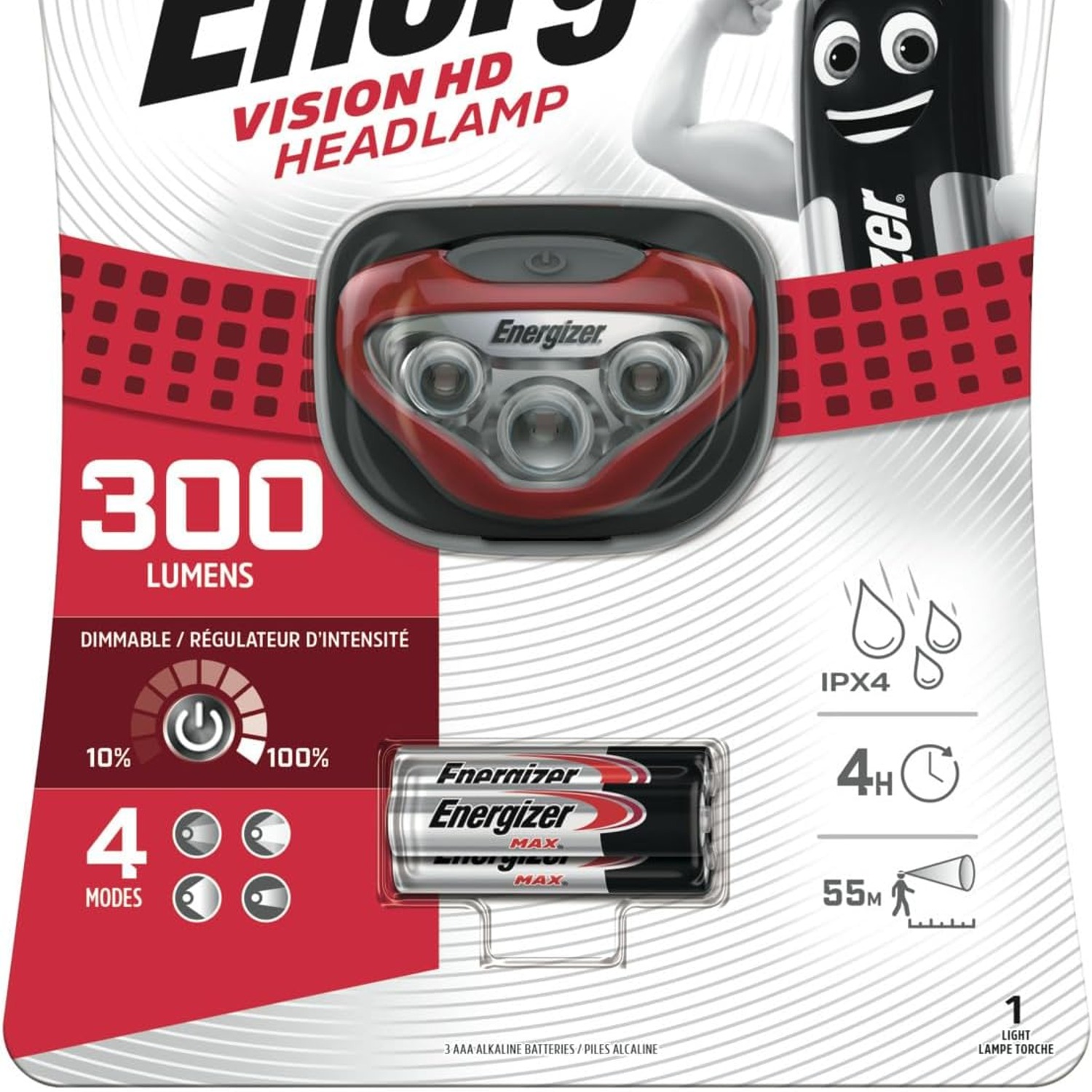
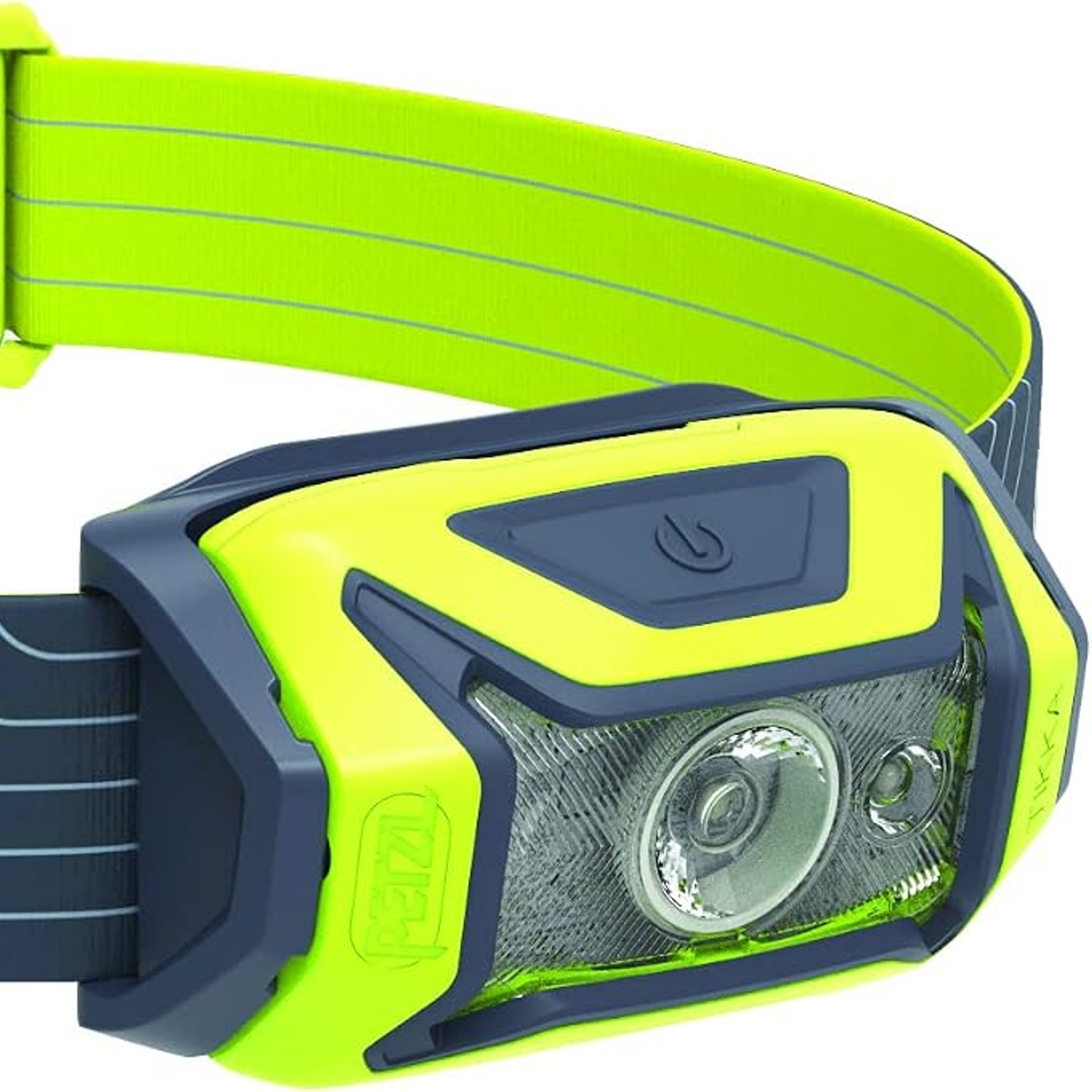
Head torches are brilliant for walking and useless for sitting still. Point your face at the chopping board and the person across the table gets a beam in the eyes. Phone torches drain the one battery you actually need. Candles and gas lanterns throw lovely light and also throw heat, fumes and a small fire risk inside a nylon tent.
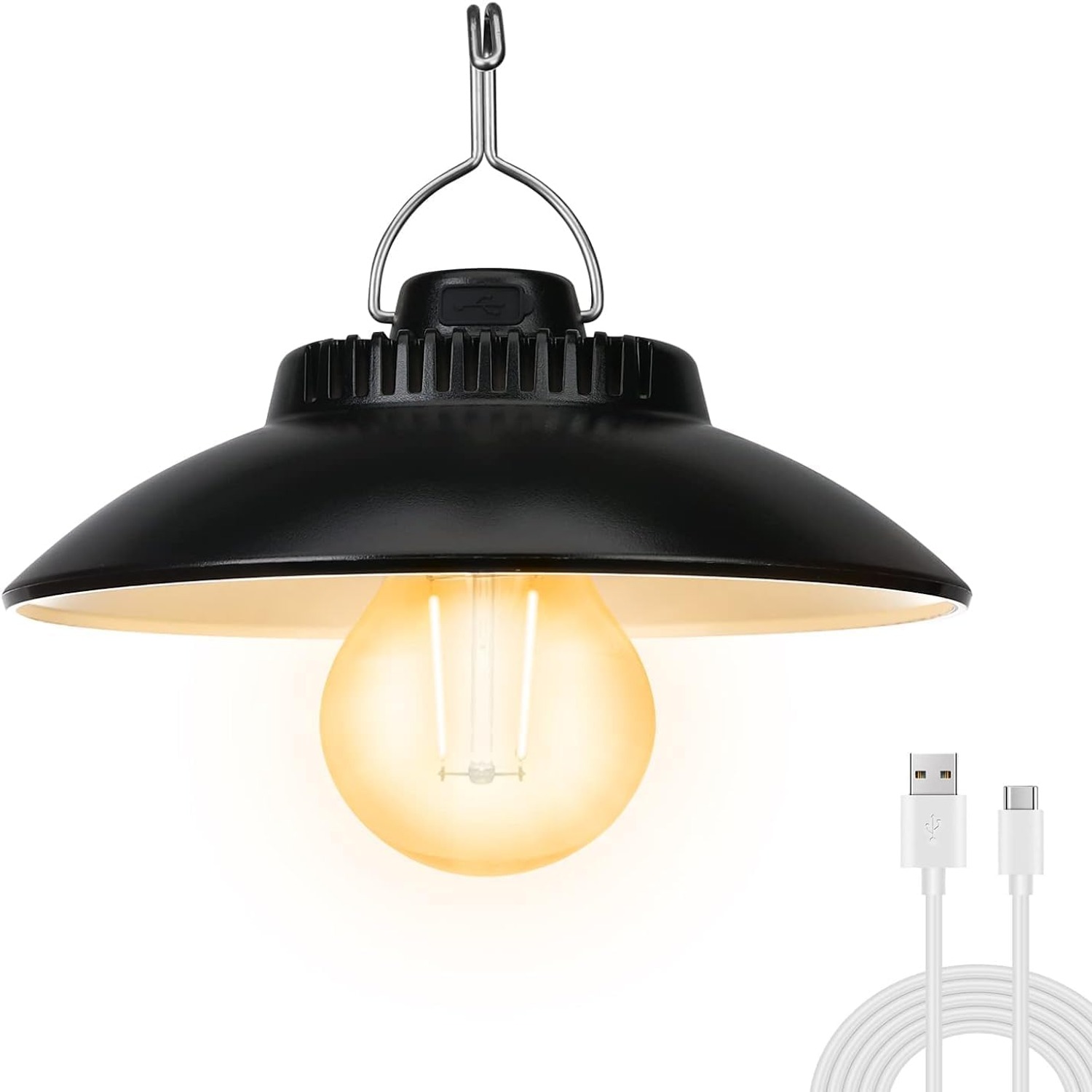
A rechargeable lantern fixes the gap. It sits in one place, lights everything around it at once and does not need a flame. This one goes a step further by looking like something you would be happy to have on a table at home rather than a chunk of grey plastic you hide in the shed.
How this lantern works
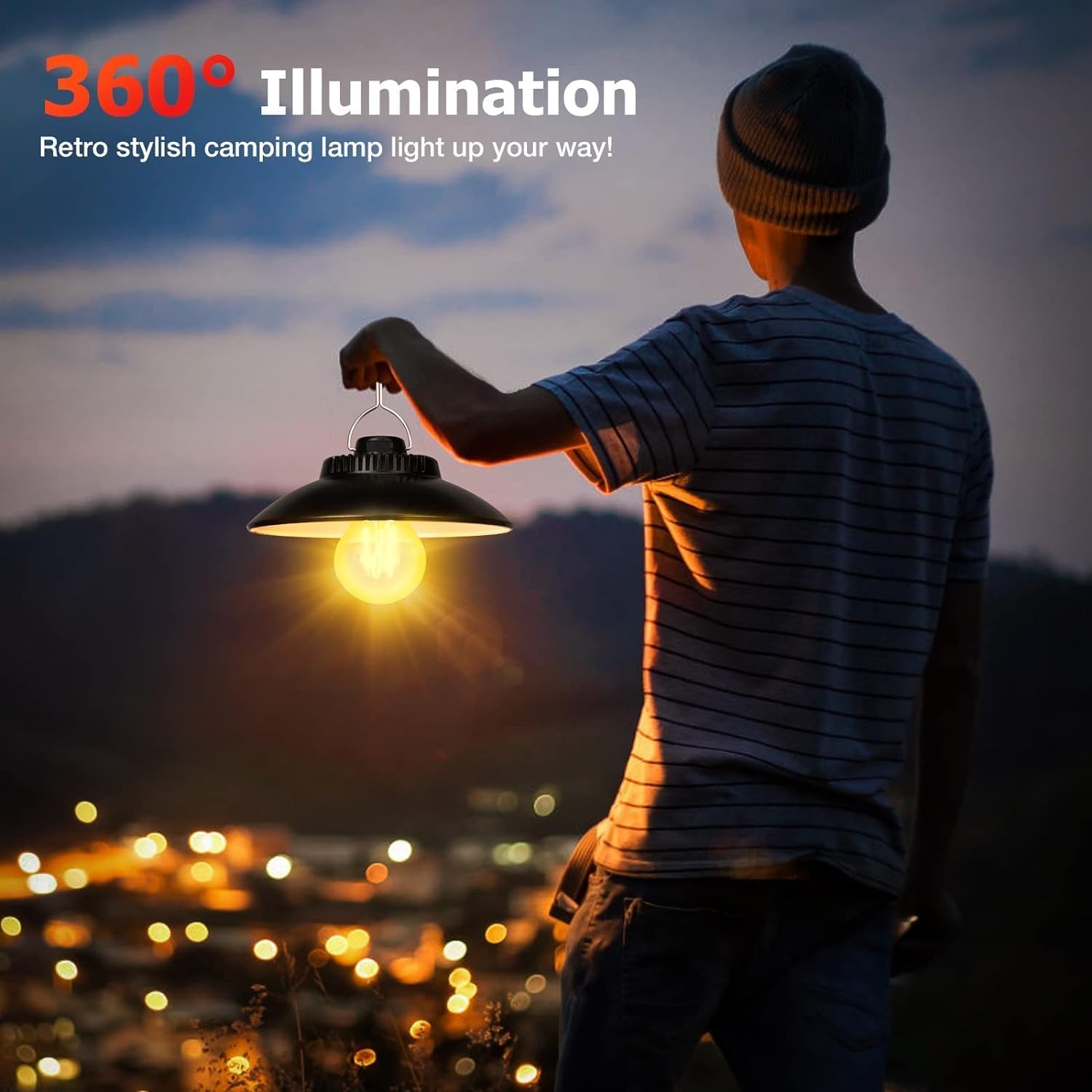
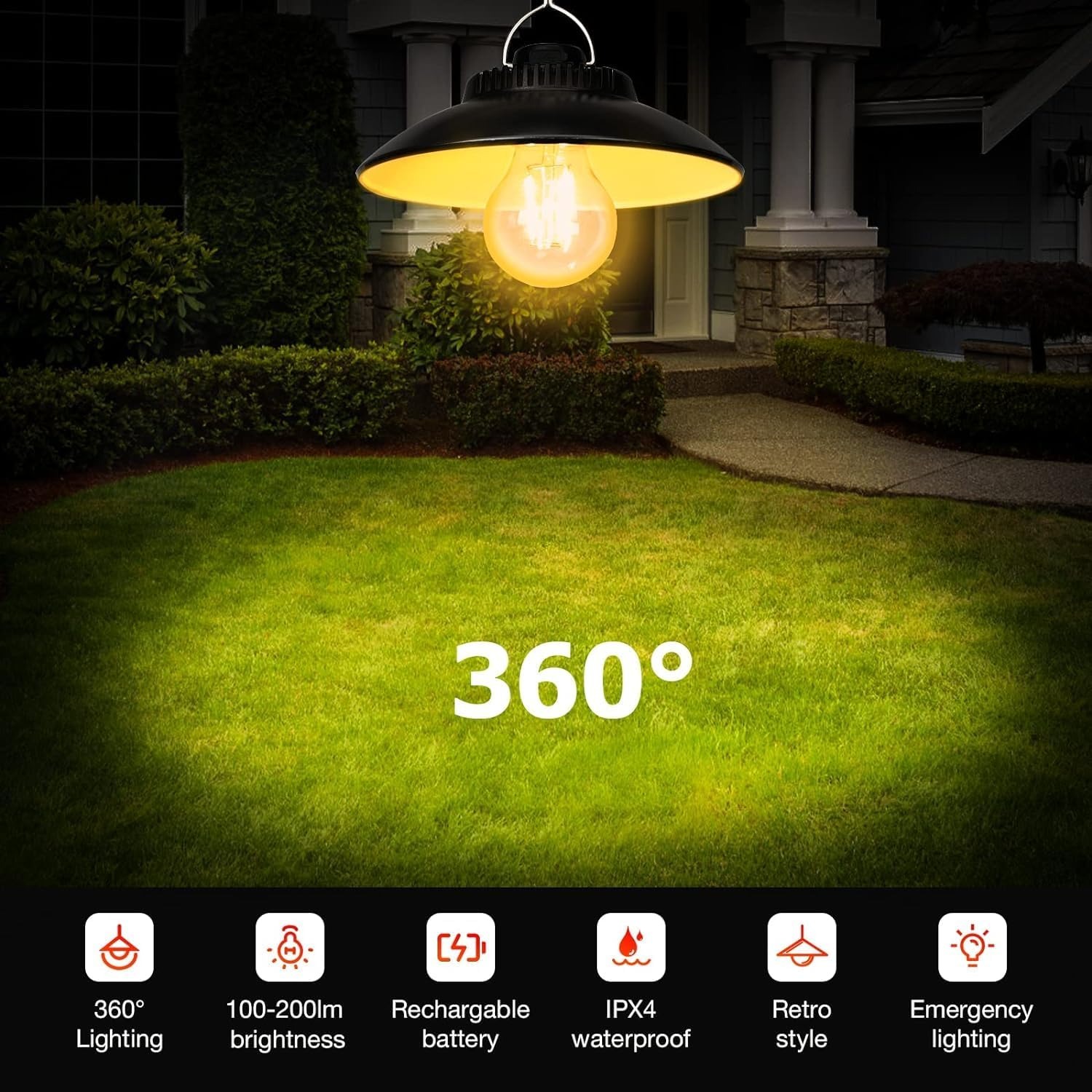
Inside the retro shell is a single LED rated at 5 watts, with a 360 degree beam angle. That beam angle is the number that matters most. It means light leaves the lantern evenly in every direction instead of being pushed forward into a cone. Hang it in the middle of a tent and the corners get lit too.
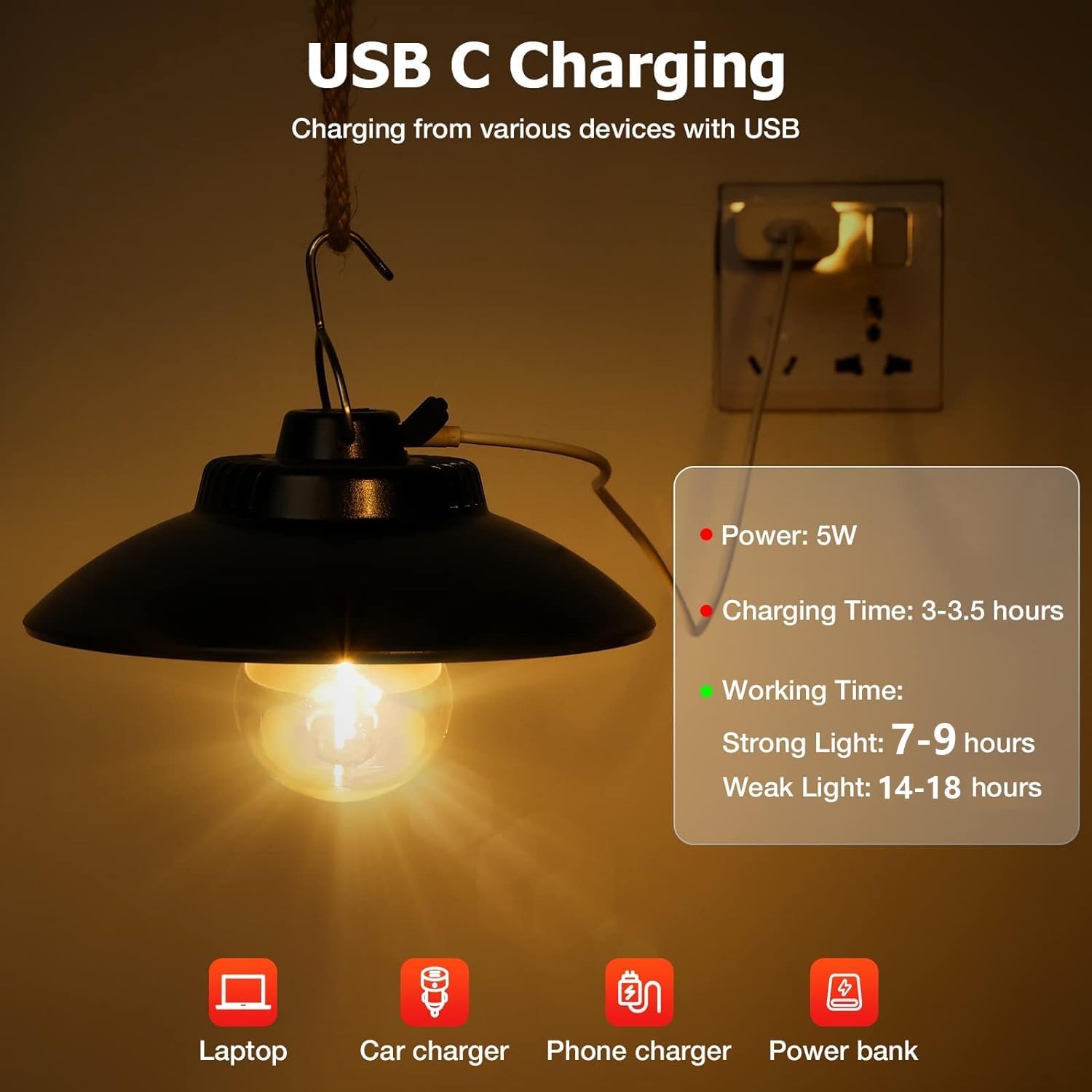
Power comes from a built-in 2600 mAh lithium battery. There are no loose cells to lose or replace. You charge it through a Type-C port at 5 volts and 1 amp, which is the same connector on most recent phones, tablets and headphones. That one detail saves a surprising amount of hassle. On a long weekend you can top it up from a power bank in the tent, from a car socket on the drive, or from a wall plug at a holiday park.
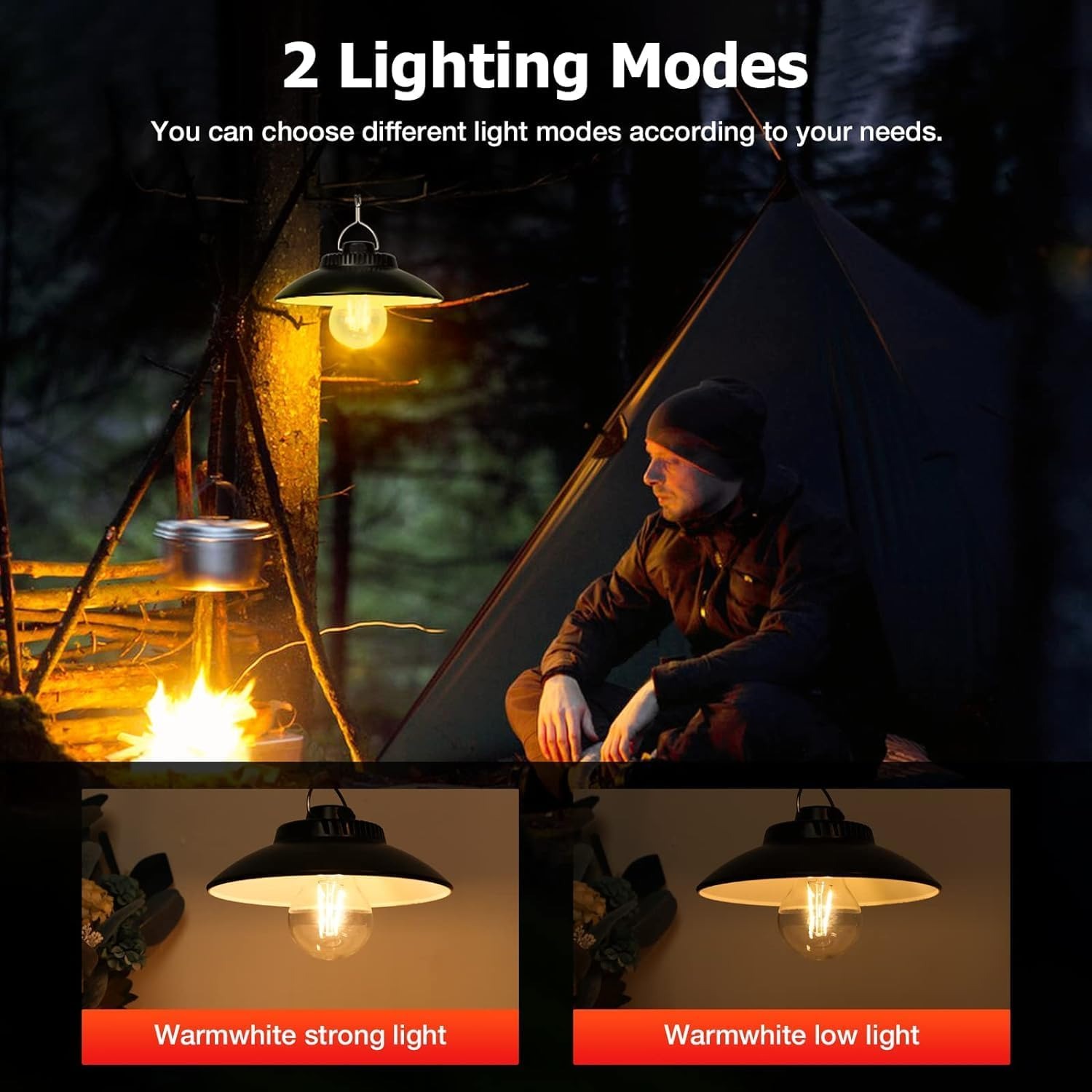
There are two brightness modes, full and half. One button cycles between them. The product details list a battery life figure of 7.75 hours, which comfortably covers an evening from sunset to bedtime, and you get more from the lower setting than the higher one.
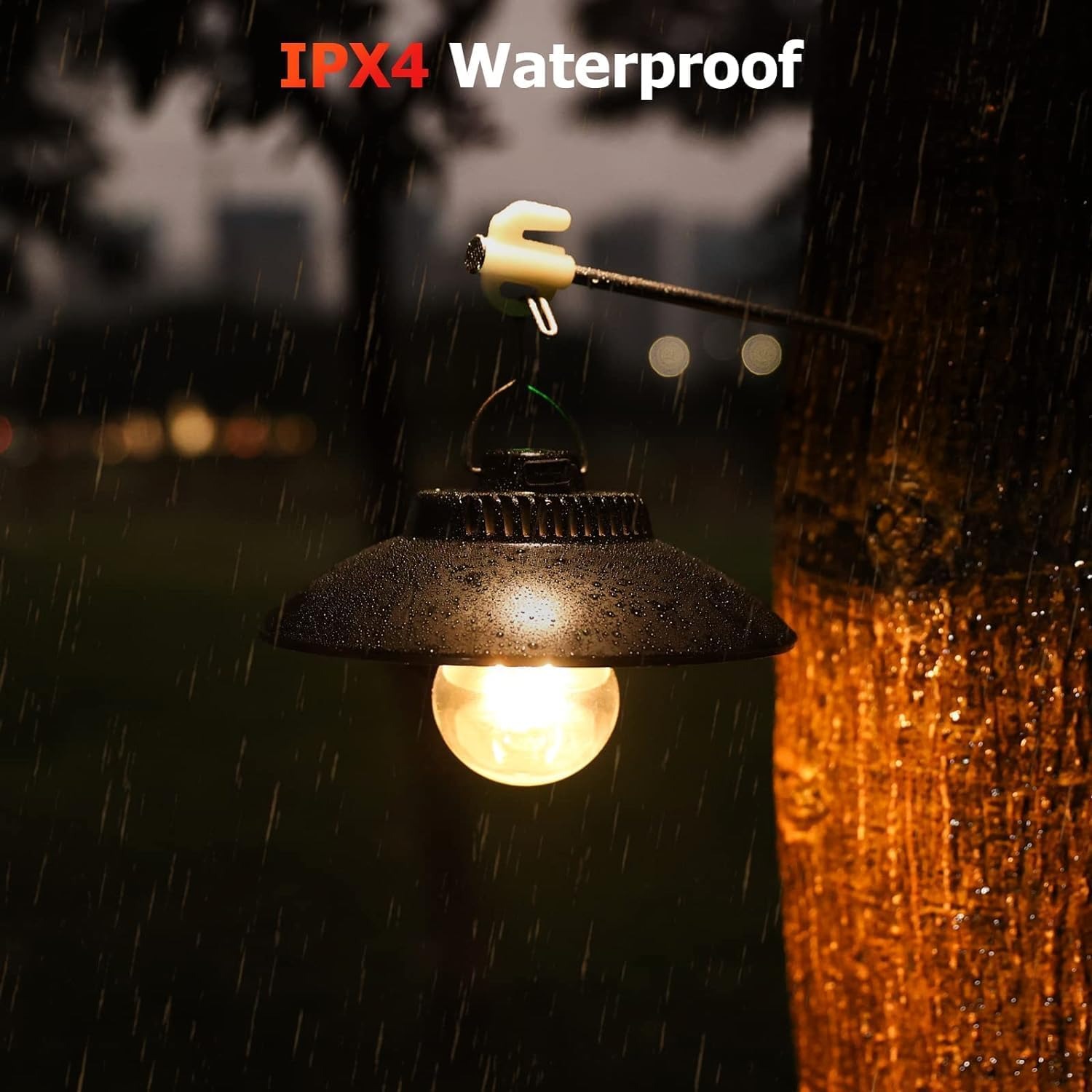
The body is ABS plastic with a powder coated finish, listed in black, and it is rated water resistant. The lantern measures 14.5 x 11 x 18.5 cm, so it packs down into a camp box without eating all the space.
Who it suits
Family campers get the most obvious benefit. One lantern on the table covers dinner, card games and the search for a missing shoe. Hang it inside the tent later and it becomes a gentle room light that nobody has to hold.
Caravan and campervan owners like USB-C lights because most vans already run USB sockets off the leisure battery. Charging the lantern costs almost nothing in power and means you are not running the van's ceiling lights all evening.
People who want a backup at home are the quiet second audience. Storms, grid faults and tripped breakers all arrive without notice, and a torch in a drawer only helps one person at a time. A charged lantern on a shelf lights a whole kitchen. If you are shopping for the best emergency power outage light rather than a camping product, this works just as well in a hallway as it does in a field.
It also suits anglers, balcony dinners, garden evenings and the sort of blackout night where kids want something friendly glowing in the corner. A battery powered tent lamp with no flame is a much easier thing to leave on than a candle.
Who it suits less: anyone needing a focused long-distance beam for hiking in the dark, and anyone who needs a light that survives being dropped in water. Water resistant means rain and splashes, not immersion.
How to choose between lanterns
A few questions sort out most of the confusion.
How long do you need it to run in one go? If your evenings are two or three hours, almost any lantern copes. If you want it on from dusk until the small hours across several nights with no charging, you want either a larger battery or a plan for recharging. A 2600 mAh cell with a listed 7.75 hour life is a solid single-evening light with room to spare, and a small power bank turns it into a multi-night one.
How will you mount it? Hooks and flat bases do different jobs. This one has both, which is why it works as a hanging camp light in a tent and a table lamp outside it. If a lantern only stands upright, you will end up propping it on an upturned mug at some point.
What charging port does it use? USB-C is worth holding out for. Older micro USB lights mean carrying a second cable for the sake of one item. Disposable battery lanterns mean buying cells you will forget to pack.
How bright do you actually need? People overestimate this. Full campsite brightness is useful for an hour of cooking, and then you want it lower. Two settings covers that honestly. Ten settings sound better on paper and mostly mean more button presses in the dark.
Does it look like something you want on a table? Not a serious engineering question, but a real one. A lantern you like the look of gets used at home between trips. A grey plastic one lives in a box.
Getting the best out of it
Hang it high. Light falls, so a lantern at head height in a tent lights far more floor than the same lantern sitting on the groundsheet. A simple cord loop in the tent apex is all you need.
Use half brightness as your default and save full output for jobs. Your eyes adjust to the dark surprisingly well, and the lower setting is kinder to everyone trying to sleep nearby.
Charge it before the trip, not during it. A full battery at the car park beats a half charge and good intentions. If you are out for more than two nights, throw a small power bank in the same bag so the two live together.
Keep the port clean. Sand is the enemy of every charging socket on a campsite. Brush the area before plugging in, and keep the cover closed the rest of the time.
Care and storage
Cleaning is simple. Wipe the ABS housing with a soft, damp cloth and dry it off. Do not scrub the powder coated finish with anything abrasive and do not run it under a tap.
Dry it properly before it goes away. The most common way outdoor lights die is not rain on a trip, it is three weeks sealed in a damp bag afterwards.
Do not leave the battery flat for long stretches. Lithium cells are happiest stored with some charge in them. A quick top-up every couple of months during the off season keeps it ready, which is exactly what you want if the lantern doubles as your blackout light.
Keep it out of extreme heat. A car boot in summer is one of the worst places to store any battery product. A cupboard indoors is better.
The short version
This is a compact, rechargeable LED lantern with a retro hurricane-lamp look and genuinely useful guts. A 5 watt LED spreads light 360 degrees, a built-in 2600 mAh lithium battery charges over USB-C, and two brightness modes cover both the busy part of the evening and the quiet part. The listed battery life is 7.75 hours.
It hangs from a hook or sits on a table, the ABS housing is water resistant for dew and showers, and at 14.5 x 11 x 18.5 cm it packs small. If you want one light that handles tent camping, caravan evenings, garden dinners and the next time the power goes out, this covers all four without looking out of place in any of them.