
The complete guide
How to Choose a Self Inflating Sleeping Mat for Camping and Travel
The real problem with sleeping outdoors
Camping goes wrong at night. The tent is up, dinner was fine, the view was worth the drive, and then you lie down and the ground reminds you that it is ground. Cold pulls heat out of your back. A root you did not see presses into your ribs. You roll over every twenty minutes trying to find a position that does not ache, and by morning you are tired in a way that no amount of coffee fixes.
A sleeping mat is the single piece of gear that changes this. Not the tent, not the bag, the mat. A bag traps the heat you make, but if the ground is pulling that heat away from underneath, the bag is fighting a losing battle. Put a layer of foam and trapped air in between and the whole night improves.
How a self inflating mat actually works
The foam inside the mat is open-celled, which means it wants to expand back to full thickness after being squashed. When you unroll the mat and open the valve, that foam pulls air in on its own. Left alone it will get most of the way there in a few minutes.
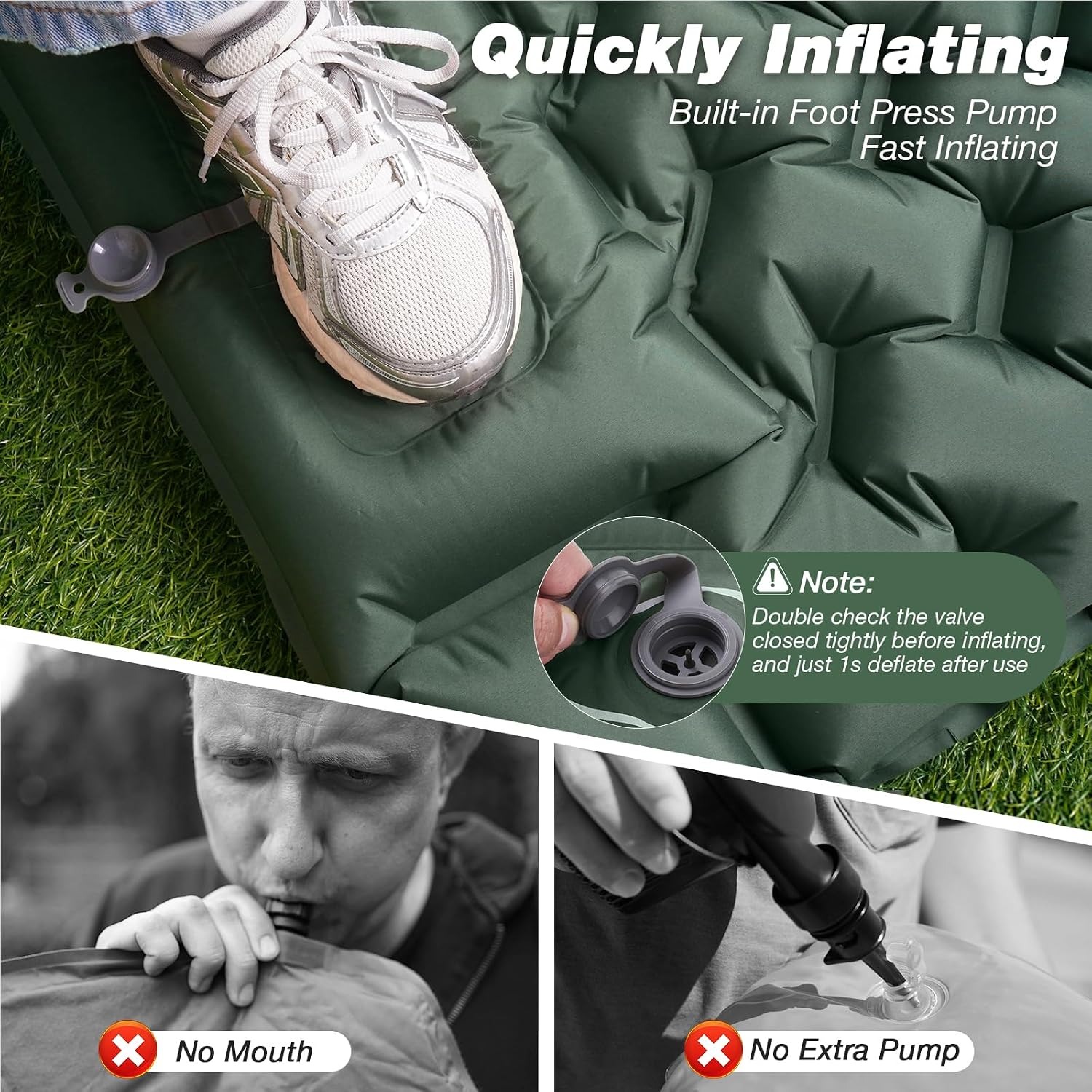
Most self-inflating mats then need a top-up to feel properly supportive, and that is where people usually lose patience. Breathing into a valve is tiring and puts moisture inside the mat. Carrying a separate pump sack means one more item to pack and one more thing to leave behind at the last campsite.
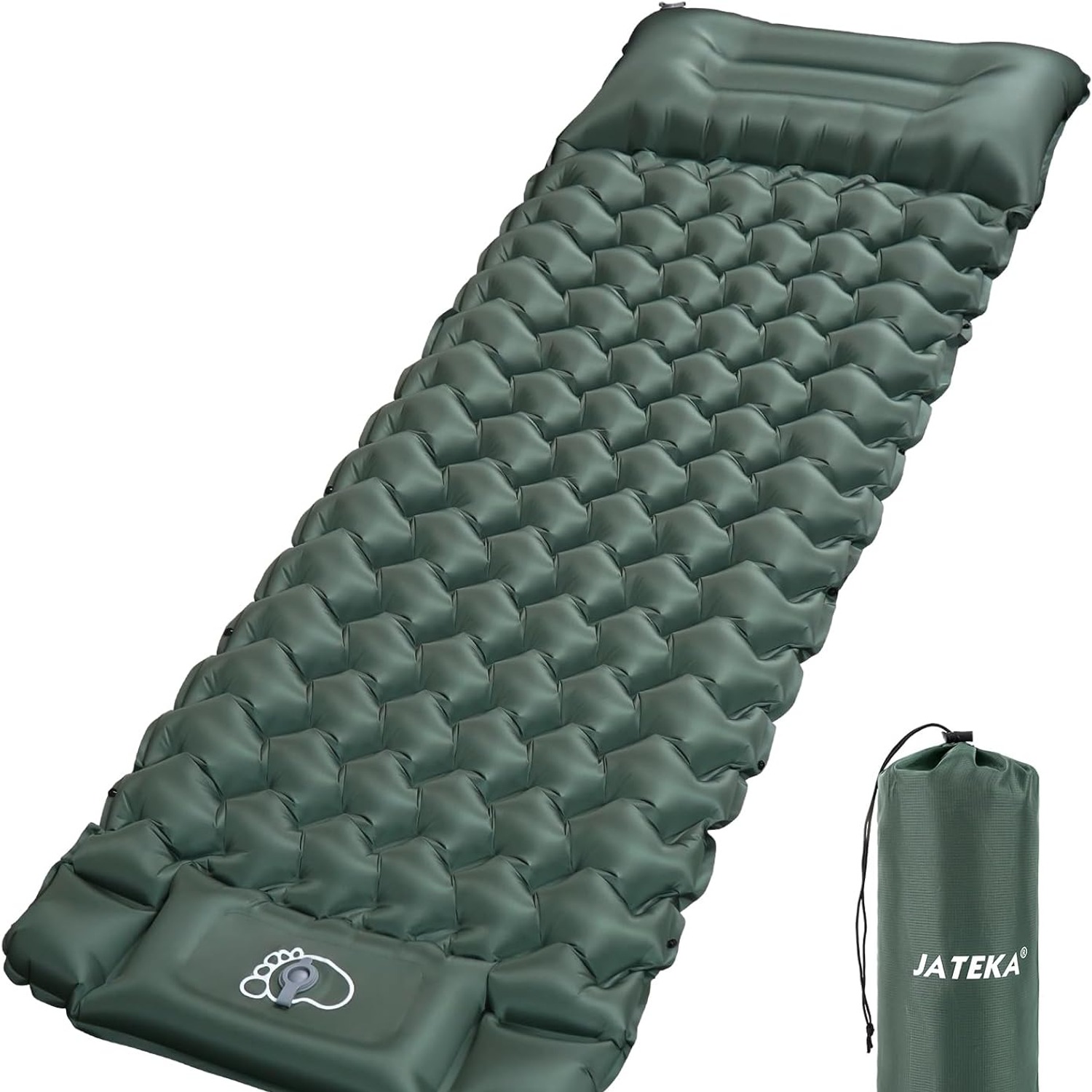
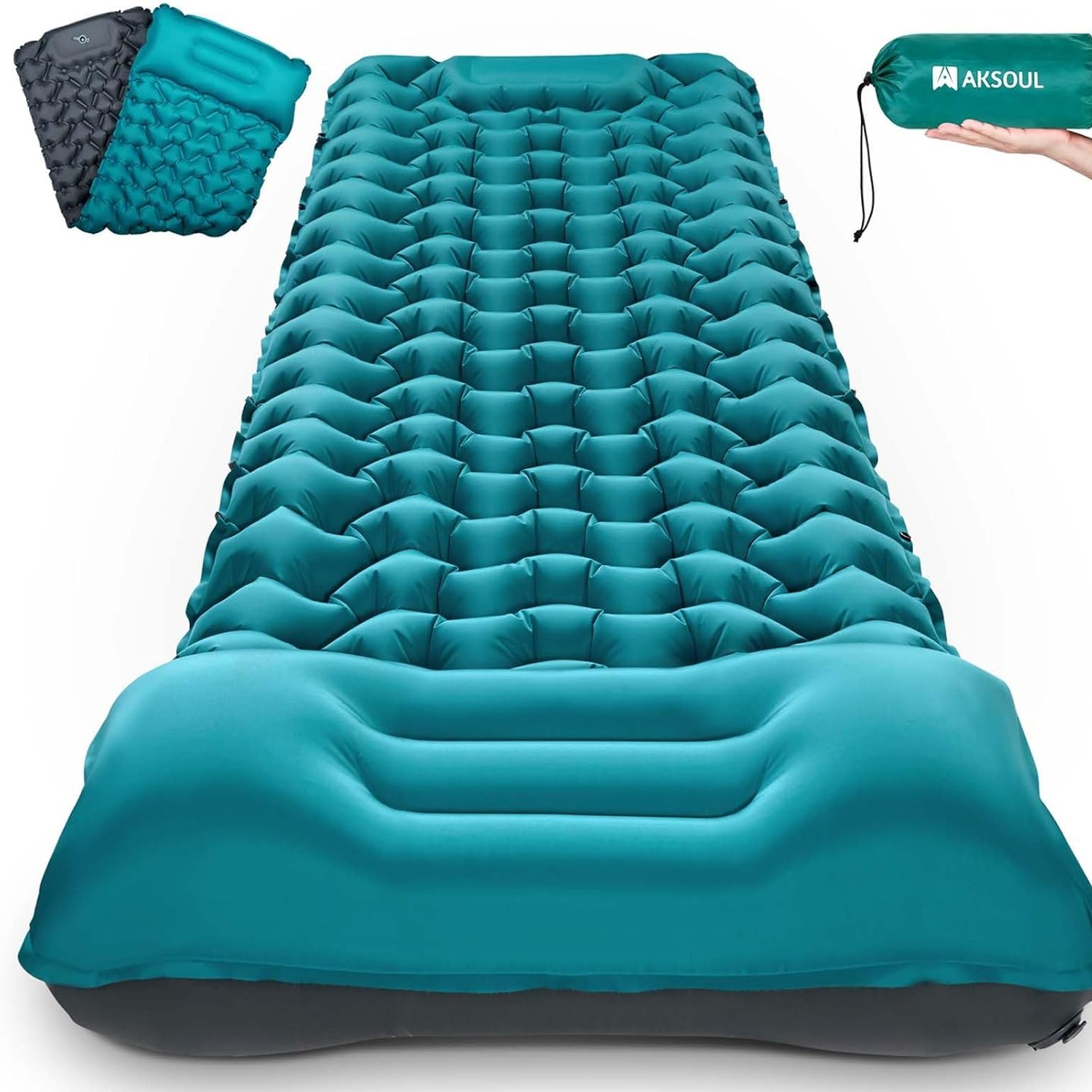
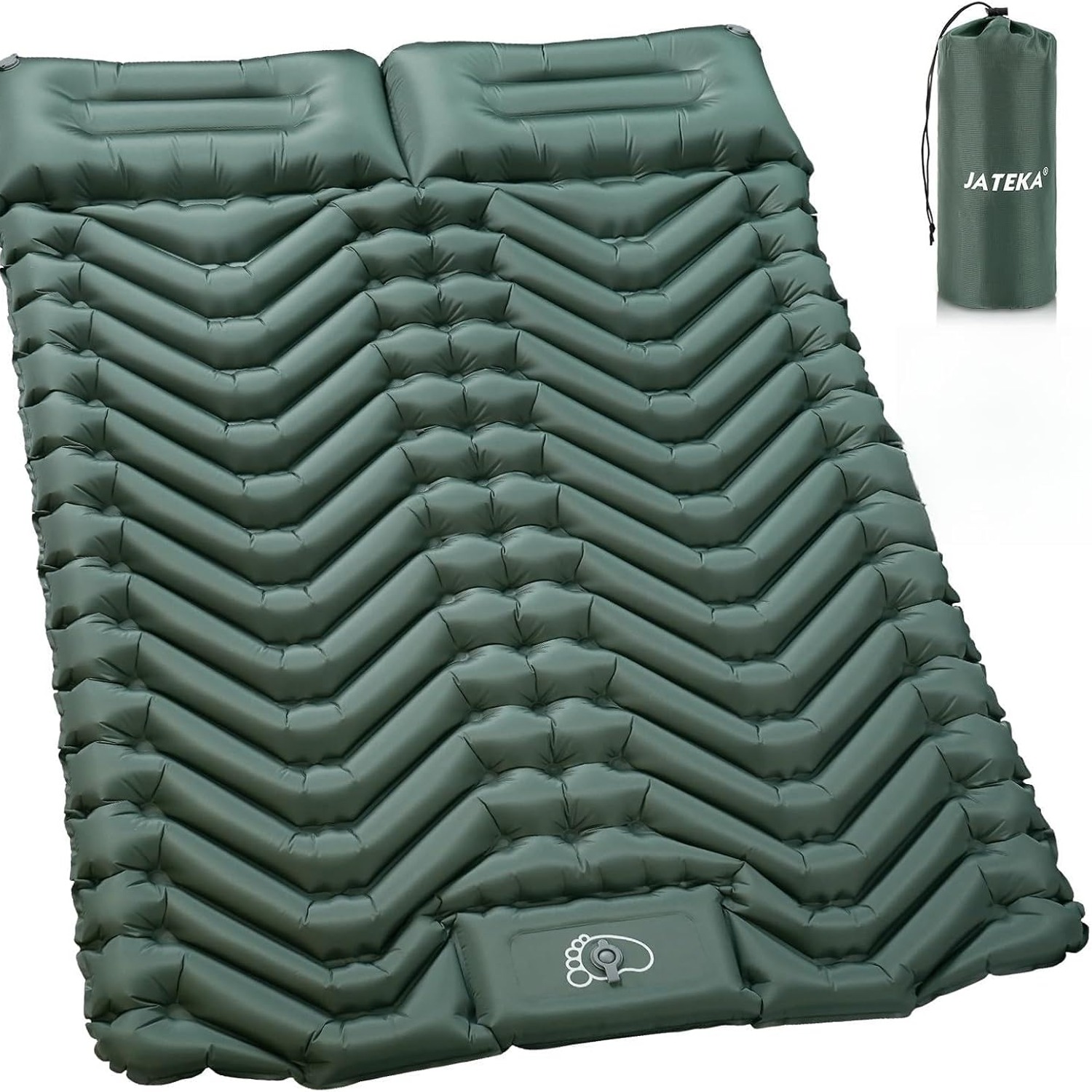
This mat solves it with a foot pump built into the body of the mat. You press it with your foot for about a minute while your hands do something useful. The double-layer valves have anti-leak films to hold pressure once closed, and when you want the air out, you open them and it goes in seconds instead of a long squeeze-and-roll routine.
What the materials mean in practice
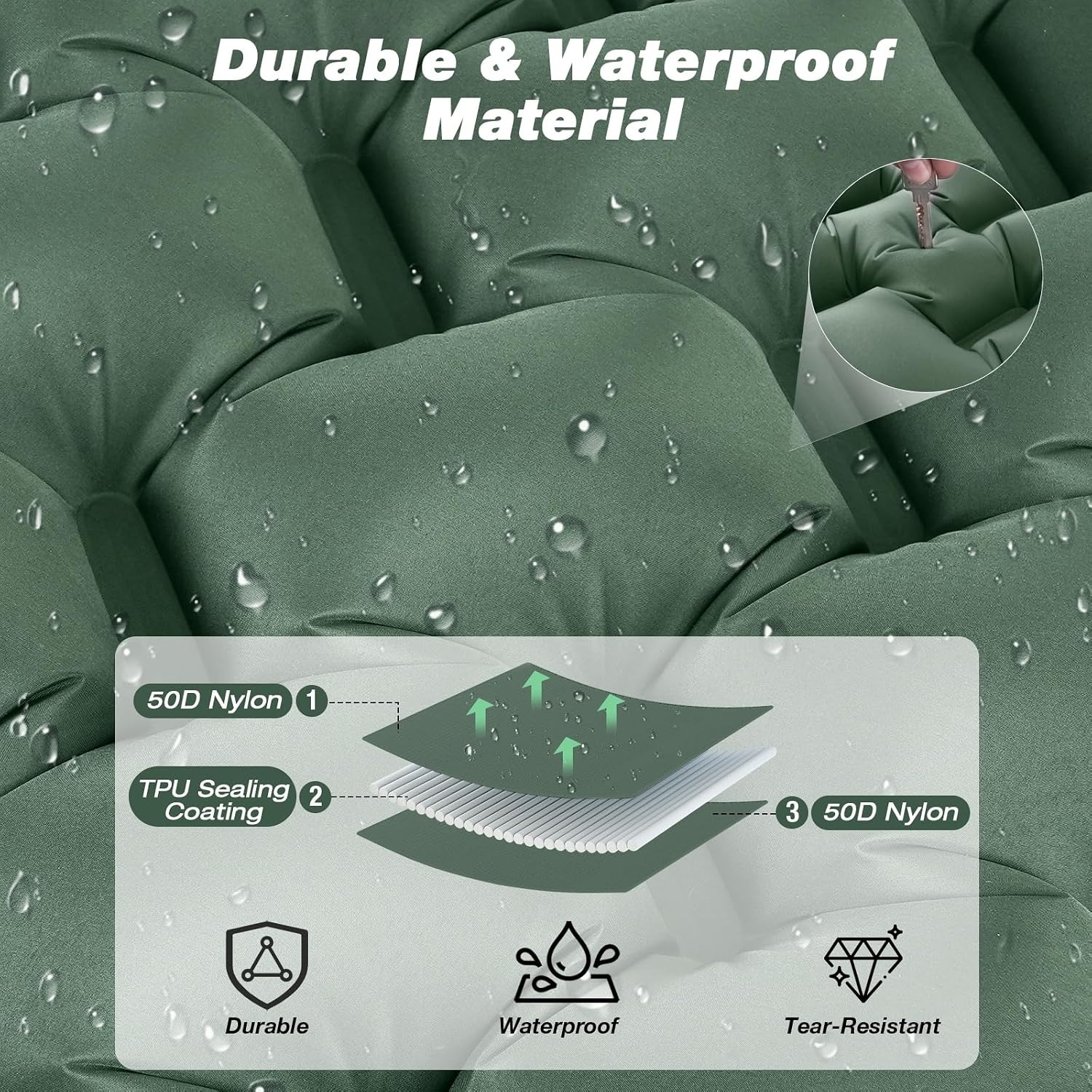
The shell and cover are 50D nylon with a TPU coating on the inside. The nylon handles abrasion, which matters because camping mats get dragged over grass, gravel and tent floors. The TPU layer is what makes the mat hold air and gives it the waterproof rating listed in the specs.
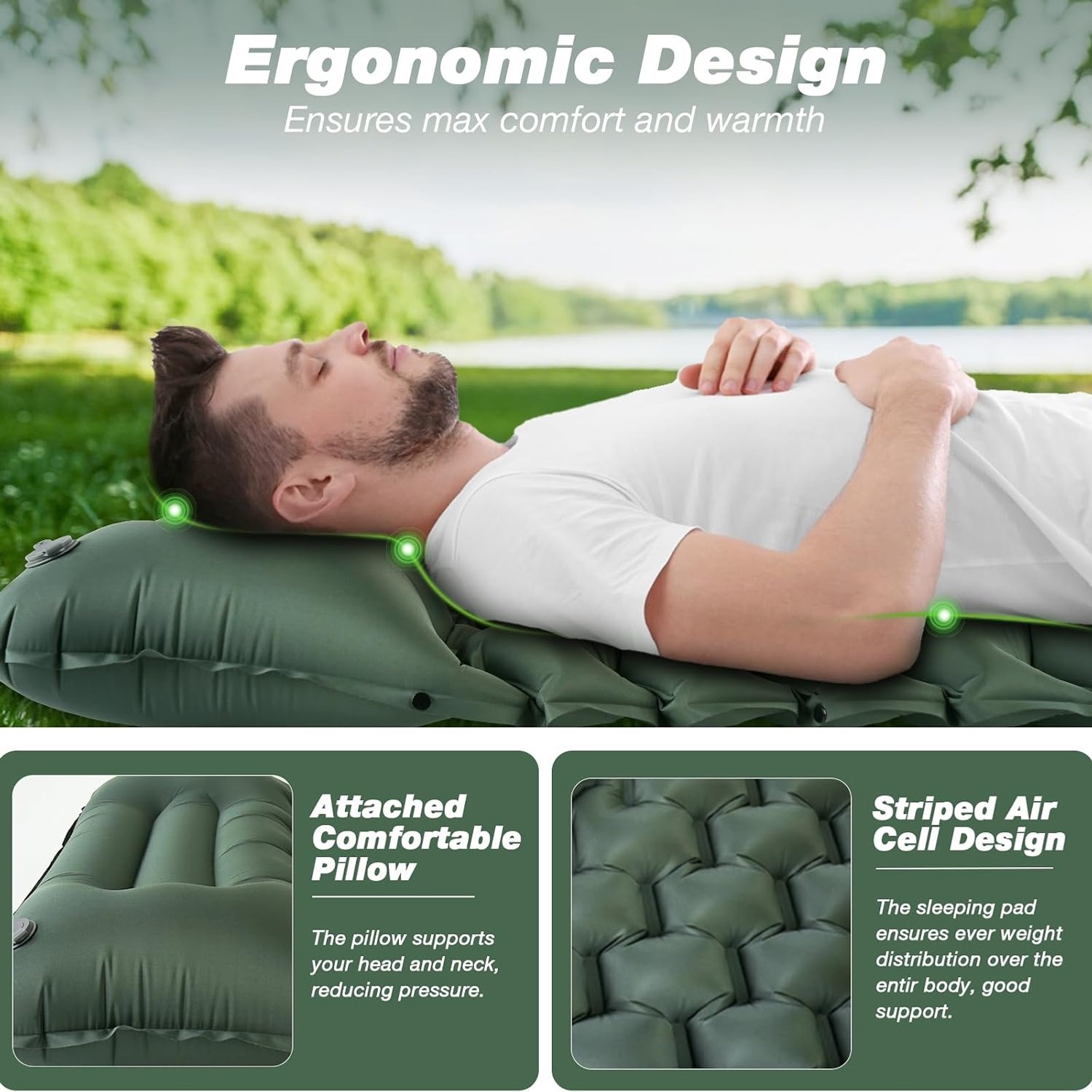
Inside sits a comfort foam layer, described as plush. In plain terms, this is not a hard board of a mat. It gives under a hip or a shoulder, which is why it suits people who sleep on their side as well as those who sleep on their back.
The build is a single layer with the pillow cushion attached at the head end. That last detail sounds minor until you have spent a night using a rolled-up jumper as a pillow and woken with a sore neck. Having it built in also means nothing slides away in the dark.
Who this suits
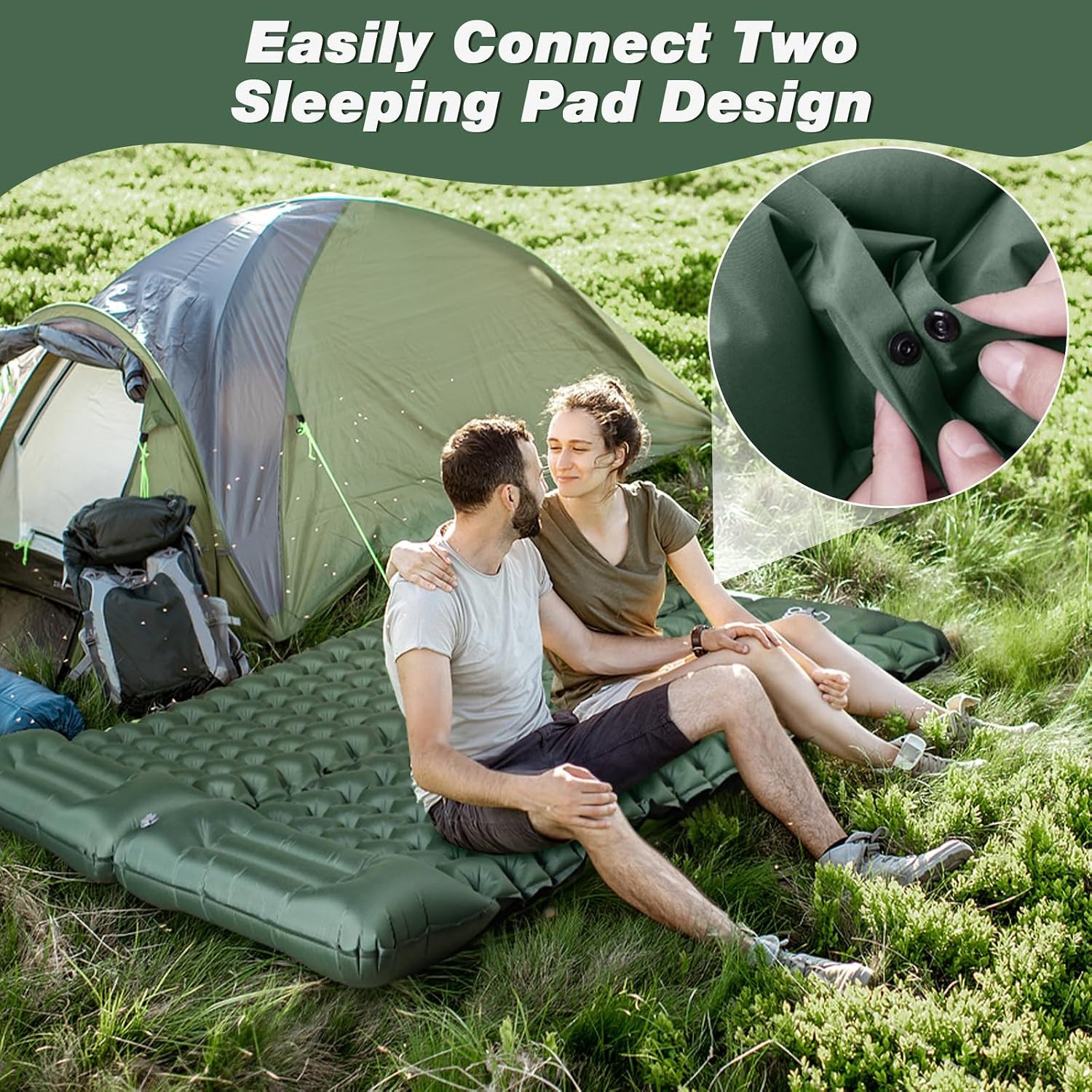
Campers who want comfort without fuss are the obvious fit. If your idea of a good trip involves driving to a site, pitching a tent and actually sleeping, this does the job. Anyone looking for the best self inflating sleeping mat for a family tent will also like the side connection buttons, because two mats clip together into a double sleeping surface.
Hikers and backpackers get a mat that rolls into a 33 x 14 x 8.5 centimetre bundle. That fits inside a pack or straps outside with the included cord. The product record does not state a weight, so if you are counting grams for a multi-day walk, confirm that figure before you commit.
Travellers and festival-goers often buy one for a different reason entirely. It packs small enough to throw in a car boot, and it turns a hostel floor, a van or a friend's lounge room into a reasonable bed. Plenty of people end up using theirs more at home as the best sleeping pad for guests than they do under canvas.
It is listed for adult use. Older kids manage it without trouble, but keep an eye on younger ones around the valves and the pump.
How to choose between mats
Start with where you are sleeping. If you are mostly car camping, comfort and thickness beat packed size every time, and a plush mat like this one makes sense. If you are walking the gear in, packed size and weight move to the top of the list.
Next, think about the ground. Hard, rocky or cold surfaces ask more of a mat. Foam-core mats like this one handle that better than a plain airbed, because even at lower pressure there is something solid between you and the stones.
Then consider your sleeping style. Side sleepers need a bit more give at the hip and shoulder, so a plush mat inflated slightly soft usually works better than a drum-tight one. Back sleepers often prefer it firmer. Because you control the pumping, you can tune it to whatever suits you on the night.
Finally, look at what is already included. A mat with the pillow and pump built in removes two separate purchases and two more items to carry. That is the quiet advantage of the best camping mat with built in pillow designs over cheaper mats that need accessories to be usable.
One more practical point. If there is any chance you will camp as a pair, buy two matching mats rather than one wide one. Matching heights clip together cleanly and you can split them again whenever you travel solo.
Looking after it
Care is simple, but skipping it shortens the life of any mat. Clear the ground before you lay it down, or better still use a groundsheet. Most punctures come from a stick or a sharp stone that nobody noticed.
Clean it with a damp cloth and mild soap. No washing machines, no bleach, no solvents. Let it dry fully, especially around the valve, before you roll it up, because moisture trapped inside foam is how a mat starts to smell.
Between trips, store it loosely rolled or flat with the valve open. Months of tight compression tyre the foam and the mat will self-inflate less eagerly. A dry cupboard away from direct sun is ideal.
If a leak appears, do not panic. Soapy water over the surface will show you where the bubbles form. Clean and dry that spot, press on one of the supplied repair patches, and leave it alone for a while before reinflating. Most punctures are a five-minute job.
The short version
This is a self inflating sleeping mat built around a foot pump, with a pillow already attached and a 50D nylon and TPU shell rated waterproof. It packs to 33 x 14 x 8.5 centimetres, feels plush rather than firm, and clips to a second mat to make a double.
It suits campers, hikers, travellers and anyone who needs a spare bed that lives in a cupboard. Weight, unrolled length and country of origin are not listed in this product record, so check those details on the listing if they are important to your trip.
If you want a mat that sets itself up while you deal with everything else, this is a sensible place to start.