
The complete guide
How To Choose A Soft Cooler Bag That Actually Keeps Things Cold
The problem with warm drinks and soggy lunches
Everyone has done it. You pack a bag with sandwiches and a few cans, drive an hour to the lake, and by the time you sit down the drinks are lukewarm and the bread has gone limp in a puddle of melted ice. The food is still technically edible. It is just no longer the thing you were looking forward to.
A decent cooler fixes that, but the word "cooler" covers a huge range of products. At one end you have the big rigid boxes that live in a shed and need two people to lift when full. At the other you have thin fabric bags that are really just a lunch sack with foil inside. Most people want something in the middle: light enough to carry on a shoulder, big enough for a day out, and sealed well enough that melting ice stays inside.
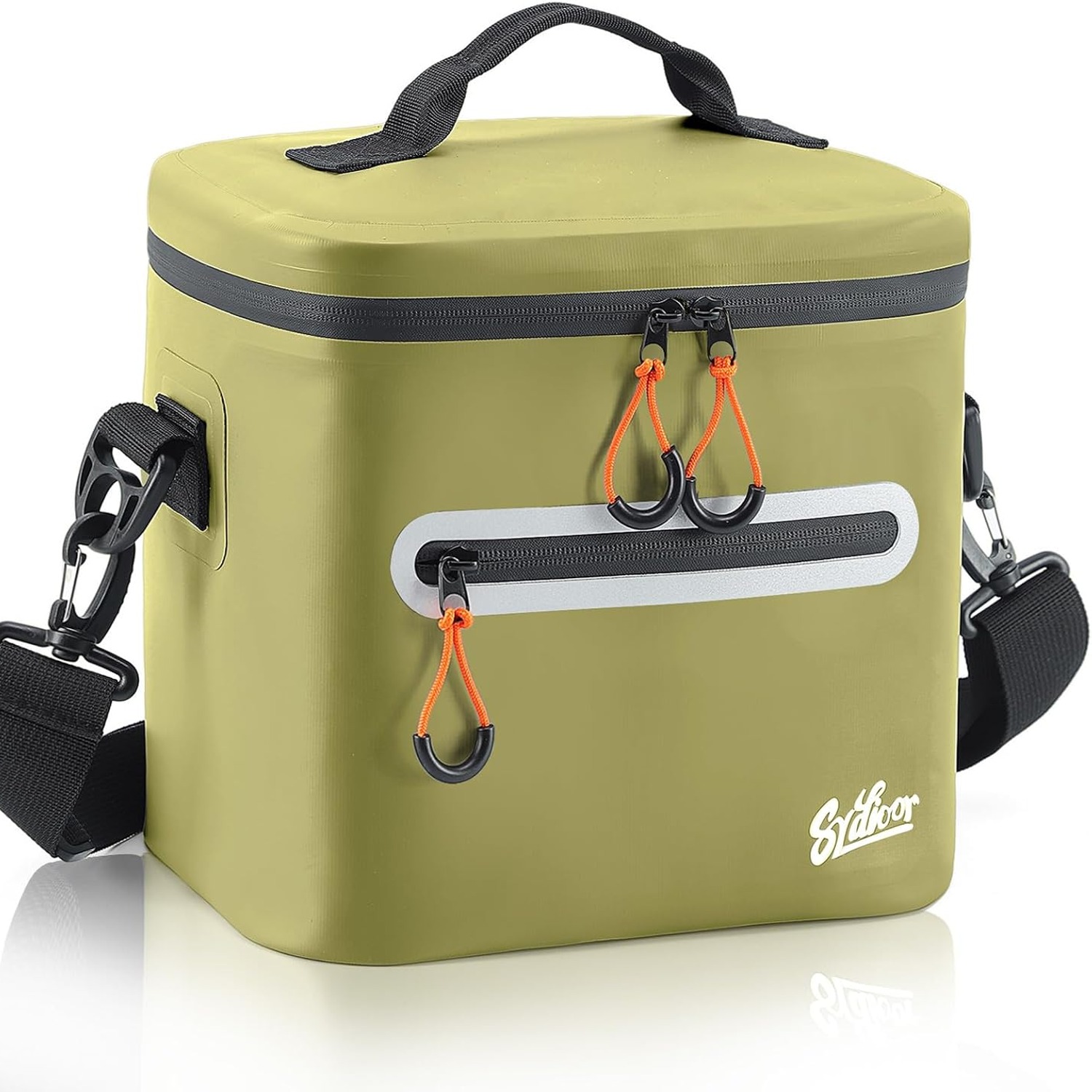
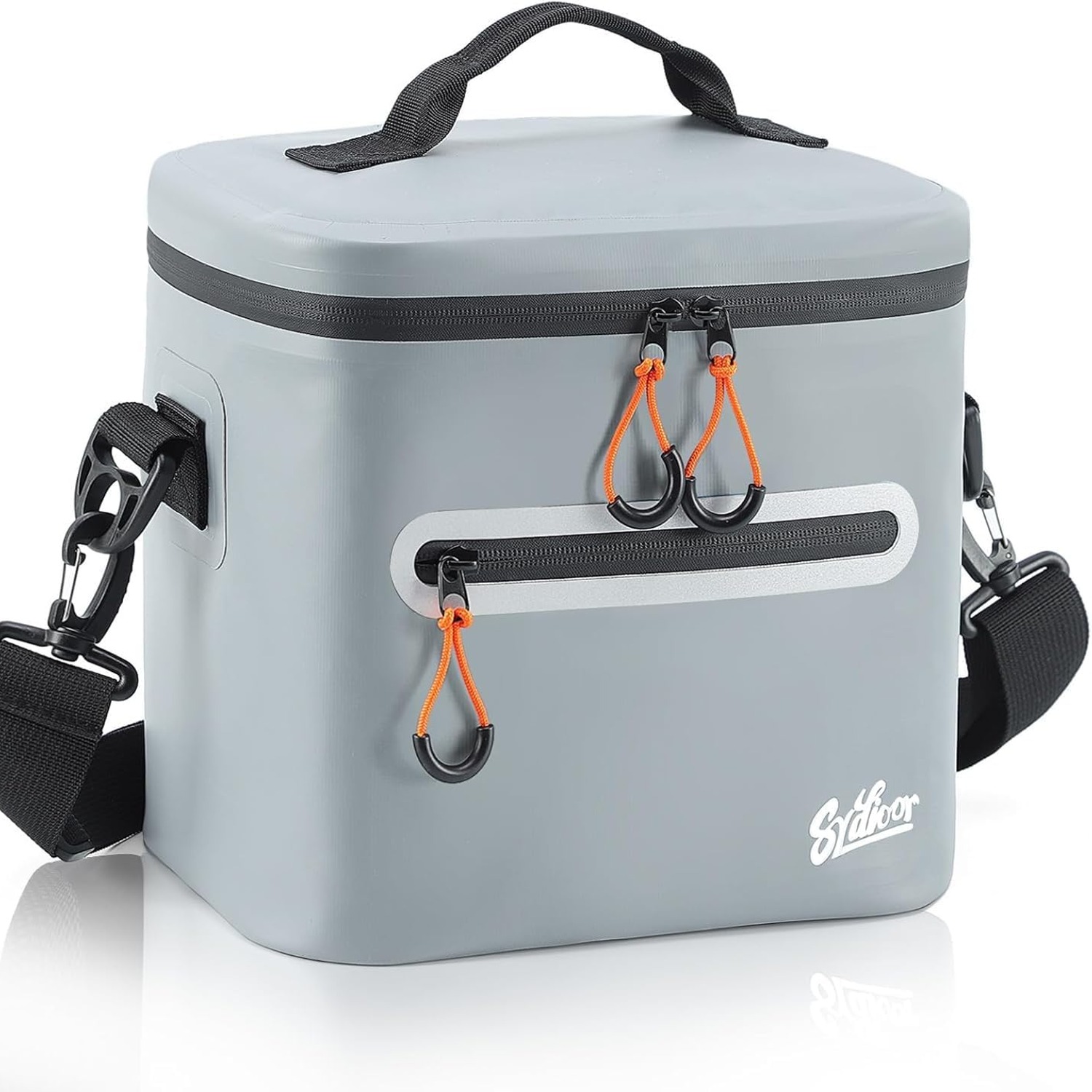
That middle ground is where a soft sided cooler bag sits, and the Sydioor IB24001 is a straightforward example of the type. Fourteen litres, a waterproof shell, a leak-proof liner, a strap and a pocket. Nothing exotic. The value is in doing the basics properly.
How a soft cooler actually works
Insulation does not create cold. It slows the movement of heat. Warm air outside the bag is always trying to reach the cold contents inside, and the job of the insulation is to make that journey slow and difficult.
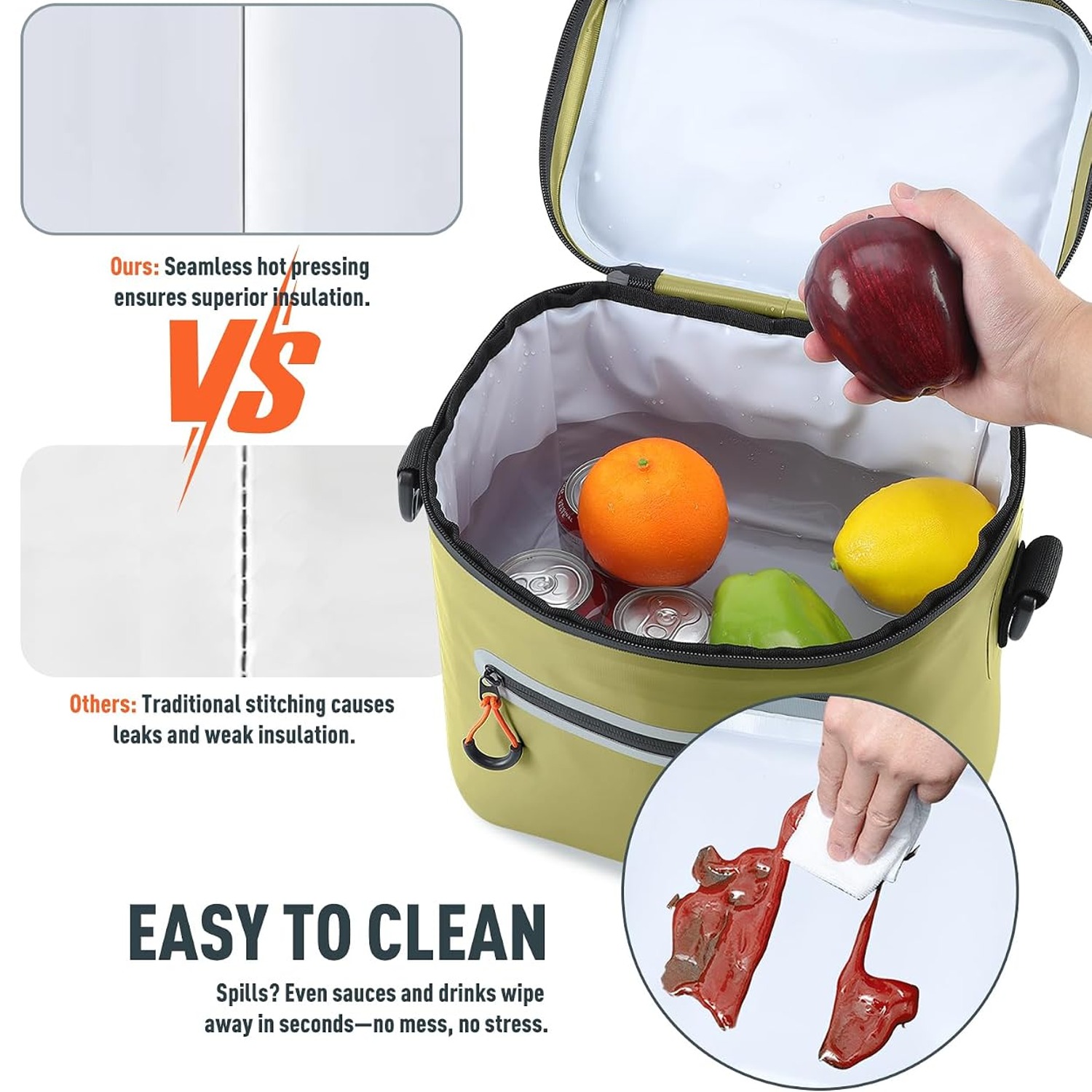
This bag uses a layered build, described by the maker as five layers, with a PEVA liner on the inside. PEVA is a food-safe plastic film commonly used for cooler liners because it does not absorb smells and can be welded into a sealed shape. That sealing is what makes the liner leak proof. Instead of stitched fabric with gaps at every seam, you get a continuous inner shell that holds water.
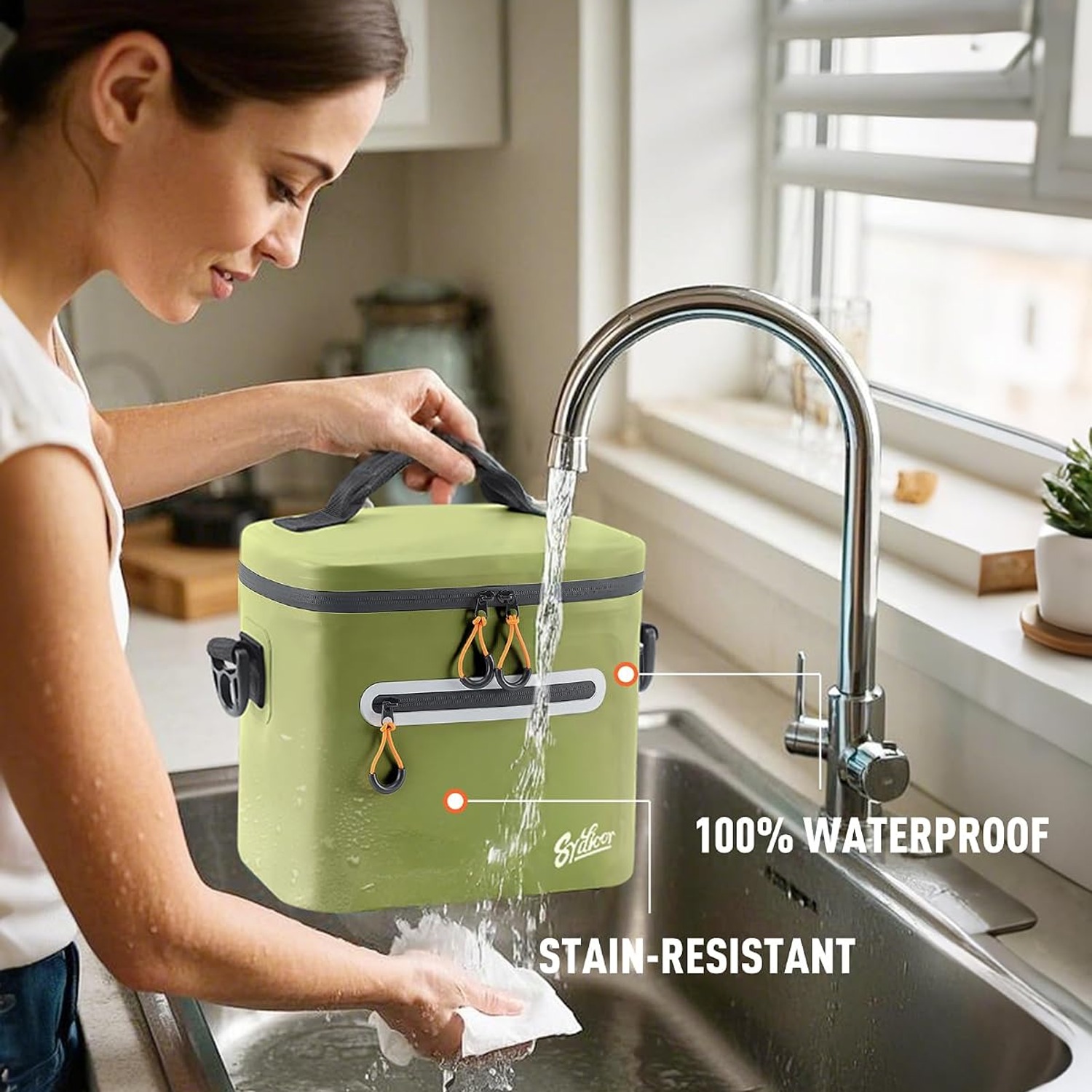
The outer skin is TPU, which is a flexible polyurethane material. The important difference from a woven cloth cooler is that TPU has no weave. Rain sits on top of it instead of wicking through. Sand brushes off. A smear of sunscreen or a drink spill comes away with a damp cloth. If you have ever given up on cleaning a fabric cooler and just shoved it back in the cupboard smelling faintly of prawns, this is the fix.
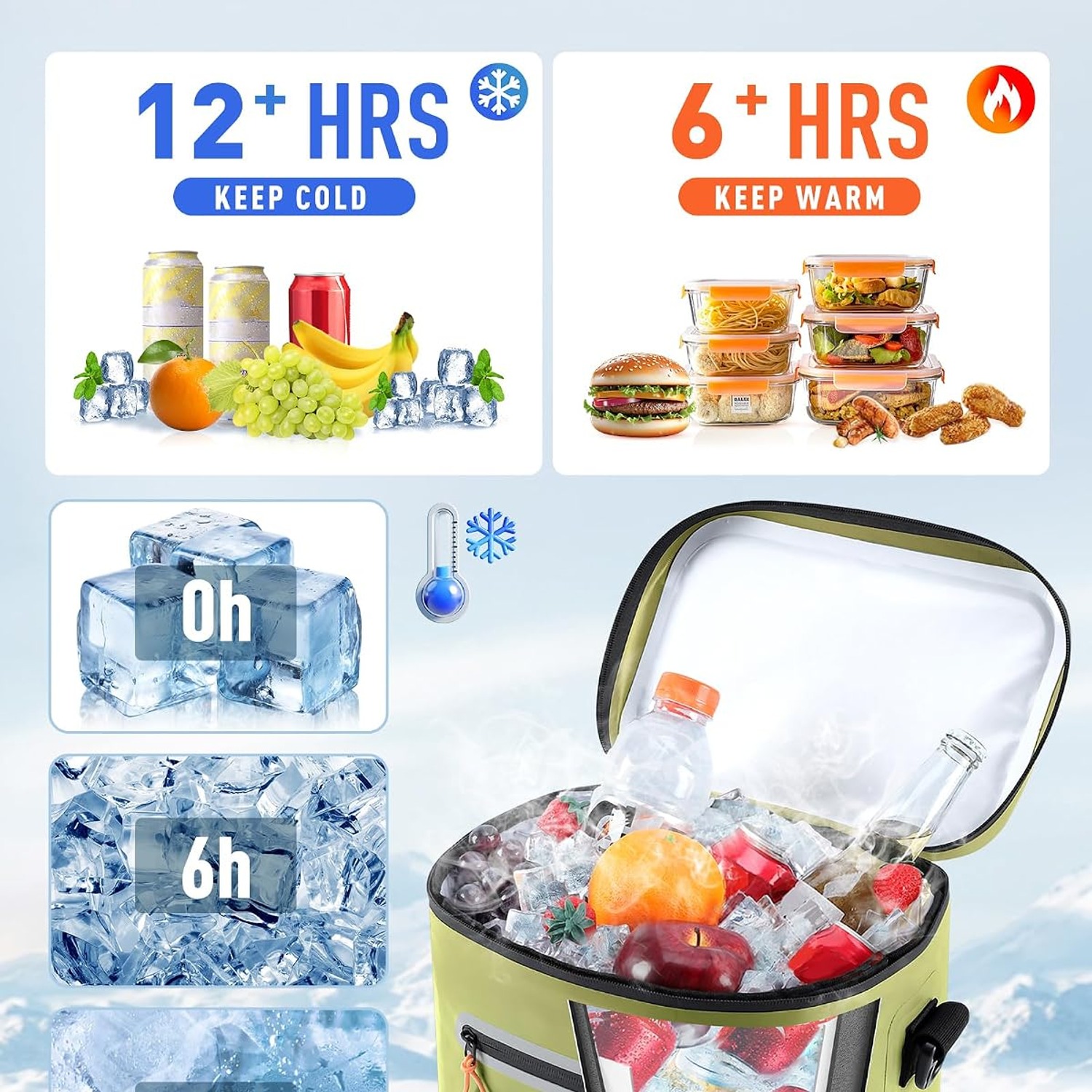
Sydioor rates the bag at more than 20 hours of cooling with ice. Treat that as a laboratory-style figure rather than a promise. Ambient temperature, how much ice you use and how often you unzip the bag all change the result dramatically. A packed bag left in shade will outperform a half empty one in a hot car by a wide margin.
Who this size suits
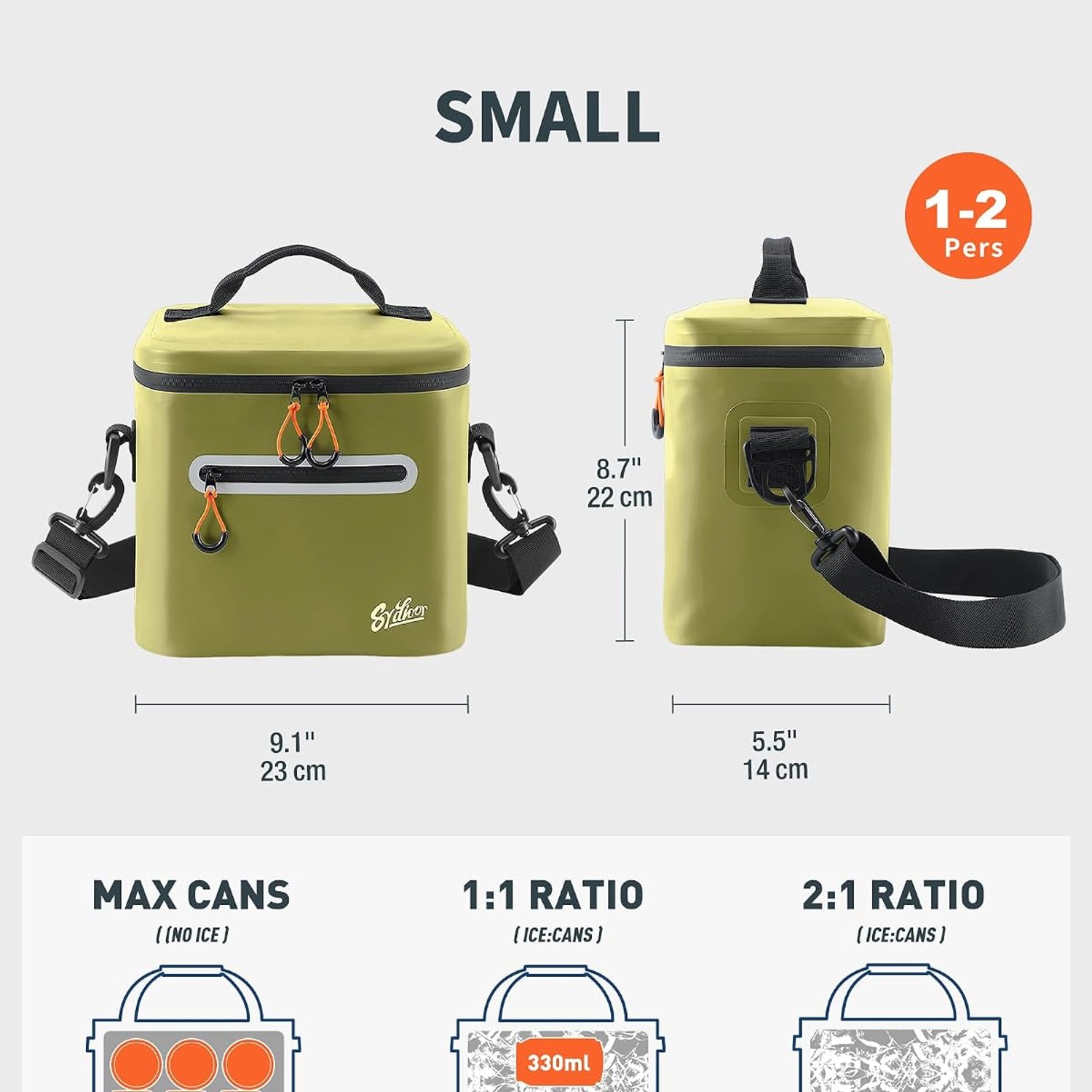
Fourteen litres, or about 16 cans, is a sensible everyday size. It is the capacity that covers a day at the beach for two, a weekend camp for one, a picnic for a small family, or a long drive where you want cold water and a few snacks.
It works well for:
- Couples and small families on day trips
- Anglers and boaters who need something wipeable
- Workers who pack serious meal prep rather than a single sandwich
- Anyone doing a grocery run with frozen items and a long drive home
It is probably too small if you regularly cater for a group, or if you want to keep drinks cold for a multi-day camp with no ice top-ups. It is more than you need if your total cargo is one yoghurt. For a lot of buyers hunting the best soft cooler bag, size is the thing they get wrong first, usually by going too small to save money and then wishing they had not.
What to look for when comparing coolers
Liner quality. This is the part that fails. A cheap cooler has a thin foil liner glued in place, and once it splits at a corner, water gets into the insulation and the bag is finished. A welded, food-grade liner is worth paying for.
Shell material. Fabric shells look nicer in photos. Wipeable shells are better in life. If your cooler goes anywhere near sand, bait, sunscreen or kids, a waterproof surface saves you hours over the years.
Capacity versus carry weight. Water is heavy. A 14 litre bag packed with ice and cans is a real load on one shoulder, which is why a proper adjustable strap matters more than people expect. Check the strap is detachable too, since a dangling strap in a car boot catches on everything.
Shape. A tall narrow bag holds cold a touch better because there is less surface area per litre, but a wider bag fits platters and takeaway containers. The 19 by 30 by 25 centimetre footprint here is a balanced compromise and fits most boot spaces.
Pockets. Counterintuitively, fewer is often better. Every external pocket is a patch of thin material where cold leaks out faster. A single front zip pocket for keys and an opener is the sweet spot.
Packing it properly
Half of cooling performance is technique. Start by chilling the contents before they go in. A cooler slows temperature change, so if you load room-temperature cans, a good chunk of your ice gets used just bringing them down.
Fill the space. Air is the enemy. If you are not packing much, add extra ice packs or even a rolled towel to take up the gap. A full bag holds cold for far longer than a half empty one.
Layer with purpose. Heavy items and anything you want coldest go at the bottom, ice spread over the top since cold air sinks, and the things you will reach for first near the lid. Fewer openings means less warm air getting in.
Keep it out of the sun. Shade under a tree, a towel thrown over the top, or a shaded corner of the boot will all buy you hours. Direct midday sun on a black bag is the fastest way to a bag of water.
Care that keeps it going for years
Cleaning takes about two minutes if you do it the same day. Wipe the inside with a damp cloth and a little mild detergent, wipe it again with clean water, then leave the bag open to air dry. The smooth liner does not hold on to grease or odours the way fabric does, so there is rarely any scrubbing involved.
Never machine wash it. The spin cycle is hard on welded seams and bonded insulation layers, and once those fail the bag will not hold water or cold properly again. The same goes for dishwashers and tumble dryers.
Store it dry and slightly open. Trapped moisture is what causes that stale smell people blame on the cooler itself. A bag that goes away clean and dry comes out next season ready to use.
Keep it away from heat and sharp edges. No sitting beside a campfire, no sharing a boot compartment with fishing hooks or tent pegs loose in the space. A small puncture in the liner is the one damage type that genuinely shortens a cooler's life.
The short version
If you want a cooler you will actually take with you, soft and light beats big and rigid most of the time. This Sydioor bag covers the practical points: 14 litres of space, a waterproof TPU shell that wipes clean, a food-grade PEVA liner built to hold melted ice inside, a detachable adjustable strap and one zip pocket for the small stuff.
Chill the contents first, pack it full, keep it shaded, and clean it the day you get home. Do those four things and a cooler like this will handle beach days, camp trips, fishing mornings and the frozen aisle run for a long time.