
The complete guide
How to Choose an Ultralight Solid Fuel Stove for Backpacking
The problem with carrying a stove you barely use
Most people carry too much stove. You buy a canister model with a built-in igniter and a fold-out pot support, you add a canister, and suddenly you have 300 to 500 grams of kit dedicated to boiling two cups of water a day. For a week in the hills with a group, that is fine. For a fast overnight, a day hike where you just want a hot drink, or a bike trip where space is tight, it is more than the job needs.
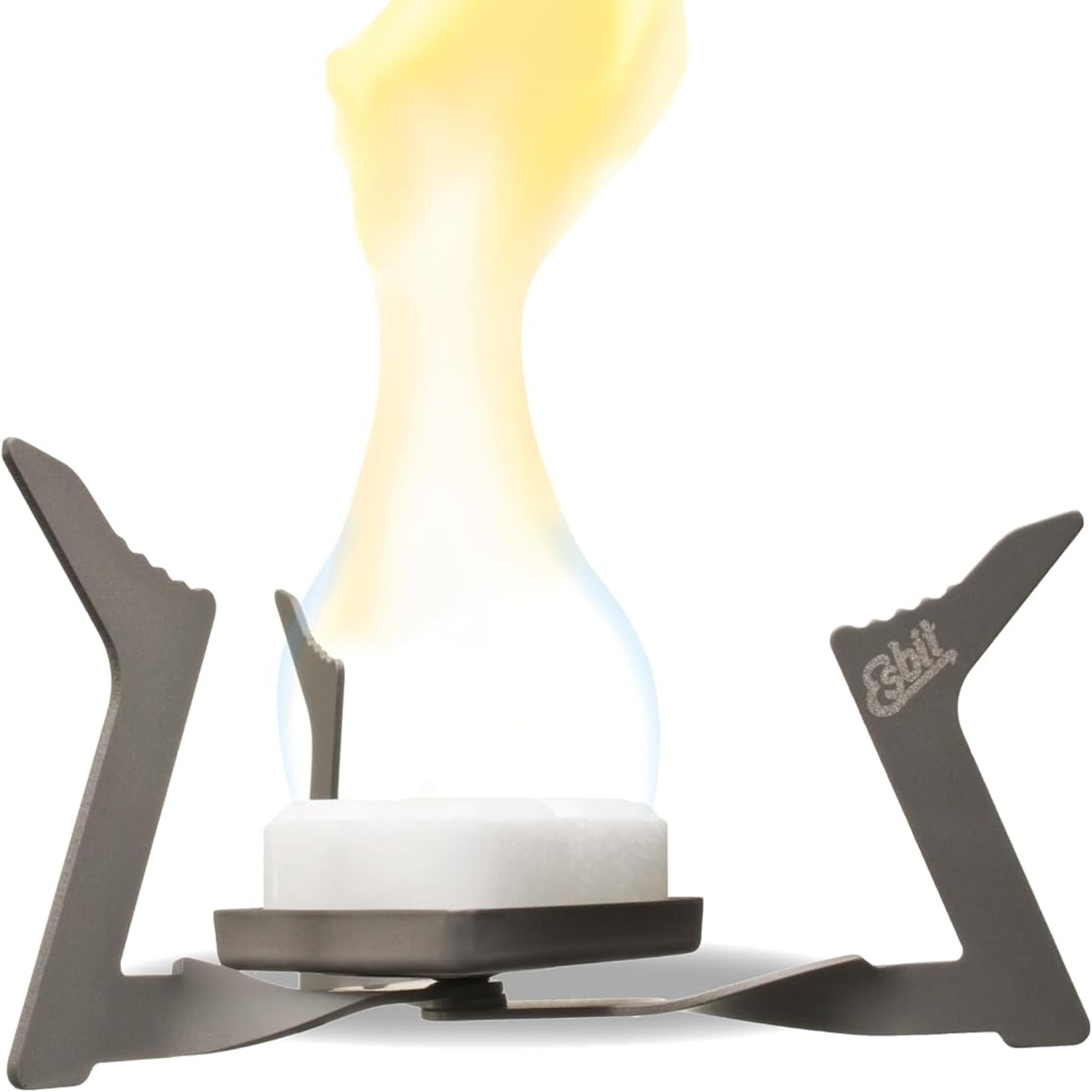
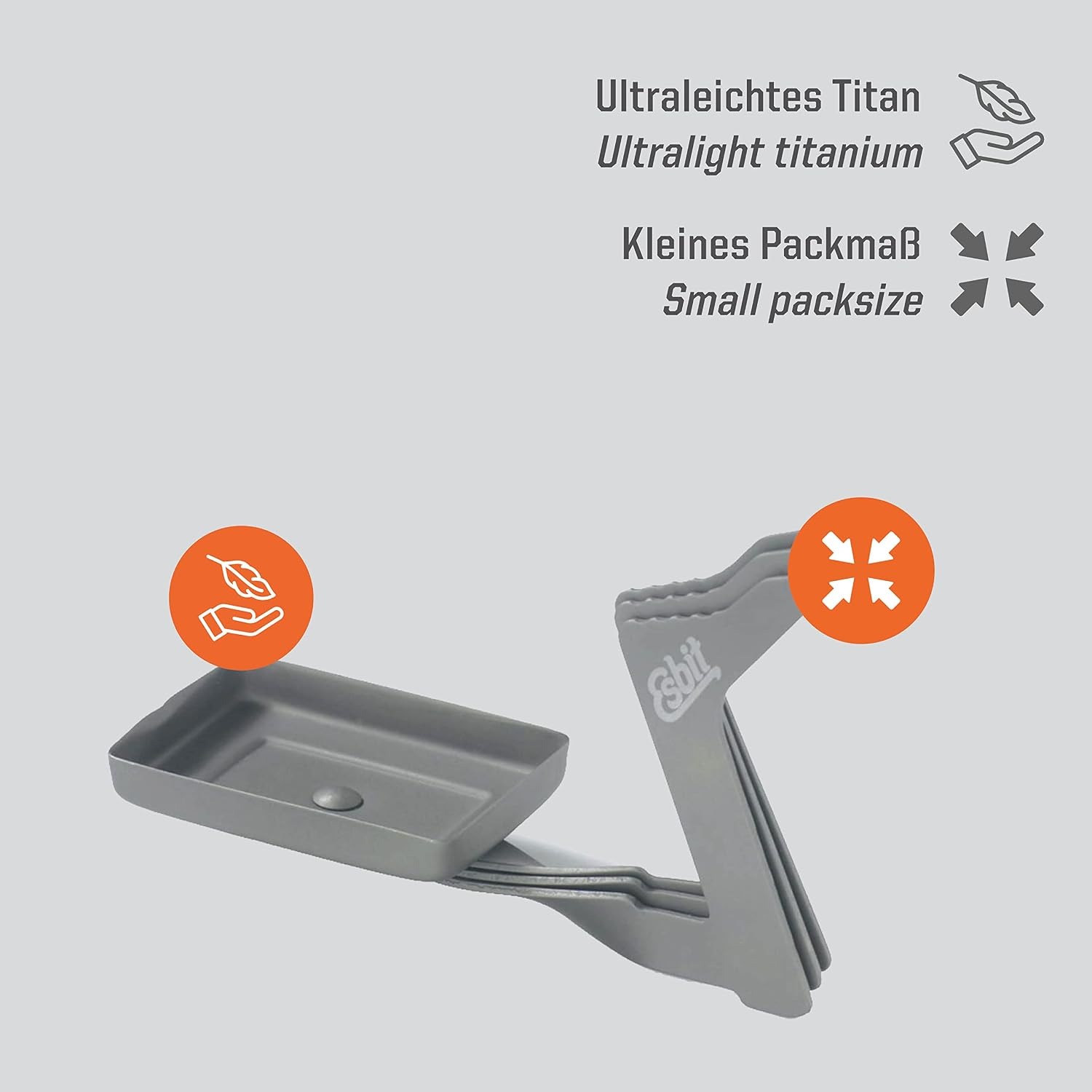
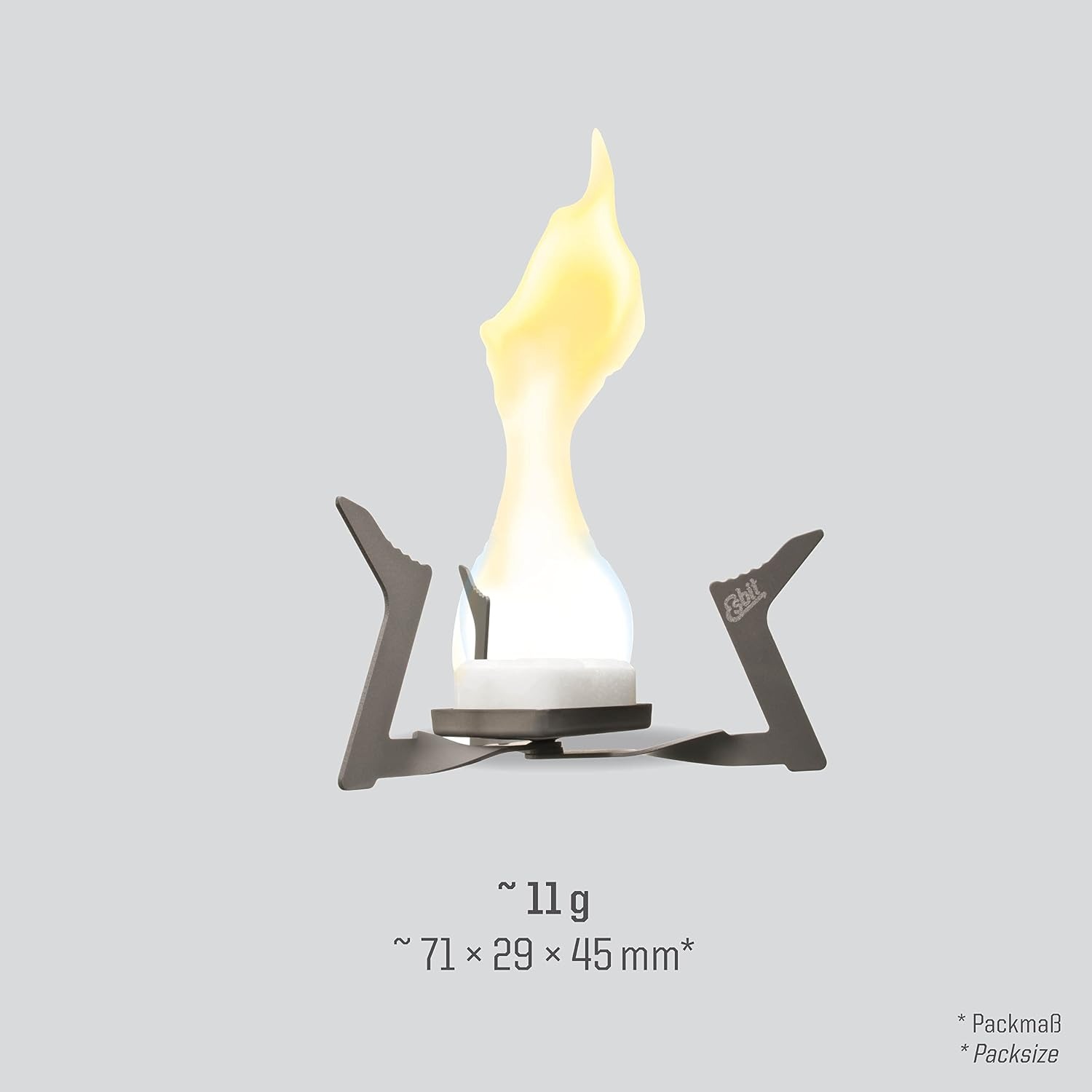
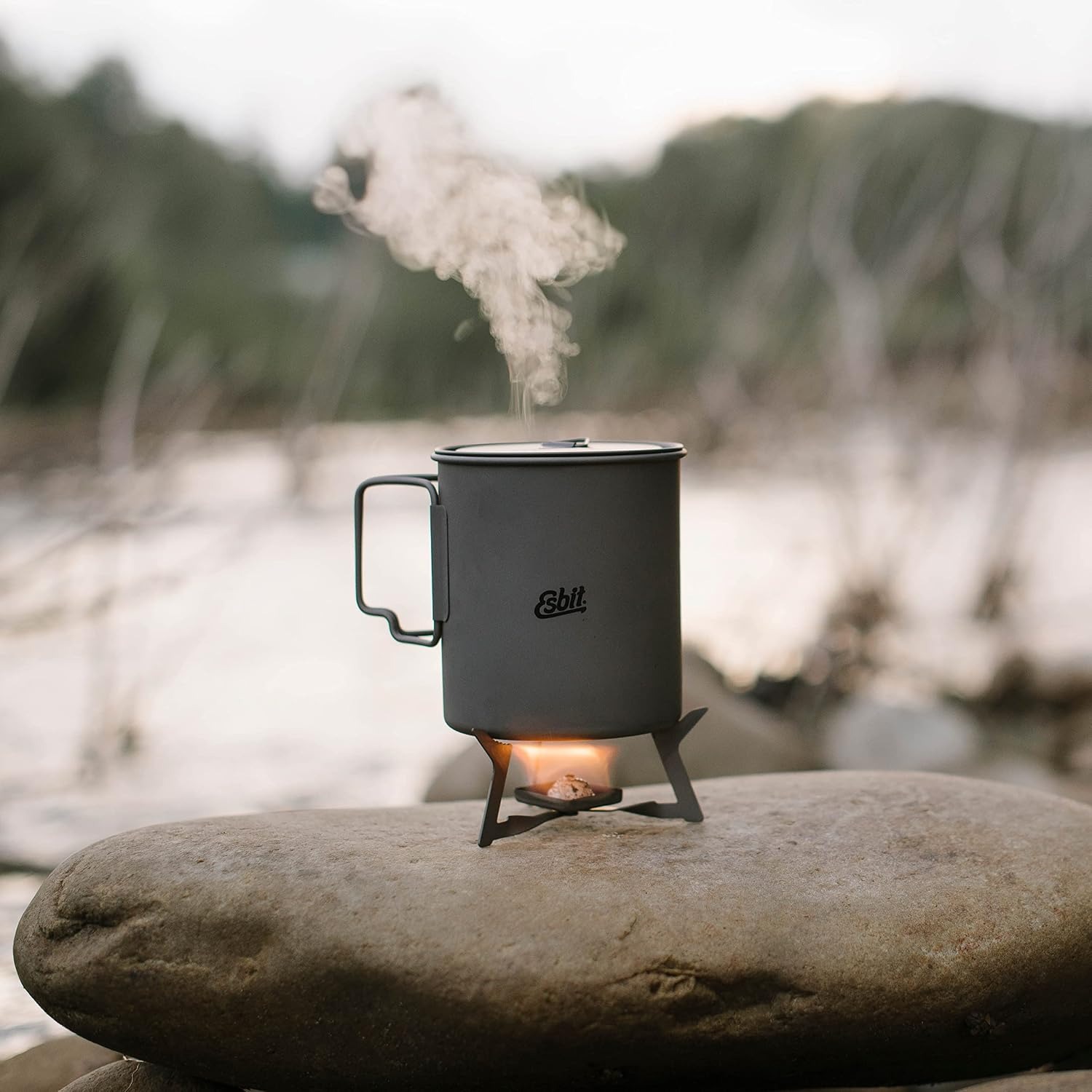
A solid fuel stove flips the maths. Instead of a burner, a valve, and a pressurised canister, you get a folding metal frame that holds a fuel tablet under your pot. This one is titanium and lists at 0.02 kg. It folds to 28 x 28 x 84 millimetres, which is small enough that it lives inside your cook pot rather than taking up its own space. You do not really decide whether to bring it. It is just there.
That is the whole pitch, and it is worth being honest about the trade-offs before you commit.
How a solid fuel stove actually works
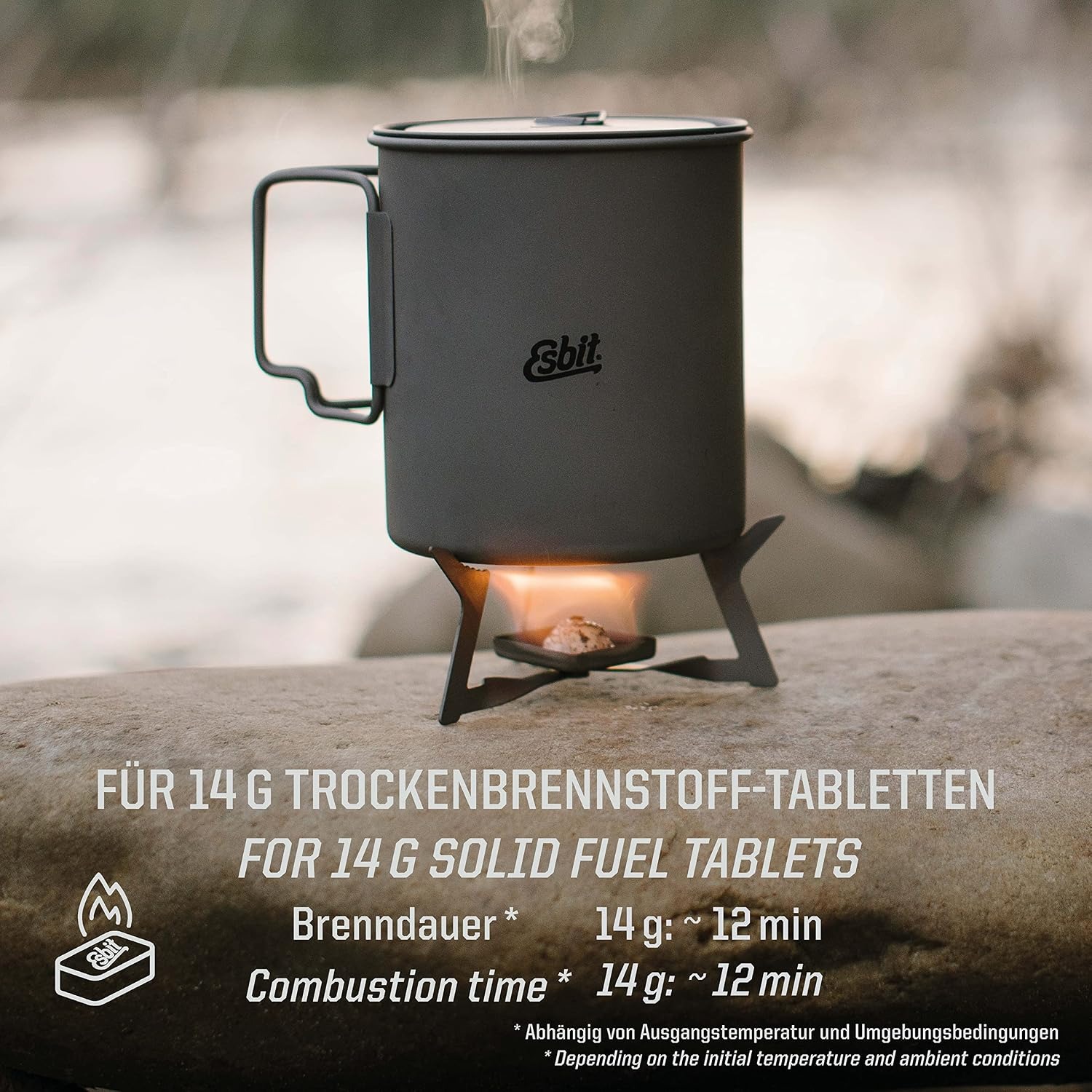
There is not much to explain, which is the point. You unfold the three legs. You drop an Esbit solid fuel tablet into the stove. You light the tablet with a lighter or a match, and you set your pot on the legs. The tablet burns down and heats the pot. When it is spent, the flame goes out.
No priming. No pump strokes. No listening for the hiss of a leaking seal. No adjusting a valve with cold fingers. In practice, a stove with no moving parts is a stove that cannot jam, clog, or lose pressure on you at the worst moment.
The three folding legs are what make it usable rather than a novelty. They fold out from the stem and sit as a self-stabilising tripod, so the pot has three solid contact points rather than balancing on a flat plate. Then they fold flat again and the whole thing goes back in the mesh bag.
What it is genuinely good at
Boiling a small amount of water. That is the sweet spot. A mug of coffee, a dehydrated meal, a cup of soup at a cold lunch stop. If your cooking consists of adding hot water to something in a bag, this stove does everything you need.
It also shines as insurance. A lot of experienced walkers carry one even when they have a bigger stove in the pack, because the weight penalty is almost nothing and the failure modes are completely different. If your canister stove clogs or your canister runs dry a day early, a tablet and a titanium frame will still get you a hot drink.
The same logic applies to emergency kits. Solid fuel tablets sit in storage for a long time without evaporating or going flat the way a part-used canister can. People searching for the best emergency stove for a bug out bag usually land on solid fuel for exactly that reason. It is a system that tolerates being ignored for two years in a cupboard.
Adventure racers and fastpackers pick it because it is measured in grams. Bikepackers pick it because a frame bag has no room to waste. Scouts and cadets have been using solid fuel for decades because it is simple enough to hand to a beginner.
Where it falls short
Be realistic. There is no simmer control. A tablet burns at the rate it burns, so this is a boiling stove rather than a cooking stove. If you like making actual meals in a pan on the trail, you want something else.
Open flames are also vulnerable to wind. The stove has no integrated windscreen, and a breeze will drag the heat sideways and stretch your boil time. Using a rock, your pack, or a small foil shield as a block makes a real difference. Just leave enough gap for air to reach the flame.
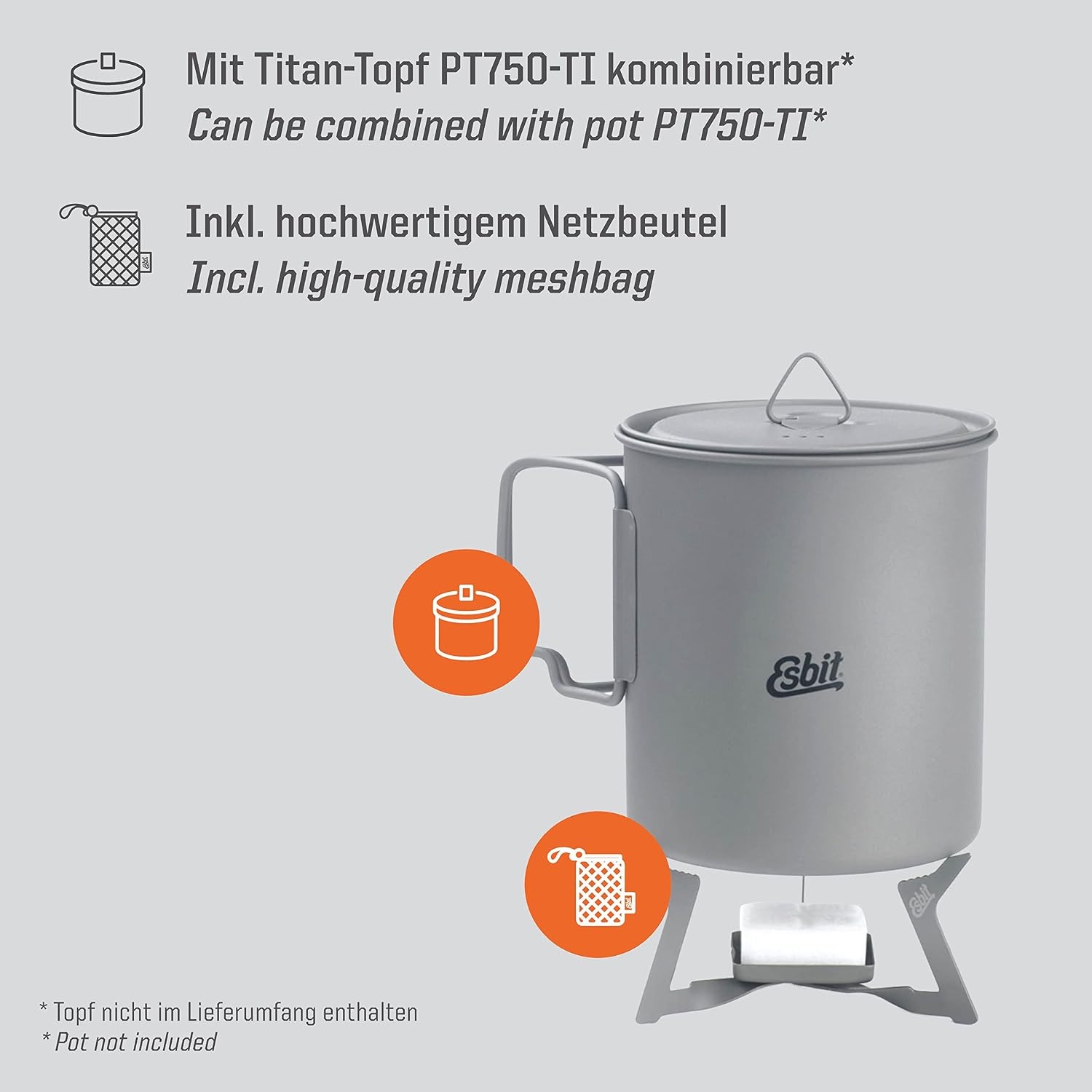
Solid fuel is sooty. Your pot base will blacken and the stove will pick up residue. The included mesh bag is there for a reason. Keep the stove bagged and ideally keep the pot in a bag too, or everything in that pocket will end up grey.
And there is the fuel itself. You carry tablets, you count them, and when they are gone they are gone. There is no topping up a half-canister. A quick test at home with your own pot, your own water volume, and your own tablet size tells you far more than any published boil time, and no boil or burn time figures are given for this stove anyway.
Matching the stove to your pot
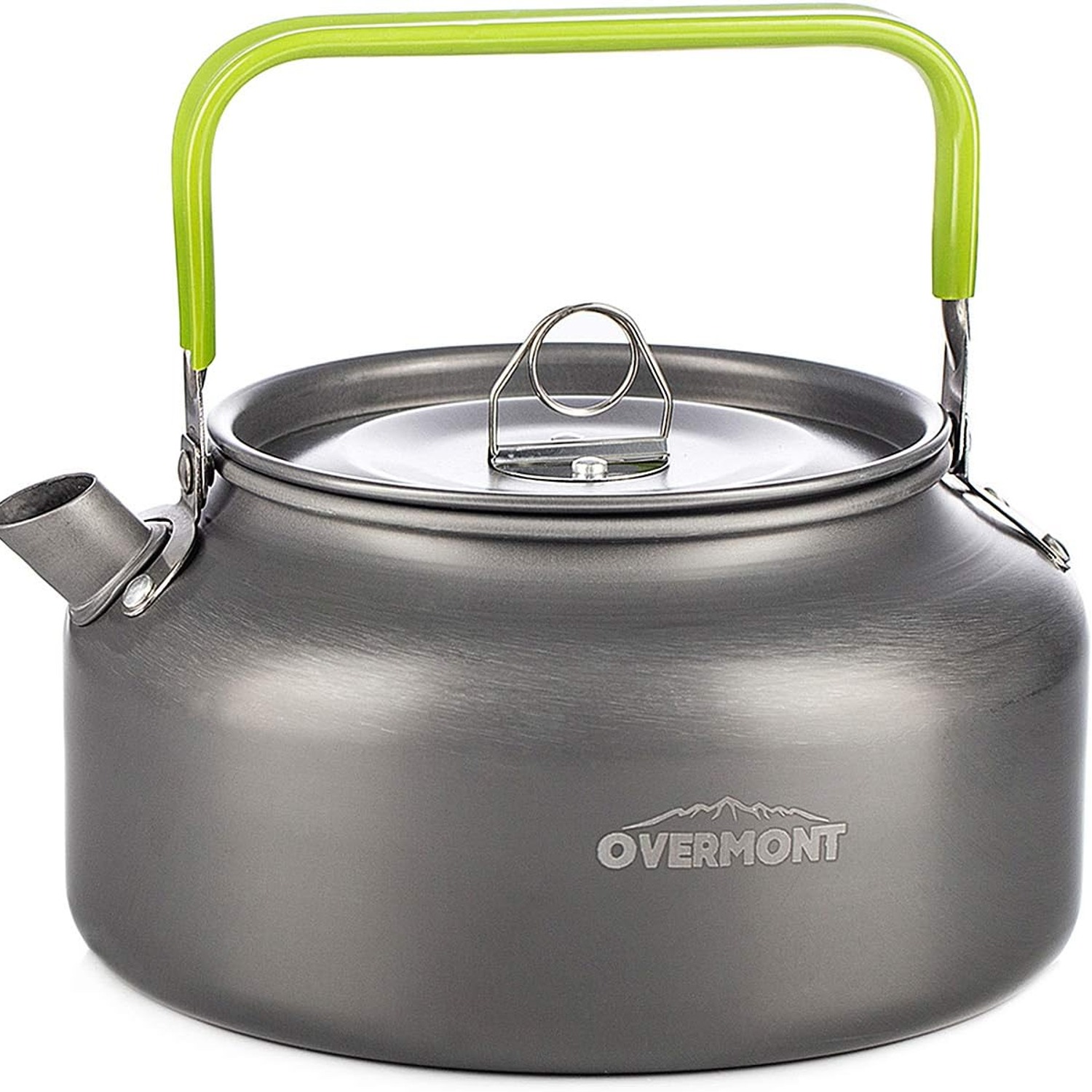
This is a solo stove. The frame is small, the base is small, and it is built to sit under a mug or a one-person pot. If your pot is a 750 ml titanium cup or a 1 litre backpacking pot, you are in the right territory. Anything wide and heavy is asking too much of a 0.02 kg frame.
Check the internal depth of your pot if you want the stove to nest inside. The stove needs about 84 millimetres of clearance when folded. Most tall, narrow backpacking pots swallow it easily. A short, wide pan might not, in which case the stove rides in a side pocket instead, which is hardly a disaster at this size.
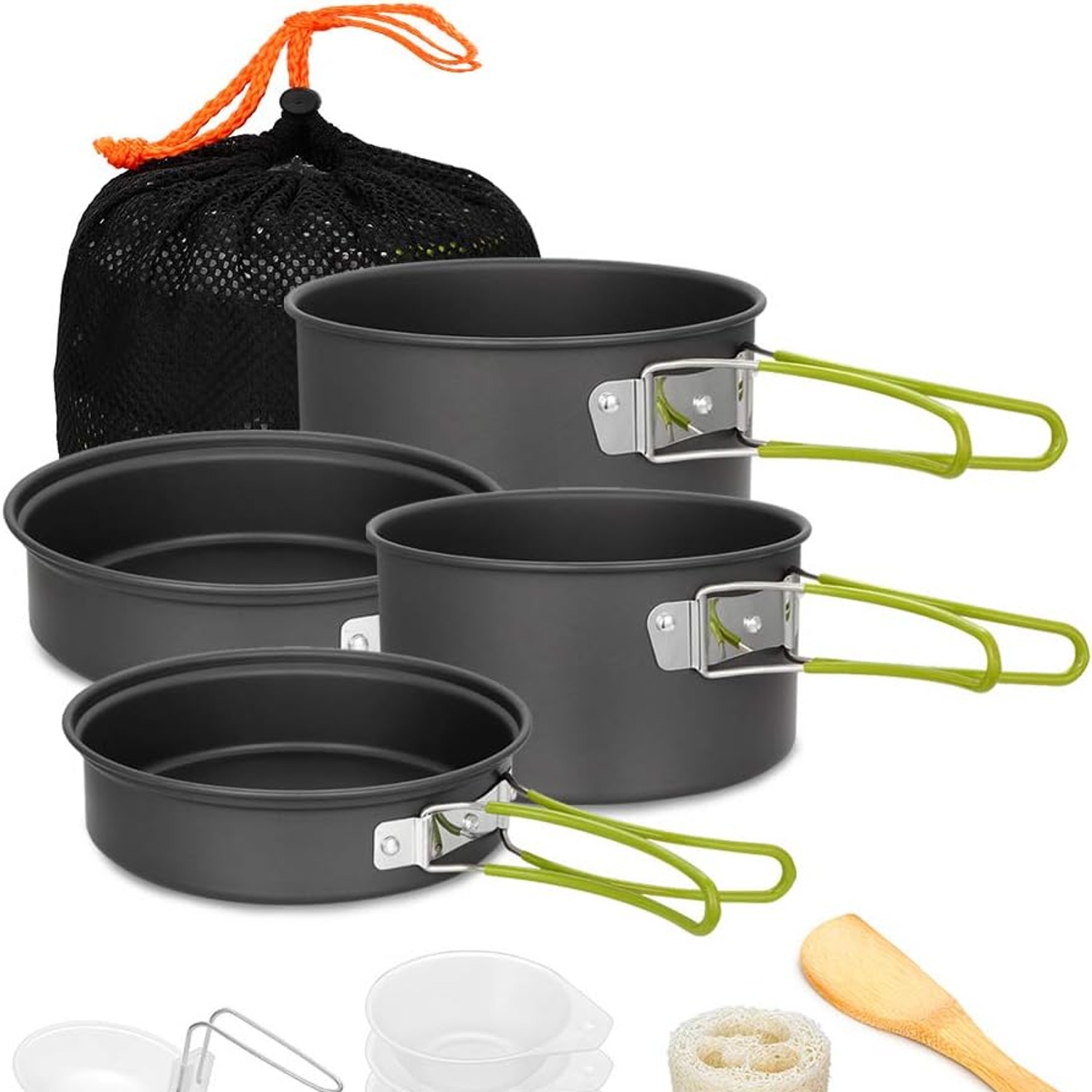
People putting together the best minimalist cooking kit usually end up with four things. A pot, this stove, a lighter, and a handful of tablets. That combination fits in a hand.
Using it safely
Set it on bare ground, a rock, or something that will not burn. Dry grass and pine needles catch easily, and a tipped stove with a lit tablet is a genuine fire risk. Keep it well clear of tent fabric and well clear of your sleeping gear.
Never use it inside a tent or any enclosed space. It is an open flame producing combustion fumes, and tents are flammable. Cook outside, in the open, with the vestibule out of range.
Let it cool properly before you touch it. Titanium sheds heat fast but it still gets hot, and the residue on the stove stays warm for a while after the flame dies. If you need to stop a burn early, smother the tablet with a metal lid rather than trying to move it.
Care and storage
Care is about as simple as the stove. Once everything has cooled, wipe the surfaces with a dry cloth, or warm water if the residue has built up. Skip the abrasive scourers, since they just scratch the finish without doing much for performance.
Dry it fully before it goes back in the mesh bag. Before each trip, open and close the legs a few times to make sure they swing freely and nothing has bent in transit. That check takes five seconds and it is the only maintenance this stove will ever ask for.
Store the fuel tablets in their wrappers, somewhere dry. They keep well, but they will absorb moisture if you leave them loose in a damp pack for a season.
The short version
If you want one stove that does everything, this is not it. If you want a stove that weighs 0.02 kg, folds to the size of a marker pen, fits inside your pot, and will reliably boil a mug of water with no maintenance and no moving parts, it is hard to beat.
Titanium build, three folding legs, a mesh bag, and Esbit solid fuel tablets. That is the whole system. Carry it as your main stove on fast, light trips, or tuck it in as backup and forget it is there until the day you need it.