
The complete guide
Tent Footprints and Ground Sheet Tarps, A Practical Buyer's Guide
The problem nobody thinks about until it happens
You pitch the tent on what looks like a fine patch of grass. It has been dry for two days. At three in the morning you wake up and the bottom of your sleeping bag is cold and faintly damp, and when you pack up the next day there is a scuff mark across the tent floor where a buried root has been grinding away at it all night.
That is the whole case for a tent footprint, right there. Tent floors are thin, because every gram the manufacturer saves there is a gram you do not carry. They are built to keep you comfortable, not to be dragged over gravel. A ground sheet tarp sits underneath and takes the punishment instead.
It is one of the cheapest bits of camping gear you can buy, and it is the one that most reliably extends the life of the expensive bit.
How a footprint actually works
Two jobs, really. The first is abrasion. Every time you shuffle around inside the tent, the floor fabric moves a fraction against whatever is under it. Over a season of weekends, that grinding wears the coating off the underside of the tent floor, and once the coating goes, the waterproofing goes with it. A footprint absorbs that movement.
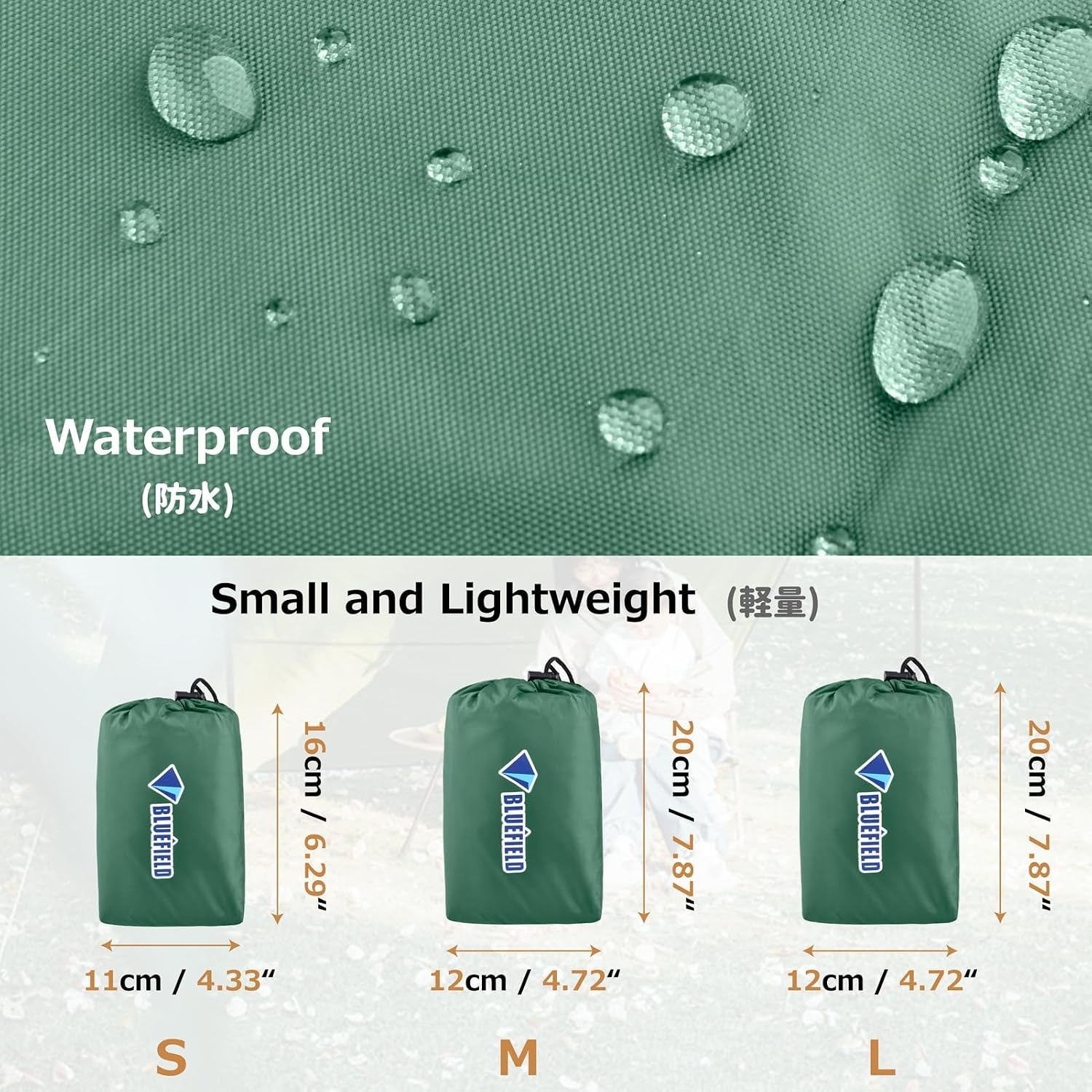
The second job is moisture. Ground is almost never as dry as it looks. Soil holds water well below the surface, and over a night of body heat and pressure that moisture finds its way up through the tent floor. A waterproof camping tarp puts a barrier in the way.
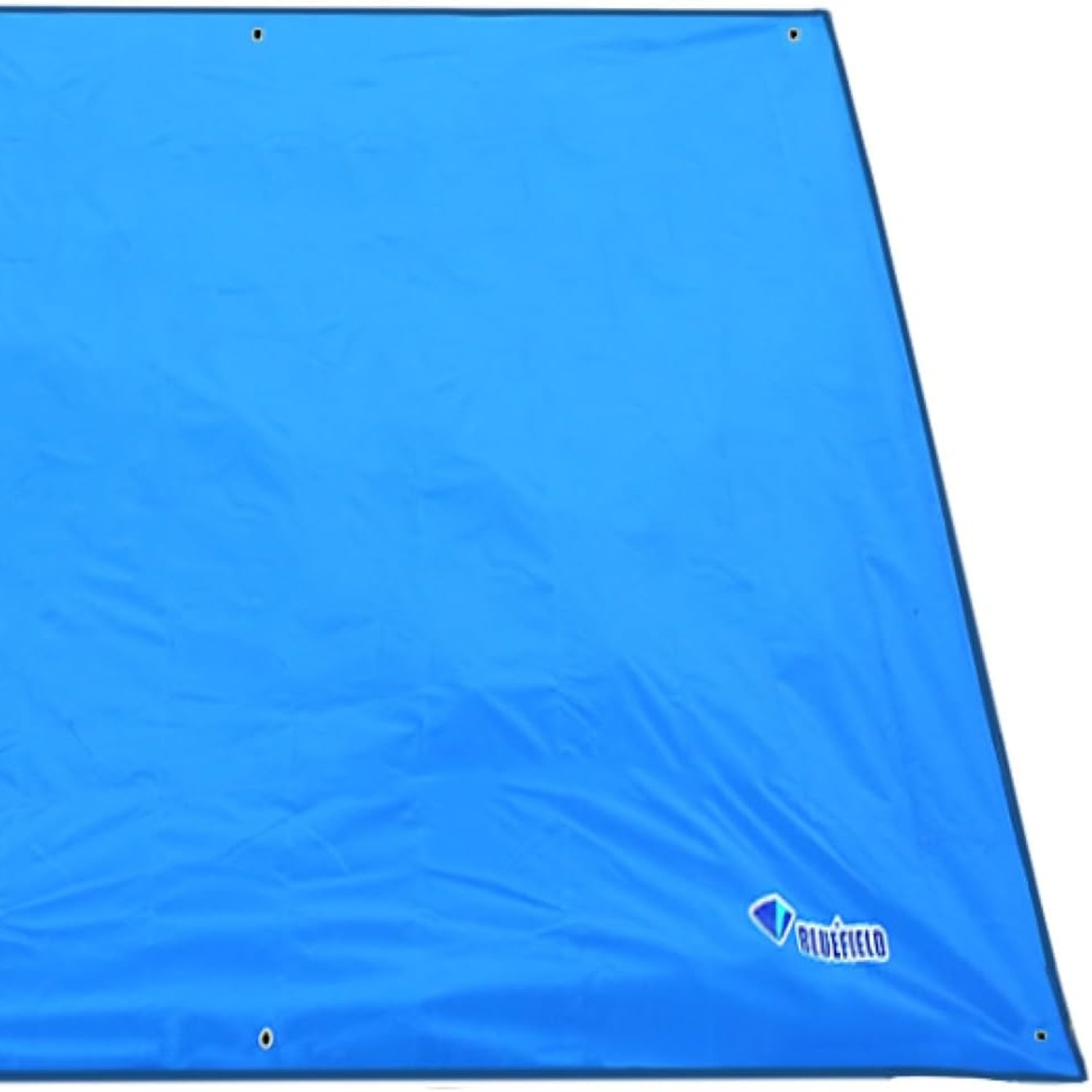
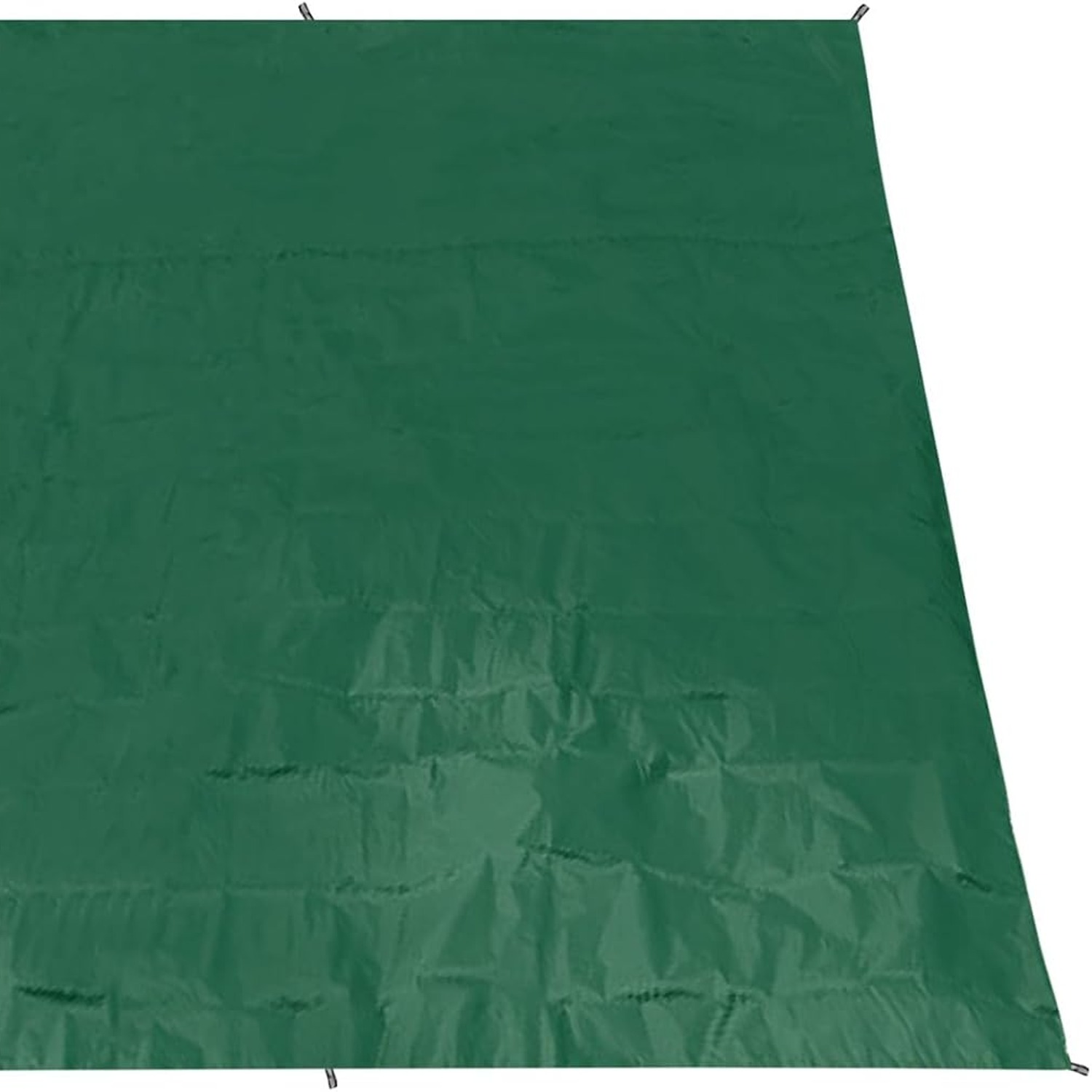
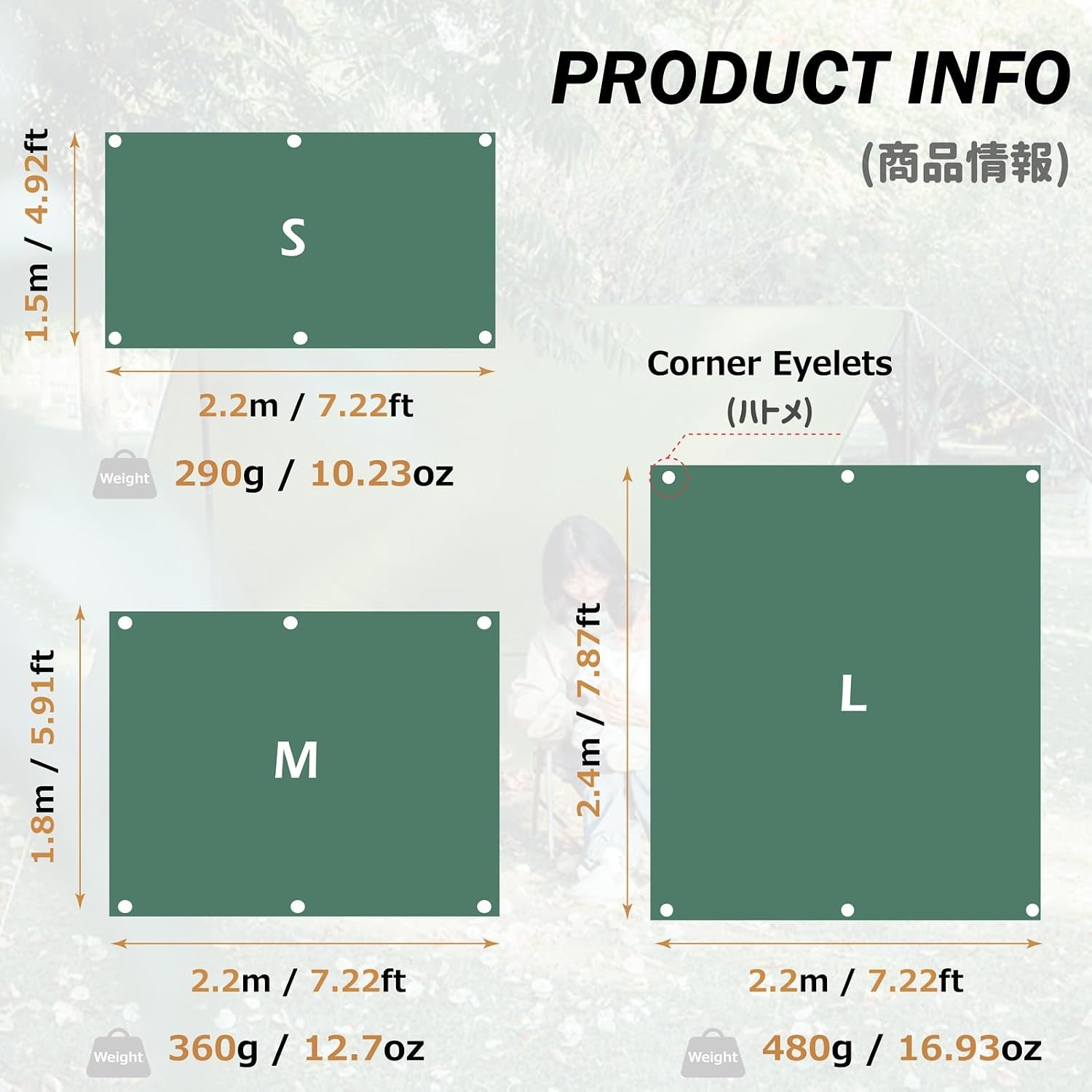
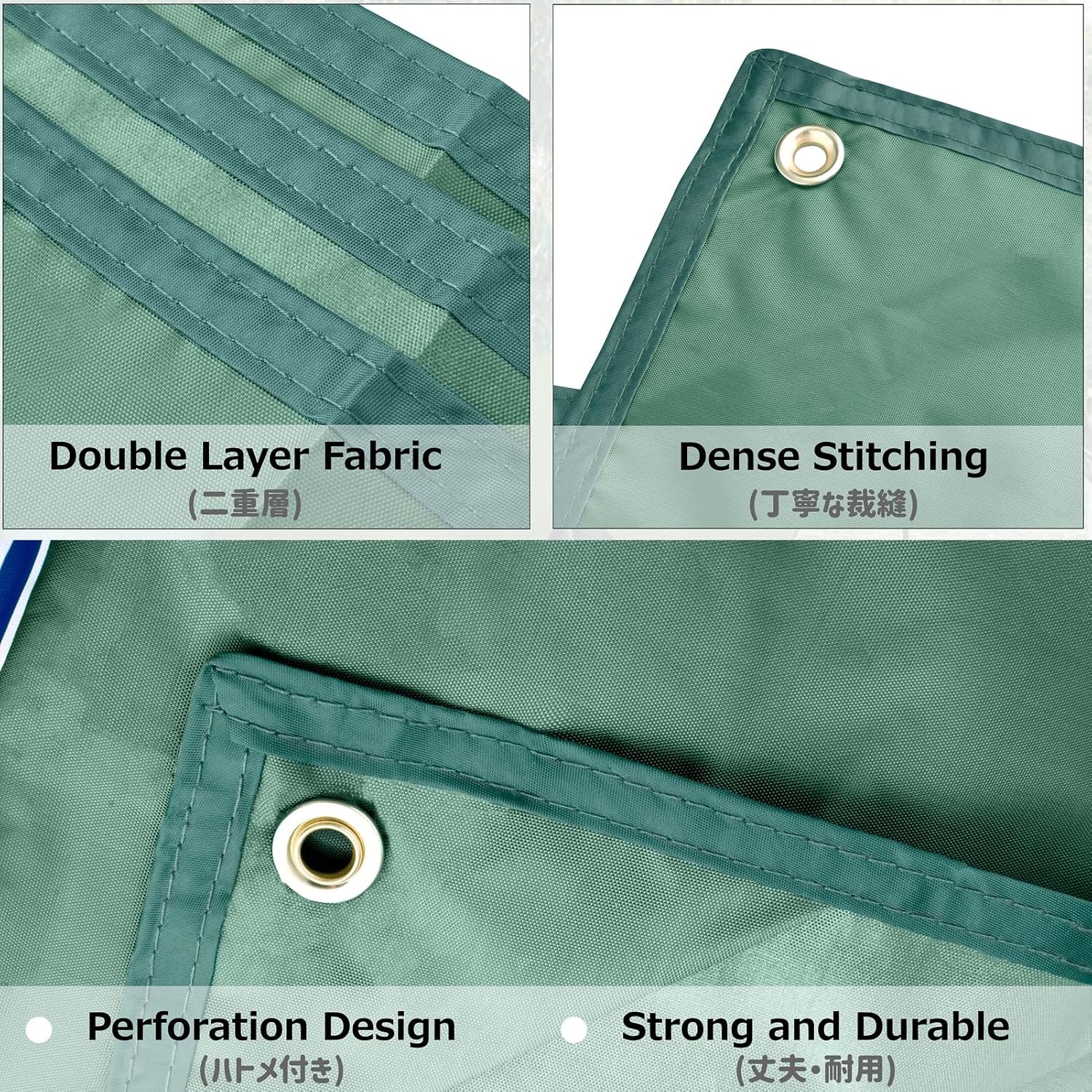
This particular one is Oxford fabric, which is a dense basketweave. It is a step up from the thin blue polytarp or plastic builder's sheeting people sometimes improvise with. Those tear at the eyelets, crinkle loudly all night and crack in the cold. Oxford holds together. The listed water resistance level here is waterproof, and the sheet measures 1.8 by 2.2 metres with metal grommet eyelets set round the edge.
Weight is 367 grams. That is light. It folds into the storage pouch it comes with, which is the detail that decides whether a footprint actually gets used or lives forgotten in the shed.
Who it suits
Weekend campers get the most out of it. If you camp a handful of times a year in a two or three person tent, this size covers your sleeping area and the tarp will outlast several tents.
Hikers carrying overnight gear will find 367 grams an acceptable trade. If you are counting every gram on a multi week trek you may go thinner, but for most trail weekends the durability is the better deal.
Families and festival goers probably want two. One under the tent, one outside the door as a boot zone. Mud is the main enemy at a festival, and having somewhere clean to sit and swap footwear changes the whole experience.
Day trippers who never camp at all still find use for it. Picnic mat, beach mat, something to lie on under the car. A lot of these end up permanently in a boot.
How to choose the right size
Measure your tent floor. Not the pitched size on the box, which often includes the vestibule, but the actual sleeping area.
Then pick a footprint that sits just inside that measurement. This is the bit people get wrong. If the footprint is bigger than the tent, rain running off the fly lands on the exposed lip of the tarp and then runs inward, pooling under your tent. You end up wetter than if you had used nothing. The fix is simple enough, fold the excess under so no edge sticks out past the tent, but it is easier to get the size right from the start.
At 1.8 x 2.2 m, the medium here is aimed at two and three person tents. Under a four person tent it will cover the main sleeping zone but not the full floor, which is still better than nothing if that is what you have.
Getting more out of the eyelets
The grommets are what separate a footprint from a plain sheet. A few things worth trying.
Peg the corners whenever there is any wind. A loose corner flapping all night will wake you, and a sheet that slides out from under the tent stops doing its job.
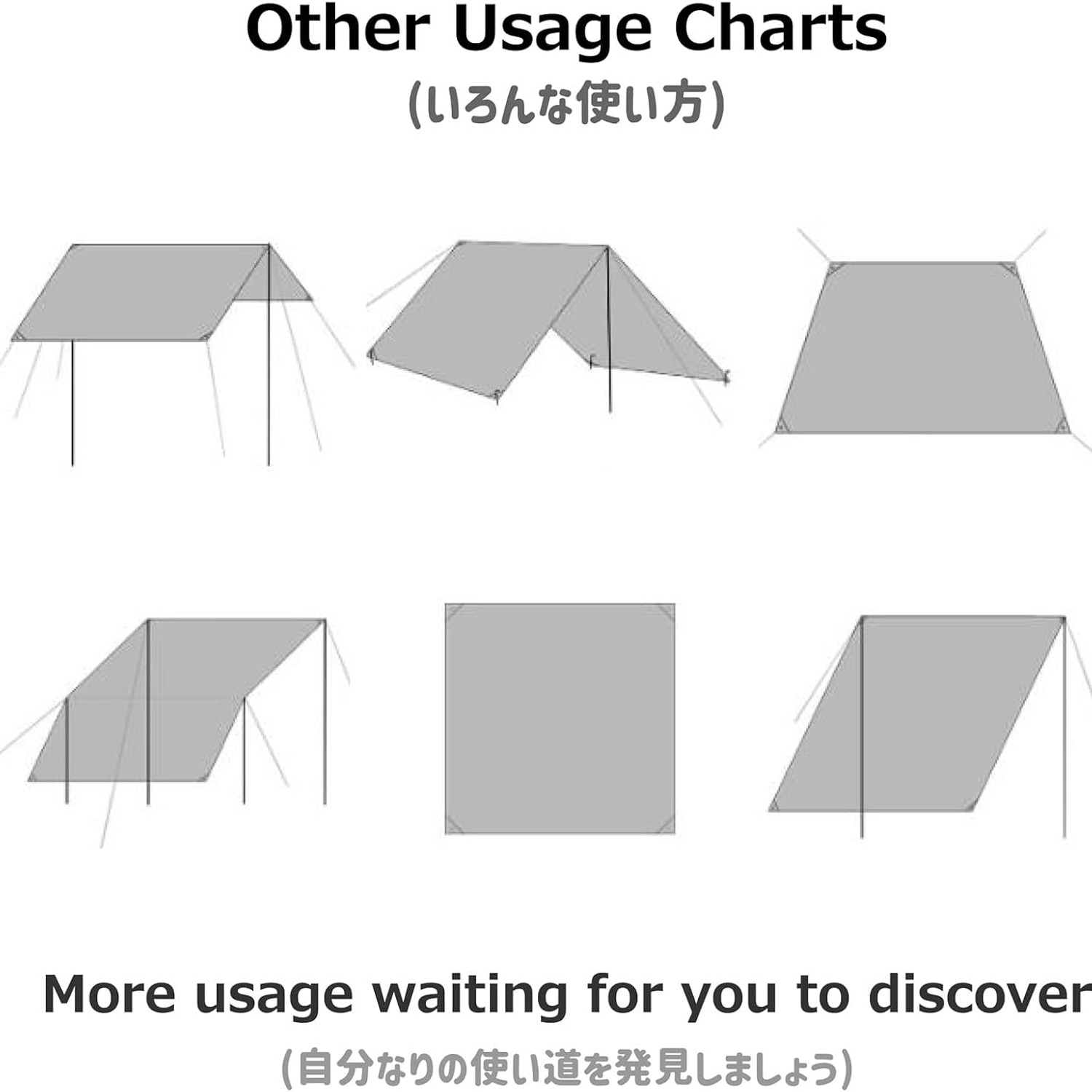
Rig it as a sun shade by running guylines through two eyelets and tying off to poles or a branch. It works well over a camp table at lunch. Worth noting that the listing does not rate this fabric for UV protection, so treat it as shade rather than sun protection in any formal sense.
Use it as a rain cover for your kitchen area. Angle it so water runs off one side rather than pooling in the middle, and keep a bit of tension on every tie point.
String it as a windbreak on a beach or an exposed pitch. Two poles, two guylines, done.
Care, which is mostly one rule
Dry it before you store it. That is the rule. A damp folded tarp grows mildew fast, and once a sheet smells musty it tends not to come back properly.
Beyond that, shake the loose dirt off before packing. For a proper clean, sponge it with cool water and a bit of mild soap, rinse, then hang it until it is completely dry. Skip the washing machine, the dryer, bleach and the iron. None of them are kind to coated outdoor fabric.
Store it loose in the pouch somewhere cool and out of sunlight. Rolling rather than hard folding every time helps, since repeated creasing along the same line is where fabric eventually gives up.
Small punctures take outdoor repair tape on both faces. Bigger tears can be patched and sealed. The eyelets are usually the first thing to go on a heavily used tarp, and even then a bit of cord looped through a reinforced hole will keep it serviceable.
A few honest limits
It is not armour. A sharp stick, a bit of broken glass or a jagged rock will go through fabric if you put your weight on it. Clear your pitch first, every time.
It is not a sleeping mat. It does nothing for comfort or insulation from cold ground, so you still need a mat or an air bed.
It will not fix condensation inside your tent. Most of that comes from your own breathing, not the ground. Open the vents.
And it will not stop water flowing downhill into your tent if you pitch in a dip. No footprint can. Read the ground before you choose a spot.
The short version
A tent footprint is a small purchase that protects a big one. This one is Oxford fabric, waterproof, 1.8 x 2.2 metres, 367 grams, with metal grommet eyelets and a storage pouch, in army green.
Measure your tent floor, pick a footprint that sits just inside it, peg the corners when it is breezy, and dry it before it goes in the cupboard. Do those four things and it will quietly do its job for years, and your tent floor will still look new when the rest of the tent is showing its age.